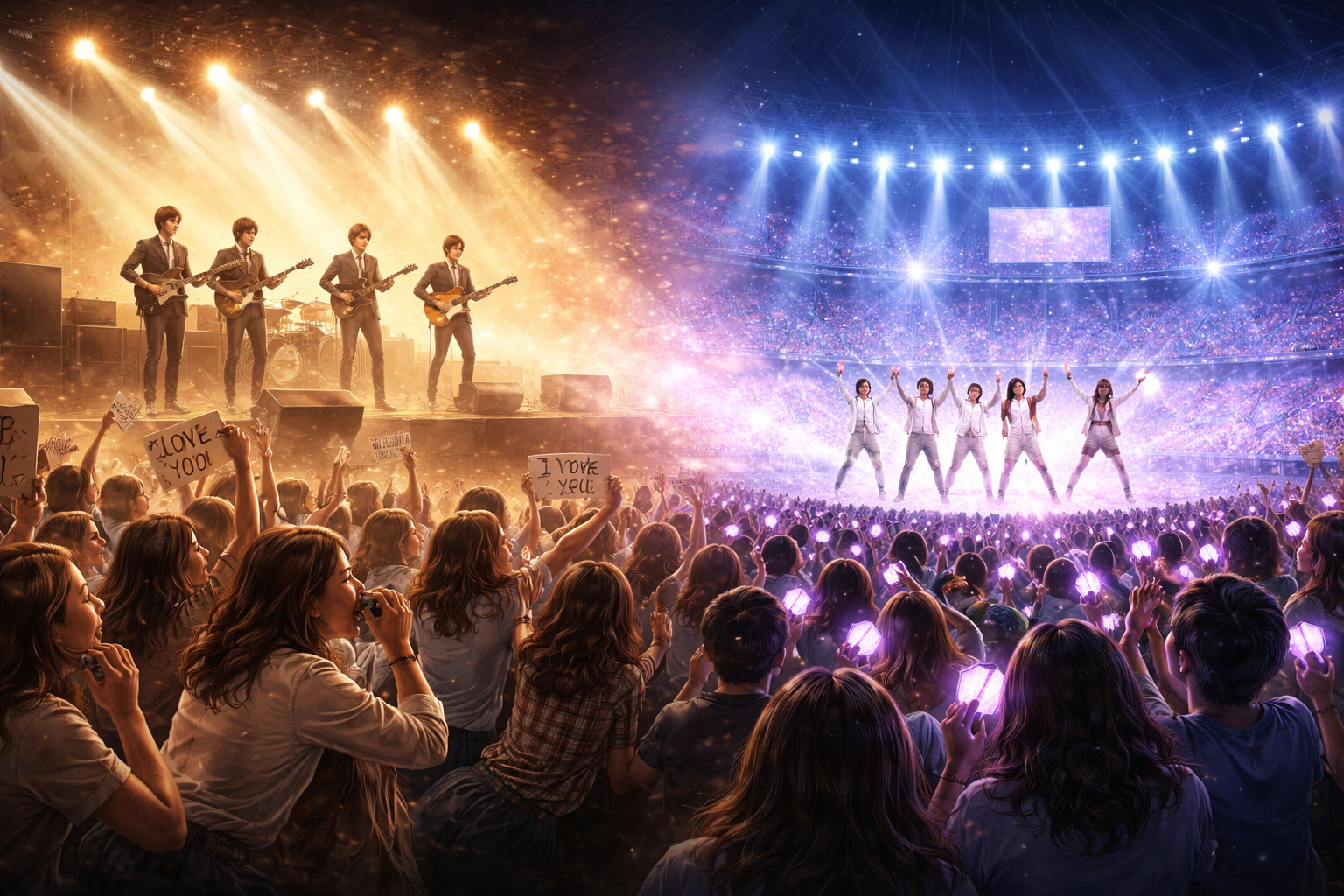
The Evolution of Fandom and Performance
“Artists create music, but fans make it move.”
The roar of a stadium.
The synchronized chants.
Thousands of voices singing as one.
A concert is no longer just a place to listen.
It is a space where artists and fans create something together.
From the frenzy of Beatlemania to the global unity of BTS’s ARMY,
fandom has transformed not only how we experience music—
but how music itself lives and evolves.
1. Beatlemania: The Birth of Modern Fandom
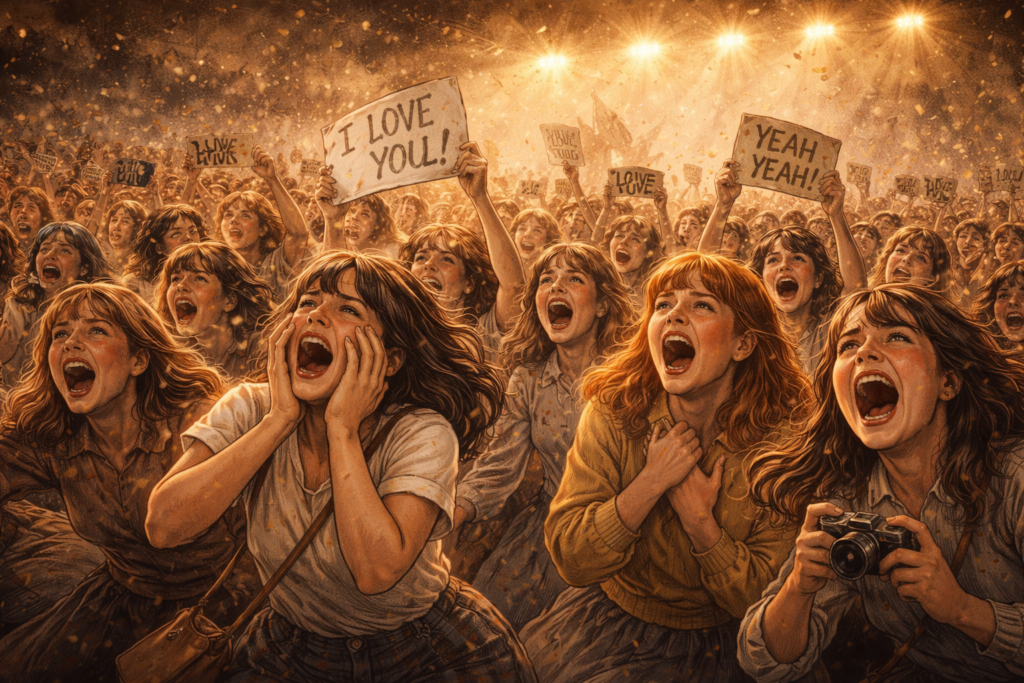
In the 1960s, The Beatles sparked a phenomenon unlike anything seen before.
Fans followed them across cities and countries,
screaming, crying, and even fainting at the sight of their idols.
The 1965 Shea Stadium concert, attended by over 50,000 people,
marked one of the first large-scale modern concerts.
But something deeper was happening.
Fans were no longer passive listeners.
They became part of the performance itself.
Beatlemania revealed a new cultural truth:
Music could be experienced collectively—and emotionally amplified through shared presence.
2. ARMY and BTS: The Rise of Participatory Culture
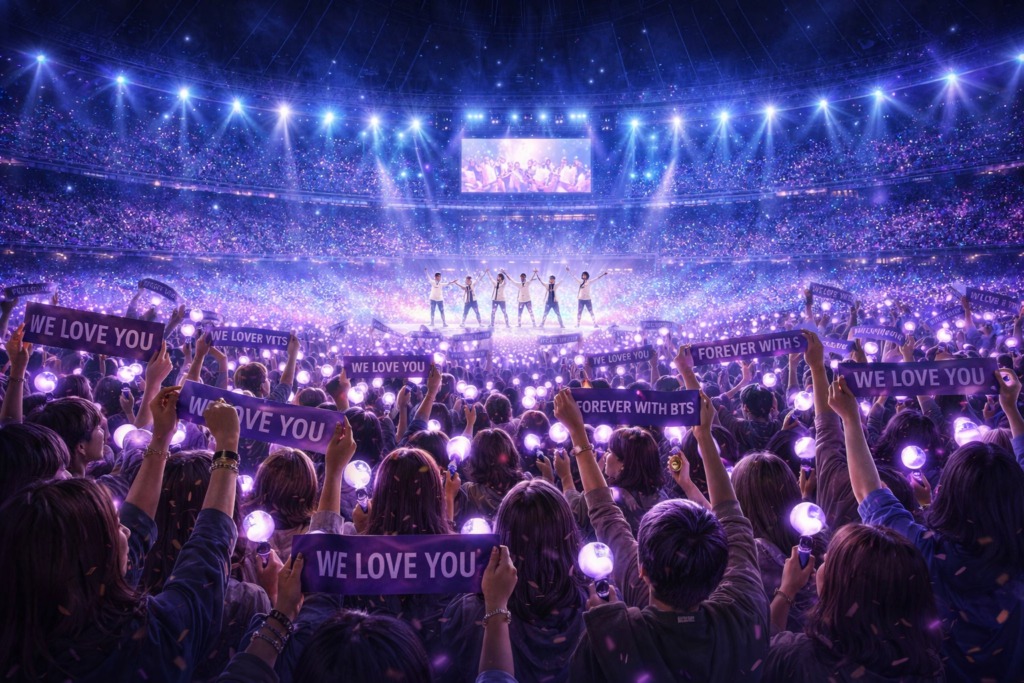
Decades later, fandom has evolved into something even more powerful.
BTS’s global success is inseparable from ARMY,
a fandom that operates as a worldwide community.
ARMY does more than listen:
- they create fan art and translations
- organize global campaigns
- participate in social and charitable actions
At concerts, this participatory culture becomes visible:
- coordinated slogan events
- collective singing moments
- fan-driven surprise messages
A concert becomes a shared production.
Fans are no longer the audience.
They are co-creators.
3. How Fans and Performances Shape Each Other
3.1 Concerts Strengthen Fandom
Live performances intensify emotional connection.
Sharing a moment with thousands of others creates:
- belonging
- identity
- collective memory
A fan becomes part of something larger.
3.2 Fandom Transforms Performance
In the digital age, fans influence how performances are experienced.
Through social media, fans:
- analyze performances
- share reactions
- extend the concert beyond the venue
The performance no longer ends when the show is over.
It continues online, evolving in real time.
4. From Audience to Cultural Force
Beatlemania opened the door.
ARMY expanded it.
Today, fandom is not a peripheral element of music culture.
It is central.
Fans shape narratives, amplify messages,
and even influence the direction of artists themselves.
This shift highlights how fandom and live music culture have become deeply interconnected in shaping modern performances.
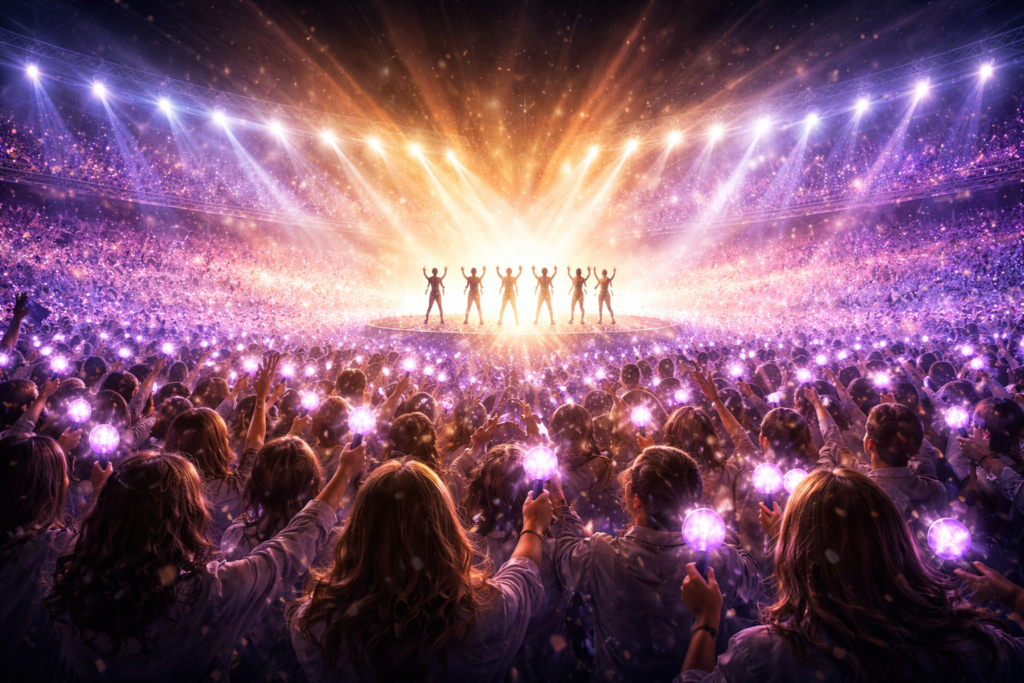
Conclusion: The Stage Has Changed
In the past, concerts were performances delivered to an audience.
Today, they are experiences created together.
Fans are no longer just consumers.
They are creators, organizers, and communities.
From Beatlemania to ARMY,
the stage has expanded—
and so has the role of the fan.
Perhaps being a fan is no longer just about admiration.
It is about connection.
Question for Readers
When you attend a concert—or even watch one online—do you see yourself as an audience member, or as part of the performance?
How has digital culture changed your experience of music and fandom?
If fans now shape culture as much as artists do,
where do you think the true power of music lies?
Related Reading
The transformation of collective identity and participation is further explored in Is the Hippie Spirit Dead—or Has It Evolved?, where cultural movements reveal how ideas persist and adapt across generations.
At a more individual level, the psychology behind shared emotional experiences is discussed in Why Do We Remember Regret Longer Than Failure?, showing how collective memory and personal reflection interact in shaping meaning.
References
1. Jenkins, H. (1992). Textual Poachers. Routledge.
This foundational work introduces the concept of participatory culture, explaining how fans actively reinterpret and recreate media, shaping cultural meaning rather than passively consuming it.
2. Duffett, M. (2013). Understanding Fandom. Bloomsbury.
This book provides a comprehensive overview of fan culture, examining its emotional, social, and historical dimensions, including its role in live performance contexts.
3. Oh, C. (2022). K-pop Dance. Routledge.
This study explores the intersection of fandom, performance, and digital media in K-pop, highlighting how fans actively contribute to the expansion and reinterpretation of performance culture.