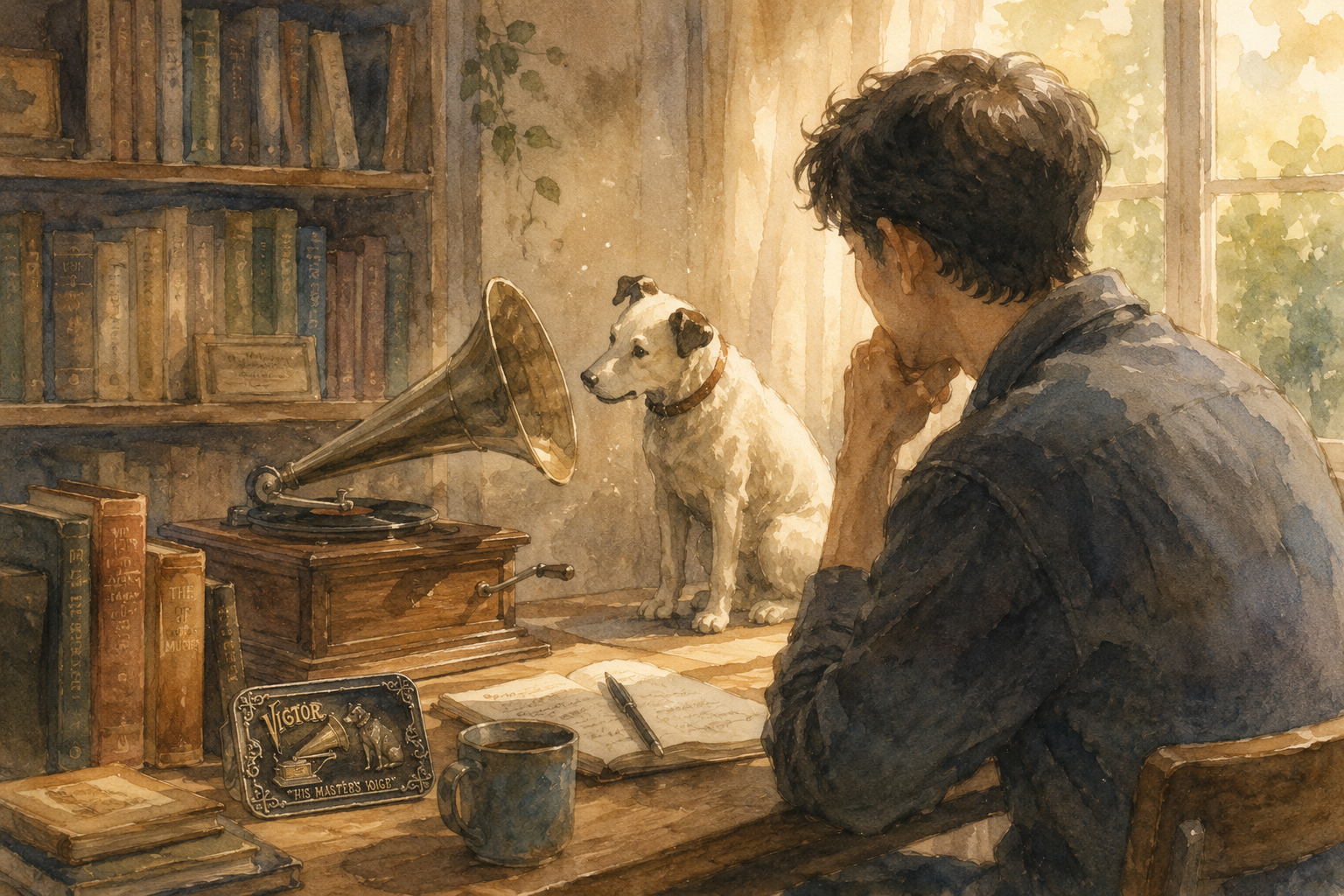
What an Old Belt Buckle Reminded Me About Truly Hearing Others
Sometimes an old object does more than bring back a memory.
Sometimes it asks us a question.
While rearranging my bookshelf one day, my fingers touched something cold and heavy between the books.
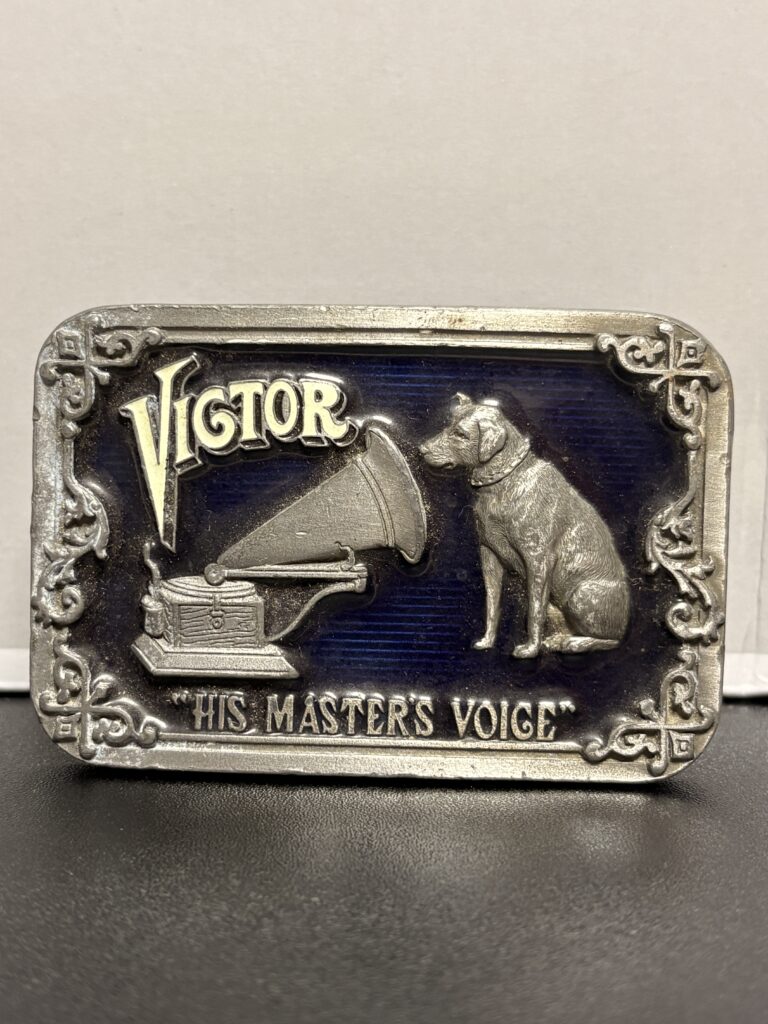
It was an old metal belt buckle I had almost forgotten.
I picked it up and looked again.
On its surface was a familiar scene: a small dog sitting beside a gramophone, his head slightly tilted as he listened intently to the sound coming from its horn.
The words were familiar too:
His Master’s Voice.
And the dog had a name.
Nipper.
The Dog Who Was Listening
The image of Nipper listening to a gramophone became one of the most recognizable symbols in the history of recorded music.
But as I held the buckle in my hand, I was less interested in its commercial history than in something much simpler.
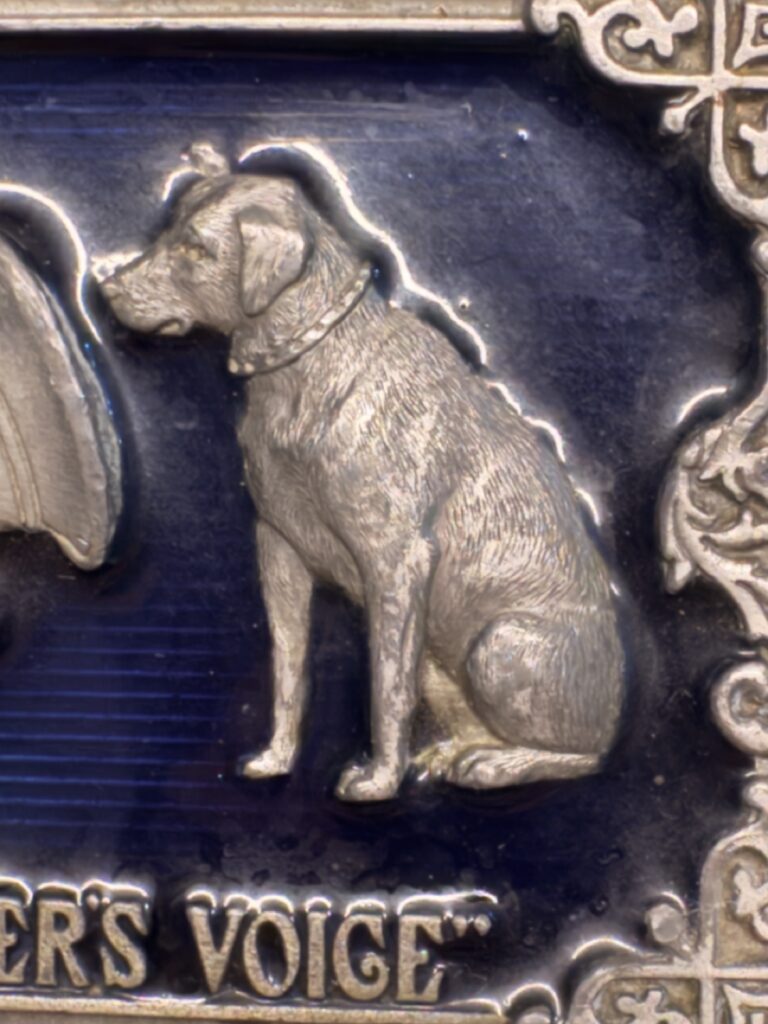
I kept looking at the dog.
His head was tilted.
His ears were attentive.
His entire body seemed focused on one thing.
Listening.
There was something strangely moving about his posture.
He was not speaking.
He was not explaining.
He was not preparing an answer.
He was simply listening.
And suddenly, that small image felt surprisingly modern.
A World Full of Voices
We live surrounded by sound.
Messages arrive constantly.
News updates appear before we have finished reading the previous ones.
Videos begin automatically.
Conversations compete with notifications.
Everyone seems to be speaking, explaining, reacting, and responding.
Yet amid all this communication, genuine listening can sometimes feel strangely rare.
Looking at Nipper, I began to wonder whether listening has become one of the quiet skills we are slowly losing.
To listen to someone without preparing our reply.
To follow a page without checking a screen.
To hear an entire piece of music without skipping ahead.
To notice rain against a window without needing to photograph it.
These are small acts.
But perhaps they require more attention than ever.
Listening With More Than Our Ears
There was a time when listening to recorded music required a different kind of ritual.
A record had to be chosen.
Placed carefully on a turntable.
A needle lowered.
Then came the music.
There was no endless stream waiting to replace it a few seconds later.
Perhaps the technology was limited by today’s standards, but the act itself invited attention.
That thought brought back another realization.
Listening is not simply something the ears do.
Sometimes we listen with patience.
Sometimes with curiosity.
Sometimes with compassion.
And sometimes the most important thing we can offer another person is not advice at all.
It is our attention.
The Angle of the Heart
I looked again at the little dog on the buckle.
His head was still tilted toward the gramophone.
And a phrase came to me:
Listening is not only about the direction of our ears.
It is about the angle of the heart.
Perhaps that is what I had been seeing all along.
When someone speaks, do I really hear what they are trying to say?
When I read, do I allow the words enough time to reach me?
When music plays, do I stay with it long enough to hear what exists between the notes?
And when the natural world speaks in wind, rain, birdsong, or silence, do I still notice?
The world may have been speaking all along.
Perhaps I had simply become too busy to listen.
A Small Reminder on the Bookshelf
That day, I did not put the buckle back between the books.
Instead, I placed it where I could see it.
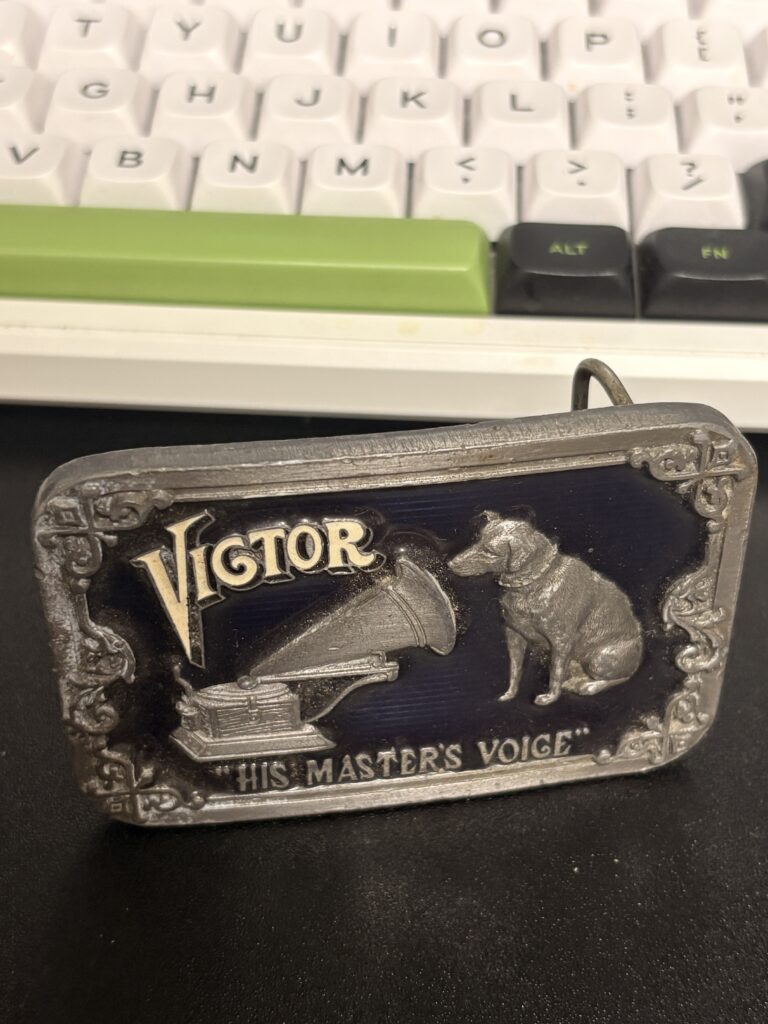
Now, when writing becomes difficult, when I find myself speaking too much, or when I am tempted to judge someone before hearing the whole story, I sometimes look at Nipper.
And for a moment, I try to do what he does.
I stop.
I turn my attention toward what is in front of me.
And I listen.
The old buckle has not taught me anything complicated.
Only something easy to forget:
Listening does not always solve another person’s problems.
It does not necessarily give us the right answer.
But being truly heard can make someone’s day feel a little less lonely.
And perhaps a little warmer.
So the small dog remains on my bookshelf, his head forever tilted toward an old gramophone.
And every now and then, without saying a word, he reminds me to tilt my heart a little too.
Reader Question
When was the last time you truly listened—to a person, a piece of music, or even the quiet sounds around you—without thinking about what to say or do next?
Related Reading
The quiet attention embodied by Nipper is echoed in The Rhythm of Wood, The Tempo of My Mind, where the simple act of working with wood reveals how slowing down can restore attention, patience, and a deeper awareness of the present moment.
A similar journey through sound and memory unfolds in The Sound of Stairs in an Old Building – Where Past Memories Meet Present Footsteps, where the creak of an old wooden staircase becomes a doorway between memory, time, and the quiet act of noticing what we usually pass by.