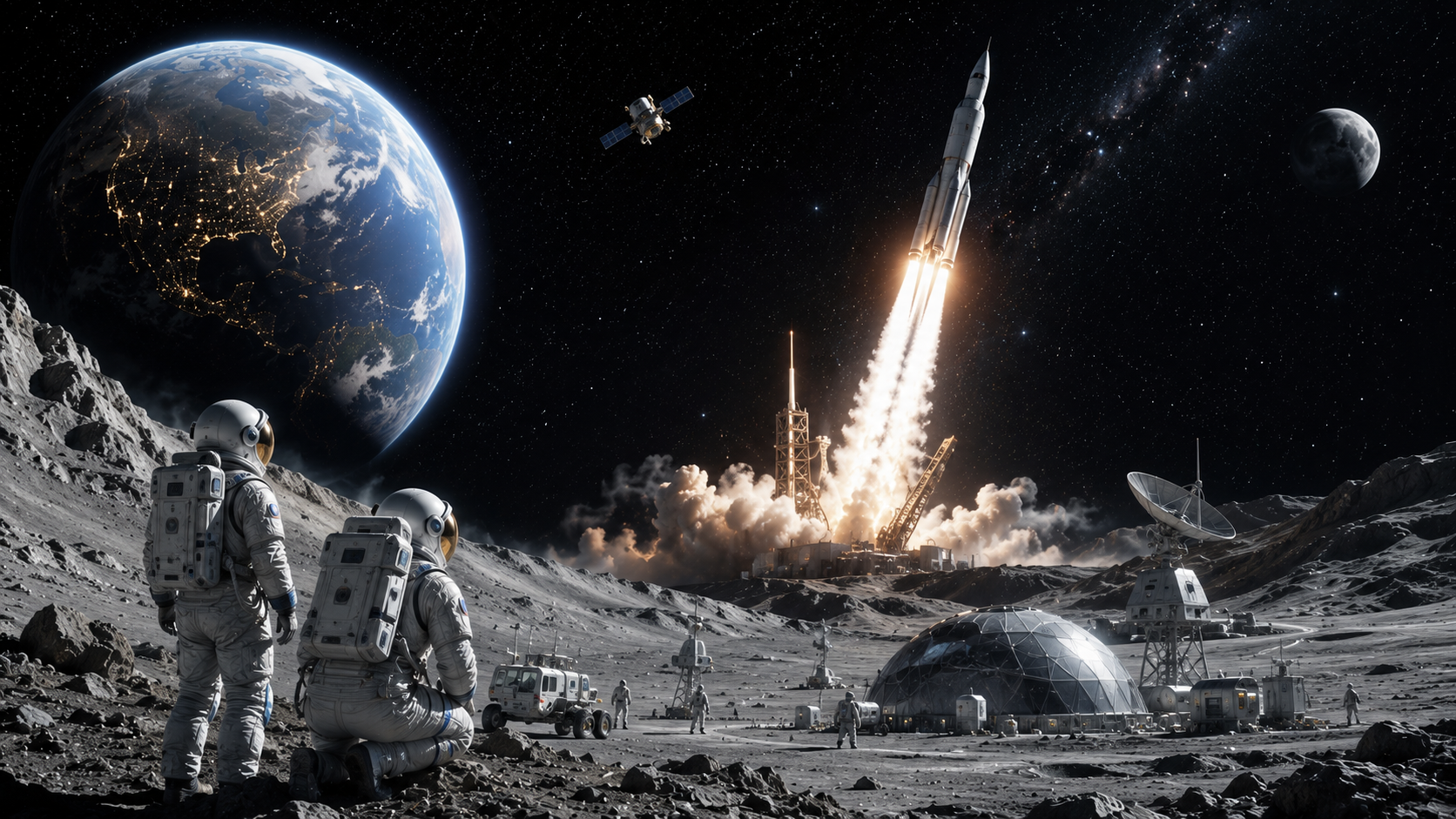
For centuries, humanity has looked toward the night sky with curiosity and wonder.
Space exploration represents more than scientific discovery. It reflects humanity’s desire to push beyond its limits, develop new technologies, and better understand its place in the universe.
For a time, space exploration seemed to slow after the historic Apollo Moon landings. Yet today, a new era has begun.
Governments are returning to the Moon. Private companies are developing reusable rockets. Discussions about Mars, asteroid mining, and even space tourism are becoming increasingly realistic.
The modern space race is no longer limited to a handful of superpowers. It has become a global effort involving nations, businesses, scientists, and entrepreneurs around the world.
1. The Return of the Moon Race
The Moon has once again become the center of global space ambitions.
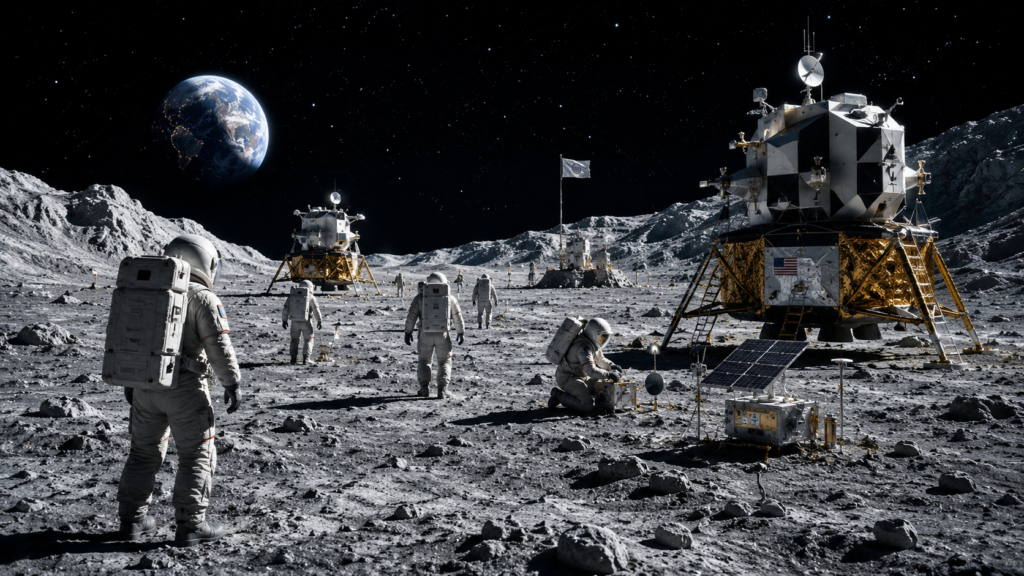
After Apollo 11 successfully landed astronauts on the Moon in 1969, many believed humanity would quickly continue deeper into space. Instead, progress slowed for several decades.
Today, however, interest in the Moon has returned.
NASA’s Artemis Program aims to send humans back to the lunar surface and establish a long-term presence there. Scientists are particularly interested in the Moon’s south pole, where water ice may exist in permanently shadowed regions.
Water could become a valuable resource for future lunar bases, supporting life and even producing rocket fuel.
The Moon is no longer viewed as a final destination. Instead, it is increasingly seen as a stepping stone toward Mars and deeper exploration of the solar system.
Meanwhile, China has successfully completed several lunar missions and continues expanding its space capabilities. India has also gained international attention through its Chandrayaan missions, demonstrating that space exploration is becoming more globally diverse.
The new Moon race is not only about science. It is also about technological leadership, national prestige, and future strategic advantages.
2. Private Companies and the Birth of the Space Economy
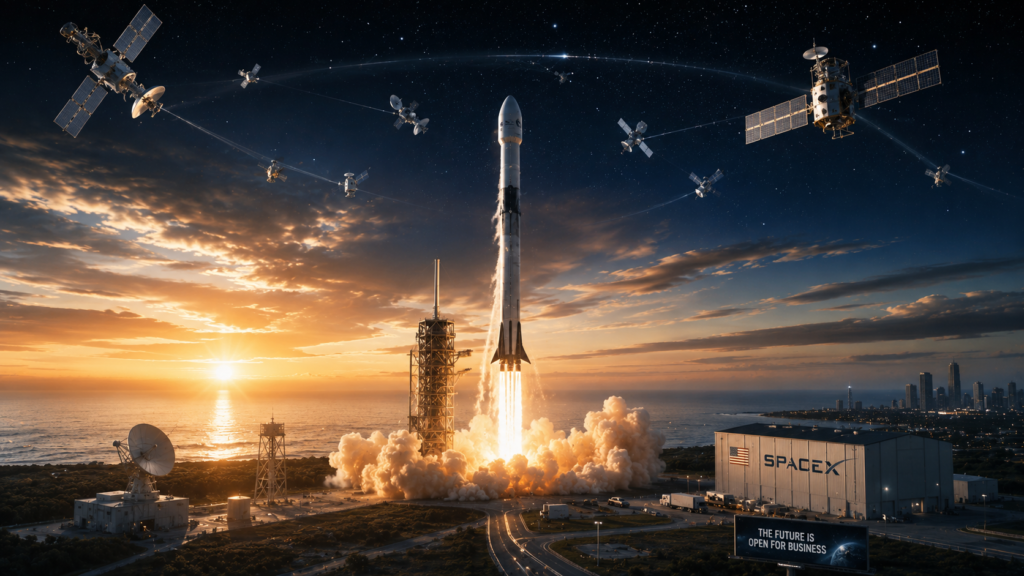
One of the most significant changes in modern space exploration is the rise of private companies.
Traditionally, governments funded and controlled most space programs. Today, private businesses are helping reshape the future of space travel.
SpaceX, founded by Elon Musk, has revolutionized launch technology through reusable rockets that dramatically reduce launch costs.
Its Starship system is being designed for missions to the Moon, Mars, and beyond.
Blue Origin, founded by Jeff Bezos, is focusing on commercial spaceflight and the long-term development of a space-based economy.
As launch costs decrease, entirely new industries are becoming possible.
Potential future markets include:
- Space tourism
- Satellite communication networks
- Asteroid mining
- Lunar resource extraction
- Orbital manufacturing
What once belonged only to science fiction is gradually entering the realm of economic reality.
3. Cooperation and Challenges Beyond Earth
Although competition drives innovation, long-term space exploration also requires cooperation.
The International Space Station (ISS) remains one of the greatest examples of international scientific collaboration. Researchers from many countries have worked together for decades to conduct experiments and prepare for future deep-space missions.
Future lunar bases and Mars missions will likely require similar cooperation.
However, significant challenges remain.
Questions surrounding ownership, resource extraction, and environmental protection in space are becoming increasingly important.
Who owns resources mined from asteroids?
How should lunar resources be shared?
Can humanity avoid repeating geopolitical conflicts beyond Earth?
International agreements will play a critical role in answering these questions.
4. How Space Exploration Could Change Life on Earth
Space exploration is often viewed as something distant from everyday life.
In reality, many technologies developed for space missions already influence modern society.
Satellite communications, GPS navigation, weather forecasting, and advanced materials all emerged from space-related research.
Future exploration may bring even greater benefits.
The Growth of the Space Economy
Space resources could provide access to rare materials while creating entirely new industries.
Environmental Insights
Observing Earth from space helps scientists monitor climate change, deforestation, ocean conditions, and natural disasters.
Scientific Discovery
Research conducted in microgravity environments may contribute to advances in medicine, biology, and engineering.
In many ways, exploring space helps humanity better understand Earth itself.
Conclusion: Why Humanity Looks Up Again
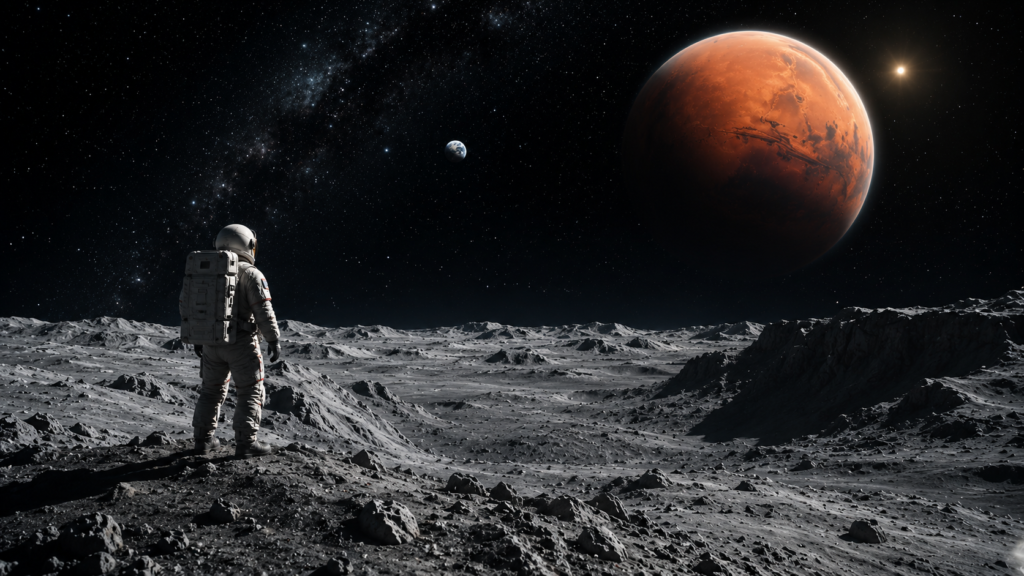
The new age of space exploration is about far more than rockets and distant planets.
It represents humanity’s continuing effort to overcome limitations, expand knowledge, and imagine new possibilities.
The Moon, Mars, and the vast reaches of space are no longer distant dreams reserved for a few scientists. They are becoming part of a shared global vision for the future.
Yet perhaps the most important question is not whether we can reach other worlds.
It is what kind of civilization we hope to become when we get there.
As humanity takes its first steps into a larger cosmic future, the story of space exploration is ultimately a story about ourselves.
A Question for Readers
If humanity succeeds in building permanent settlements on the Moon or even reaches Mars, what should be our primary goal there—scientific discovery, economic opportunity, or the survival of our species?
Perhaps the future of space exploration will reveal not only what exists beyond Earth, but also what kind of civilization we hope to become.
Related Reading
The renewed global interest in space exploration reflects humanity’s enduring desire to push beyond known boundaries and imagine new possibilities. This drive to explore the unknown connects naturally with Dreams, Utopia, and the Impossible, which examines how visions of ideal futures inspire scientific innovation, social change, and ambitious projects that once seemed impossible.
At the same time, the emerging space economy raises profound ethical questions about ownership, responsibility, and the use of resources beyond Earth. This perspective is further explored in Can Humans Be the Moral Standard?, which challenges human-centered assumptions and asks whether our existing ethical frameworks are sufficient for addressing new frontiers and shared global responsibilities.
References
- The Case for Space
This book argues that expanding into space is essential for humanity’s long-term future. It explores lunar exploration, Mars colonization, private spaceflight, and the economic opportunities emerging from the new space age. - NASA Artemis Program
NASA’s Artemis initiative outlines plans to return humans to the Moon and establish sustainable lunar exploration, creating a foundation for future missions to Mars. - Astrobiology and Space Exploration: Exploring the Universe and Ourselves
This work examines the scientific, technological, and ethical dimensions of future space exploration, including planetary science, resource utilization, and the search for life beyond Earth.