Tag: modern society

  • Do Humans Control Technology, or Does Technology Control Us?

    Is Technology a Tool—or a New Master?
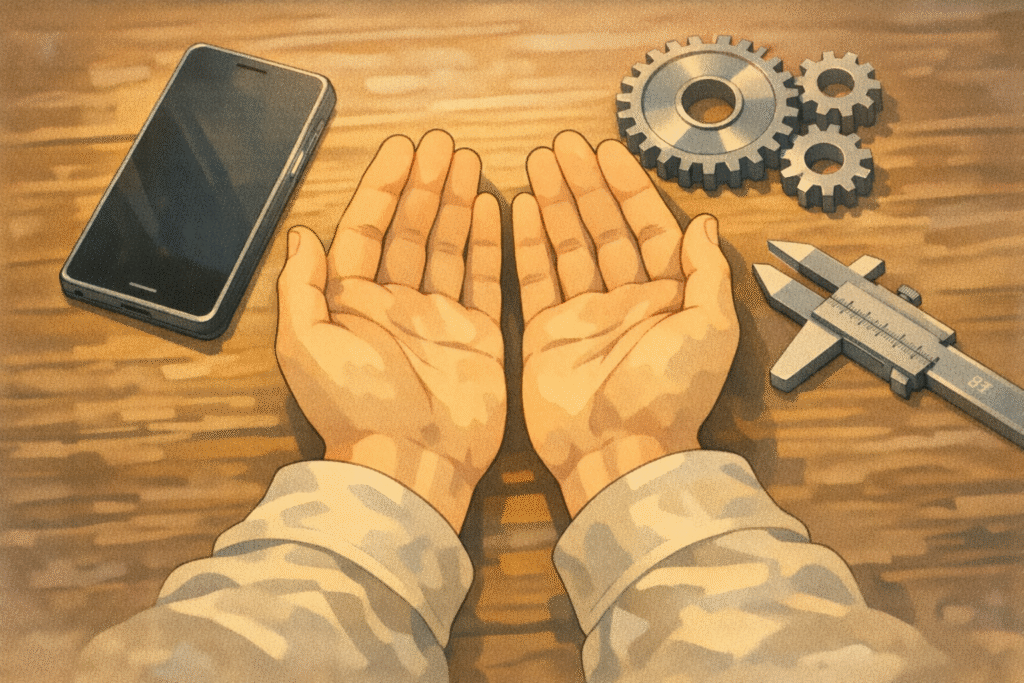
    Technology shown as a neutral tool in human hands

    We live inside technology.

    A day without checking a smartphone feels almost unimaginable.
    Artificial intelligence answers our questions.
    Big data and algorithms shape what we buy, what we read, and even how we form relationships.

    On the surface, technology appears to be nothing more than a collection of tools created by humans.
    Yet in practice, our lives are increasingly structured by those very tools.

    This leads to a fundamental question:

    Do we control technology, or has technology begun to control us?


    1. The Instrumental View: Humans as Masters of Technology

    1.1 Technology as a Human Creation

    From this perspective, technology is a product of human necessity and ingenuity.

    From fire and basic tools to the steam engine and electricity, technology has always emerged to serve human needs.
    Light bulbs illuminate darkness.
    The internet accelerates the spread of knowledge.
    Smartphones simplify communication.

    Seen this way, technology is neutral.
    Its impact depends entirely on how humans design, use, and regulate it.

    1.2 Human Choice and Responsibility

    According to this view, technology does not determine social outcomes.
    Humans do.

    Whether technology liberates or harms society ultimately reflects political decisions, cultural values, and ethical priorities.


    2. Technological Determinism: When Technology Shapes Humanity

    2.1 Technology as a Social Force

    A contrasting perspective argues that technology is never merely a tool.

    This view—often called technological determinism—holds that technology actively reshapes social structures, institutions, and even patterns of thought.

    The invention of the printing press did more than increase book production.
    It transformed knowledge distribution, fueled religious reform, and reshaped political power.

    Similarly, the internet and social media have altered how public opinion forms and how social movements emerge.

    2.2 Algorithmic Mediation of Reality

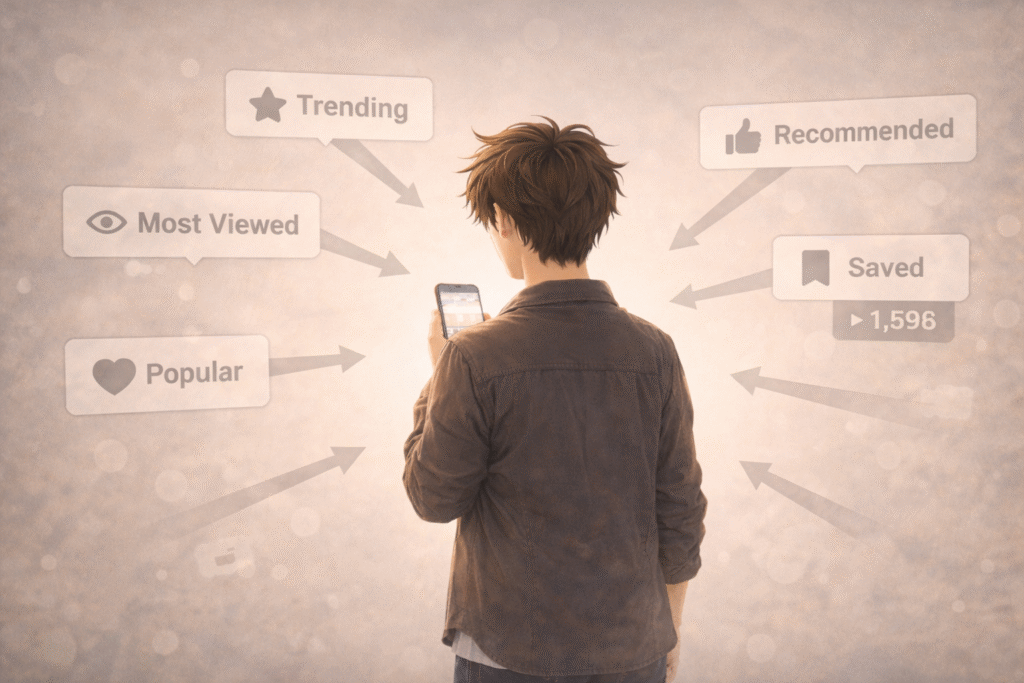
    Today, algorithms decide which news we see, which posts gain visibility, and which voices are amplified or silenced.

    In such conditions, humans are no longer fully autonomous choosers.
    We operate within frameworks constructed by technological systems.

    Technology does not simply assist decision-making—it structures perception itself.

    Algorithms subtly shaping human choices and attention

    3. The Boundary Between Control and Dependence

    3.1 Erosion of Human Control

    As technology grows more complex, human control often weakens.

    • Smartphone dependency: We use devices freely, yet our attention and time are increasingly governed by them.
    • Algorithmic curation: We believe we choose information, but often select only from what platforms present.
    • AI-driven decisions: In finance, medicine, and hiring, AI systems now generate outcomes that humans merely review.

    What appears as convenience gradually becomes a form of governance.

    3.2 Technology as a New Power

    Technology approaches us with the promise of efficiency and comfort.
    Yet beneath that promise lies a quiet restructuring of habits, priorities, and values.

    In this sense, technology functions as a new kind of power—subtle, pervasive, and difficult to resist.


    4. Freedom, Responsibility, and Ethical Control

    4.1 Are We Becoming Subordinate to Technology?

    This does not mean humans are powerless.

    Technology does not emerge independently of human intention.
    Its goals, constraints, and accountability mechanisms are still socially constructed.

    4.2 The Demand for Transparency and Accountability

    What matters is whether societies demand:

    • transparency in how algorithms function,
    • clarity about the data AI systems learn from,
    • accountability for harms caused by automated decisions.

    Without such safeguards, technology risks becoming a system of domination rather than liberation.


    Conclusion: Master, Subject, or Both?

    Technology operating as a powerful structure shaping society

    The relationship between humans and technology cannot be reduced to a simple question of control.

    Technology is a human creation—but once deployed, it reorganizes society and reshapes human behavior.

    In this sense, humans are both masters and subjects of technology.

    The decisive issue is not technology itself, but the ethical, political, and social frameworks that surround it.

    As one paradoxical insight suggests:

    We believe we use technology—but technology also uses us.

    Recognizing this tension is the first step toward restoring balance between human agency and technological power.

    Related Reading

    The tension between technological agency and human autonomy is further examined in Automation of Politics: Can Democracy Survive AI Governance? where algorithmic power and collective decision-making are debated.
    At the level of everyday experience, The Standardization of Experience reflects on how digital systems subtly shape personal choice and perception.


    References

    1. The Whale and the Reactor
      Winner, L. (1986). The Whale and the Reactor. University of Chicago Press.
      → Argues that technologies embody political and social values rather than remaining neutral tools.
    2. The Technological Society
      Ellul, J. (1964). The Technological Society. Vintage Books.
      → A classic work asserting that technology develops according to its own internal logic, shaping human society in the process.
    3. The Rise of the Network Society
      Castells, M. (1996). The Rise of the Network Society. Blackwell.
      → Analyzes how information and network technologies restructure social organization and power relations.
    4. The Question Concerning Technology
      Heidegger, M. (1977). The Question Concerning Technology. Harper & Row.
      → Explores technology as a mode of revealing that shapes how humans understand and relate to the world.
    5. The Age of Surveillance Capitalism
      Zuboff, S. (2019). The Age of Surveillance Capitalism. PublicAffairs.
      → Critically examines how digital technologies predict, influence, and monetize human behavior.

  • Sleep: A Fundamental Human Right or a Tool for Productivity?

    A person resting peacefully at night, symbolizing sleep as a fundamental human right

    A question raised in the age of efficiency

    Global temperatures are not the only thing rising in modern society—so are working hours, performance pressure, and expectations of constant availability.
    In this context, sleep is no longer taken for granted. It is measured, optimized, shortened, and often sacrificed.

    This raises a fundamental question:
    Is sleep a natural human right, or merely a tool for maximizing productivity?

    This tension is not new. More than a century ago, the Swiss philosopher and legal scholar Karl Hilty (1833–1909) warned against a life dominated by relentless activity and efficiency. His reflections on sleep offer a powerful lens through which to examine our present condition.


    1. Karl Hilty and the philosophical meaning of sleep

    1.1 Sleep as a foundation of moral life

    Karl Hilty, best known for his writings on happiness and practical wisdom, believed that a meaningful life begins with respecting fundamental human needs.
    For him, sleep was not a mere biological function. It was a moral and spiritual necessity.

    Hilty argued that without sufficient rest, human beings lose emotional balance, ethical clarity, and inner freedom. Fatigue, in his view, dulls moral judgment and erodes character.

    1.2 A growing tension in modern society

    In contrast, contemporary society treats sleep as something to be managed rather than respected.
    Smartwatches track sleep cycles, apps quantify sleep quality, and individuals are encouraged to function on minimal rest while maintaining peak performance.

    In this shift, sleep becomes caught between two competing interpretations:

    • a natural human right, or
    • a resource to be optimized for productivity.

    2. Hilty’s position: Sleep as a natural right

    Hilty famously described sleep as “one of God’s greatest gifts to humanity.”
    This perspective frames sleep not as indulgence, but as an essential condition for a dignified human life.

    2.1 Physical and psychological restoration

    Adequate sleep restores both body and mind.
    Hilty warned that chronic sleep deprivation leads not only to physical illness but also to irritability, poor judgment, and ethical decline.

    2.2 Inner peace and spiritual balance

    For Hilty, nighttime rest allowed the human soul to regain equilibrium. Sleep prepared individuals for reflection, self-control, and moral responsibility.

    2.3 An inalienable human right

    From this standpoint, sleep cannot be subordinated to economic or social demands.
    It is a natural right, inseparable from human dignity and therefore not subject to negotiation.


    3. The modern view: Sleep as a tool of productivity

    Smart devices measuring sleep, representing productivity-driven sleep management

    In contemporary capitalist societies, however, sleep is increasingly framed as a variable to be controlled.

    3.1 The ideology of performance

    Popular narratives suggest that “successful people sleep less.”
    Wakefulness is celebrated as discipline, while sleep is portrayed as inefficiency.

    This logic transforms sleep into a sacrifice rather than a right.

    3.2 The rise of the sleep industry

    Ironically, as sleep is shortened, it has also become commodified.
    Sleep medications, tracking devices, and optimization programs turn rest into a marketable product—one that must be purchased back.

    3.3 Self-optimization culture

    Morning routines, productivity hacks, and biohacking trends reinforce the idea that sleep exists primarily to fuel work.
    Rest becomes valuable only insofar as it enhances output.


    4. The core conflict: Right versus instrument

    At the heart of this debate lies a philosophical clash:

    • Rights-based view:
      Sleep is essential to moral agency, mental health, and human dignity.
    • Instrumental view:
      Sleep is a means to economic efficiency and personal achievement.

    The question is unavoidable:
    Do we respect sleep as part of what it means to be human, or do we treat it as a tool to be engineered?


    5. Contemporary implications

    5.1 Sleep as a social responsibility

    Organizations such as the International Labour Organization (ILO) and the World Health Organization (WHO) warn that chronic sleep deprivation violates basic human rights.
    Long working hours and insufficient rest are increasingly recognized as structural, not individual, problems.

    5.2 The need for balance

    Productivity cannot be ignored. Yet reducing human beings to machines optimized for output risks erasing what makes life meaningful.

    5.3 Hilty’s enduring question

    Hilty’s philosophy leaves us with a profound inquiry:
    Do we sleep merely to work better tomorrow, or to live more deeply today?

    An individual standing between rest and work, symbolizing the ethical debate on sleep

    Conclusion: Sleep at the crossroads of humanity

    Karl Hilty’s reflections remind us that sleep is not a luxury, nor a weakness.
    It is a cornerstone of ethical life and inner freedom.

    Modern society, however, increasingly treats sleep as a tool to be managed in service of productivity.

    The question therefore remains open—and urgent:

    Is sleep a fundamental human right, or a resource to be optimized?

    How we answer this question will shape not only our sleeping habits, but our understanding of what it means to be human.


    Related Reading

    The culture of acceleration and digital exhaustion is analyzed in Digital Aging: When Technology Moves Faster Than We Do, reflecting on how technological tempo alters human rhythms.

    The existential dimension of rest and reflection emerges in A Night Sky Narrative — A Quiet Story Told by Starlight, where slowing down becomes a philosophical act.

    References

    1. Hilty, K. (1901/2002). Happiness: Essays on the Meaning of Life. Kessinger Publishing.
      → A foundational text outlining Hilty’s philosophy of simplicity, rest, and moral life, offering deep insight into his view of sleep as a human necessity.
    2. Williams, S. J. (2011). Sleep and Society: Sociological Ventures into the (Un)known. Routledge.
      → Examines sleep as a social and cultural phenomenon, exploring its transformation from a private need into a managed social practice.
    3. Wolf-Meyer, M. J. (2012). The Slumbering Masses: Sleep, Medicine, and Modern American Life. University of Minnesota Press.
      → Analyzes how sleep has become medicalized and regulated in modern society, contrasting sharply with humanistic perspectives like Hilty’s.
    4. Kushida, C. A. (Ed.). (2007). Sleep Deprivation: Clinical Issues, Pharmacology, and Sleep Loss Effects. CRC Press.
      → Provides scientific evidence on the physical and psychological consequences of sleep deprivation, supporting arguments for sleep as a fundamental right.
    5. Crary, J. (2013). 24/7: Late Capitalism and the Ends of Sleep. Verso Books.
      → A critical examination of how late capitalism erodes sleep, framing rest as one of the last frontiers of resistance against total productivity.
  • The Standardization of Experience

    Why Travel, Hobbies, and Life Are Becoming Increasingly Similar

    Similar travel photos repeating across social media

    1. Why Are Our Experiences Becoming So Alike?

    Scrolling through travel photos online, familiar scenes appear again and again.

    Similar cafés, identical poses, the same backdrops, almost interchangeable captions.

    Hobbies follow the same pattern.
    Trending workouts, recommended activities, and “hot right now” interests spread rapidly.

    Although we live separate lives,
    the shape of our experiences is becoming strikingly similar.

    This question naturally arises:

    Why are “personal experiences” slowly disappearing?


    2. How Recommendation Systems Flatten Experience

    AI-assisted imagery:
    A person hesitating in front of a recommendation screen, surrounded by repeated choices.


    2.1 The Age of Algorithmic Choice

    Today, many experiences begin not with exploration, but with recommendation.

    Travel destinations are introduced as “most saved places.”
    Music arrives as “playlists curated for you.”
    Hobbies are presented as “what people are doing most right now.”

    Algorithms reduce decision fatigue efficiently,
    but they also guide experiences along similar paths.

    In exchange for convenience,
    we receive experiences that are increasingly standardized.

    Algorithm recommendations shaping similar life choices

    2.2 Social Proof and the Comfort of Safe Choices

    Psychology describes our tendency to value what many others choose as social proof.

    Likes, reviews, and view counts function as indicators of quality.
    As a result, people select experiences that seem less likely to fail.

    Unfamiliar or uncertain experiences are avoided,
    and this repetition gradually erodes diversity.


    2.3 When Experience Becomes Performance

    Experience is no longer just something we live through.

    It becomes something to display, document, and explain.

    Places that photograph well are favored.
    Experiences that are easy to describe are preferred.
    Personal yet inexpressible moments quietly disappear.


    3. Is Experience a Commodity — or a Trace of Being?

    Philosophically, experience is not something to be consumed or exchanged.

    It is a trace of time that shapes who we are.

    Standardized experience shifts the question from
    “What did this mean to me?”
    to
    “How will this look to others?”

    At that moment, experience becomes an external product rather than internal accumulation.

    True experience is often inefficient, difficult to explain,
    and sometimes includes failure.

    Yet it is precisely there that people discover their own rhythm and sensibility.


    4. Conclusion: Reclaiming One’s Own Experience

    AI-assisted imagery:
    A solitary figure reflecting in a quiet space, recovering personal experience.


    The problem is not recommendation systems themselves,
    but our uncritical dependence on them.

    When we follow the same paths without asking what they mean to us,
    our lives begin to resemble one another.

    Wisdom today does not lie in endlessly seeking novelty.

    Quiet reflection on reclaiming personal experience

    It lies in pausing before a given choice and asking:

    “Why does this experience matter to me?”

    Returning experience to the individual —
    that is the most personal form of resistance
    in an age of standardization.


    📚 References

    1. Han, B.-C. (2017). The Expulsion of the Other. Cambridge: Polity Press.
      Han analyzes how sameness replaces difference in contemporary society, offering insight into how standardized experiences weaken individuality.
    2. Zuboff, S. (2019). The Age of Surveillance Capitalism. New York: PublicAffairs.
      Zuboff examines how platforms and algorithms predict and shape human behavior, revealing how experience design is shifting from individuals to systems.
    3. Pine, B. J., & Gilmore, J. H. (1999). The Experience Economy. Boston: Harvard Business School Press.
      This foundational work explains how experiences become economic goods, providing a framework for understanding the commodification and standardization of experience today.