Between the “Nice Person” Complex and Emotional Labor
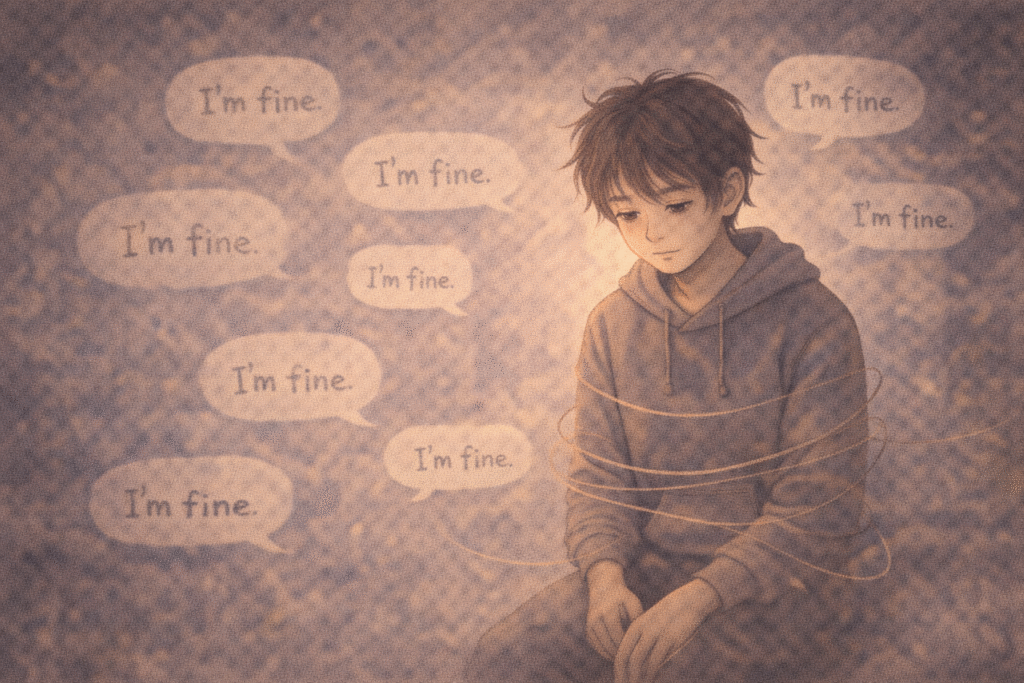
“I’m fine.” “I can do it.” “That’s only natural.”
There are people who say these words almost automatically.
They worry about making others uncomfortable.
They fear ruining the mood.
They hesitate to disappoint expectations.
So they place other people’s feelings ahead of their own—again and again.
At first, it looks like kindness.
Over time, it becomes exhaustion.
This quiet weariness has a name. We live in what might be called a society fatigued by kindness.

1. Why Does the “Nice Person” Complex Develop?
In psychology, this pattern is often described as Nice Person Syndrome or approval addiction.
People affected by it feel a strong urge to be liked, accepted, and seen as good. They avoid conflict, struggle to say no, and measure their self-worth through others’ reactions.
Common signs include:
- Constantly worrying about how others perceive you
- Agreeing even when you feel uncomfortable
- Offering help automatically, without checking your own limits
Over time, kindness stops being a genuine choice and turns into a survival strategy. Emotions are suppressed, needs are postponed, and fatigue quietly accumulates.
2. Emotional Labor Is Not Just a Workplace Issue
The term emotional labor originally referred to service workers who must regulate or perform emotions as part of their job.
Today, however, emotional labor extends far beyond the workplace.
It appears in everyday life:
- Smiling while feeling irritated
- Replying “I’m okay” when you are not
- Accepting unreasonable requests to avoid awkwardness
When these moments pile up, people begin wearing a permanent mask of emotional stability. Every interaction consumes emotional energy, even when no one notices.
3. When Kindness Becomes Exploited
Ironically, the kinder someone appears, the more demands tend to follow.
Helpful people are quickly labeled “reliable.”
Their efforts become expected, not appreciated.
Refusal—even once—invites disappointment.
In this structure, kindness is no longer voluntary. It becomes a resource that others draw from repeatedly.
As a result, many “nice” people lose touch with their own boundaries. Some grow numb. Others suppress frustration until it eventually erupts.
4. Kindness Should Be a Strategy, Not a Sacrifice
Does this mean we should stop being kind?
Not at all. But kindness must be regulated, not reflexive.
Healthy kindness includes:
- Practicing how to say “no” without guilt
- Expressing emotional limits honestly
- Prioritizing your own emotional state alongside others’
- Allowing firmness when situations require it
True kindness does not come from depletion. It comes from self-respect.
When kindness is a conscious choice rather than a compulsion, it becomes sustainable.

Conclusion: From “Good” to Sustainable
A fatigue-of-kindness society is one where considerate people burn out, while inconsiderate behavior often goes unchecked.
In such a world, the goal is not to be endlessly nice—but to be emotionally sustainable.
Smiling for others has value.
But standing firm for yourself matters just as much.
Genuine kindness grows best on the foundation of self-respect.
May your days be gentle—
without leaving you empty.
Related Reading
The exhaustion that follows moral expectation connects to broader reflections on social pressure discussed in The Praise-Driven Society: Recognition and Self-Worth in the Digital Age.
Similar emotional dynamics in daily life are also explored in How Social Media Amplifies Feelings of Lack and Comparison.
References
- Hochschild, A. R. (1983/2012). The Managed Heart: Commercialization of Human Feeling. University of California Press.
This foundational work introduces the concept of emotional labor, showing how managing feelings—especially in service roles—can lead to psychological exhaustion. It provides the sociological basis for understanding why “being nice” can function as unpaid labor. - Brown, B. (2010). The Gifts of Imperfection. Hazelden Publishing.
Brown explores how social expectations and perfectionism pressure individuals to perform goodness. The book emphasizes self-worth, boundaries, and authenticity as alternatives to approval-driven behavior. - Maslach, C., & Leiter, M. P. (1997). The Truth About Burnout. Jossey-Bass.
This research-driven work examines burnout as a structural and relational problem, not just an individual weakness. It explains why people with high responsibility and empathy are especially vulnerable to emotional exhaustion.