Tag: modern life

  • Why Do We Always Feel Busy? The Social Pressure of Time

    “I have no time.”

    “Today flew by.”

    “I didn’t even get a moment to rest this weekend.”

    Most of us say these things almost automatically.
    Yet, when we look closely, our schedules are not always as full as our exhaustion suggests.

    So a question arises:
    Why do we feel busy even when we are not doing that much?


    1. Time Is a Feeling: Psychological Time vs. Clock Time
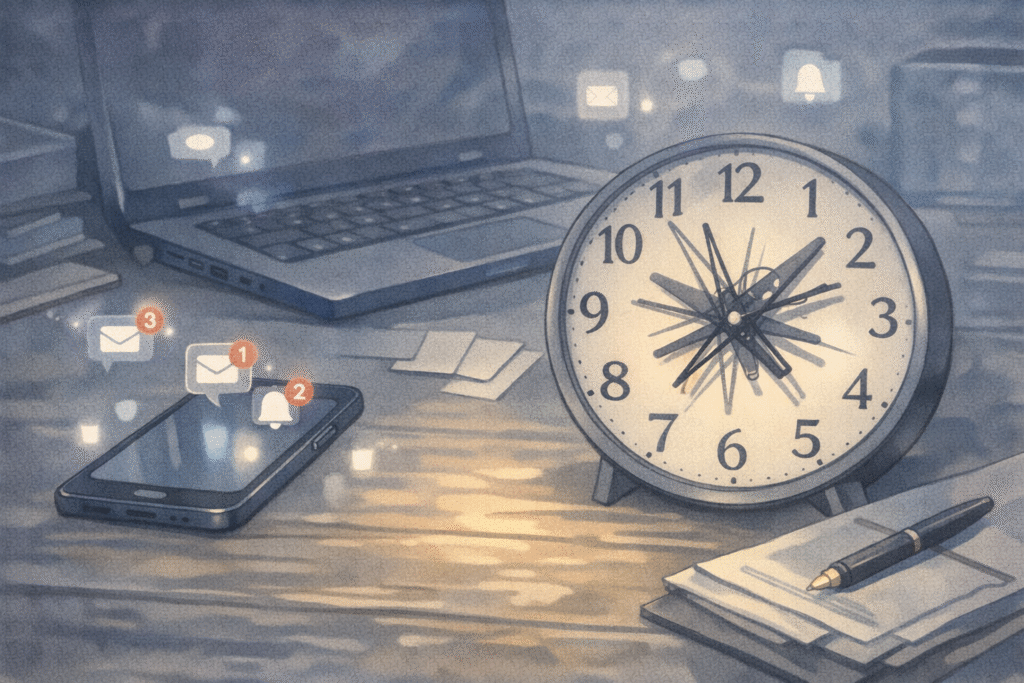
    Fragmented time and constant distractions in modern life

    1.1 The Difference Between Measured and Lived Time

    The time we experience is not the same as the time measured by clocks.
    Psychologists distinguish between physical time and perceived time.

    An hour spent watching a favorite movie can pass in an instant, while ten minutes of worrying about unfinished tasks can feel unbearably long.

    1.2 Why Modern Time Feels Fragmented

    Our sense of time is shaped by emotion, attention, and environment.
    Constant notifications, emails, messages, and social media alerts repeatedly interrupt our focus.

    Even without completing many tasks, our attention becomes fragmented.
    As a result, the day feels scattered, unproductive, and exhausting — leaving us with the impression that we were “busy” all along.


    2. Saying “I’m Busy” as Social Self-Defense

    2.1 Busyness as a Social Signal

    When asked, “How are you doing?”, many people instinctively answer, “I’m busy.”

    This response is not just a factual update.
    Psychologists describe it as a form of social self-presentation.

    Busyness as a social identity in everyday life

    2.2 When Busyness Equals Competence

    In competitive societies, busyness is often equated with usefulness and capability.
    To appear busy is to appear productive, valuable, and responsible.

    Conversely, appearing relaxed or unoccupied can feel risky — as if it signals laziness or irrelevance. Over time, we internalize this script and begin to believe we are busy even when we are not.


    3. More “Shoulds” Than Actual Tasks

    3.1 The Pressure to Always Be Doing Something

    We may not have many urgent tasks, but our minds are filled with things we feel we should be doing.

    Scrolling through social media can trigger thoughts like:
    “Everyone else is exercising.”
    “Everyone else is improving themselves.”
    “I should be doing more.”

    3.2 FOMO and Constant Mental Tension

    This pressure is closely linked to FOMO (Fear of Missing Out).
    Even without taking action, we remain mentally alert, comparing ourselves and anticipating future demands.

    The result is a constant state of tension — a feeling of being chased by time without actually moving.


    4. “Time Is Money”: Addiction to Efficiency

    4.1 When Every Moment Must Be Useful

    From an early age, many of us learn that time should never be wasted.
    This belief, rooted in industrial and capitalist values, turns time into a resource that must always generate value.

    Even rest is evaluated:
    “Is this productive rest?”
    “Is this helping me improve?”

    4.2 When Efficiency Becomes Exhausting

    An efficiency-centered view of time makes stillness uncomfortable.
    It keeps us asking, “Am I doing enough?” — a question that never truly ends.

    In this way, busyness becomes less about tasks and more about identity.


    Conclusion: Recovering Slowness
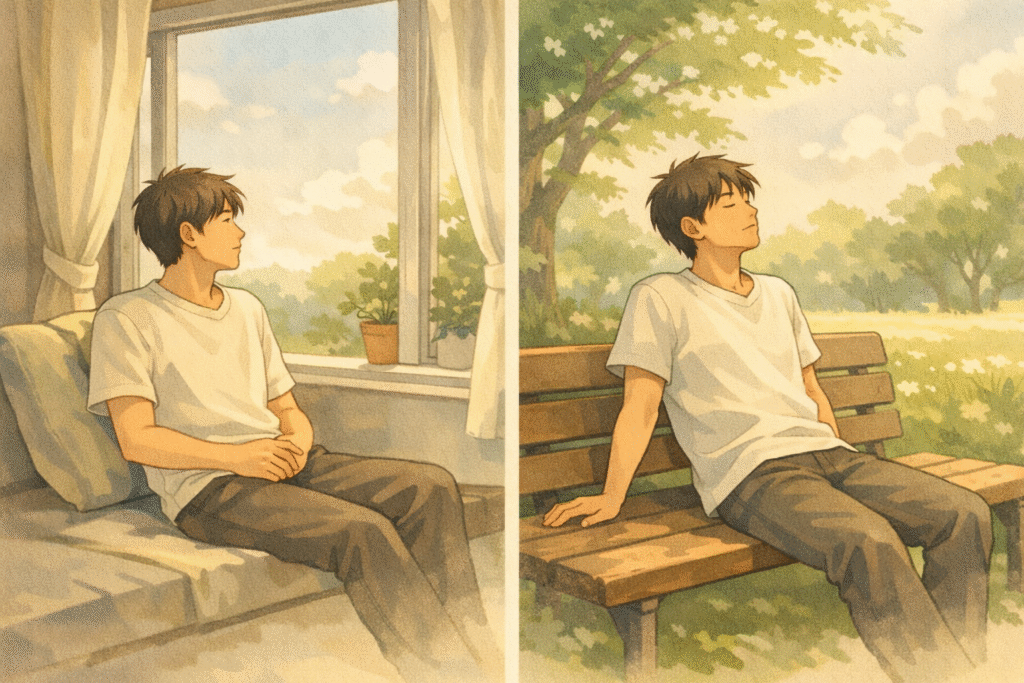
    Quiet moment of slowing down without productivity pressure

    Feeling busy is not simply a scheduling problem.
    It is a psychological state shaped by social expectations, time culture, and self-worth.

    The solution, therefore, is not only to reduce tasks, but to rethink how we relate to time.

    Allowing moments where nothing needs to be done.
    Accepting rest as a meaningful outcome.
    Remembering that moving slowly does not mean falling behind.

    These small shifts can loosen the grip of constant busyness.

    If you feel busy all the time, today, being slow is allowed.

    Related Reading

    The social construction of productivity is analyzed in Sleep: A Fundamental Human Right or a Tool for Productivity?Sleep: A Fundamental Human Right or a Tool for Productivity?, which challenges the moralization of efficiency.

    A structural perspective on modern comparison culture appears in How Social Media Amplifies Feelings of Lack and ComparisonHow Social Media Amplifies Feelings of Lack and Comparison, highlighting how digital environments intensify temporal anxiety.


    References

    1.Rosa, H. (2013). Social Acceleration: A New Theory of Modernity. New York: Columbia University Press.
    Rosa analyzes how modern societies experience constant acceleration, showing that feelings of time pressure are rooted in structural and cultural change rather than individual failure.

    2.Southerton, D. (2009). “Re-ordering Temporal Rhythms: Coordinating Daily Practices in the UK.” Time & Society, 18(1), 91–113.
    This study examines how social scheduling and fragmented daily rhythms contribute to chronic feelings of busyness and time scarcity.

    3.Wajcman, J. (2015). Pressed for Time: The Acceleration of Life in Digital Capitalism. Chicago: University of Chicago Press.
    Wajcman explores how digital technologies reshape attention and time perception, explaining why modern individuals feel increasingly busy despite technological convenience.

  • Solitude in the Digital Age: Recovery or a Deeper Loss?

    In the digital age, we are more connected than ever.
    Messages arrive instantly, notifications never stop, and silence has become rare.

    Yet paradoxically, many people report feeling more exhausted, distracted, and internally fragmented than before.
    This raises a deeper philosophical question:

    Is solitude being recovered in new forms, or are we losing it altogether?

    To approach this question, we revisit Arthur Schopenhauer’s reflections on solitude and examine how they resonate—or fail to resonate—within today’s hyper-connected society.


    1. Schopenhauer on Solitude and the Modern Question

    1.1 Solitude as Intellectual Freedom

    For Arthur Schopenhauer, solitude was not a form of social withdrawal but a deliberate act of intellectual autonomy.
    He believed that solitude allowed individuals to think independently, free from the pressures of public opinion and social conformity.

    In his view, constant immersion in society often diluted thought, while solitude enabled clarity, creativity, and philosophical depth.

    1.2 A Radically Changed Environment

    However, the 21st century presents a fundamentally different context.
    Digital platforms ensure that individuals are almost permanently connected, transforming social interaction into a continuous background condition.

    This leads us to a crucial question:
    Can Schopenhauerian solitude still exist in a world of constant connectivity?


    2. Hyper-Connectivity and the Erosion of Solitude

    An isolated individual surrounded by digital notifications in a hyperconnected world

    2.1 The Illusion of Belonging

    Social media, instant messaging, and streaming platforms offer a persistent sense of connection and belonging.
    Yet these connections are often shallow, fragmented, and rapidly replaceable.

    What appears as social intimacy may, in reality, be a sequence of fleeting interactions.

    2.2 Psychological Fatigue and the Loss of Inner Space

    Endless notifications and scrolling routines leave little room for introspection.
    Moments once reserved for reflection are now filled with external stimuli.

    As a result, solitude as a space for inner dialogue is replaced by reactive attention and surface-level engagement.

    2.3 The Commodification of Solitude

    Even solitude itself has become a marketable experience.
    “Healing playlists,” “solo exhibitions,” and “lonely cafés” package solitude as a consumable aesthetic.

    While comforting, such forms risk replacing genuine self-reflection with curated experiences.


    3. Reclaiming Solitude: New Possibilities

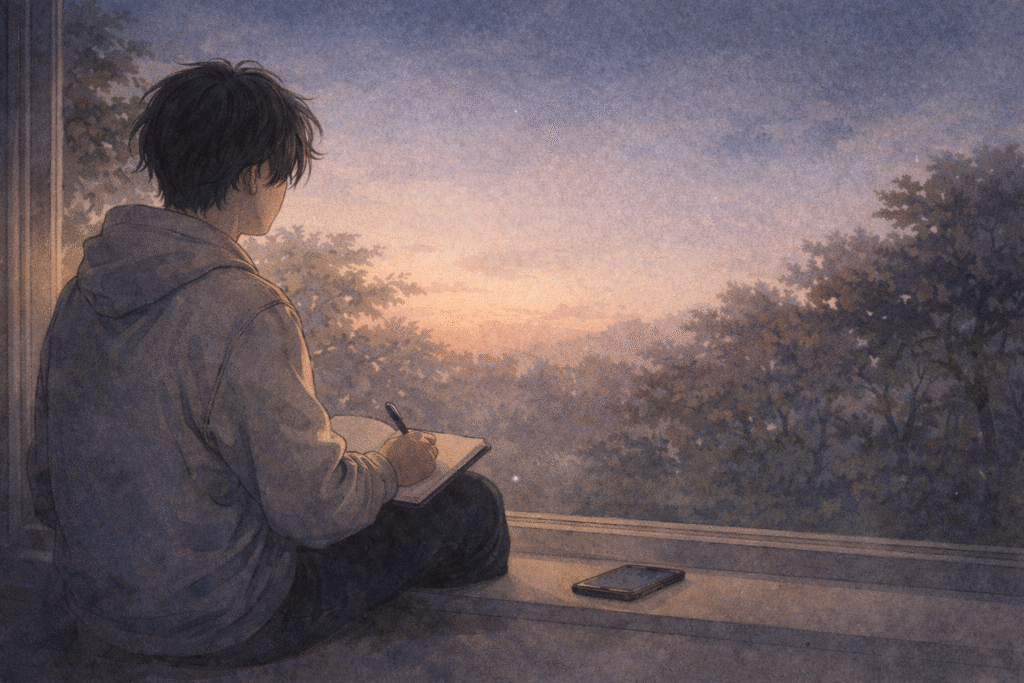
    A person practicing intentional solitude away from digital distractions

    Despite these challenges, the digital age does not necessarily eliminate solitude.
    Rather, it reshapes the conditions under which solitude can exist.

    3.1 The Practice of Selective Disconnection

    Turning off notifications, practicing digital detox, or intentionally limiting online engagement can restore moments of solitude.
    Here, technology becomes a tool rather than a master.

    3.2 Personalized Spaces for Reflection

    Digital journals, meditation apps, and private note-taking platforms can also support inward exploration.
    Modern solitude may involve not physical isolation, but deliberate inward orientation.

    3.3 Shared Solitude

    Interestingly, online communities dedicated to mindfulness, reflection, or quiet practices suggest a paradoxical form of solitude—
    one that is respected within loose forms of connection rather than absolute isolation.


    4. Freedom of Solitude vs. the Risk of Isolation

    4.1 Solitude as a Scarce Resource

    In an age of constant connectivity, solitude becomes rare—and therefore valuable.
    It enables creative thought, identity formation, and psychological recovery.

    Solitude, in this sense, is not an escape from society but a condition for meaningful participation within it.

    4.2 The Danger of Enforced Isolation

    However, solitude imposed rather than chosen carries serious risks.
    For elderly populations and digitally marginalized groups, enforced disconnection can lead to social isolation and declining well-being.

    The challenge, therefore, lies in distinguishing chosen solitude from structural exclusion.


    5. Redefining Solitude in the Digital Age

    5.1 Beyond “Being Alone”

    Modern solitude can no longer be defined simply as being physically alone.
    It must be understood as the freedom to regulate one’s relationship with connection and disconnection.

    5.2 A Contemporary Schopenhauerian Solitude

    Schopenhauer’s ideal remains relevant, but its form has changed.
    Today, solitude requires the ability to manage boundaries within an environment of constant digital presence.


    6. Reclaiming Solitude: A Small Reflective Action

    Solitude does not require abandoning technology altogether.
    Instead, it can begin with a minimal, intentional pause.

    Today’s small action:

    • Choose one 15-minute window with no digital input.
      No phone, no music, no reading. Simply sit, walk, or think.

    Afterward, ask yourself:

    Was this moment of emptiness uncomfortable—or quietly restoring?

    This is not a productivity exercise.
    It is an experiment in reclaiming inner space within a connected world.

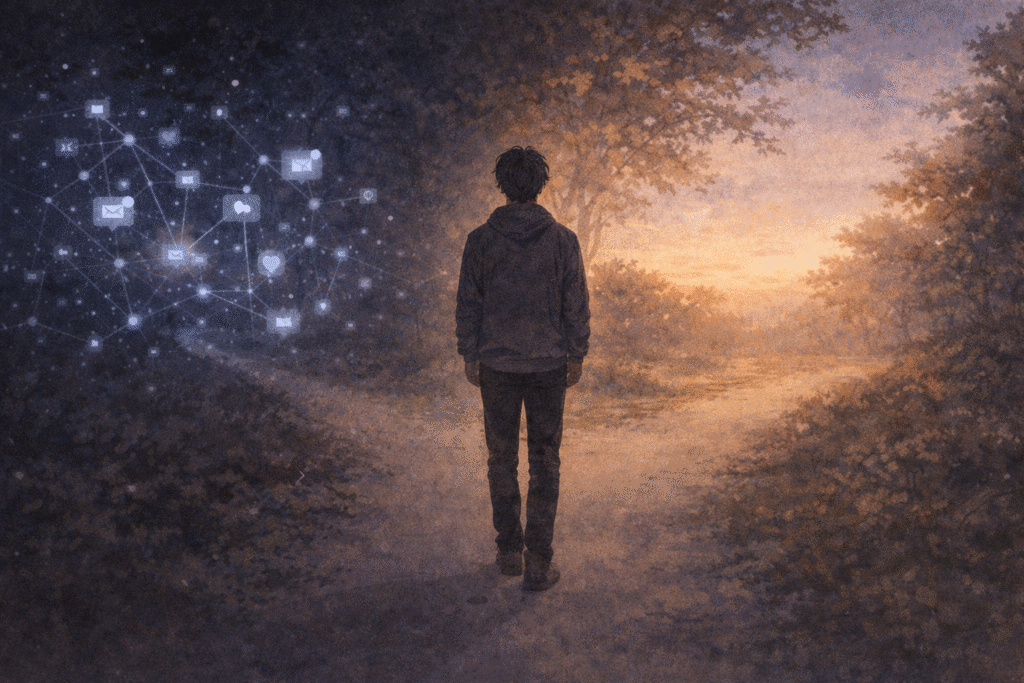
    A figure standing between connection and solitude, symbolizing conscious choice

    Conclusion: Solitude as an Active Choice

    In the digital age, solitude is no longer a passive absence of others.
    It has become an active and intentional resource that must be consciously reclaimed.

    The essential question therefore shifts:

    Are we losing solitude—or are we learning how to recover it differently?

    The answer depends on how deliberately we navigate the balance between connection and withdrawal in our everyday lives.

    Related Reading

    This modern solitude recalls an older philosophical question about withdrawal and wisdom, explored further in The Solitude of the Wise: Withdrawal from the Masses or Intellectual Elitism?

    The emotional mechanisms behind digital loneliness are also examined in everyday contexts in How Social Media Amplifies Feelings of Lack and Comparison.

    Related Reading

    The emotional texture of chosen solitude is quietly portrayed in Familiar Solitude — The Quiet Comfort of Being Alone, where aloneness becomes a space for reflection rather than absence.

    The technological reshaping of intimacy is further explored in Living with Virtual Beings: Companionship, Comfort, or Replacement?, examining whether digital companionship deepens or replaces human connection.

    References

    1. Schopenhauer, A. (1851/2004). Parerga and Paralipomena (E. F. J. Payne, Trans.). Oxford University Press.
    → This work presents Schopenhauer’s direct reflections on solitude as a form of intellectual independence. It offers a philosophical foundation for understanding solitude not as social withdrawal, but as a condition for autonomous thought and self-reflection.

    2. Turkle, S. (2011). Alone Together: Why We Expect More from Technology and Less from Each Other. Basic Books.
    → Turkle critically examines how digital connectivity paradoxically deepens loneliness and emotional fragmentation. The book is central to understanding solitude’s transformation in the age of constant technological presence.

    3. Cacioppo, J. T., & Patrick, W. (2008). Loneliness: Human Nature and the Need for Social Connection. W. W. Norton.
    → Drawing on neuroscience and psychology, this work analyzes how the absence or distortion of social connection affects the human brain and emotional well-being, providing empirical grounding for discussions of modern solitude.

    4. Bauman, Z. (2003). Liquid Love: On the Frailty of Human Bonds. Polity Press.
    → Bauman explores the instability and superficiality of relationships in late modern societies, helping to explain how hyper-connectivity weakens emotional depth and reflective solitude.

    5. Carr, N. (2010). The Shallows: What the Internet Is Doing to Our Brains. W. W. Norton.
    → Carr investigates how digital environments reshape attention, cognition, and sustained thinking, highlighting structural obstacles to deep reflection and solitude in the internet age.