1. Schopenhauer on Solitude: A Privilege of the Wise
1.1 Solitude as a Chosen State of Wisdom
Arthur Schopenhauer regarded solitude as one of the noblest conditions of human life.
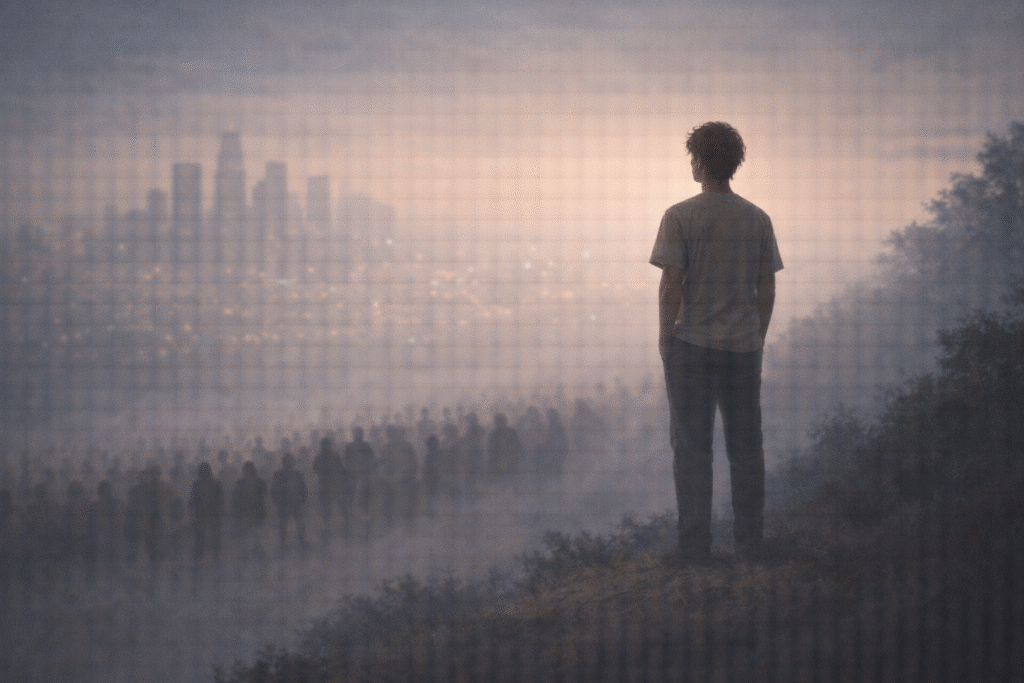
In his view, while the majority live amid noise, crowds, and superficial desires, the truly wise retreat into solitude in order to immerse themselves in thought and self-reflection.
Here, solitude is not mere social isolation.
It is a conscious and autonomous choice—a state reserved for those capable of intellectual depth and inner independence.
For Schopenhauer, solitude was a mental privilege available only to the wise.
1.2 Growth of the Great Mind
Schopenhauer famously claimed that great minds grow in solitude.
By distancing themselves from the values and distractions of the masses, the wise can pursue truth through inner contemplation.
In this sense, solitude is presented as a necessary condition for philosophical and intellectual achievement.
2. Solitude and the Masses: A Point of Tension
2.1 Distance from Society
When solitude is framed as a privilege of the wise, it can easily be interpreted as deliberate distance from the masses.
Yet social relationships are fundamental to human life.
Shared values, collective experiences, and communal bonds enrich individual existence.
An excessive glorification of solitude risks turning into social withdrawal—or even an elitist posture.
2.2 The Wise versus the Many
Schopenhauer’s distinction implicitly ranks individuals according to intellectual capacity.
If only the wise are capable of solitude, the majority may be dismissed as mere “noise.”
Such a hierarchy risks devaluing social interaction and undermining the worth of communal life.
2.3 The Need for Community
As Aristotle famously described humans as political animals, meaning-seeking creatures who thrive in relationships, an exclusive emphasis on solitude may ignore a fundamental dimension of human nature.

3. Critiques of Elitism
Schopenhauer’s solitude has therefore been criticized on several grounds.
3.1 Justifying Social Inequality
Claiming solitude as a privilege of the wise can appear to legitimize social exclusion, particularly for those lacking educational or cultural resources.
3.2 Avoidance of Moral Responsibility
Retreating into solitude may also be seen as evading responsibility toward social injustice and collective suffering.
3.3 Intellectual Authoritarianism
Idealizing solitude risks reinforcing the idea that only intellectual elites have access to truth, reflection, and moral insight.
4. The Positive Value of Solitude
Despite these criticisms, solitude itself cannot be dismissed.
Modern psychology suggests that periods of solitude can foster creativity, emotional stability, and self-reflection.
4.1 Creativity and Intellectual Achievement
Many of history’s great achievements—across philosophy, science, and literature—emerged from solitary reflection.
Figures such as Shakespeare, Newton, and Gandhi demonstrate the generative power of solitude.
4.2 Formation of Identity
Solitude allows individuals to step outside social comparison and confront their inner selves, contributing to a mature sense of identity.
4.3 Inner Freedom
Freedom from social judgment enables deeper moral reflection and personal growth.
5. Reconciling Solitude and Social Solidarity
The core problem lies in treating solitude and social engagement as opposites.
5.1 From Solitude to Social Contribution
Reflection in solitude can prepare individuals for meaningful social participation.
Many public intellectuals and artists translate solitary thought into social critique and responsibility.
5.2 From Society Back to Solitude
Conversely, experiences within society—conflict, failure, injustice—often demand solitary reflection to be understood and transformed into wisdom.
True wisdom, then, lies not in withdrawal but in balance.
Conclusion: Is Solitude a Privilege or a Responsibility?
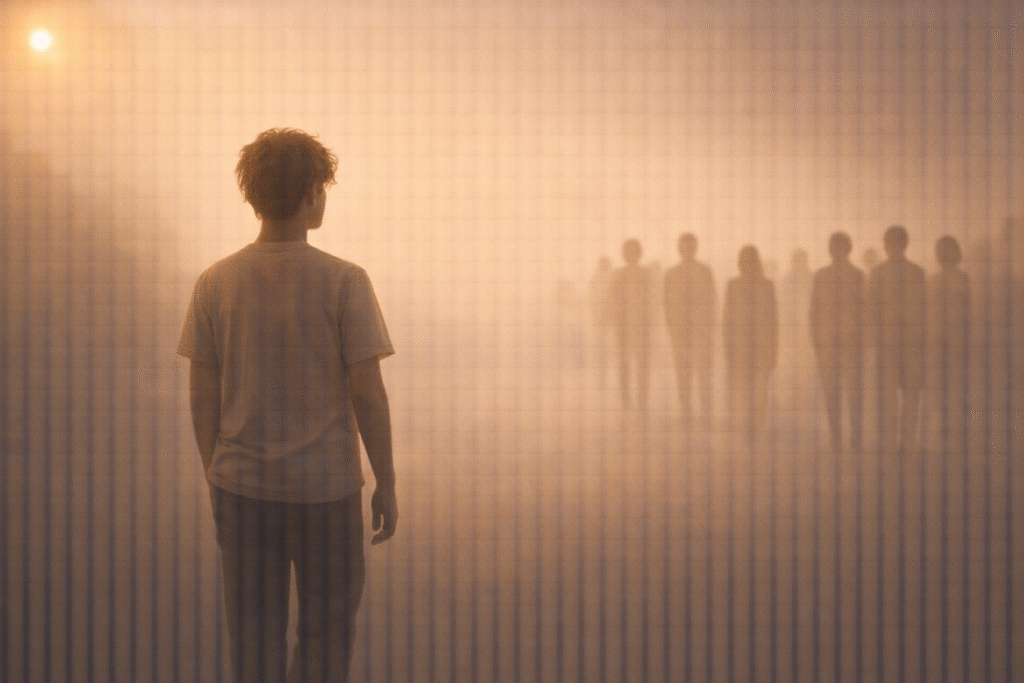
Schopenhauer’s solitude may appear as an exclusive privilege of the wise.
Yet it need not collapse into elitism.
Solitude can be understood as a space of preparation—
a freedom for reflection that ultimately enables deeper engagement with society.
Thus, the question may be reframed:
Is solitude not a withdrawal from the masses, but a precondition for a more responsible return to the community?
The value of solitude is fully realized only when it reconnects with social solidarity.
References
1. Schopenhauer, A. (1851/2004). Parerga and Paralipomena (E. F. J. Payne, Trans.). Oxford University Press.
→ A foundational text for understanding Schopenhauer’s view of solitude as an intellectual and moral condition.
2.Nietzsche, F. (1878/2006). Human, All Too Human. Cambridge University Press.
→ Reinterprets solitude as a space for creative transformation, while critically engaging with Schopenhauer’s legacy.
3.Weiss, R. S. (1973). Loneliness: The Experience of Emotional and Social Isolation. MIT Press.
→ Distinguishes reflective solitude from pathological loneliness through a social-psychological lens.
4.Putnam, R. D. (2000). Bowling Alone: The Collapse and Revival of American Community. Simon & Schuster.
→ Explores the societal consequences of isolation and the erosion of communal life.
5.Cacioppo, J. T., & Patrick, W. (2008). Loneliness: Human Nature and the Need for Social Connection. W. W. Norton.
→ Examines the dual nature of solitude, highlighting both its cognitive benefits and psychological risks.