Where Is the Boundary Between Objectivity and Relativism?
Truth seems like one of the simplest concepts in human life. We expect facts to be accurate, evidence to be reliable, and reality to exist independently of our personal beliefs. Yet history repeatedly shows that what societies once accepted as “truth” has often changed over time.
In today’s digital world, the question has become even more complicated. Scientific discoveries, political polarization, social media algorithms, and artificial intelligence all influence how information is created, shared, and interpreted. As a result, many people no longer ask only “What is true?” but also “Who decides what counts as truth?”
The debate is no longer confined to philosophy classrooms. It now shapes public health, democracy, journalism, education, and everyday decision-making.
1. Objective Truth: Does It Exist?
Facts Beyond Personal Belief
The traditional understanding of truth assumes that certain facts remain true regardless of individual opinion.
Scientific knowledge often illustrates this idea. The Earth orbits the Sun whether or not someone believes it. Water freezes under specific conditions regardless of cultural background. Mathematical principles remain consistent across languages and civilizations.
These examples suggest that objective reality exists independently of human perception.
The Limits of Human Knowledge
However, history reminds us that our understanding of reality evolves.
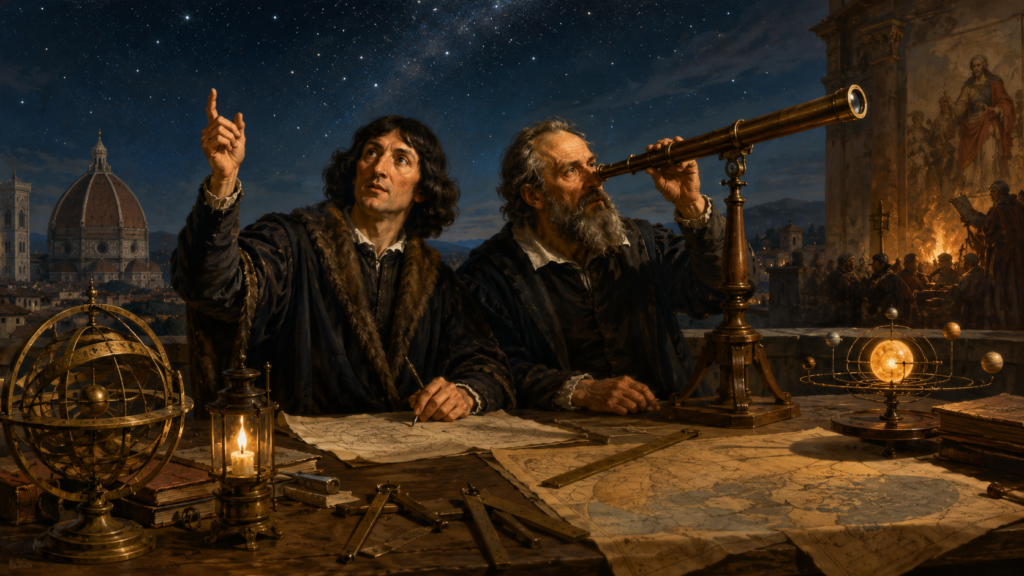
For centuries, many Europeans believed that Earth was the center of the universe. Only after the work of Copernicus, Galileo, and Kepler did the heliocentric model gradually replace the earlier worldview.
This does not necessarily mean that truth itself changed. Rather, human understanding of truth became more accurate as better evidence emerged.
2. Relativism and the Rise of Multiple Truths
The Postmodern Perspective
Postmodern thinkers argue that many forms of truth depend on language, culture, historical context, and personal experience.
Historical events, works of art, or political movements may be interpreted differently by different societies. A national hero in one country may be remembered very differently elsewhere.
From this perspective, some truths are not simply discovered—they are interpreted.
Social Media and Personalized Reality
Digital technology has amplified this phenomenon.
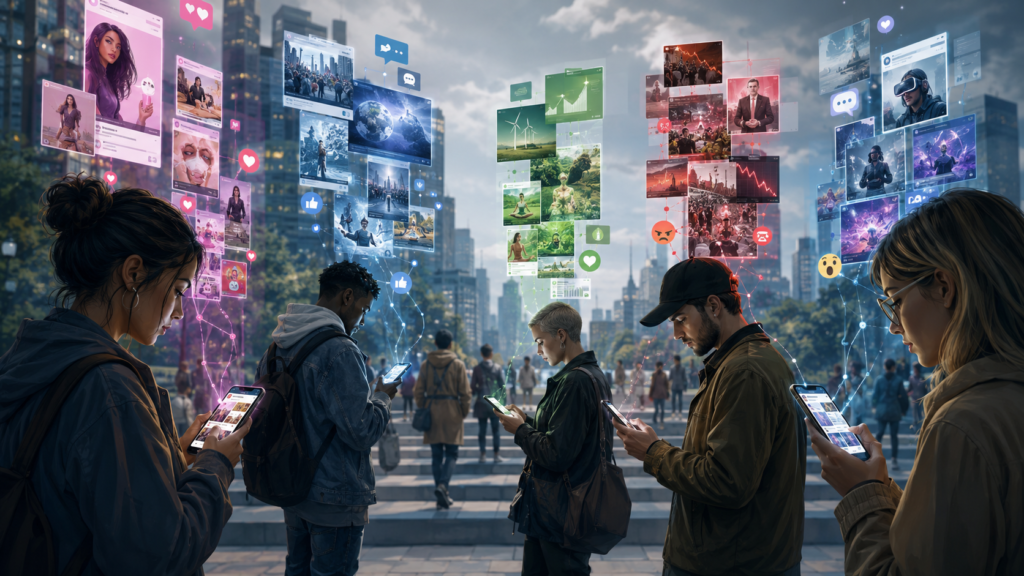
Recommendation algorithms often present information that reinforces existing beliefs. Over time, people may inhabit entirely different information environments despite living in the same society.
This creates what some researchers call “personalized realities,” where individuals encounter very different versions of the same event.
3. Scientific Evidence and Public Trust
Facts Alone Are Not Always Enough
Scientific consensus depends on evidence, experimentation, and continuous review.
Yet public acceptance depends equally on trust.
Climate change provides a clear example. Although the overwhelming majority of climate scientists agree that human activity contributes significantly to global warming, public opinion varies considerably across countries and political groups.
The debate often reflects differences in trust toward institutions rather than differences in scientific evidence.
When Misinformation Spreads Faster Than Facts
The digital age has made false information easier to create and distribute.
Deepfakes, manipulated images, fabricated quotations, and AI-generated content can appear highly convincing.
Consequently, critical thinking and media literacy have become essential skills for distinguishing credible information from misinformation.
4. Can Artificial Intelligence Recognize Truth?
AI as a Powerful but Imperfect Tool
Generative AI systems can summarize information, answer questions, and create persuasive content within seconds.
However, AI does not independently verify reality. Instead, it predicts likely responses based on patterns found in its training data.
This means AI may confidently produce inaccurate or misleading information when reliable evidence is unavailable or conflicting.
Human Judgment Still Matters
As AI becomes increasingly integrated into education, journalism, and research, human oversight remains essential.
Technology can assist our search for truth, but it cannot replace careful reasoning, ethical responsibility, and evidence-based evaluation.
5. Living With Uncertainty
Seeking Truth Without Absolute Certainty
Perhaps the greatest lesson is that the pursuit of truth requires both confidence and humility.
Scientific inquiry encourages us to follow evidence wherever it leads while remaining willing to revise conclusions when better evidence appears.
Likewise, democratic societies depend on open dialogue, respectful disagreement, and shared standards of evidence rather than unquestioned certainty.
Conclusion

The nature of truth lies at the intersection of objective evidence, human interpretation, and social trust.
Some truths describe the physical world with remarkable consistency. Others involve values, historical interpretation, or cultural meaning, where multiple perspectives naturally coexist.
Rather than choosing between absolute objectivity and complete relativism, modern societies may need to cultivate something more valuable: the ability to evaluate evidence critically while remaining open to new understanding.
In an age shaped by artificial intelligence, social media, and rapidly expanding information, perhaps the greatest challenge is not simply finding the truth—but learning how to recognize it responsibly.
Reader Question
Can any society function without a shared understanding of truth, or is disagreement about reality an unavoidable part of human life?
As artificial intelligence and social media continue shaping how information is created and consumed, what responsibilities do individuals have in verifying what they choose to believe?
Related Reading
If scientific knowledge continues to evolve through new discoveries and changing evidence, can any scientific conclusion ever be considered permanently true?
In Is Scientific Truth Ever Absolute?, we examine how scientific progress continually refines our understanding of reality while balancing certainty with healthy skepticism.
If history can be interpreted differently by different cultures, generations, or political perspectives, does a single historical truth truly exist?
In Is There a Single Historical Truth, or Many Narratives?, we explore how evidence, memory, and interpretation shape competing understandings of the past without abandoning the search for historical accuracy.