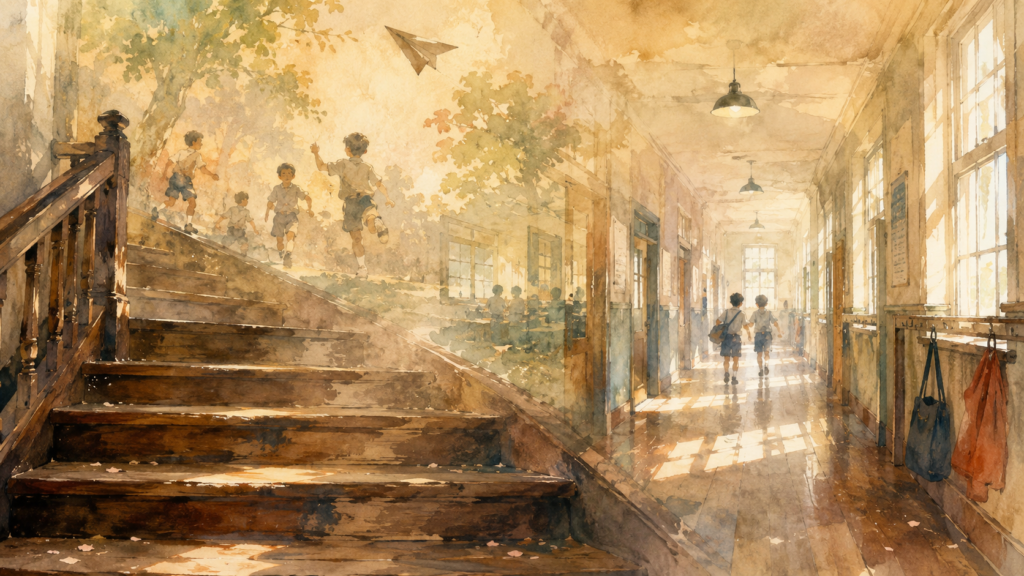
Sometimes, we keep objects not because they guide our steps, but because they remind us where our heart once wanted to go.
There is a small object I took out of a drawer after many years.
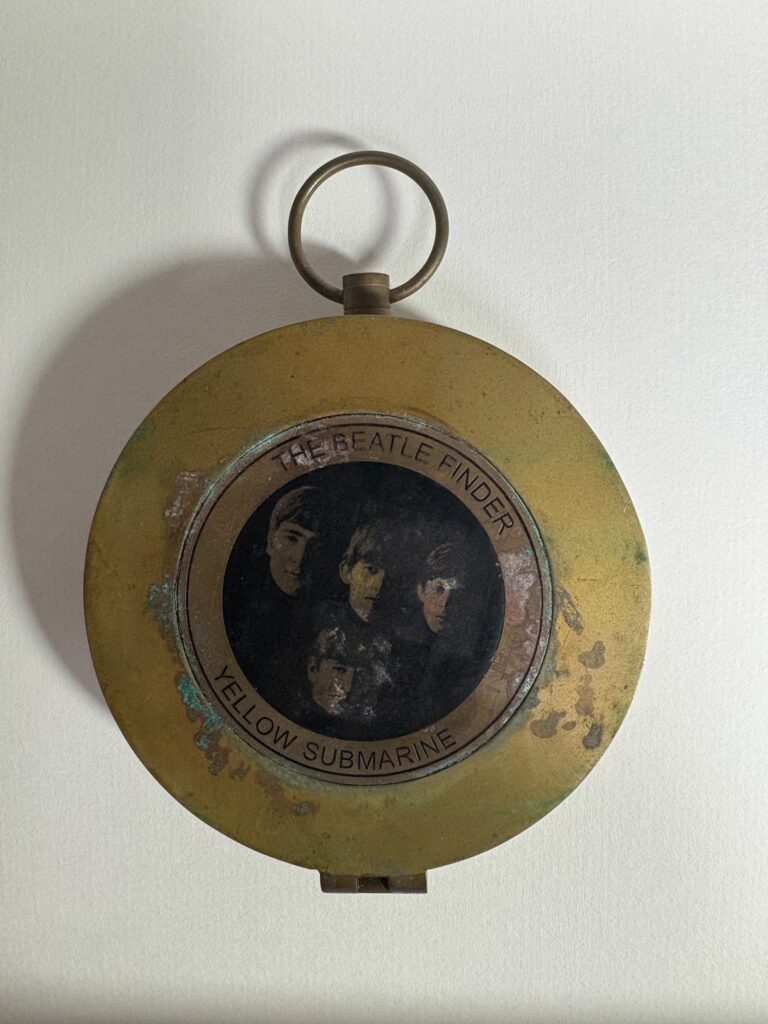
A round brass case, a worn metal loop at the top, and at its center—faded faces of a band.
The Beatle Finder.
And just beneath it, a small engraving:
“Yellow Submarine.”
More than thirty years ago, I found this compass somewhere— perhaps at a flea market, or a small souvenir shop during a trip.
The memory is blurred, but the feeling of holding it for the first time remains.
At the time, I simply loved the music.
The Beatles— their lightness, their sincerity, their way of not taking the world too seriously, yet somehow being deeply genuine.
“Yellow Submarine” was never just a cheerful song.
To me, it was a quiet metaphor for escape, a way to imagine another world beneath the surface of everyday life.
This compass sat at the center of that feeling.
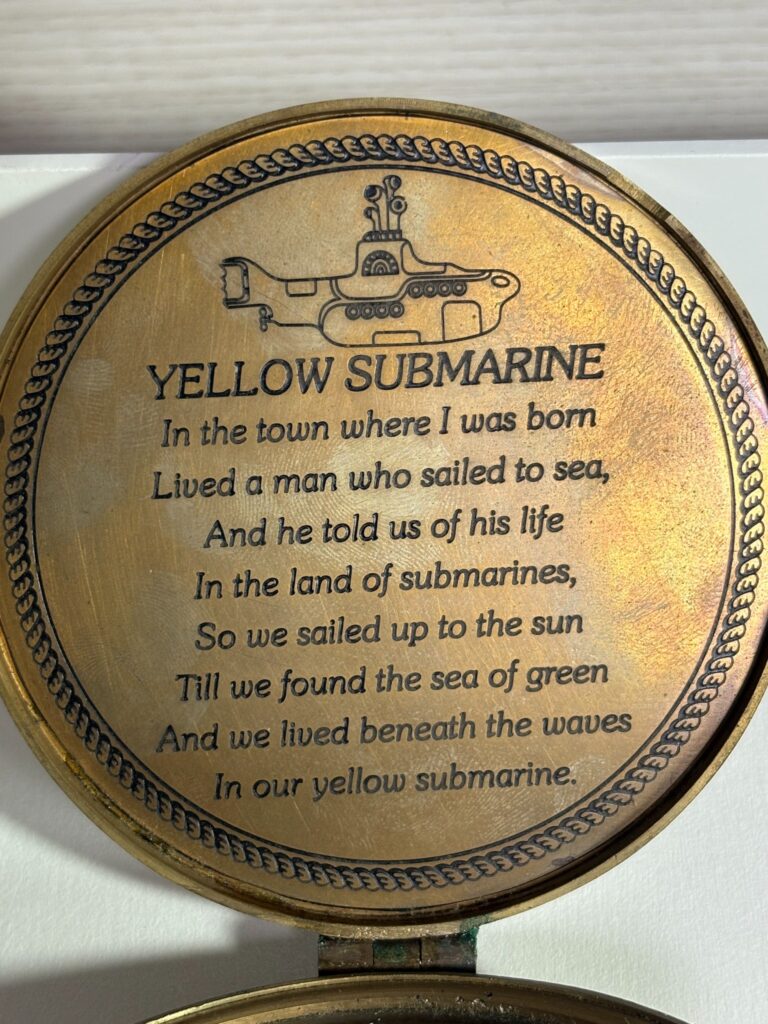
When I open it, inside the lid, the lyrics are engraved:
“In the town where I was born Lived a man who sailed to sea…”
I remember the first time I read those words.
It felt like a quiet realization:
Perhaps everyone carries a small submarine within.
A hidden space that no one else can see, where we can travel at our own pace.
A private world made of music, imagination, and memory.
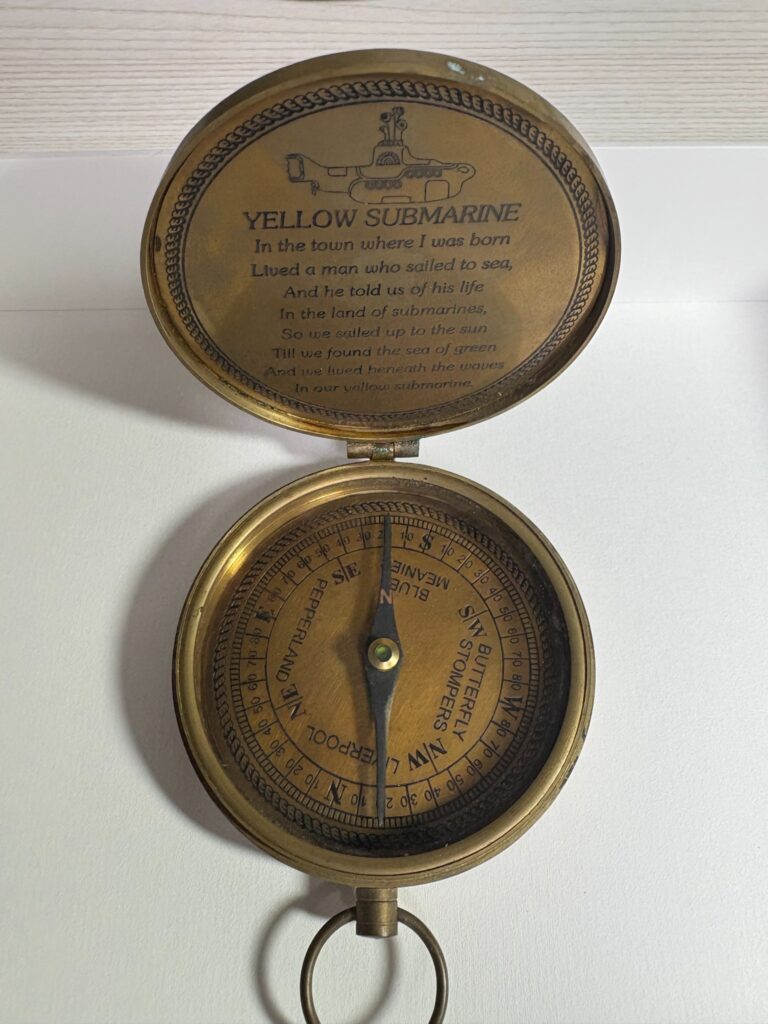
This compass does point north.
But I have never used it to find a physical direction.
Instead, I have used it to find something else.
There were moments in life when I felt lost— unsure of what to do, or where to go.
On those days, I would quietly open this compass and simply watch the needle.
And somehow, I didn’t feel the need to rush toward a destination.
Instead, I felt this:
There are places you don’t have to go. There are worlds you can simply stay within.
Over time, the songs moved further down old playlists.
The idea of sailing away in a yellow submarine became less frequent.
But this small compass still rests on the corner of my desk.
Not as a tool for navigation, but as a quiet reminder:
That I am still capable of imagining, still capable of dreaming.
Sometimes, I open it again and whisper to myself:
“And we lived beneath the waves… In our yellow submarine.”
Reader Question
Is there something you’ve kept—not for its use, but for the meaning it holds in your life?
Related Reading
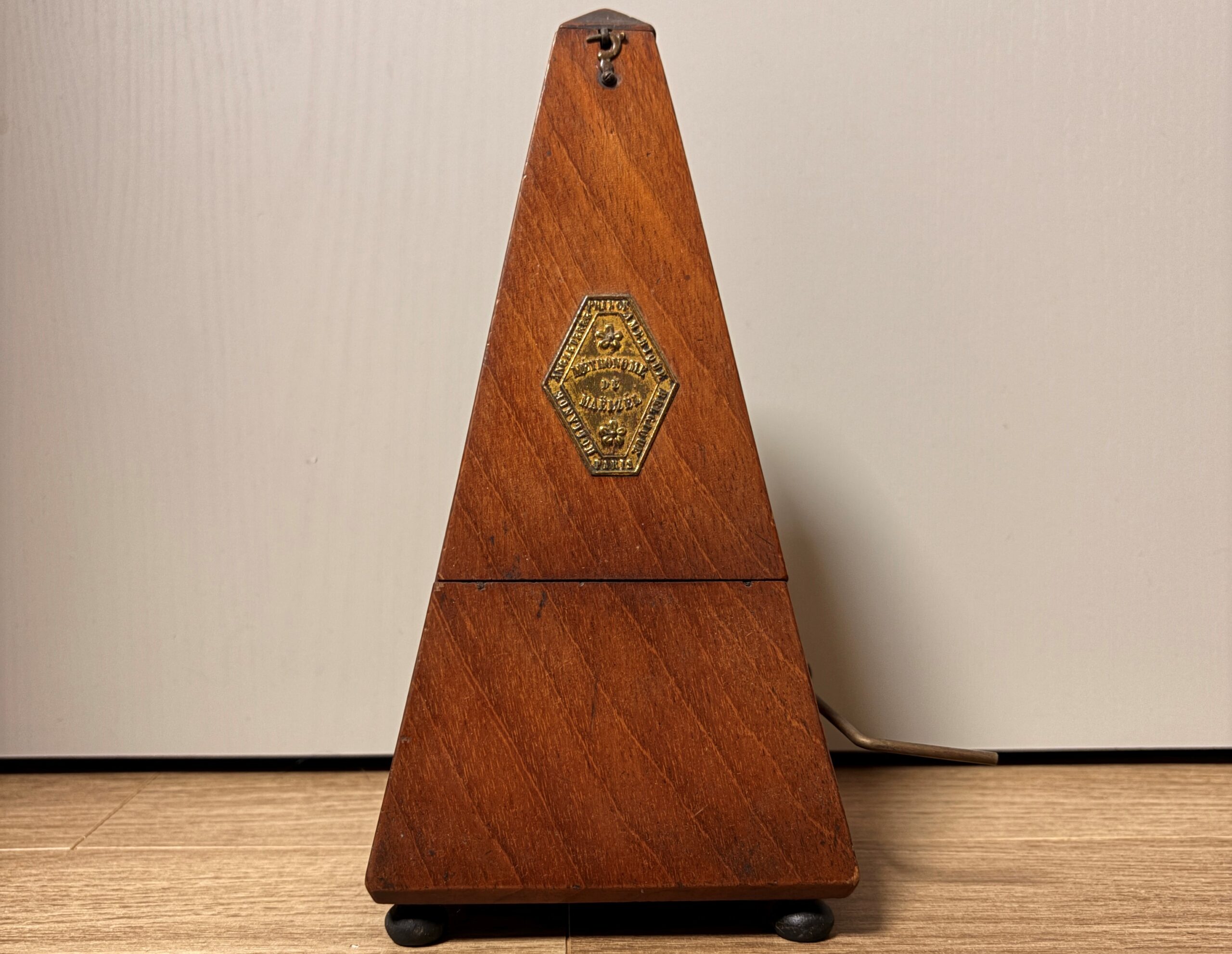
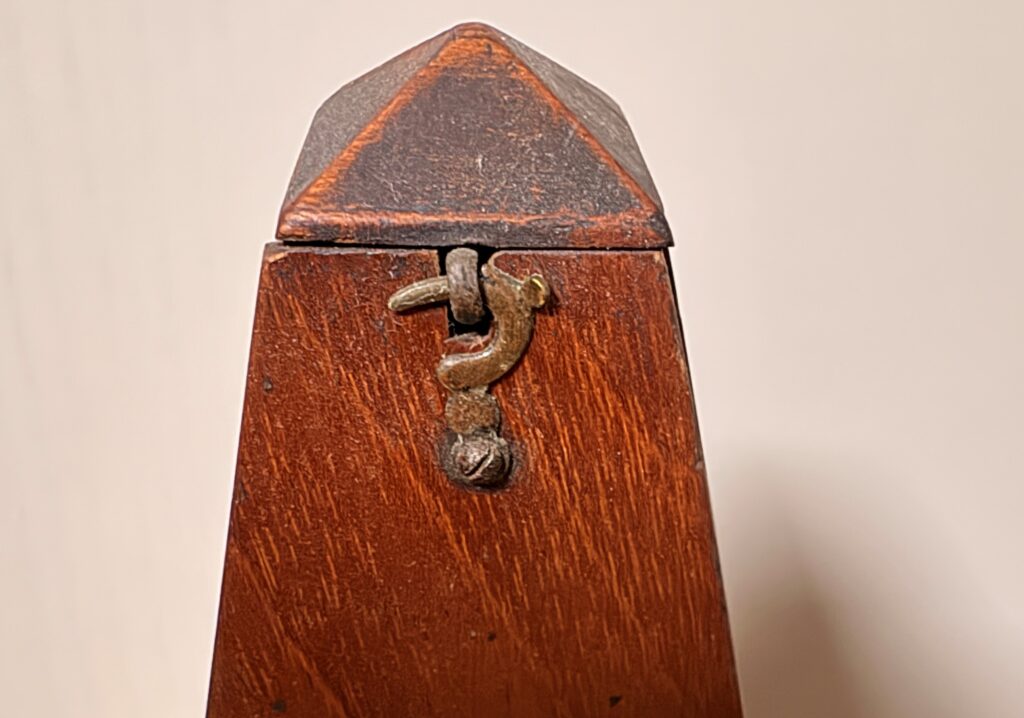
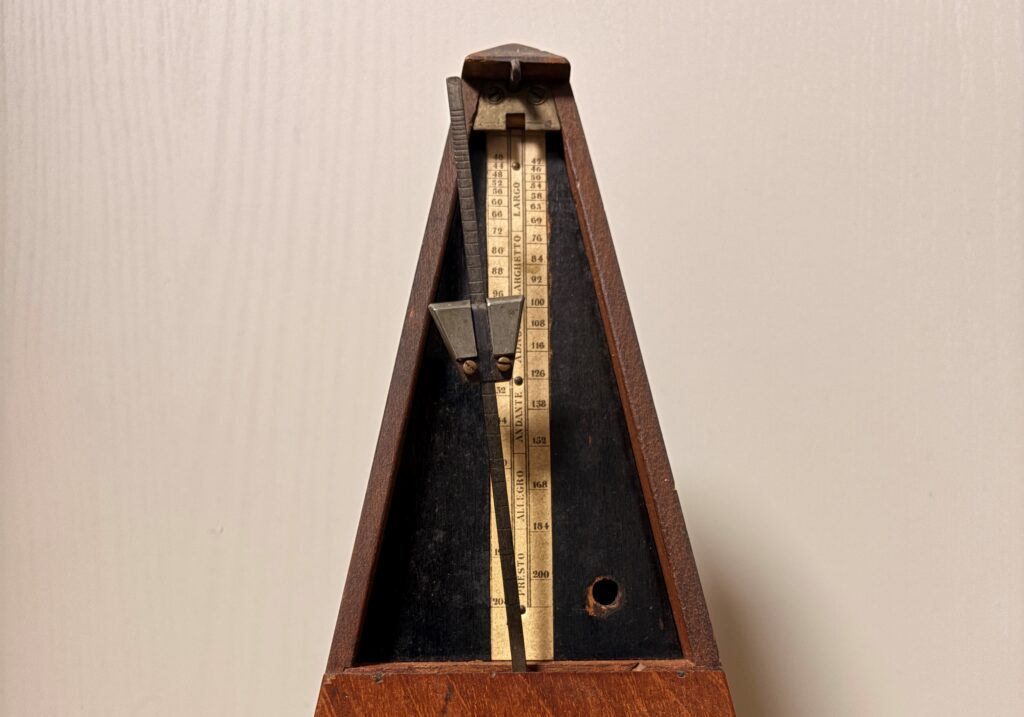
The idea of finding direction beyond physical navigation is reflected in The Rhythm of Wood, The Tempo of My Mind, where a simple metronome becomes a quiet guide to balance and inner timing.
One afternoon, I decided it was time for a long-overdue deep cleaning.
Unfinished books were stacked on the desk. Clothes from different seasons were tangled together in the closet. As I sorted through these small messes, a quiet thought surfaced:
Perhaps my mind has become much the same.
I opened the window to let fresh air in. Soft sunlight filled the room, and something inside felt lighter. That was when I realized that cleaning is not only about space— it is also about letting air move through the mind.
A Small Moment of Humor
“Even the mind needs cleaning,” someone once joked. “Then what is the dust?” “Perhaps,” came the answer, “unattended emotions.”
Insight – The Rooms We Carry Inside
Inside each of us are many rooms.
A room of joy. A room of sorrow. A room of regret we hesitate to enter.
We often live with these doors closed. Yet emotions left untouched do not disappear. They quietly accumulate, making the inner air heavy.
To organize the mind is not to erase feelings, but to become honest with oneself.
When an old wound is gently brought into the light, it transforms—from a burden into understanding.
The essence of inner organization is not to discard emotions, but to find the courage to revisit them with honesty.
Today’s Practice – Creating an Emotional Storage Map
Take a sheet of paper and name the rooms of your inner house.
For example: The Room of Joy The Room of Regret The Room of Gratitude
Write down, in a single line, what each room contains. Then choose one room to tend to today.
When emotions are given structure, what once felt overwhelming begins to take shape.
A Small Act of Courage
Later that afternoon, with a warm cup of tea nearby, I opened a page labeled The Room of Regret.
Slowly, I wrote what I had long postponed: “Why wasn’t I kinder then?”
Tears welled up—not from regret, but from understanding. When the page was complete, the weight inside had eased.
“This room,” I thought, “can finally breathe.”
Quote of the Day
“The unexamined life is not worth living.” — Socrates
Closing Reflection – Letting Light In
Organizing the inner house is not about removing emotions. It is about returning them to their rightful place.
As scattered thoughts are gently arranged, new feelings find space to enter.
Everyone carries at least one room that remains unorganized. Today, consider opening its door— and letting in a line of sunlight and a breath of air.
A Thought from Psychology
Psychologist D. W. Winnicott emphasized that reconnecting with the True Self begins by recognizing one’s inner emotional space.
This process is not about meeting external expectations, but about noticing what is genuinely felt within.
To care for the rooms of the mind is to begin finding one’s way back to the self.
One-Sentence Takeaway
“Caring for the inner house is the quietest way of loving who you are today.”
Reader Question
If your mind were a house, which room would you choose to open today—and why?
Perhaps it is a room of gratitude, regret, hope, or quiet healing. Share your thoughts in the comments. Your reflection may encourage someone else to begin caring for their own inner house.
Related Reading
A peaceful inner life begins with accepting yourself, even on difficult days. Small Self-Esteem explores how quiet self-trust grows through everyday moments of patience, compassion, and gentle resilience.
Many people hide their true emotions behind constant kindness and the desire to please others. The Fatigue of Kindnessexamines how emotional boundaries help us reconnect with our authentic selves instead of losing ourselves in others’ expectations.
How psychological time expands, contracts, and gives meaning to our lives.
Some days seem to disappear before we can fully notice them.
Others linger in our minds with surprising weight, stretching far beyond the limits of the clock.
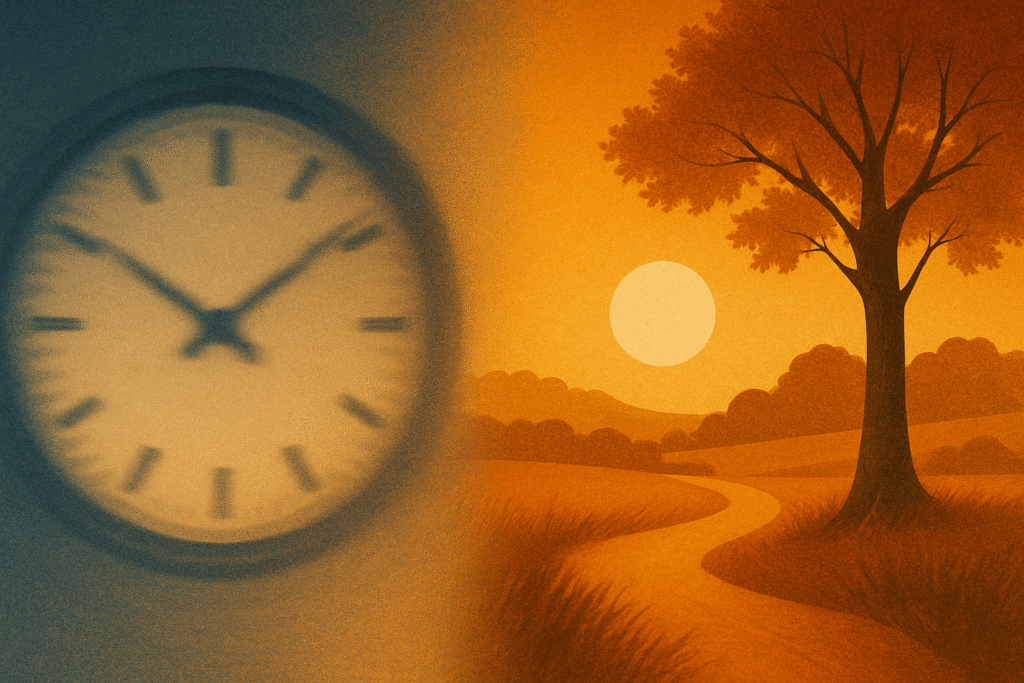
Perhaps time is not only something we measure— but something we emotionally experience.
1.Two Kinds of Time: Measured vs. Experienced
We often say, “Today felt so long” or “This week went by in a flash.” Interestingly, these statements have nothing to do with physical time. Physics tells us that time flows at a constant rate—24 hours a day, without exception.
Yet human beings do not live inside clocks. We live inside perceived time, or what psychologist Daniel Zakay called “experienced time.”
Zakay distinguishes between:
Measured time — the objective ticking of the clock
Experienced time — the subjective feeling of duration shaped by attention, emotion, and memory
The gap between these two creates what we might call the texture of time. This texture is not a mere feeling—it emerges from the brain’s information-processing, emotional state, and social environment.
In other words:
The quality of our time mirrors the quality of our perception.
2. When Time Slows Down
Some moments stretch endlessly: waiting for exam results, entering a new environment, or standing in an unfamiliar place. Slow time appears in three main situations:
Novelty — a world rich in unfamiliar details
The brain works harder to process new information, which creates the sensation of longer time. A first-time trip feels longer than a daily commute because novelty increases mental recording.
Anxiety and hyper-awareness
Before an interview, during turbulence on a plane, or in moments of threat, the mind becomes highly alert. This heightened attention makes even seconds feel elongated.
Waiting — the pressure of the expected future
Waiting is not an empty pause. It is a psychological space where expectation and uncertainty weigh on the present. This emotional tension stretches time.
In slow time, the brain is collecting more data—hence the long, heavy texture.
3. When Time Speeds Up
Other times, a whole day slips through our fingers before we notice.
Flow — when the self momentarily disappears
In deep concentration, the brain’s time-tracking function weakens. Artists, athletes, and writers often describe the sensation of timelessness during full absorption.
Routine — the unrecorded hours
Repetition and familiarity reduce memory formation. When the brain doesn’t “save” the moment, the duration feels shorter.
This explains why:
Children experience long, expansive time (full of new stimuli)
Adults feel time accelerating with age (reduced novelty = reduced memory density)
Fast time is not a sign of aging itself—it is a sign of decreased newness.
4. Time Is a Social Experience
Time is not only psychological—it is also social. Sociologist Norbert Elias argued that time is a symbolic tool societies use to coordinate life.
Modern society demands speed
Efficiency has become a virtue, and the pressure to be fast creates a culture of urgency. This accelerates our inner tempo.
The smartphone era fragments our time
Notifications, updates, and alerts constantly break our attention. Our day becomes a series of small interruptions—fast, jagged, and thin.
The best days aren’t the busiest—they are the densest
A day feels meaningful not because it was filled with tasks, but because it contained a memorable moment.
The value of time is measured not in quantity, but in density.
5. How to Change the Texture of Your Time
We cannot control time’s speed, but we can change how we experience it.
Create memorable moments — the art of novelty
Try a new café, walk a different street, listen to unfamiliar music. Small variations build richer memories.
Practice intentional pauses — the art of stillness
A few minutes of silence, deep breathing, or opening a window resets the mind.
Record your experiences — the art of memory
Write, photograph, or journal. Recorded moments gain texture and depth.
Cultivate flow — the art of immersion
Engage fully in one activity. Flow compresses time but enriches meaning.
Conclusion: Time Is Not Managed—It Is Felt
Physical time flows steadily. Psychological time flows according to meaning, emotion, and attention.
Pleasant experiences pass quickly—but their resonance is long.
Anxious moments drag—but leave shallow memory.
What truly matters is not how much time we have, but how deeply we live inside the time we experience.
The texture of time is shaped by how we see, feel, and remember our days.
A Question for You
Have you ever noticed that the most meaningful moments in life are not always the longest ones?
Zakay, D., & Block, R. (1997). Temporal Cognition. Annual Review of Psychology. → A foundational study explaining the difference between measured time and experienced time, and how attention and emotion shape time perception.
Csikszentmihalyi, M. (1990). Flow: The Psychology of Optimal Experience. Harper & Row. → Explores how deep immersion alters our sense of time and how flow enriches lived experience.
Bergson, H. (1911). Time and Free Will. Macmillan. → Introduces the concept of “duration,” distinguishing clock time from the qualitative, subjective dimension of psychological time.