Tag: mental health

  • The Many Faces of Self-Love: Where Healthy Self-Esteem Ends and Toxic Narcissism Begins

    “Love yourself.”
    “You can’t love others unless you value yourself first.”

    Messages about self-care, self-esteem, and self-love dominate modern psychology and popular culture.
    Yet many people find themselves quietly confused.

    When did loving oneself begin to sound like permission to ignore others?
    Is self-love a healthy emotional foundation—or a carefully disguised form of selfishness?

    Person reflecting calmly on inner emotions and self-worth

    1. Self-Love Is a Universal Human Emotion

    Self-love, often discussed under the term narcissism in psychology, originates from a basic human instinct: the desire to protect and value oneself. In its healthy form, it supports survival, identity formation, and emotional stability.

    Healthy self-love includes:

    • The belief that “I have inherent worth”
    • The recognition that “I deserve respect”
    • The ability to express one’s emotions and needs without shame

    This form of self-love strengthens psychological resilience and serves as the foundation for balanced relationships.

    Problems arise when self-love becomes excessive or distorted—when protecting the self turns into elevating the self at the expense of others.


    2. What Is Toxic Narcissism?

    Toxic narcissism refers to an extreme preoccupation with oneself that leads to the objectification or dismissal of others.

    Such individuals often:

    • Overestimate their own importance
    • React defensively to criticism
    • Constantly seek admiration
    • Show limited empathy toward others

    Outwardly, they may appear confident. Inwardly, however, exaggerated self-importance often masks insecurity and emotional emptiness.

    Common examples include:

    • Dominating conversations by redirecting every topic toward oneself
    • Ignoring a partner’s emotions while emphasizing personal exhaustion or needs
    • Claiming credit while avoiding responsibility in group work

    In this sense, toxic narcissism is not excessive self-love—it is an inability to love at all.
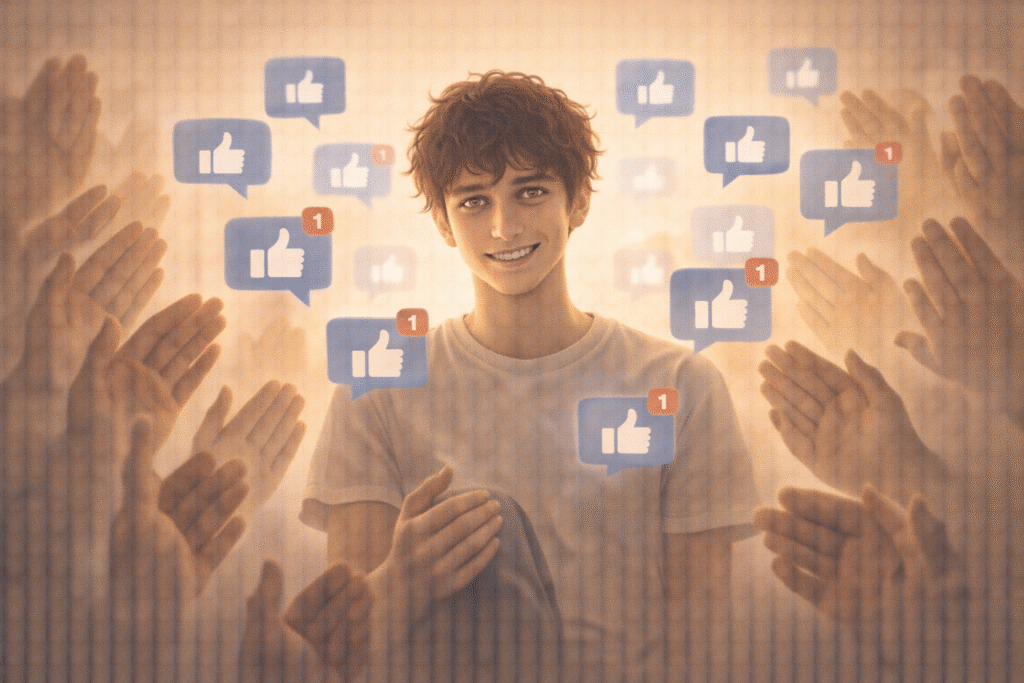
    Person surrounded by social approval symbols showing fragile ego

    3. What Does Healthy Self-Love Look Like?

    The key distinction lies in how self-love operates within relationships.

    Healthy self-love:

    • Respects personal needs and others’ boundaries
    • Accepts responsibility instead of resorting to defensiveness
    • Welcomes praise without collapsing under criticism
    • Recognizes that one’s emotions matter—just as much as another’s

    When loving oneself leads to healthier relationships rather than emotional domination, self-love becomes a source of nourishment rather than harm.


    4. Self-Love and Self-Esteem Are Not the Same

    Though often confused, self-love and self-esteem differ in important ways.

    • Self-esteem is an internal sense of worth that does not depend on comparison.
    • Narcissism relies heavily on external validation and perceived superiority.

    People with stable self-esteem rarely need to exaggerate themselves or diminish others.
    Those with fragile self-worth, by contrast, may appear confident while remaining highly sensitive to rejection or criticism.

    This is why intense narcissistic traits often coexist with deep insecurity.


    5. Living in the Age of Self-Promotion

    Modern society rewards visibility, personal branding, and constant self-display. In such an environment, self-focus becomes not only normalized but encouraged.

    Under these conditions, self-love can easily transform into a survival strategy.

    However, when “self-love” is used to justify rudeness, emotional exploitation, or disregard for others, the result is not empowerment—but isolation.

    A society that celebrates the self while neglecting empathy risks producing individuals who stand alone, disconnected despite constant self-expression.


    Conclusion: Where the Boundary Truly Lies

    Balanced emotional relationship with mutual respect and boundaries

    Self-love is not inherently harmful. In fact, it is essential for psychological well-being.

    But the moment self-love ignores the emotional reality of others, it ceases to be care and becomes a display of power.

    True self-love protects the self without harming others.
    It allows us to stand firmly as individuals while remaining emotionally present within relationships.

    That balance—between self-respect and mutual respect—is where healthy self-love truly resides.


    References

    1. Twenge, J. M., & Campbell, W. K. (2009). The Narcissism Epidemic: Living in the Age of Entitlement. New York: Free Press.
    → Analyzes the cultural rise of narcissistic traits and their impact on relationships, workplaces, and social values, offering a broad sociopsychological perspective.

    2.Kohut, H. (1971). The Analysis of the Self. Chicago: University of Chicago Press.
    → A foundational psychoanalytic work distinguishing healthy narcissism from pathological forms, providing a conceptual framework still influential today.

    3.Vaknin, S. (2001). Malignant Self-Love: Narcissism Revisited. Prague: Narcissus Publications.
    → Examines narcissistic personality patterns through clinical observation, highlighting how distorted self-love affects interpersonal dynamics.

  • The Fatigue of Kindness

    Between the “Nice Person” Complex and Emotional Labor

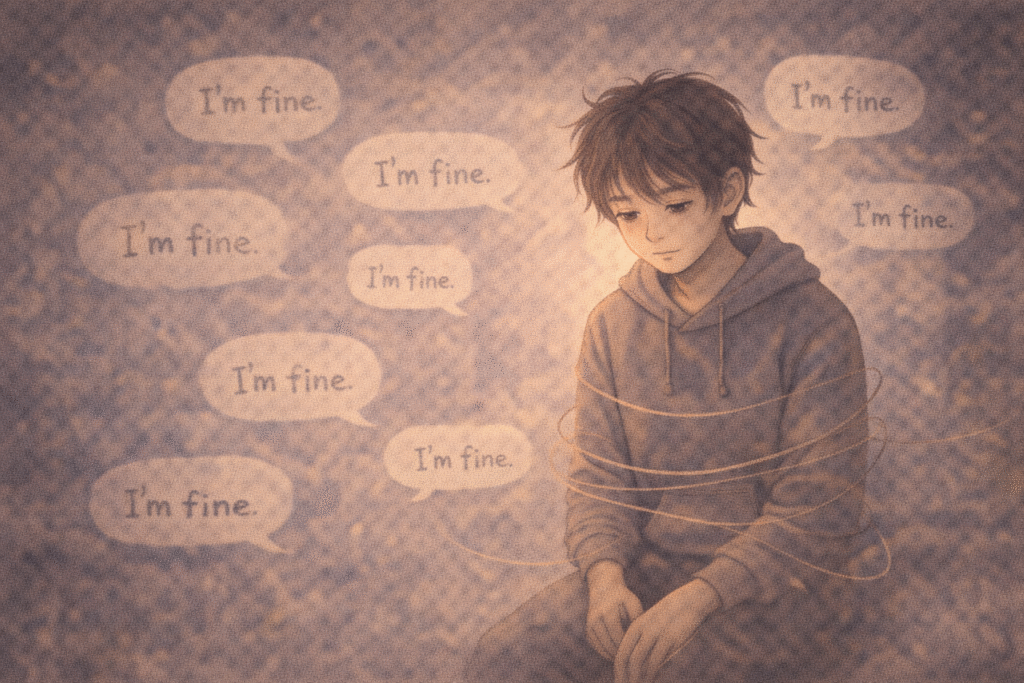
    “I’m fine.” “I can do it.” “That’s only natural.”

    There are people who say these words almost automatically.

    They worry about making others uncomfortable.
    They fear ruining the mood.
    They hesitate to disappoint expectations.

    So they place other people’s feelings ahead of their own—again and again.

    At first, it looks like kindness.
    Over time, it becomes exhaustion.

    This quiet weariness has a name. We live in what might be called a society fatigued by kindness.

    A person smiling while surrounded by social expectations

    1. Why Does the “Nice Person” Complex Develop?

    In psychology, this pattern is often described as Nice Person Syndrome or approval addiction.

    People affected by it feel a strong urge to be liked, accepted, and seen as good. They avoid conflict, struggle to say no, and measure their self-worth through others’ reactions.

    Common signs include:

    • Constantly worrying about how others perceive you
    • Agreeing even when you feel uncomfortable
    • Offering help automatically, without checking your own limits

    Over time, kindness stops being a genuine choice and turns into a survival strategy. Emotions are suppressed, needs are postponed, and fatigue quietly accumulates.


    2. Emotional Labor Is Not Just a Workplace Issue

    The term emotional labor originally referred to service workers who must regulate or perform emotions as part of their job.

    Today, however, emotional labor extends far beyond the workplace.

    It appears in everyday life:

    • Smiling while feeling irritated
    • Replying “I’m okay” when you are not
    • Accepting unreasonable requests to avoid awkwardness

    When these moments pile up, people begin wearing a permanent mask of emotional stability. Every interaction consumes emotional energy, even when no one notices.

    An exhausted person carrying invisible emotional pressure

    3. When Kindness Becomes Exploited

    Ironically, the kinder someone appears, the more demands tend to follow.

    Helpful people are quickly labeled “reliable.”
    Their efforts become expected, not appreciated.
    Refusal—even once—invites disappointment.

    In this structure, kindness is no longer voluntary. It becomes a resource that others draw from repeatedly.

    As a result, many “nice” people lose touch with their own boundaries. Some grow numb. Others suppress frustration until it eventually erupts.


    4. Kindness Should Be a Strategy, Not a Sacrifice

    Does this mean we should stop being kind?

    Not at all. But kindness must be regulated, not reflexive.

    Healthy kindness includes:

    • Practicing how to say “no” without guilt
    • Expressing emotional limits honestly
    • Prioritizing your own emotional state alongside others’
    • Allowing firmness when situations require it

    True kindness does not come from depletion. It comes from self-respect.

    When kindness is a conscious choice rather than a compulsion, it becomes sustainable.

    A calm person setting healthy emotional boundaries

    Conclusion: From “Good” to Sustainable

    A fatigue-of-kindness society is one where considerate people burn out, while inconsiderate behavior often goes unchecked.

    In such a world, the goal is not to be endlessly nice—but to be emotionally sustainable.

    Smiling for others has value.
    But standing firm for yourself matters just as much.

    Genuine kindness grows best on the foundation of self-respect.

    May your days be gentle—
    without leaving you empty.


    Related Reading

    The exhaustion that follows moral expectation connects to broader reflections on social pressure discussed in The Praise-Driven Society: Recognition and Self-Worth in the Digital Age.

    Similar emotional dynamics in daily life are also explored in How Social Media Amplifies Feelings of Lack and Comparison.

    References

    1. Hochschild, A. R. (1983/2012). The Managed Heart: Commercialization of Human Feeling. University of California Press.
      This foundational work introduces the concept of emotional labor, showing how managing feelings—especially in service roles—can lead to psychological exhaustion. It provides the sociological basis for understanding why “being nice” can function as unpaid labor.
    2. Brown, B. (2010). The Gifts of Imperfection. Hazelden Publishing.
      Brown explores how social expectations and perfectionism pressure individuals to perform goodness. The book emphasizes self-worth, boundaries, and authenticity as alternatives to approval-driven behavior.
    3. Maslach, C., & Leiter, M. P. (1997). The Truth About Burnout. Jossey-Bass.
      This research-driven work examines burnout as a structural and relational problem, not just an individual weakness. It explains why people with high responsibility and empathy are especially vulnerable to emotional exhaustion.
  • How Social Media Amplifies Feelings of Lack and Comparison

    Scrolling through social media has become a daily ritual for many people.
    We wake up, reach for our phones, and are immediately greeted by images of vacations, promotions, fitness routines, and seemingly perfect lives.

    Yet instead of feeling inspired, many of us experience an unexpected emotional dip.
    The reason is simple: social media largely presents highlights, not everyday reality.
    As a result, we begin to compare our ordinary lives with carefully curated moments—and a subtle sense of lack begins to grow.

    Person scrolling social media and comparing life to others

    1. The Psychology of Comparison: “Am I Falling Behind?”

    People tend to share their happiest and most successful moments online—weddings, travels, career milestones, or idealized lifestyles. These posts create the illusion that others are constantly thriving.

    Psychologists describe this tendency as social comparison theory. We unconsciously evaluate our own worth by measuring ourselves against others. On social media, however, this comparison becomes distorted.

    A single vacation photo, taken once a year, may appear repeatedly on our feed. Over time, it can feel as though others are always living better lives, reinforcing the belief that we are somehow falling behind.


    2. The Highlight Effect and Selective Exposure

    Social media content is not neutral—it is selected, edited, and optimized for attention.
    A quiet morning coffee rarely competes with a sunset photo taken on a tropical beach.

    Platforms dominated by visual content, such as Instagram or TikTok, intensify this effect. Users become increasingly aware of aesthetics, filters, and perfection. In comparison, our own daily routines may start to feel dull or insufficient, deepening psychological dissatisfaction.


    3. Algorithms as Emotional Amplifiers

    Algorithm-driven social media images amplifying comparison and lack

    Social media platforms are designed to keep users engaged. Algorithms learn what captures our attention and deliver more of it.

    If you interact with luxury travel, fitness influencers, or high-end dining content, similar posts will appear more frequently. Gradually, your feed becomes filled with images of “better” lives—carefully selected to provoke interest, admiration, and often envy.

    In this way, social media does not merely reflect reality; it magnifies what we are most likely to compare ourselves against.


    4. FOMO and Emotional Fatigue

    This persistent comparison often leads to FOMO (Fear of Missing Out)—the anxiety that others are experiencing meaningful moments without us.

    A peaceful weekend at home can suddenly feel empty when confronted with group photos from a trip or event. When such experiences accumulate, they can result in emotional exhaustion, reduced self-esteem, and even depressive feelings.

    Research suggests that adolescents and young adults are particularly vulnerable, as repeated exposure can foster the belief that their lives are less exciting or less valuable.


    5. Using Social Media Without the Sense of Lack

    Social media itself is not inherently harmful. The key lies in how we use and interpret it.

    • Intentional use: Log in with a purpose—learning, inspiration, or connection—rather than endless scrolling.
    • Reality awareness: Remember that posts represent fragments, not complete lives.
    • Time boundaries: Setting daily limits can significantly reduce emotional fatigue.

    When approached mindfully, social media can shift from a source of deficiency to a tool for motivation and insight.


    Conclusion

    Person stepping away from social media comparison for mental clarity

    Social media functions like a distorted mirror—one that reflects only the brightest moments of others while obscuring the full picture. When we mistake highlights for reality, we risk undervaluing our own lives.

    The challenge is not to reject social media entirely, but to reclaim perspective.
    By recognizing the difference between curated images and lived experience, we can transform social media from a space of comparison into one of connection and self-awareness.


    Related Reading

    The social economy of validation and recognition is analyzed more explicitly in The Praise-Driven Society: Recognition and Self-Worth in the Digital Age.

    These everyday emotional dynamics mirror a broader existential concern explored in Solitude in the Digital Age: Recovery or a Deeper Loss?

    References

    Vogel, E. A., Rose, J. P., Roberts, L. R., & Eckles, K. (2014). Social comparison, social media, and self-esteem. Psychology of Popular Media Culture, 3(4), 206–222.
    → This study empirically examines how social comparison on social media affects self-esteem, highlighting the role of upward comparison in feelings of inadequacy.

    Chou, H. T. G., & Edge, N. (2012). “They are happier and having better lives than I am”: The impact of using Facebook on perceptions of others’ lives. Cyberpsychology, Behavior, and Social Networking, 15(2), 117–121.
    → Demonstrates how social media users systematically overestimate others’ happiness, reinforcing perceived personal deficiency.

    Tandoc Jr., E. C., Ferrucci, P., & Duffy, M. (2015). Facebook use, envy, and depression among college students. Computers in Human Behavior, 43, 139–146.
    → Explores the link between social media use, envy, and depressive symptoms, offering insight into long-term emotional consequences.