Is marriage simply about love—or can it be a path to wisdom?
When we think of marriage today, we often associate it with emotional connection, companionship, and personal fulfillment. But for the ancient Greek philosopher Socrates, marriage meant something deeper. It was not merely a romantic bond—it was a space for self-examination, growth, and philosophical insight.
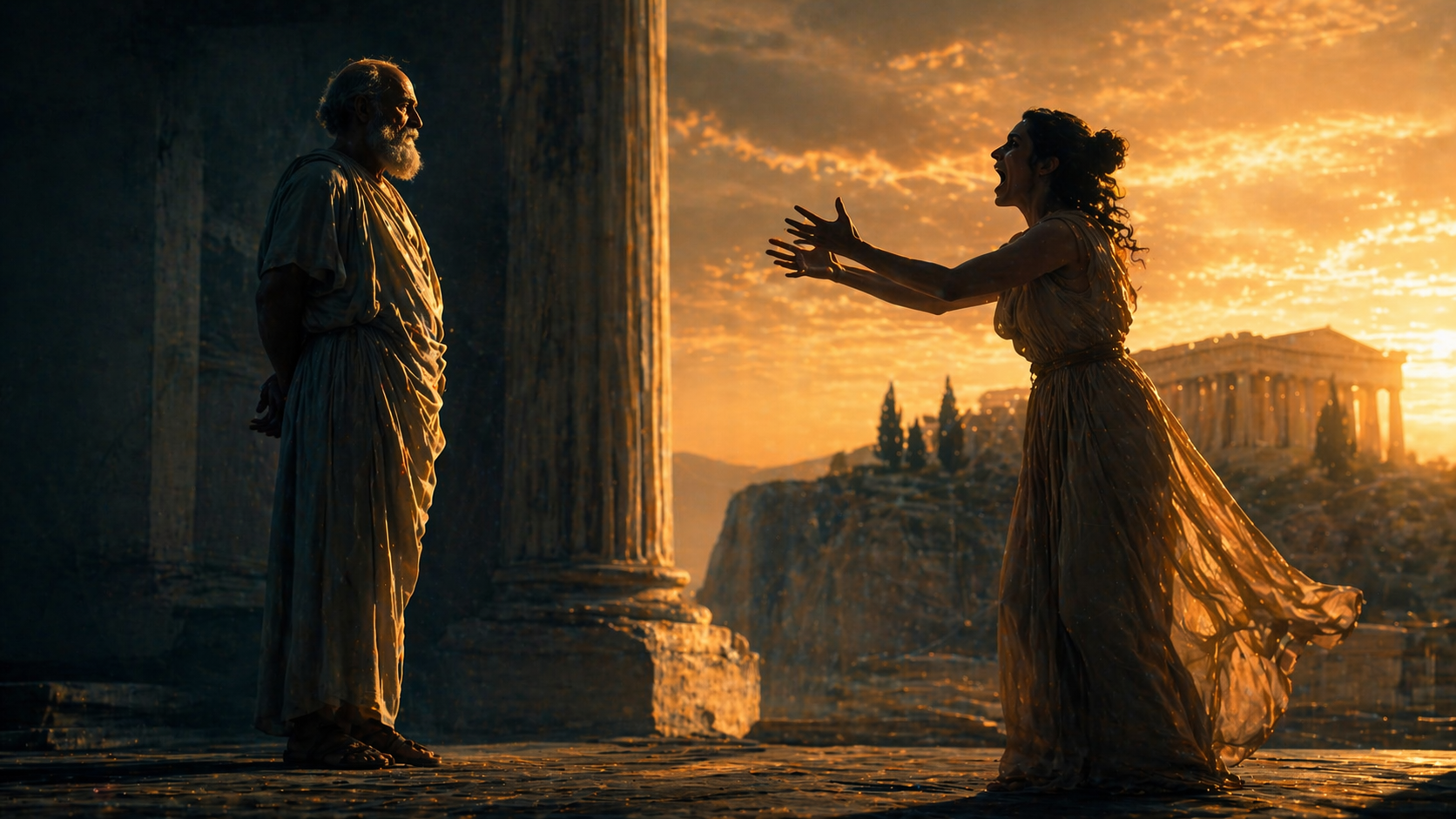
Interestingly, Socrates’ own marriage to Xanthippe was far from peaceful. Yet instead of avoiding conflict, he embraced it as part of the human experience. To him, even difficulty had meaning.
1. Marriage as a Training Ground for Character
Socrates believed that the most important task in life was self-knowledge. His famous idea—“Know thyself”—applied not only to abstract thinking, but to everyday relationships.
Marriage, in this sense, becomes a powerful environment for self-development.
Xanthippe, often described as strong-willed and temperamental, is frequently mentioned in historical anecdotes. Rather than viewing this as misfortune, Socrates saw it as an opportunity to practice patience and resilience.
He is famously quoted as saying:
“Marry. If you get a good wife, you’ll be happy. If you get a bad one, you’ll become a philosopher.”
Whether humorous or serious, this statement reflects a deeper belief:
every experience—pleasant or difficult—can teach us something.
2. Marriage as a Social Responsibility
In ancient Greece, marriage was not purely a personal choice—it was a civic duty.
Socrates, like many thinkers of his time, saw family life as essential to the stability of society. Through marriage, individuals contributed to the upbringing of future citizens and the continuation of social order.
According to Xenophon’s writings, Socrates encouraged young men to marry not just for personal happiness, but to fulfill their role within the community.
Even today, this perspective still resonates:
Marriage is not only about two individuals—it also shapes families, communities, and social structures.
3. Marriage as a Space for Dialogue
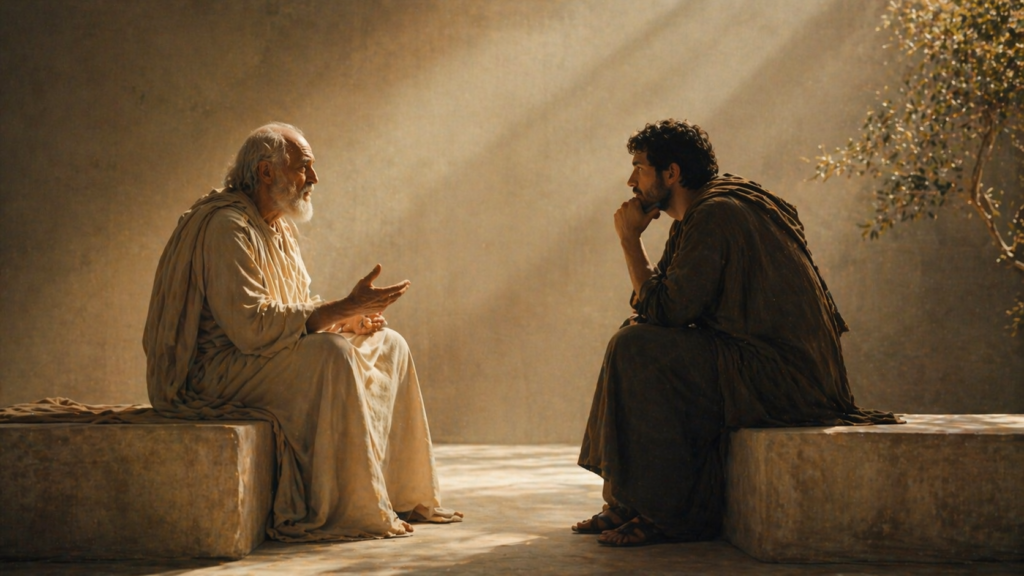
Socrates is best known for his method of questioning—what we now call the Socratic method.
He believed that truth emerges through dialogue, challenge, and reflection.
This philosophy extended into his personal life. Even arguments with his wife could be seen as opportunities for deeper understanding.
Rather than avoiding disagreement, Socrates valued it.
👉 In this sense, marriage becomes:
- A place of conversation
- A space for intellectual exchange
- A mirror reflecting our own assumptions
Modern relationships often struggle not because of differences—but because of the inability to discuss them.
4. Marriage as an Inevitable Reality
Socrates also approached marriage with realism.
He did not idealize it as perfect harmony. Instead, he acknowledged its challenges as natural and unavoidable.
A famous anecdote illustrates this well:
After a heated argument, Xanthippe allegedly poured water over Socrates. He calmly responded:
“After thunder comes rain.”
Rather than reacting emotionally, he accepted conflict with humor and perspective.
👉 His attitude suggests:
Marriage is not about avoiding difficulty—but learning how to respond to it.
Conclusion

For Socrates, marriage was far more than a personal relationship. It was:
- A training ground for character
- A social responsibility
- A space for dialogue
- A reality to be understood, not escaped
In a world that often seeks comfort and ease, Socrates offers a different view:
Growth often comes through tension, not harmony.
So perhaps the question is not:
“Is marriage supposed to make us happy?”
But rather:
“What kind of person does marriage help us become?”
Reader Question
Is marriage meant to make us happy—or to make us wiser?
Do you think conflict in relationships is something to avoid—or something to learn from?
Related Reading
If relationships are meant to shape who we become, why do they so often expose our contradictions instead?
In Why Hypocrisy Persists in Modern Society, we explore how human beings struggle between ideals and reality—revealing that tension within relationships is not failure, but part of moral and personal growth.
If solitude helps us reflect, can true self-understanding exist without distance from others?
In The Solitude of the Wise: Withdrawal from the Masses or Intellectual Elitism?, we examine whether stepping away from relationships deepens wisdom—or whether human connection itself is essential for becoming who we are.
References
1. Plato. (2007). The Last Days of Socrates (H. Tredennick & H. Tarrant, Trans.). Penguin Classics.
A classic collection containing Apology, Crito, Euthyphro, and Phaedo. It provides the most important primary source for understanding Socrates’ philosophy, including his views on virtue, self-examination, and the examined life.
2. Xenophon. (1998). Memorabilia and Oeconomicus (A. J. Bowen, Trans.). Cornell University Press.
Xenophon’s writings offer a complementary portrait of Socrates, focusing on his everyday conversations and practical philosophy. Oeconomicus is particularly valuable for understanding ancient Greek perspectives on household life, marriage, and personal responsibility.
3. Gregory Vlastos. (1991). Socrates: Ironist and Moral Philosopher. Cornell University Press.
One of the most influential modern studies of Socrates. Vlastos explores Socrates’ ethical philosophy, irony, moral reasoning, and the pursuit of virtue, making it an essential reference for contemporary interpretations of his thought.
4. Donald R. Morrison (Ed.). (2011). The Cambridge Companion to Socrates. Cambridge University Press.
A comprehensive scholarly volume covering Socrates’ historical context, philosophical methods, ethics, politics, and lasting influence. It is widely regarded as one of the best academic introductions to Socratic philosophy.
5. Sarah Bakewell. (2016). At the Existentialist Café: Freedom, Being, and Apricot Cocktails. Other Press.
Although centered on existentialism, Bakewell traces the intellectual roots of self-examination and philosophical living back to Socrates. The book offers an engaging perspective on how Socratic questioning continues to influence modern ideas about relationships, freedom, and the search for a meaningful life.