Tag: loneliness

  • Is Solitude a Freedom of Self-Reflection, or a Risk of Social Disconnection?

    The Ambivalence of Solitude

    Solitude has always occupied an uneasy position in human life.
    At times, it is praised as a space of freedom and self-reflection.
    At others, it is feared as a sign of isolation and social breakdown.

    In a world saturated with constant connection, solitude appears both desirable and dangerous.
    Is solitude a path toward inner autonomy, or does it quietly erode our social bonds?
    This inquiry explores solitude as a space of freedom—and as a potential risk.
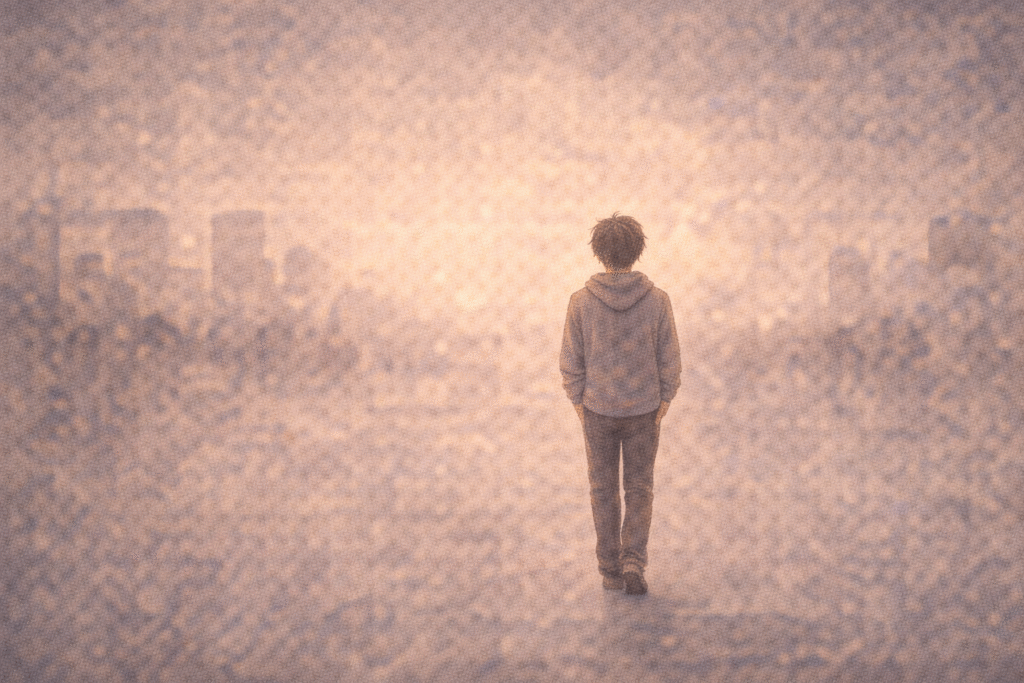

    A solitary figure standing calmly in an open, quiet space

    1. The Philosophical Meaning of Solitude: Schopenhauer’s Perspective

    1.1 Solitude as a Noble State

    The 19th-century German philosopher Arthur Schopenhauer regarded solitude as one of the highest conditions a human being could attain.
    For him, solitude was not mere loneliness or social withdrawal.
    It was a deliberate withdrawal from social noise and collective pressure in order to engage deeply with one’s own thinking.

    Schopenhauer famously argued that “a wise man finds satisfaction in solitude.”
    Only in isolation from social comparison and public opinion, he believed, could individuals achieve genuine intellectual freedom.

    1.2 Inner Autonomy and Self-Mastery

    Solitude, in Schopenhauer’s thought, was the foundation of inner autonomy.
    Freed from the constant gaze of others, individuals could confront themselves honestly.
    Philosophy, art, and scholarship, he argued, emerge not from crowds but from quiet reflection.


    2. Solitude as Freedom: A Space for Reflection and Creation

    A person immersed in quiet self-reflection without external distractions

    Solitude offers more than philosophical abstraction—it shapes creativity and personal growth.

    2.1 The Source of Creative Thought

    Many writers, composers, and thinkers have relied on solitude as a condition for creation.
    Goethe’s reflective writings and Beethoven’s isolated compositional periods exemplify how solitude can function as a mental laboratory for innovation.

    By suspending external expectations, solitude allows ideas to unfold freely.

    2.2 Self-Reflection and Psychological Growth

    In social life, individuals often perform roles shaped by others’ expectations.
    Solitude provides an opportunity to examine one’s own emotions, desires, and fears without interruption.

    Psychological research suggests that moderate, voluntary solitude can foster emotional resilience and self-awareness.

    2.3 Experiencing Inner Freedom

    In the digital age, constant connectivity has become exhausting.
    Notifications, messages, and social media create a permanent sense of being observed.

    Paradoxically, solitude—often seen as deprivation—can become a rare experience of freedom:
    a space where one exists without explanation or performance.


    3. The Shadow of Solitude: Risks of Social Disconnection

    Solitude, however, is not inherently virtuous.
    When extended or imposed, it can become harmful.

    3.1 Loneliness and Psychological Risk

    Social psychology distinguishes between solitude and loneliness, yet the boundary is fragile.
    Prolonged solitude can transform into loneliness, which has been linked to depression, anxiety, and even physical health risks.

    When solitude ceases to be chosen, it often becomes a burden.

    3.2 The Erosion of Social Capital

    Sociologist Robert Putnam famously described the decline of communal life in Bowling Alone.
    Excessive isolation weakens trust, cooperation, and shared responsibility.

    While solitude may benefit individual reflection, its expansion at the social level can fragment communities.

    3.3 The Digital Paradox

    Digital platforms promise connection but frequently intensify isolation.
    Online relationships often remain superficial, lacking the depth of embodied interaction.

    As a result, hyper-connectivity can paradoxically deepen psychological solitude rather than alleviate it.


    4. Two Faces of Solitude: Finding Balance

    Solitude is neither purely liberating nor inherently destructive.
    Its meaning depends on how and why it is experienced.

    4.1 Chosen Solitude vs. Enforced Isolation

    Voluntary solitude can nourish creativity and reflection.
    Enforced isolation—caused by social exclusion or structural inequality—often produces psychological harm.

    The key distinction lies in agency.

    4.2 The Cycle of Solitude and Connection

    Human development often follows a rhythm:
    withdrawal for reflection, followed by re-engagement with others.

    Solitude and sociality need not be opposites; they can function as complementary phases of maturity.

    4.3 Reframing Solitude in Contemporary Life

    Practices such as digital detox, meditation, and solitary walking reflect modern attempts to reclaim solitude intentionally.
    These practices reinterpret solitude not as abandonment, but as rest and renewal.
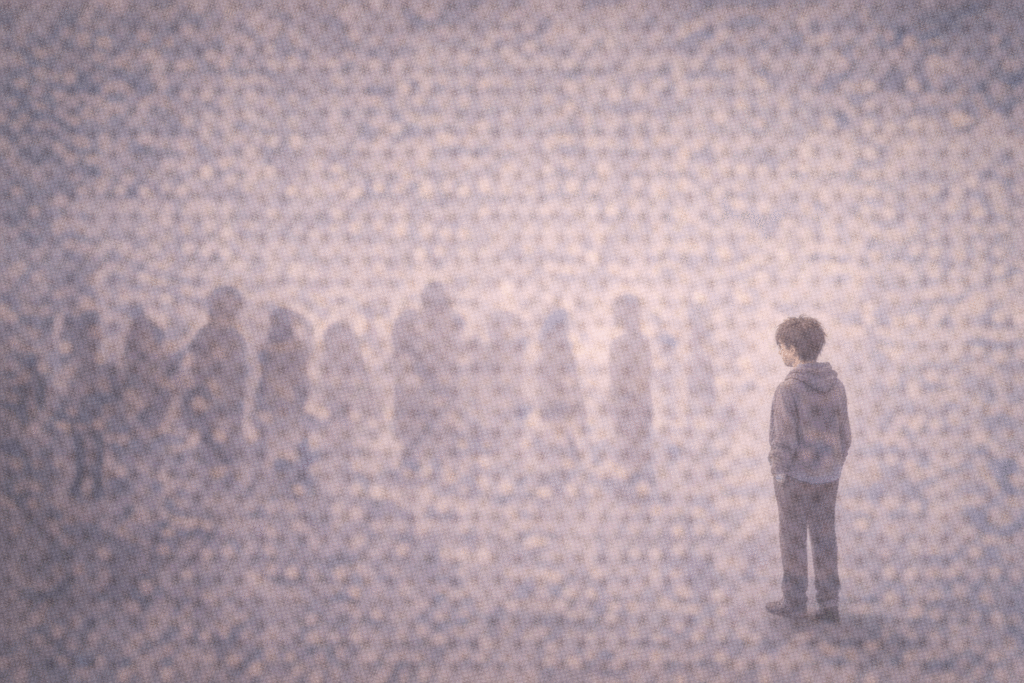
    A person isolated from others despite their presence in the same space

    Conclusion: Freedom or Disconnection?

    Solitude cannot be judged through a simple binary.
    As Schopenhauer suggested, it may open a space for wisdom and inner freedom.
    Yet when excessive or imposed, it risks becoming social disconnection and psychological isolation.

    The more meaningful question is not whether solitude is good or bad, but how we relate to it.

    When chosen consciously and balanced with social connection, solitude can become a vital resource.
    When neglected or imposed, it may quietly erode both personal well-being and collective life.

    Solitude, then, is not an escape from society—but a mirror through which we learn how to return to it more fully.


    References

    1. Schopenhauer, A. (1851/2004). Parerga and Paralipomena. Oxford: Oxford University Press.
      → This work contains Schopenhauer’s reflections on solitude, wisdom, and intellectual freedom, offering a philosophical foundation for understanding solitude as a condition of self-mastery rather than mere isolation.
    2. Weiss, R. S. (1973). Loneliness: The Experience of Emotional and Social Isolation. Cambridge, MA: MIT Press.
      → A classic psychological study distinguishing solitude from loneliness, analyzing how social isolation produces distinct emotional and structural consequences.
    3. Baumeister, R. F., & Leary, M. R. (1995). The Need to Belong. Psychological Bulletin, 117(3), 497–529.
      → This influential paper argues that the need for social connection is a fundamental human motivation, clarifying the limits of solitude as a positive resource.
    4. Putnam, R. D. (2000). Bowling Alone. New York: Simon & Schuster.
      → Putnam analyzes the decline of social capital and communal life, illustrating how widespread isolation undermines democratic and social cohesion.
    5. Cacioppo, J. T., & Patrick, W. (2008). Loneliness: Human Nature and the Need for Social Connection. New York: W. W. Norton.
      → Integrating neuroscience and psychology, this work explains the biological and emotional costs of prolonged loneliness, highlighting the fragile boundary between solitude and isolation.

  • Solitude in the Digital Age: Recovery or a Deeper Loss?

    In the digital age, we are more connected than ever.
    Messages arrive instantly, notifications never stop, and silence has become rare.

    Yet paradoxically, many people report feeling more exhausted, distracted, and internally fragmented than before.
    This raises a deeper philosophical question:

    Is solitude being recovered in new forms, or are we losing it altogether?

    To approach this question, we revisit Arthur Schopenhauer’s reflections on solitude and examine how they resonate—or fail to resonate—within today’s hyper-connected society.


    1. Schopenhauer on Solitude and the Modern Question

    1.1 Solitude as Intellectual Freedom

    For Arthur Schopenhauer, solitude was not a form of social withdrawal but a deliberate act of intellectual autonomy.
    He believed that solitude allowed individuals to think independently, free from the pressures of public opinion and social conformity.

    In his view, constant immersion in society often diluted thought, while solitude enabled clarity, creativity, and philosophical depth.

    1.2 A Radically Changed Environment

    However, the 21st century presents a fundamentally different context.
    Digital platforms ensure that individuals are almost permanently connected, transforming social interaction into a continuous background condition.

    This leads us to a crucial question:
    Can Schopenhauerian solitude still exist in a world of constant connectivity?


    2. Hyper-Connectivity and the Erosion of Solitude

    An isolated individual surrounded by digital notifications in a hyperconnected world

    2.1 The Illusion of Belonging

    Social media, instant messaging, and streaming platforms offer a persistent sense of connection and belonging.
    Yet these connections are often shallow, fragmented, and rapidly replaceable.

    What appears as social intimacy may, in reality, be a sequence of fleeting interactions.

    2.2 Psychological Fatigue and the Loss of Inner Space

    Endless notifications and scrolling routines leave little room for introspection.
    Moments once reserved for reflection are now filled with external stimuli.

    As a result, solitude as a space for inner dialogue is replaced by reactive attention and surface-level engagement.

    2.3 The Commodification of Solitude

    Even solitude itself has become a marketable experience.
    “Healing playlists,” “solo exhibitions,” and “lonely cafés” package solitude as a consumable aesthetic.

    While comforting, such forms risk replacing genuine self-reflection with curated experiences.


    3. Reclaiming Solitude: New Possibilities

    A person practicing intentional solitude away from digital distractions

    Despite these challenges, the digital age does not necessarily eliminate solitude.
    Rather, it reshapes the conditions under which solitude can exist.

    3.1 The Practice of Selective Disconnection

    Turning off notifications, practicing digital detox, or intentionally limiting online engagement can restore moments of solitude.
    Here, technology becomes a tool rather than a master.

    3.2 Personalized Spaces for Reflection

    Digital journals, meditation apps, and private note-taking platforms can also support inward exploration.
    Modern solitude may involve not physical isolation, but deliberate inward orientation.

    3.3 Shared Solitude

    Interestingly, online communities dedicated to mindfulness, reflection, or quiet practices suggest a paradoxical form of solitude—
    one that is respected within loose forms of connection rather than absolute isolation.


    4. Freedom of Solitude vs. the Risk of Isolation

    4.1 Solitude as a Scarce Resource

    In an age of constant connectivity, solitude becomes rare—and therefore valuable.
    It enables creative thought, identity formation, and psychological recovery.

    Solitude, in this sense, is not an escape from society but a condition for meaningful participation within it.

    4.2 The Danger of Enforced Isolation

    However, solitude imposed rather than chosen carries serious risks.
    For elderly populations and digitally marginalized groups, enforced disconnection can lead to social isolation and declining well-being.

    The challenge, therefore, lies in distinguishing chosen solitude from structural exclusion.


    5. Redefining Solitude in the Digital Age

    5.1 Beyond “Being Alone”

    Modern solitude can no longer be defined simply as being physically alone.
    It must be understood as the freedom to regulate one’s relationship with connection and disconnection.

    5.2 A Contemporary Schopenhauerian Solitude

    Schopenhauer’s ideal remains relevant, but its form has changed.
    Today, solitude requires the ability to manage boundaries within an environment of constant digital presence.


    6. Reclaiming Solitude: A Small Reflective Action

    Solitude does not require abandoning technology altogether.
    Instead, it can begin with a minimal, intentional pause.

    Today’s small action:

    • Choose one 15-minute window with no digital input.
      No phone, no music, no reading. Simply sit, walk, or think.

    Afterward, ask yourself:

    Was this moment of emptiness uncomfortable—or quietly restoring?

    This is not a productivity exercise.
    It is an experiment in reclaiming inner space within a connected world.

    A figure standing between connection and solitude, symbolizing conscious choice

    Conclusion: Solitude as an Active Choice

    In the digital age, solitude is no longer a passive absence of others.
    It has become an active and intentional resource that must be consciously reclaimed.

    The essential question therefore shifts:

    Are we losing solitude—or are we learning how to recover it differently?

    The answer depends on how deliberately we navigate the balance between connection and withdrawal in our everyday lives.

    Related Reading

    This modern solitude recalls an older philosophical question about withdrawal and wisdom, explored further in The Solitude of the Wise: Withdrawal from the Masses or Intellectual Elitism?

    The emotional mechanisms behind digital loneliness are also examined in everyday contexts in How Social Media Amplifies Feelings of Lack and Comparison.

    Related Reading

    The emotional texture of chosen solitude is quietly portrayed in Familiar Solitude — The Quiet Comfort of Being Alone, where aloneness becomes a space for reflection rather than absence.

    The technological reshaping of intimacy is further explored in Living with Virtual Beings: Companionship, Comfort, or Replacement?, examining whether digital companionship deepens or replaces human connection.

    References

    1. Schopenhauer, A. (1851/2004). Parerga and Paralipomena (E. F. J. Payne, Trans.). Oxford University Press.
    → This work presents Schopenhauer’s direct reflections on solitude as a form of intellectual independence. It offers a philosophical foundation for understanding solitude not as social withdrawal, but as a condition for autonomous thought and self-reflection.

    2. Turkle, S. (2011). Alone Together: Why We Expect More from Technology and Less from Each Other. Basic Books.
    → Turkle critically examines how digital connectivity paradoxically deepens loneliness and emotional fragmentation. The book is central to understanding solitude’s transformation in the age of constant technological presence.

    3. Cacioppo, J. T., & Patrick, W. (2008). Loneliness: Human Nature and the Need for Social Connection. W. W. Norton.
    → Drawing on neuroscience and psychology, this work analyzes how the absence or distortion of social connection affects the human brain and emotional well-being, providing empirical grounding for discussions of modern solitude.

    4. Bauman, Z. (2003). Liquid Love: On the Frailty of Human Bonds. Polity Press.
    → Bauman explores the instability and superficiality of relationships in late modern societies, helping to explain how hyper-connectivity weakens emotional depth and reflective solitude.

    5. Carr, N. (2010). The Shallows: What the Internet Is Doing to Our Brains. W. W. Norton.
    → Carr investigates how digital environments reshape attention, cognition, and sustained thinking, highlighting structural obstacles to deep reflection and solitude in the internet age.