Have you ever noticed that not all benches are really meant to be used?
In many cities, public benches look inviting at first glance. But a closer look reveals metal bars dividing the seats, tilted surfaces, or cold materials that discourage anyone from staying too long. These designs seem subtle, almost invisible — yet they send a clear message.
Uncomfortable design is not always a mistake.
Sometimes, it is a deliberate choice.
1. Metal Bars on Benches: “Don’t Lie Down”
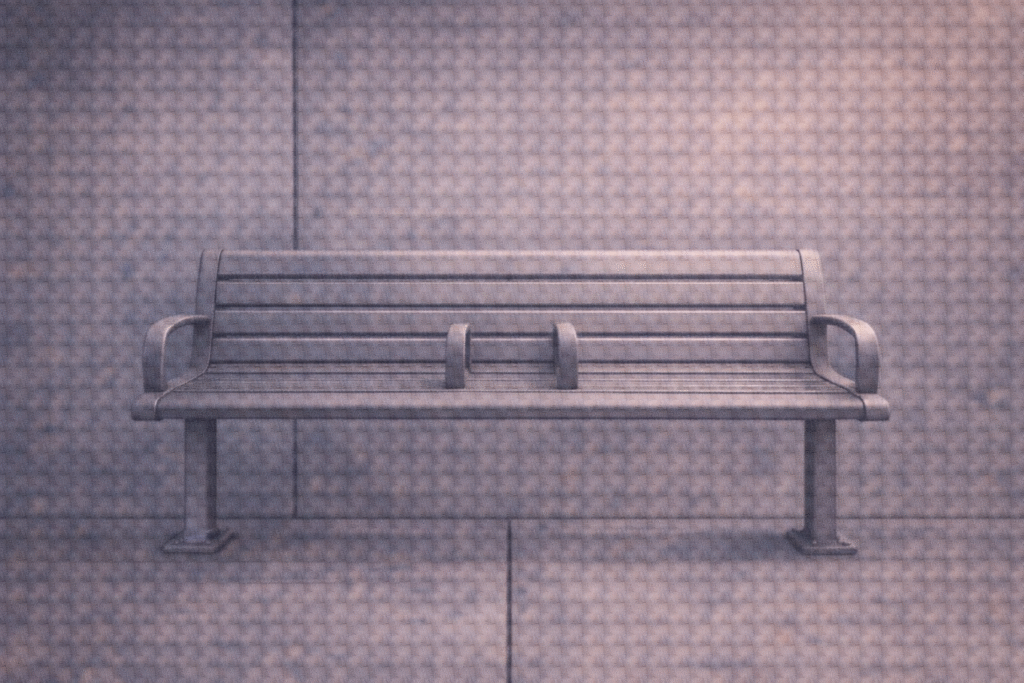
1.1 Designed to Prevent Rest
In parks, subway platforms, and public squares, benches are often fitted with metal dividers. Sitting is allowed, but lying down — or resting for more than a moment — becomes impossible.
This design does not stop people from using the bench.
It controls how they use it.
1.2 Anti-Homeless Architecture
These features are commonly referred to as anti-homeless or hostile architecture. Their purpose is not comfort, but regulation.
Similar examples include:
- Cold metal seats in public restrooms
- Waiting areas without backrests
- Slanted walls or narrow ledges
Each silently communicates the same rule:
You may stay briefly, but you are not welcome to remain.
2. Skateboard Deterrents on Stairs
2.1 Controlling Youth Through Design
Small metal studs embedded into stair rails or ledges prevent skateboarders from performing tricks. Officially, these devices protect public property and improve safety.
However, critics argue that they also serve another function:
the exclusion of youth culture from public space.
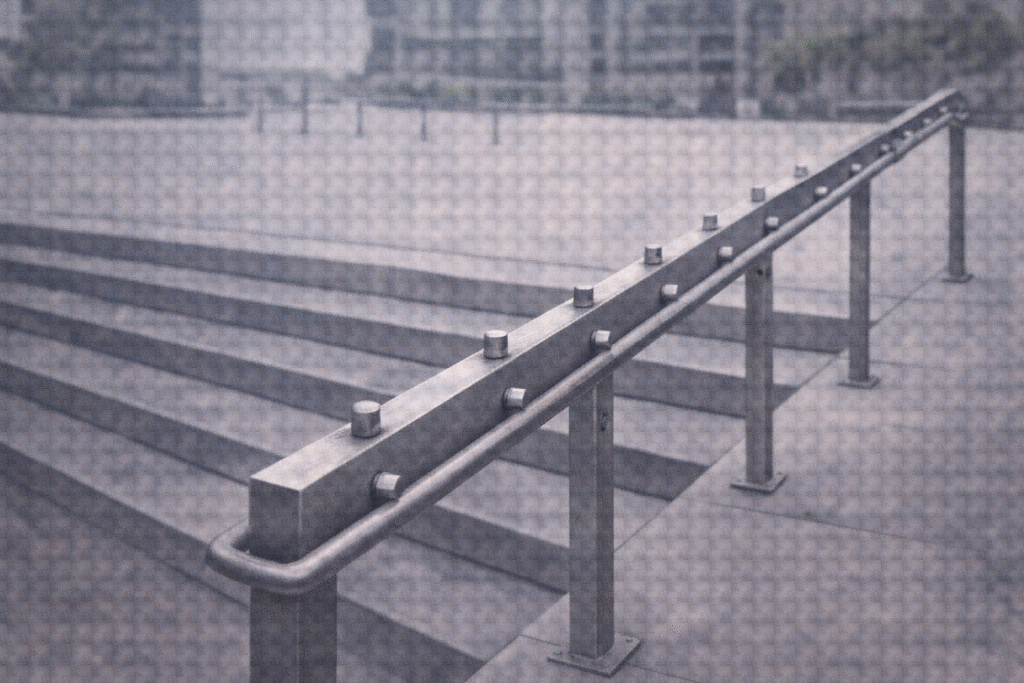
2.2 When Play Becomes a Problem
By treating play as disruption, design becomes a tool of social control. What appears to be a technical solution reflects a deeper cultural judgment about who belongs in public space — and how they should behave.
3. Heavy Doors and Narrow Handles: The Opposite of Universal Design
3.1 Who Can Enter — and Who Cannot
Some buildings have heavy doors, high or narrow handles, and awkward entrances. These features create real barriers for:
- Wheelchair users
- Parents with strollers
- Elderly people
- Children
Access becomes a privilege rather than a right.
3.2 Exclusion by “Normal” Standards
Such designs often reflect two assumptions:
- A default user without physical limitations
- A lack of concern — or intentional disregard — for others
In this sense, uncomfortable design operates as the opposite of universal design: it works smoothly for some, while quietly excluding others.
4. Discomfort Is Not Accidental
4.1 Design as Power
Across these examples, a clear pattern emerges: discomfort is rarely random. It is frequently intentional — and often political.
Design is not just about aesthetics or efficiency.
It shapes behavior.
4.2 Silent Messages in Space
Through design, spaces communicate:
- Who is visible
- Who is welcome
- Who should move along
This subtle form of exclusion functions as a kind of silent violence — unnoticed by many, but deeply felt by those affected.
5. Is Inclusive Design Possible?
5.1 Designing for Everyone
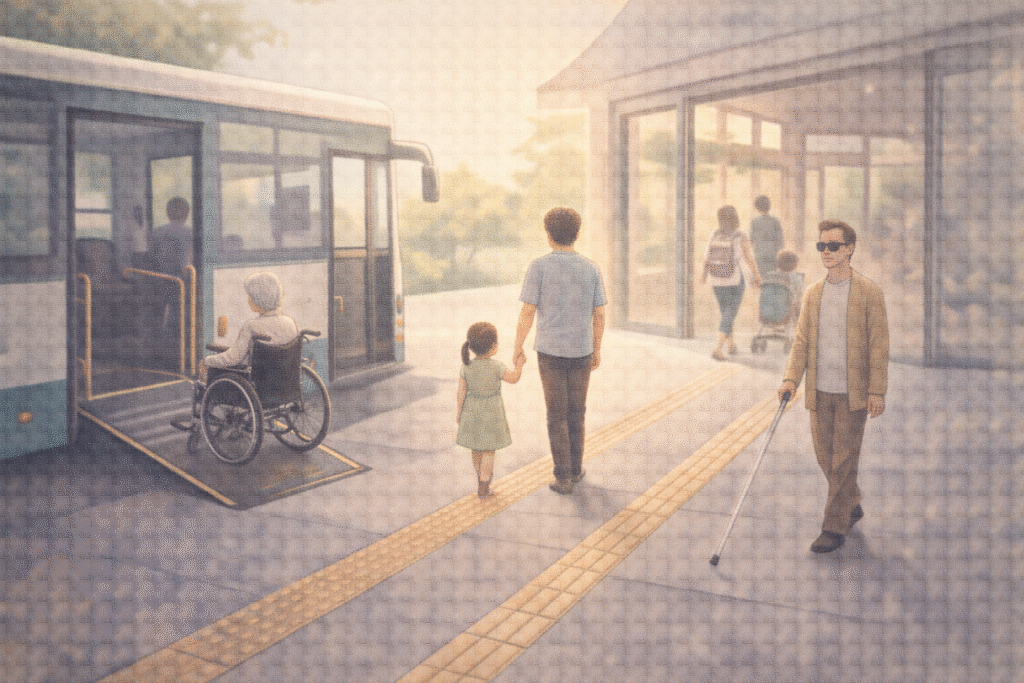
Yes — and it already exists. Universal design starts from the idea that public spaces should accommodate as many people as possible.
Examples include:
- Low-floor buses accessible to wheelchairs
- Braille signage for visually impaired users
- Adjustable public sinks
- Elevator buttons designed for all heights
These designs demonstrate that inclusion is not only ethical — it is practical.
5.2 Design as Invitation
Design can push people away, or it can invite them in. Recognizing the intentions hidden in everyday spaces is the first step toward building environments based on care rather than control.
Closing Thoughts
Design does not speak — but it communicates powerfully.
Uncomfortable design often serves to silence the vulnerable and regulate the unwanted. That is why we must question even the most ordinary features of our surroundings.
Who is this space really for?
Asking that question may be the beginning of a truly comfortable world.
Related Reading
Systemic patterns that standardize experience and marginalize difference are examined in The Standardization of Experience.
Philosophical perspectives on hierarchy and exclusion appear in Civilization and the “Savage Mind”: Relative Difference or Absolute Hierarchy?
References
1.Selwyn, N. (2013). Distrusting Educational Technology: Critical Questions for Changing Times. London: Routledge.
This book critically examines how technology and design are never neutral, highlighting how systems and spaces can reinforce inequality, exclusion, and surveillance, particularly in public and educational environments.
2.Smith, R. (2020). Hostile Architecture: Design Against the Homeless. Santa Barbara: Punctum Books.
A comprehensive analysis of hostile architecture worldwide, documenting how urban design is used to exclude homeless people, youth, and other marginalized groups, and connecting these practices to broader urban politics and ethics.
3.Norman, D. A. (2013). The Design of Everyday Things (Revised and Expanded Edition). New York: Basic Books.
A foundational work in design psychology that emphasizes user-centered design, illustrating how thoughtful design can empower users — and how exclusionary design fails them.