Tag: justice philosophy

  • Is Justice Real—or Something We Invent Together?

    Is Justice Real—or Something We Invent Together?

    A Philosophical Inquiry into Truth, Power, and Human Agreement

    Imagine two people looking at the same situation—
    one calls it fair, the other calls it unjust.

    A court decision divides public opinion.
    A policy feels just to some, but deeply unfair to others.

    In moments like these, we are forced to ask:

    Is justice something that truly exists—
    or something we create together as a society?

    This question lies at the heart of philosophy, law, and human coexistence.

    Across history, thinkers have struggled with a fundamental tension:
    whether justice is an objective truth waiting to be discovered,
    or a social agreement shaped by culture, power, and time.

    Understanding this distinction is not just theoretical—
    it shapes how we judge right and wrong in the real world.

    1. Plato: Justice as an Objective Truth

    philosopher seeking absolute truth

    Plato represents one of the strongest defenders of justice as an objective reality.

    In The Republic, he defines justice as a harmonious order in which each part of society fulfills its proper role.
    For Plato, justice exists in the realm of eternal Forms—unchanging, absolute, and independent of human opinion.

    This means justice is not created by agreement.
    It is something to be discovered through reason.

    Philosophers, therefore, are those capable of perceiving this truth and guiding society accordingly.

    This perspective establishes justice as a universal and objective standard—
    one that transcends culture, time, and individual preference.


    2. Aristotle: Justice Within Social Context

    Aristotle offers a more grounded and practical approach.

    In Nicomachean Ethics, he distinguishes between:

    • Distributive justice (fair allocation based on merit or contribution)
    • Corrective justice (restoring balance in cases of wrongdoing)

    While Aristotle still believes in rational standards, he recognizes that justice operates within real social contexts.

    Justice is not purely abstract—it must be applied within human communities.

    This marks a subtle shift:
    justice may have universal principles, but its implementation varies depending on circumstances.


    3. Social Contract Thinkers: Justice as Agreement

    people discussing justice in society

    Modern philosophers such as Hobbes, Locke, and Rousseau shift the discussion further.

    They argue that justice does not exist in a “natural” state.
    Instead, it emerges when individuals form societies and agree on rules.

    • Hobbes: Justice arises from escaping chaos through authority
    • Locke: Justice protects natural rights through mutual agreement
    • Rousseau: Justice reflects the “general will” of the people

    Here, justice is not discovered—it is constructed.

    It becomes a product of rational consensus, shaped by collective decision-making.


    4. Rawls vs. Nozick: Fairness or Freedom?

    In the 20th century, the debate takes a new form.

    John Rawls

    Rawls defines justice as fairness.
    Behind a “veil of ignorance,” individuals would choose principles that benefit everyone—especially the least advantaged.

    This approach seeks a universal standard, but one grounded in hypothetical agreement.

    Robert Nozick

    Nozick rejects redistributive justice.
    For him, justice lies in process, not outcome.

    If resources are acquired and transferred fairly, inequality itself is not unjust.

    This sharp contrast highlights a key divide:
    Is justice about fairness of results—or legitimacy of procedures?


    5. Postmodern Perspectives: Justice as Construction

    Postmodern thinkers challenge the idea of objective justice altogether.

    • Michel Foucault argues that norms are shaped by power structures
    • Jacques Derrida suggests justice is always deferred—never fully realized

    From this view, justice is not a fixed truth.
    It is a product of discourse, language, and historical context.

    What we call “justice” may simply reflect dominant narratives rather than universal morality.

    fragmented view of justice concept

    Conclusion: Where Does Justice Truly Exist?

    The debate between objective justice and social agreement remains unresolved.

    Those who defend objectivity emphasize universal moral principles and human dignity.
    Those who emphasize social construction highlight the influence of culture, power, and history.

    Perhaps the most meaningful conclusion is not to choose one side—
    but to recognize the importance of continually questioning justice itself.

    Justice is not merely an abstract ideal.
    It is a living practice—shaped by how we think, argue, and act together.

    💬 A Question for Readers

    Do you believe justice exists as a universal truth—
    or is it something we create together as a society?


    Related Reading

    The question of justice becomes even more complex when we consider how societies remember and interpret truth.
    In Is There a Single Historical Truth, or Many Narratives?, the tension between objective reality and collective interpretation reveals how even “truth” itself can be shaped by perspective.

    At the same time, the limits of human judgment are revealed in Why We Excuse Ourselves but Blame Others, where cognitive biases such as the actor–observer effect demonstrate how our sense of fairness is often influenced by perspective rather than objective standards.


    References

    1. Rawls, J. (1971). A Theory of Justice. Cambridge, MA: Harvard University Press.
      → This work presents justice as fairness, proposing that rational individuals behind a “veil of ignorance” would agree on equitable principles. It is one of the most influential attempts to reconcile objectivity and social agreement in modern political philosophy.
    2. Sandel, M. (2009). Justice: What’s the Right Thing to Do? New York: Farrar, Straus and Giroux.
      → Sandel introduces competing theories of justice and emphasizes that moral reasoning is deeply embedded in cultural and civic contexts. The book highlights the limits of purely objective definitions of justice.
    3. MacIntyre, A. (1981). After Virtue. Notre Dame: University of Notre Dame Press.
      → This work critiques modern moral fragmentation and argues that justice can only be understood within traditions and communities. It supports a socially constructed view of ethical standards.
    4. Sen, A. (2009). The Idea of Justice. Cambridge, MA: Harvard University Press.
      → Sen challenges ideal theories of justice and focuses on practical improvements in real-world conditions. He frames justice as a comparative and socially negotiated concept.
    5. Fraser, N. (1997). Justice Interruptus. New York: Routledge.
      → Fraser expands justice beyond distribution to include recognition and representation, showing that justice operates across multiple social dimensions and cannot be reduced to a single universal standard.
  • Can Artificial Intelligence Make Better Laws?

    Justice, Algorithms, and the Future of Democracy

    Law is one of the most fundamental institutions of human society.

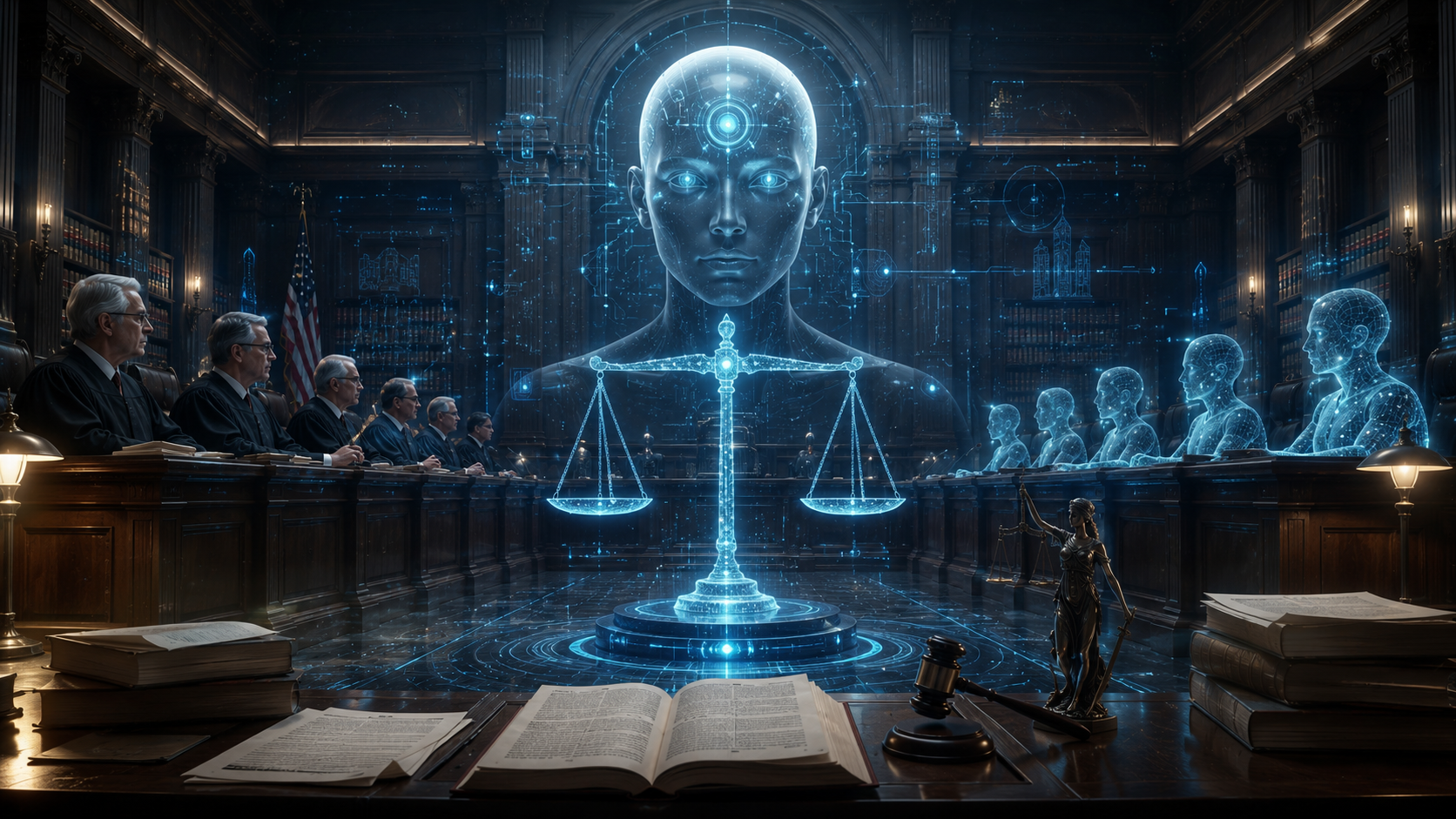
    AI scales of justice concept

    It organizes social order, resolves conflicts, and defines the limits of acceptable behavior. Yet throughout history, laws have rarely represented perfect justice.

    Legal systems are shaped by political negotiation, economic interests, historical traditions, and human limitations. Legislators compromise, lobbyists influence policy, and public opinion changes over time. As a result, laws often reflect a balance of power rather than a purely rational expression of fairness.

    Today, however, technological developments are raising a new possibility. Artificial intelligence can process enormous amounts of data, detect patterns within complex systems, and simulate the potential consequences of policy decisions. Some researchers therefore suggest that AI might assist—or even participate—in the creation of laws.

    If algorithms could design legal rules based on massive datasets and statistical reasoning, societies might gain more efficient and consistent legal systems.

    Yet this possibility raises a deeper question.

    If artificial intelligence could write laws, would justice actually become closer—or would law lose its human meaning?


    1. Algorithmic Lawmaking and the Promise of Rational Governance

    Artificial intelligence can analyze information at a scale that no human legislator could match. Modern machine-learning systems are capable of examining thousands of court decisions, statutes, and policy outcomes simultaneously.

    In principle, this capability allows AI to detect structural patterns in legal systems that humans may overlook. Algorithms could identify contradictions within complex regulatory frameworks or reveal unintended biases embedded in existing laws.

    In areas where rules depend heavily on measurable variables—such as taxation, traffic regulation, or administrative procedures—AI could improve legal consistency and predictability.

    For example, algorithmic systems might help policymakers:

    • detect contradictory regulations within legal codes
    • identify discriminatory patterns in policy outcomes
    • model the long-term economic and social consequences of legislation

    From this perspective, AI appears to offer a powerful tool for rational governance. Laws could become more coherent, efficient, and data-informed.

    However, the promise of algorithmic rationality raises an immediate philosophical challenge.

    Is rational optimization the same as justice?


    2. Justice Beyond Calculation

    algorithm versus human legal judgment

    Legal systems are not merely technical structures. They are moral frameworks shaped by social values, cultural traditions, and human interpretation.

    In judicial practice, the same legal rule may lead to different outcomes depending on context. Courts frequently consider factors such as intention, responsibility, personal circumstances, and the possibility of rehabilitation.

    Such decisions require interpretation rather than calculation.

    Artificial intelligence excels at identifying patterns in structured data. Yet moral reasoning often involves qualitative judgments that cannot easily be reduced to numerical variables.

    For instance, empathy, remorse, and social circumstances can influence legal judgments. These dimensions are deeply human and difficult to encode into algorithmic systems.

    A purely data-driven legal system might therefore produce decisions that appear statistically fair but are experienced as morally unacceptable.

    This distinction highlights a crucial tension between formal fairness and substantive justice. While algorithms may ensure consistency, justice often requires flexibility and moral understanding.


    3. Law as a Democratic Institution

    Another challenge concerns the political legitimacy of lawmaking.

    In democratic societies, laws derive authority not only from their outcomes but also from the process through which they are created. Citizens elect representatives, legislatures debate policies, and governments remain accountable to the public.

    Law is therefore not only a set of rules but also a form of collective self-governance.

    If artificial intelligence were to design laws autonomously, this democratic principle could be weakened. Even if AI-generated rules were technically efficient, citizens might question their legitimacy.

    Important questions would arise:

    Who determines the values embedded in the algorithm?
    Who is responsible when an AI-generated law produces harmful consequences?

    Without clear accountability, algorithmic governance risks undermining the democratic idea that societies should govern themselves.


    4. Philosophical Debate: Can Justice Be Computed?

    The debate surrounding AI lawmaking reflects a deeper philosophical disagreement about the nature of justice itself.

    One perspective argues that justice should be as rational and impartial as possible. Human lawmakers are vulnerable to prejudice, corruption, and emotional bias. From this viewpoint, algorithmic systems may offer a more objective approach to legal design. By relying on large datasets and statistical reasoning, AI could potentially reduce arbitrary judgments and improve fairness.

    Supporters of this perspective see technology as a means of overcoming the imperfections of human decision-making.

    Another perspective, however, argues that justice cannot be reduced to computation. Legal philosopher Ronald Dworkin famously described law as an interpretive practice that requires moral reasoning. Justice, in this view, emerges from human debate, ethical reflection, and democratic participation.

    According to this perspective, removing human judgment from lawmaking would not produce neutrality but rather a new form of hidden power—embedded in the design of algorithms and datasets.

    The philosophical tension therefore lies between two visions of justice:

    • justice as rational optimization
    • justice as moral interpretation

    Artificial intelligence may excel at the first, but the second remains deeply rooted in human social life.


    5. AI as a Tool for Law, Not Its Author

    Despite these philosophical concerns, artificial intelligence may still play a transformative role in legal systems.

    Rather than replacing human lawmakers, AI could function as a powerful analytical tool within legislative processes. Algorithms might assist policymakers by identifying contradictions within legal codes, detecting discriminatory provisions, or predicting the consequences of regulatory changes.

    Such systems could make legislative decision-making more evidence-based and transparent.

    In this hybrid model, artificial intelligence supports human judgment without replacing it. Elected representatives continue to define societal values, while algorithmic systems provide analytical insights that improve policy design.

    This approach preserves the human character of lawmaking while benefiting from computational analysis.

    human and AI shaping future law

    Conclusion

    The possibility of AI-generated laws forces societies to reconsider fundamental assumptions about justice and governance.

    Artificial intelligence may eventually become capable of proposing legal frameworks that are more consistent and analytically sophisticated than those created by humans alone.

    Yet justice is not simply a problem of technical optimization. It is a moral and political concept rooted in shared values, democratic participation, and human responsibility.

    The central question may therefore not be whether AI can write laws.

    Instead, the more important question is whether human societies would accept laws created by machines.

    Justice does not exist solely in algorithms or datasets. It emerges from communities continuously negotiating how they wish to live together.

    Even in an age of intelligent machines, defining justice will likely remain a fundamentally human task.

    Related Reading

    The subtle psychological mechanisms that shape human judgment and decision-making are further explored in Why We Excuse Ourselves but Blame Others, where the tendency to apply different standards to ourselves and others reveals how subjective bias can influence perceptions of fairness and responsibility.

    At a broader technological and political level, similar questions about the role of digital systems in shaping public life appear in Algorithmic Bias: How Recommendation Systems Narrow Our Worldview, where debates about algorithmic influence raise deeper concerns about whether automated systems can truly remain neutral in democratic societies.


    References

    1. Lessig, L. (1999). Code and Other Laws of Cyberspace. New York: Basic Books.
    This influential work argues that digital code functions as a regulatory system similar to law. Lessig demonstrates how technological architectures shape social behavior and provides a theoretical foundation for understanding algorithmic governance and its implications for legal systems.

    2. Surden, H. (2014). “Machine Learning and Law.” Washington Law Review, 89(1), 87–115.
    Surden analyzes how machine-learning technologies can assist legal analysis and decision-making. The article also discusses the conceptual limitations of algorithmic reasoning when applied to complex legal interpretation and policy formation.

    3. Sartor, G. (2009). Legal Reasoning: A Cognitive Approach to the Law. Dordrecht: Springer.
    Sartor examines the cognitive processes underlying legal reasoning and compares them with formal logical systems. His work highlights the challenges involved in translating human interpretive judgment into computational models.

    4. Balkin, J. M. (2017). “The Three Laws of Robotics in the Age of Big Data.” Ohio State Law Journal, 78(5), 1217–1247.
    Balkin explores how artificial intelligence and large-scale data systems are reshaping legal institutions. The article emphasizes the importance of democratic accountability in an era increasingly influenced by algorithmic decision-making.

    5. Calo, R. (2015). “Robots in American Law.” University of Washington School of Law Research Paper No. 2015-04.
    Calo investigates the emerging relationship between robotics, artificial intelligence, and legal institutions. His analysis highlights regulatory challenges and the evolving role of intelligent systems in modern governance.