Can Cultural Diversity Thrive in a World Still Dominated by Hollywood?
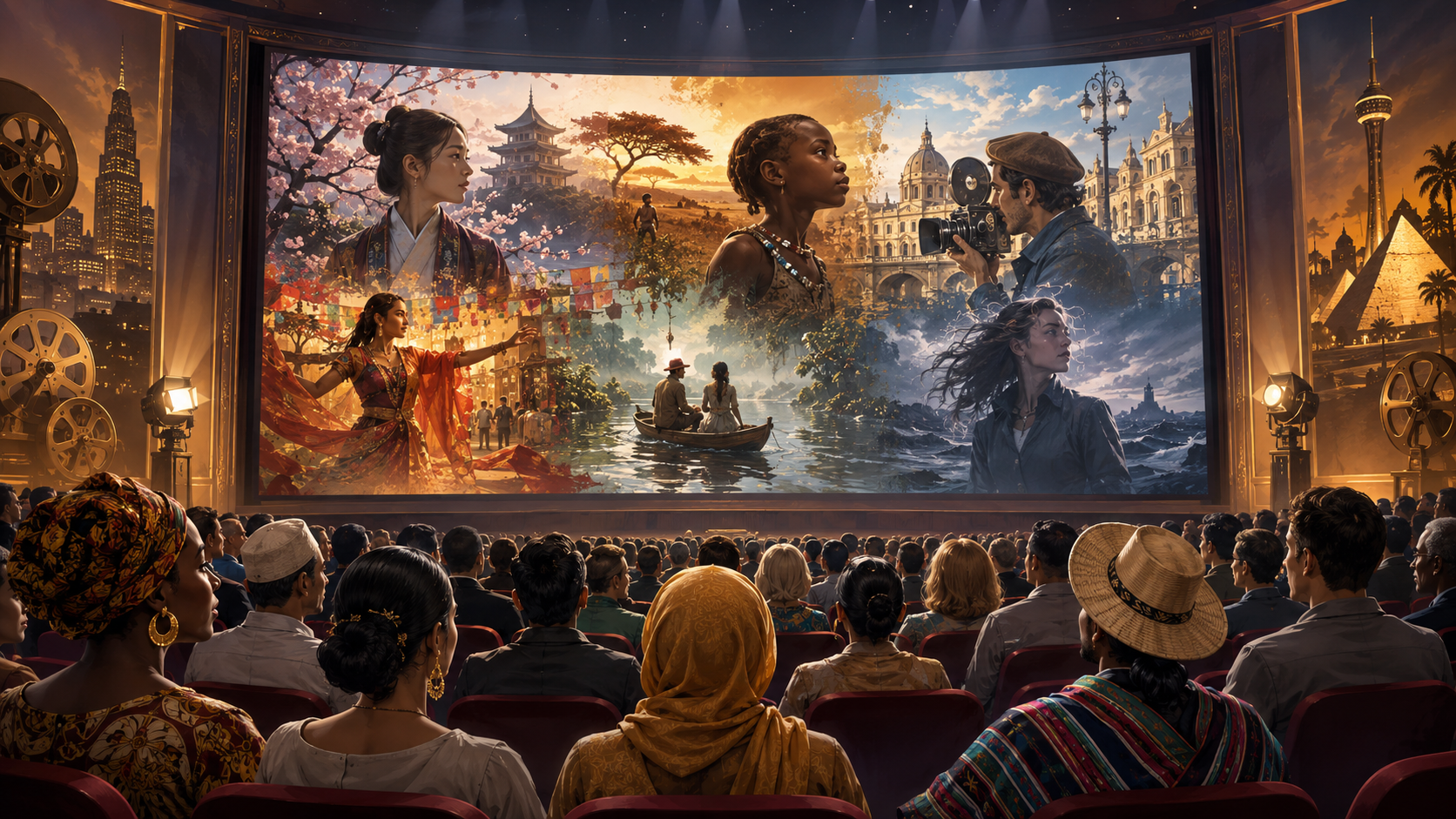
Movies have long been one of humanity’s most influential forms of storytelling. They entertain audiences, preserve cultural memories, challenge political ideas, and introduce people to lives far different from their own. In today’s interconnected world, however, cinema is no longer confined by national borders. A film released in Seoul, Mumbai, Tokyo, Paris, or Lagos can reach viewers around the globe within days through streaming platforms and international distribution networks.
This unprecedented accessibility has transformed the global film industry. Audiences now have greater opportunities than ever before to discover stories from different cultures, languages, and traditions. At the same time, globalization has intensified competition, allowing a small number of powerful studios and digital platforms to shape what billions of people watch.
This creates an important debate. Does globalization strengthen cultural diversity by giving more voices a global audience, or does it gradually encourage filmmakers to produce stories that conform to international commercial expectations?
The answer is more complex than choosing between Hollywood and local cinema. Today’s film industry is increasingly influenced by streaming services, global co-productions, recommendation algorithms, artificial intelligence, and rapidly changing audience preferences. The challenge is no longer simply protecting national cinemas—it is ensuring that cultural diversity continues to flourish within a truly global entertainment ecosystem.
1. The Globalization of Cinema
From National Industries to Global Audiences
For much of the twentieth century, films were produced primarily for domestic audiences before occasionally reaching international markets. Today, digital technology has fundamentally changed that model.
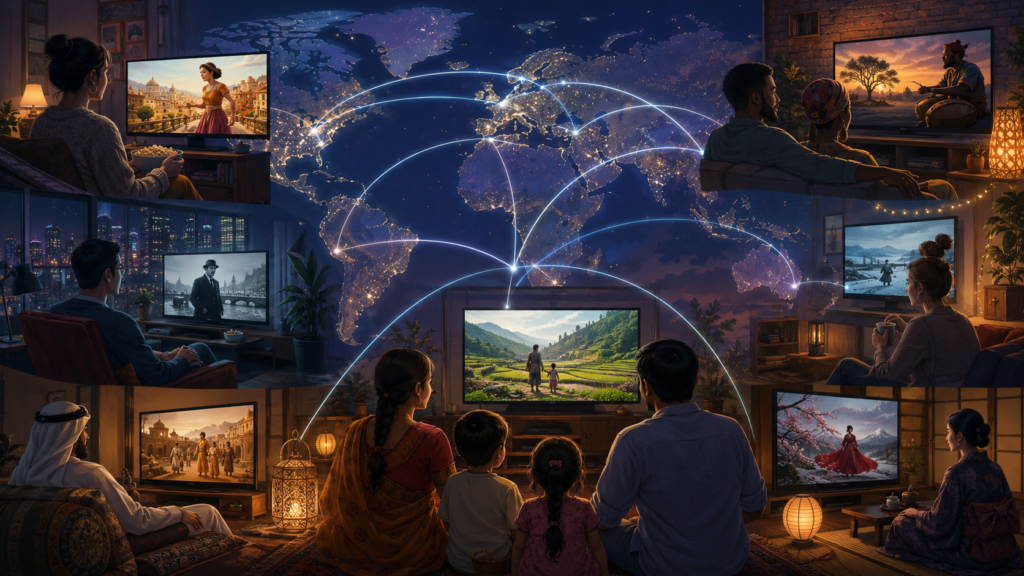
Streaming platforms, international film festivals, and global distribution networks allow films to cross borders almost instantly. Viewers can watch productions from countries they may never have visited, while filmmakers can access audiences that were once impossible to reach.
Cinema has become one of the most globalized cultural industries in the world.
A New Era of International Collaboration
Globalization has also transformed the way films are made.
International co-productions bring together directors, actors, technicians, composers, and visual-effects artists from multiple countries. Productions frequently combine financial investment, creative talent, and filming locations across continents.
This collaboration often enriches storytelling by incorporating diverse perspectives while allowing smaller industries to benefit from international expertise and funding.
2. How Globalization Enriches Cinema
Expanding Cultural Exchange
Perhaps the greatest advantage of global cinema is its ability to introduce audiences to cultures beyond their own.
Films provide emotional experiences that textbooks and documentaries often cannot. Through stories, viewers gain insight into different traditions, historical experiences, family structures, and social values.
The international success of South Korea’s Parasite demonstrated that audiences are increasingly willing to embrace stories deeply rooted in local culture. Rather than becoming a barrier, cultural specificity became one of the film’s greatest strengths.
Similarly, Japanese films such as Drive My Car, India’s RRR, and France’s Anatomy of a Fall have shown that outstanding storytelling can transcend language barriers.
Innovation Through Collaboration
Global partnerships also encourage technical and artistic innovation.
Advances in visual effects, animation, cinematography, and sound design are increasingly shared across industries. Smaller film industries gain access to cutting-edge technology, while larger studios benefit from fresh creative perspectives.
The result is a richer and more diverse cinematic landscape than ever before.
Streaming Platforms as Cultural Gateways
Streaming services have dramatically expanded access to international cinema.
In previous decades, many foreign-language films reached only specialized cinemas or film festivals. Today, viewers can discover productions from dozens of countries with just a few clicks.
For many audiences, streaming platforms have become the first introduction to cultures they previously knew little about.
3. The Challenges of Hollywood’s Global Influence
Unequal Market Power
Despite increasing diversity, Hollywood continues to dominate the global box office.
Large production budgets, sophisticated marketing campaigns, internationally recognized actors, and extensive distribution networks give major American studios enormous competitive advantages.
In many countries, blockbuster franchises occupy most cinema screens during peak seasons, making it difficult for local productions to attract audiences.
Economic success, therefore, does not always reflect cultural diversity.
The Risk of Cultural Homogenization
Global audiences often encourage globally recognizable stories.
To maximize international appeal, filmmakers may simplify cultural traditions, reduce historical complexity, or emphasize universally familiar themes.
While this approach increases commercial success, critics argue that it can gradually weaken the cultural uniqueness that distinguishes different national cinemas.
As films become designed for “everyone,” they sometimes become deeply representative of no particular culture.
Language and Representation
Language remains another significant challenge.
Although subtitles and dubbing have become increasingly accepted, much of the emotional nuance, humor, and cultural meaning contained within original dialogue cannot be fully translated.
Smaller languages also receive far less international exposure than English, raising concerns that linguistic diversity may gradually decline within global entertainment.

4. Streaming Platforms: Opportunity or New Gatekeepers?
Opening Doors for Independent Films
Platforms such as Netflix, Disney+, Amazon Prime Video, and MUBI have significantly expanded opportunities for filmmakers outside Hollywood.
Independent productions that might never have secured international theatrical distribution can now reach viewers across multiple continents.
This has created unprecedented visibility for regional cinema.
The Power of Algorithms
Yet streaming platforms introduce a different concern.
Recommendation algorithms largely determine which films audiences discover. Instead of viewers actively exploring diverse cultures, algorithms often recommend content similar to previous viewing habits.
As a result, audiences may remain inside personalized entertainment “bubbles,” limiting genuine cultural exploration.
The future of diversity depends not only on what platforms offer but also on what their algorithms choose to promote.
5. Can Local Cinema Compete?
Government Support and Cultural Policy
Many countries actively support domestic filmmaking through grants, tax incentives, public broadcasters, and national film institutes.
These policies recognize cinema not merely as an industry but as an important expression of cultural identity.
Without public support, commercially driven global markets could easily overwhelm smaller film industries.
The Importance of International Film Festivals
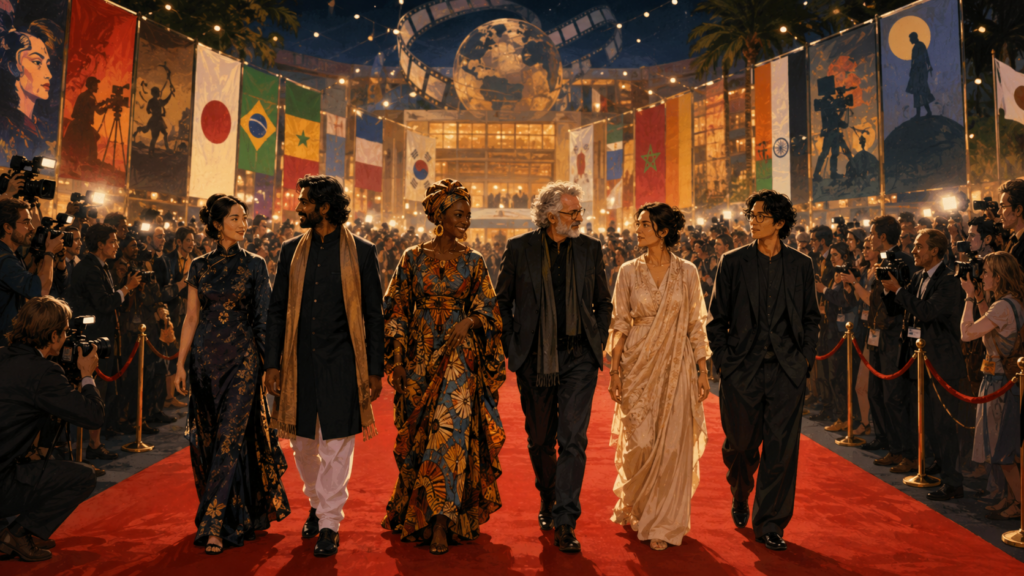
Film festivals such as Cannes, Venice, Berlin, Sundance, and Toronto continue to play an essential role in promoting artistic diversity.
They introduce audiences, critics, and distributors to innovative films that may otherwise receive little international attention.
Many internationally acclaimed films first gained recognition through these festivals before reaching wider audiences.
Audiences Also Shape the Market
Ultimately, viewers influence which stories survive.
Every decision to watch a local film, recommend an independent production, or explore cinema from another culture contributes to a more diverse global film industry.
Globalization is shaped not only by studios and platforms but also by millions of individual viewing choices.
6. The Future of Global Cinema
Artificial Intelligence and Film Production
Artificial intelligence is beginning to influence screenwriting, editing, visual effects, dubbing, and translation.
These technologies may reduce production costs and make international distribution easier than ever before.
However, they also raise important ethical questions.
If AI increasingly generates scripts or reproduces artistic styles, how should originality, authorship, and cultural authenticity be protected?
The future debate may extend beyond Hollywood’s dominance to the relationship between human creativity and machine-generated storytelling.
Toward a Truly Global Film Culture
Rather than replacing local cultures, globalization has the potential to connect them.
The greatest strength of cinema lies in its ability to present universal human experiences through unique cultural perspectives.
The goal should not be creating films that look the same everywhere but ensuring that audiences everywhere have access to different voices, languages, and traditions.
A healthy global film industry is one in which diversity is viewed not as a commercial obstacle but as its greatest creative advantage.
Conclusion
The globalization of cinema presents both extraordinary opportunities and significant challenges.
It enables unprecedented cultural exchange, encourages international collaboration, and allows remarkable stories from every corner of the world to reach global audiences. At the same time, market concentration, algorithmic recommendations, and Hollywood’s continuing dominance create pressures toward commercial standardization.
The future of cinema depends on maintaining a careful balance between global accessibility and cultural authenticity.
Filmmakers must continue telling stories rooted in their own cultures without feeling compelled to conform to international formulas. Governments and cultural institutions should support creative diversity, while streaming platforms should ensure that recommendation systems expose audiences to a broader range of voices.
Most importantly, audiences themselves hold considerable power.
Every time we choose to watch a film from an unfamiliar country, listen to a different language, or engage with a story outside our own cultural experience, we contribute to a richer global conversation.
Cinema has always reflected humanity’s diversity. In an increasingly connected world, its greatest mission may not be to create a single global culture, but to help different cultures understand one another without losing their unique identities.
Reader Question
As streaming platforms continue to connect audiences across borders, should they prioritize commercially successful films, or should they actively promote culturally diverse stories from smaller film industries?
If globalization makes movies more accessible than ever before, how can filmmakers preserve authentic cultural identities without limiting their international appeal?
Related Reading
If cultural products increasingly cross national borders through digital platforms, how can societies encourage global exchange without losing the uniqueness of local traditions?
In Cultural Tourism and Commercialization: Preserving Heritage or Turning Tradition into a Product?, we explore how globalization creates new opportunities for cultural exchange while also raising concerns about commercialization and cultural authenticity.
If artificial intelligence begins transforming not only filmmaking but also storytelling, creativity, and audience experiences, how might it change the future of cinema itself?
In The Future of Happiness: How Will We Define Happiness in the Age of AI and Climate Change?, we examine how AI, technological innovation, and changing human values may reshape not only everyday life but also the creative industries that influence how we understand ourselves.
References
1. Elsaesser, T. (2019). European Cinema and Continental Philosophy. Bloomsbury Academic.
Elsaesser explores how cinema reflects cultural identity, globalization, and philosophical ideas across different societies. The book highlights the importance of preserving diverse cinematic voices in an increasingly interconnected world.
2. Scott, A. J. (2005). On Hollywood: The Place, the Industry. Princeton University Press.
This book examines why Hollywood became the dominant force in the global film industry. It analyzes the economic, technological, and institutional factors behind Hollywood’s worldwide influence while discussing its impact on other national cinemas.
3. UNESCO. (2005). Convention on the Protection and Promotion of the Diversity of Cultural Expressions. UNESCO Publishing.
UNESCO argues that cultural diversity is a global public good and that creative industries—including film—deserve protection from excessive market concentration. The convention remains a key international framework for discussions about cultural globalization.
4. Lobato, R. (2019). Netflix Nations: The Geography of Digital Distribution. New York University Press.
Lobato investigates how streaming platforms are transforming global media distribution. He explains both the opportunities these services create for international cinema and the new inequalities introduced through platform algorithms and digital gatekeeping.
5. United Nations Educational, Scientific and Cultural Organization (UNESCO). (2022). Re|Shaping Policies for Creativity: Addressing Culture as a Global Public Good. UNESCO.
This report examines how governments, creators, and digital platforms can work together to support cultural diversity in the digital age. It emphasizes that globalization should expand—not reduce—the range of cultural voices available to audiences worldwide.