Rethinking Anthropocentrism and Our Place in the Living World
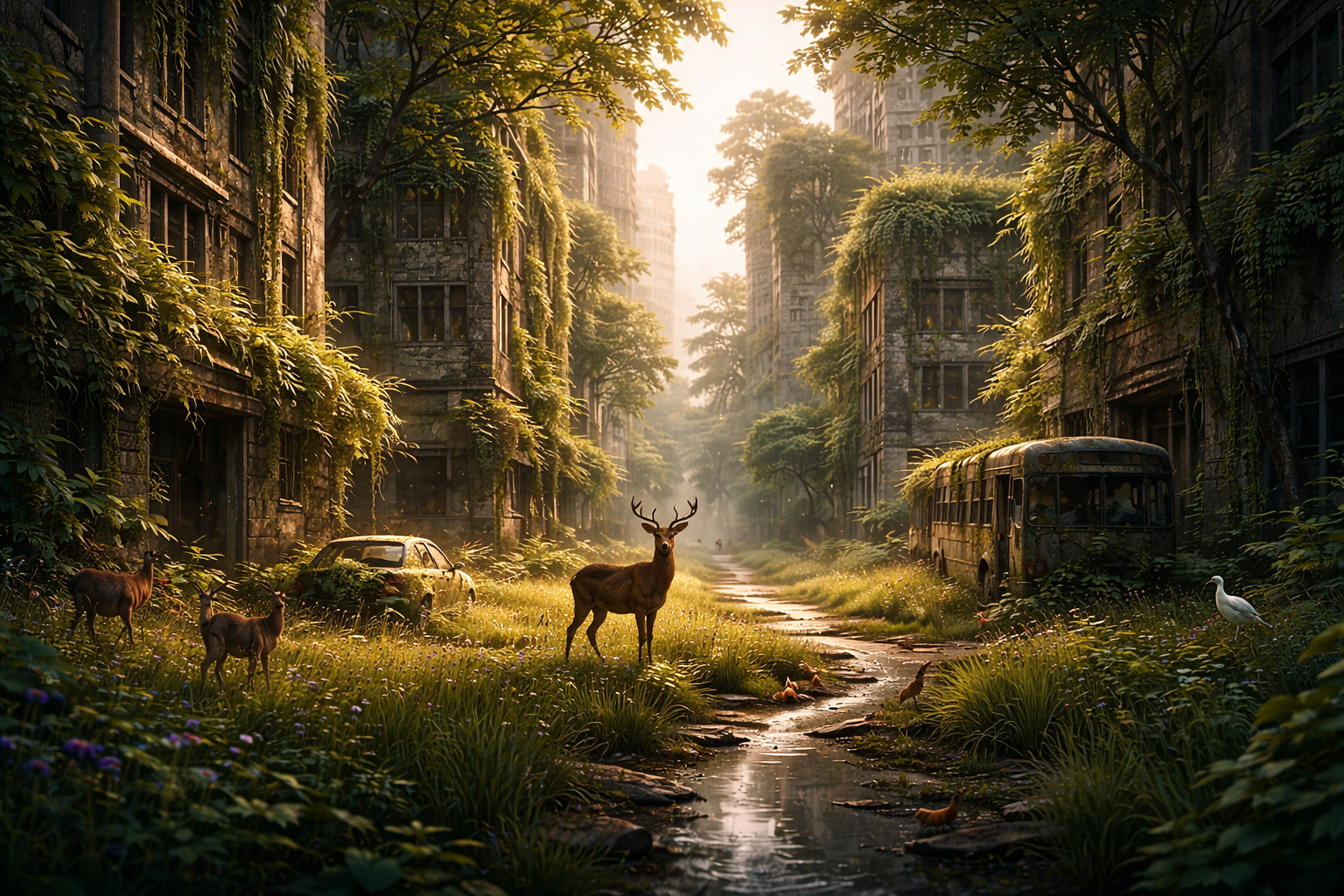
Imagine a world where humans have disappeared.
Cities grow silent. Forests reclaim abandoned streets.
Oceans begin to heal, and endangered species return.
Surprisingly, this vision does not always feel like a dystopia.
It leads us to an unsettling question:
Would the Earth be better without us?
1. Nature Does Not Depend on Humans

1.1. Evidence from Temporary Absence
During the COVID-19 pandemic, reduced human activity led to
clearer skies, cleaner air, and the return of wildlife to urban areas.
Nature began to recover—
not because of human intervention, but because of its absence.
1.2. The Resilience of Ecosystems
This suggests that ecosystems possess
an inherent capacity for regeneration.
Life on Earth evolved long before humans existed—
and it can continue without us.
2. The Shadow of Anthropocentrism
2.1. Humans at the Center
For centuries, human civilization has placed itself
at the center of existence.
Philosophical traditions—from Descartes onward—
reinforced the idea that humans are distinct from, and superior to, nature.
2.2. The Cost of Dominance
This worldview has justified exploitation:
deforestation, industrialization, and biodiversity loss.
The belief that we are “owners” of the Earth
may be one of the greatest threats to its survival.
3. Would a Human-Free Earth Be Ideal?
3.1. A World Without Witnesses
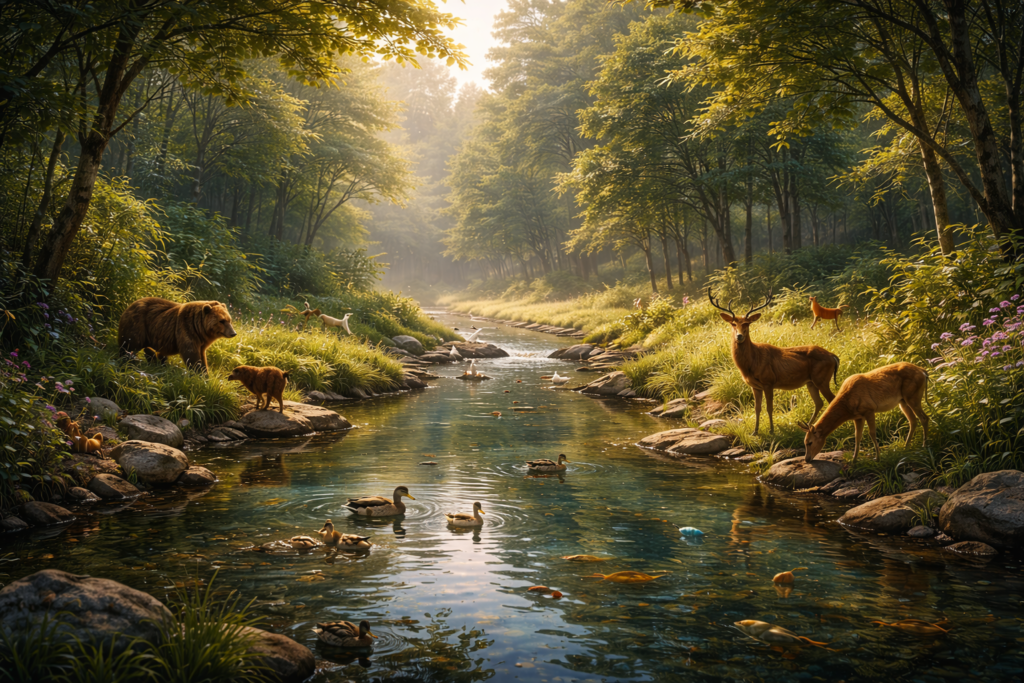
A human-free Earth might be greener, cleaner, and more balanced.
But it would also be a world without observers—
no one to perceive beauty, meaning, or value.
3.2. Humans as Destroyers—and Stewards
Humans are not only agents of destruction.
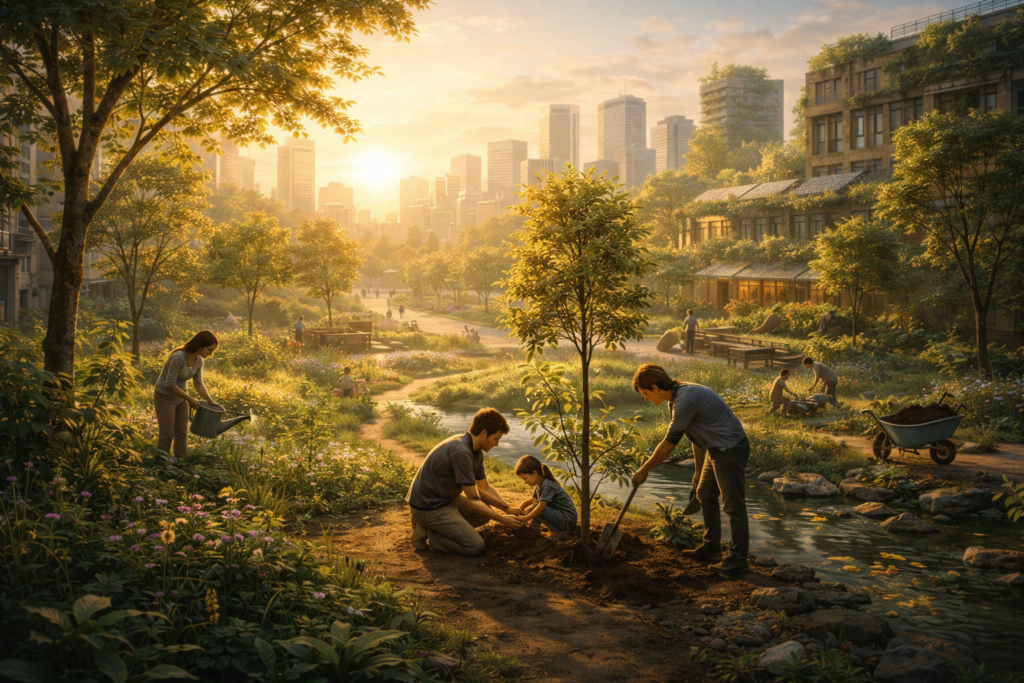
We are also capable of responsibility, care, and restoration.
Environmental movements, conservation efforts, and sustainability innovations
all originate from human awareness.
4. From Dominance to Coexistence
4.1. A Better Question
Perhaps the real question is not:
“Would Earth be better without humans?”
But rather:
“How can humans exist in a way that allows Earth to thrive?”
4.2. Redefining Our Role
Through technology, ethics, education, and culture,
we can move from domination to coexistence.
Not as rulers of nature—
but as participants within it.
Conclusion: Who Does the Earth Belong To?
A human-free Earth might be quieter and more balanced.
But it would also be a world without meaning—
at least in human terms.
The future of Earth does not depend on our disappearance,
but on our transformation.
From exploiters to caretakers,
from owners to co-inhabitants.
The question is not whether we should vanish—
but whether we can learn to belong.
Reader Question
Do you believe the Earth needs fewer humans—
or better humans?
Related Reading
The relationship between humans and the natural world becomes even more complex when we consider how our daily choices shape the environment.
In Is Minimalism a Lifestyle or a Privilege?, the idea of consumption reveals how reducing what we take from the world may be one of the first steps toward a more sustainable coexistence.
At the same time, the question of progress itself invites deeper reflection.
In Are Cities Symbols of Progress—or Spaces of Inequality?, the tension between development and its consequences highlights how human-centered growth can both improve and destabilize the environments we depend on.
References
1. ReferencesKolbert, E. (2014). The Sixth Extinction: An Unnatural History. New York: Henry Holt.
→ Kolbert documents how human activity is driving mass extinction, offering powerful evidence that ecological imbalance is closely tied to anthropogenic impact.
2. Weisman, A. (2007). The World Without Us. New York: Thomas Dunne Books.
→ This book imagines a planet without humans, illustrating how natural systems would reclaim human-made environments and restore ecological balance over time.
3. Crist, E. (2018). Abundant Earth: Toward an Ecological Civilization. Chicago: University of Chicago Press.
→ Crist critiques anthropocentrism and proposes a shift toward ecological coexistence, emphasizing the need