Memory, Identity, and the Limits of the Self
Memory is not just data.
It is the narrative through which we understand who we are,
the structure that shapes our relationships with the world,
and the emotional foundation of our identity.
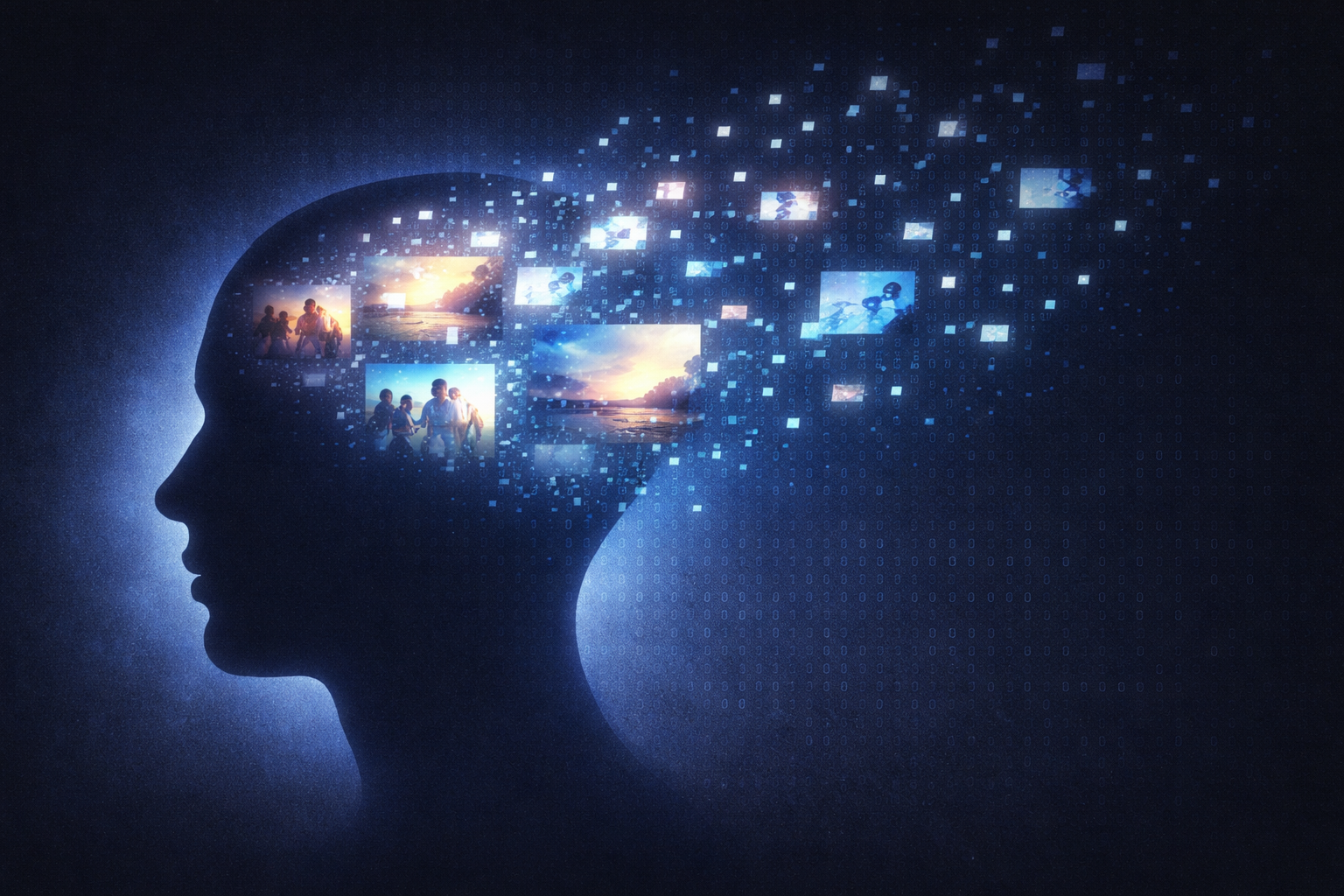
But what if every memory we have — from the faintest childhood moment to the most recent conversation — could be perfectly digitized, stored, and retrieved at will?
What if memories could be exchanged, edited, or even erased?
Would we still be the same person?
1. Is Memory the Core of Personal Identity?

Philosopher John Locke argued that personal identity is grounded in the continuity of memory.
According to his “memory theory,” a person remains the same individual as long as they can remember past experiences as their own.
From this perspective, perfectly digitizing and preserving memory might appear to stabilize identity.
However, human memory is not designed for perfect preservation.
It is shaped by forgetting, distortion, and reinterpretation.
To digitize memory completely is to remove these imperfections —
and perhaps, in doing so, remove something essential to being human.
2. Memory Copying and the Multiplication of the Self
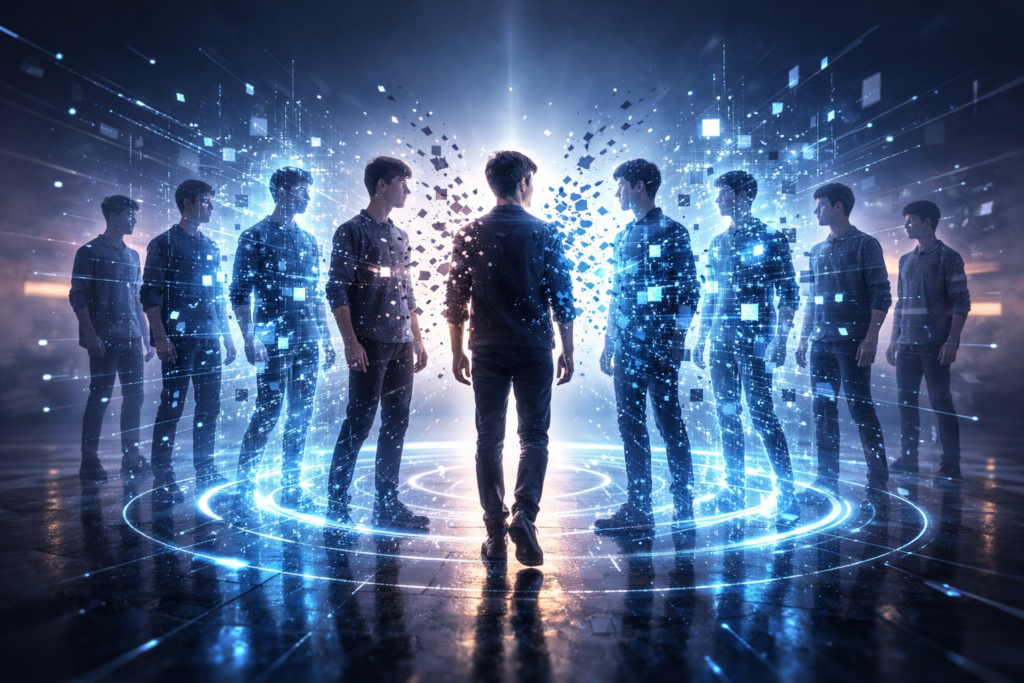
If memory can be fully digitized, it can theoretically be copied.
Imagine an artificial intelligence that contains all your memories.
Would that entity be you?
Or would it be something else — a replica of your narrative without your present consciousness?
This raises a deeper philosophical question:
Is personal identity defined by memory alone,
or does it also require a specific body, perception, and lived experience in the present?
If multiple entities share identical memories,
can they all be considered the same person?
3. Memory Editing and the Transformation of Identity
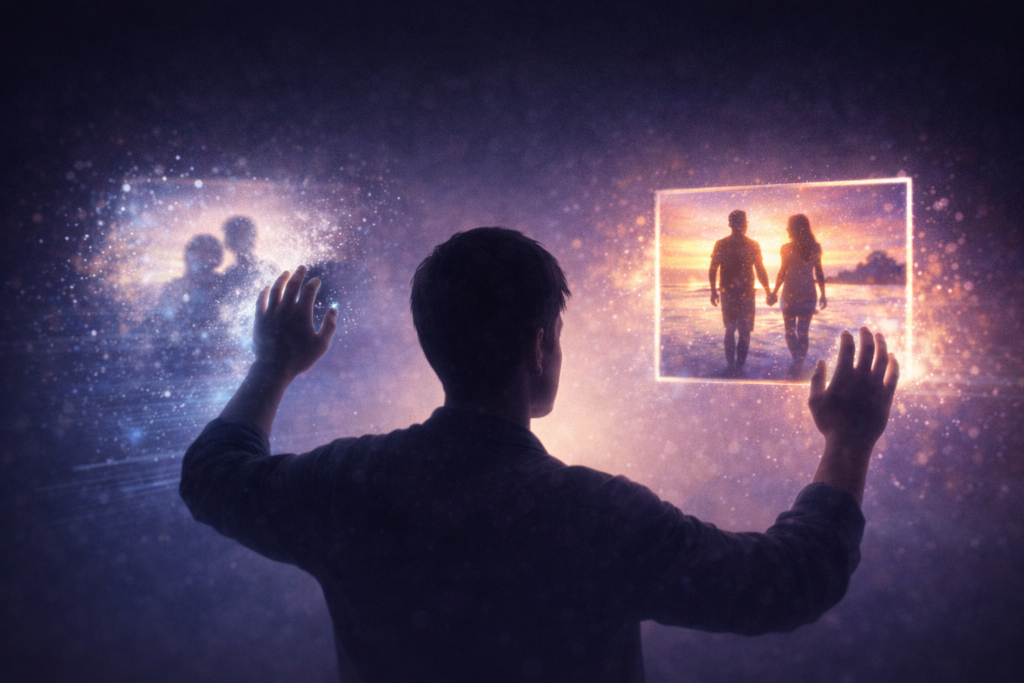
If we could remove painful memories or implant artificial ones,
would that make our lives better?
Popular culture has explored this idea, most notably in Eternal Sunshine of the Spotless Mind,
where characters erase memories of love and loss.
Psychologically, memory is not a passive archive of the past.
It is an active process that continuously shapes the present self.
To alter memory is not merely to change the past —
it is to reconstruct identity itself.
This suggests a shift from the idea of identity as continuity
to identity as ongoing reconstruction.
4. Social and Ethical Implications
The digitization of memory transforms private experience into data.
This raises serious concerns about privacy and control.
If governments or corporations gain access to memory data,
they could potentially monitor, manipulate, or even rewrite personal identity.
Furthermore, if memory technologies become commodified,
they may create new forms of inequality.
Those with resources could preserve, enhance, or curate their memories,
while others may be excluded from such possibilities.
This leads to a troubling scenario:
a society where memory itself becomes a site of power and inequality.
Conclusion: Identity Beyond Storage
The digitization of memory is not merely a technological development.
It is a fundamental challenge to how we define the self.
If memory becomes data, can identity remain human?
Perhaps the answer lies in recognizing that memory is not just something we store,
but something we continuously live through, reinterpret, and sometimes forget.
Even in a future where memory can be perfectly preserved,
our humanity may depend on our ability to choose how we remember —
and how we forget.
A Question for Readers
If your memories could be perfectly copied or edited, would you still consider yourself the same person — or would you become someone new?
Related Reading
The philosophical tension between memory, identity, and the limits of human completeness is also reflected in Why Do Humans Seek Perfection While Knowing They Are Incomplete?, where the desire to overcome human limitations reveals deeper questions about self-awareness, imperfection, and the nature of being.
At a more introspective level, the role of memory and personal experience in shaping the self can be further explored in The Psychology of Handwriting, where subtle human expressions—often overlooked in the digital age—offer insight into how identity is continuously formed through embodied and imperfect acts of cognition.
References
- Locke, J. (1690/1975). An Essay Concerning Human Understanding. Oxford University Press.
→ Locke establishes the philosophical foundation of the memory theory of personal identity, arguing that continuity of consciousness defines the self. This work remains central to debates on whether digitized memory could preserve identity. - Parfit, D. (1984). Reasons and Persons. Oxford University Press.
→ Parfit explores complex scenarios involving identity, duplication, and psychological continuity. His arguments challenge the idea of a single, stable self and are crucial for understanding memory copying and identity fragmentation. - Sandel, M. J. (2007). The Case Against Perfection: Ethics in the Age of Genetic Engineering. Harvard University Press.
→ Sandel examines the ethical implications of human enhancement technologies, including those affecting cognition and memory. His work extends to broader concerns about human dignity and the limits of technological intervention. - Roediger, H. L., & McDermott, K. B. (2000). “Tricks of Memory.” Current Directions in Psychological Science, 9(4), 123–127.
→ This study highlights how human memory is inherently reconstructive and prone to distortion. It provides an empirical foundation for questioning whether “perfect” digital memory would fundamentally alter human cognition. - Kurzweil, R. (2005). The Singularity Is Near: When Humans Transcend Biology. Viking Press.
→ Kurzweil discusses the possibility of digitizing human consciousness and memory within the context of technological singularity. His work offers a forward-looking perspective on how identity might evolve alongside technology.