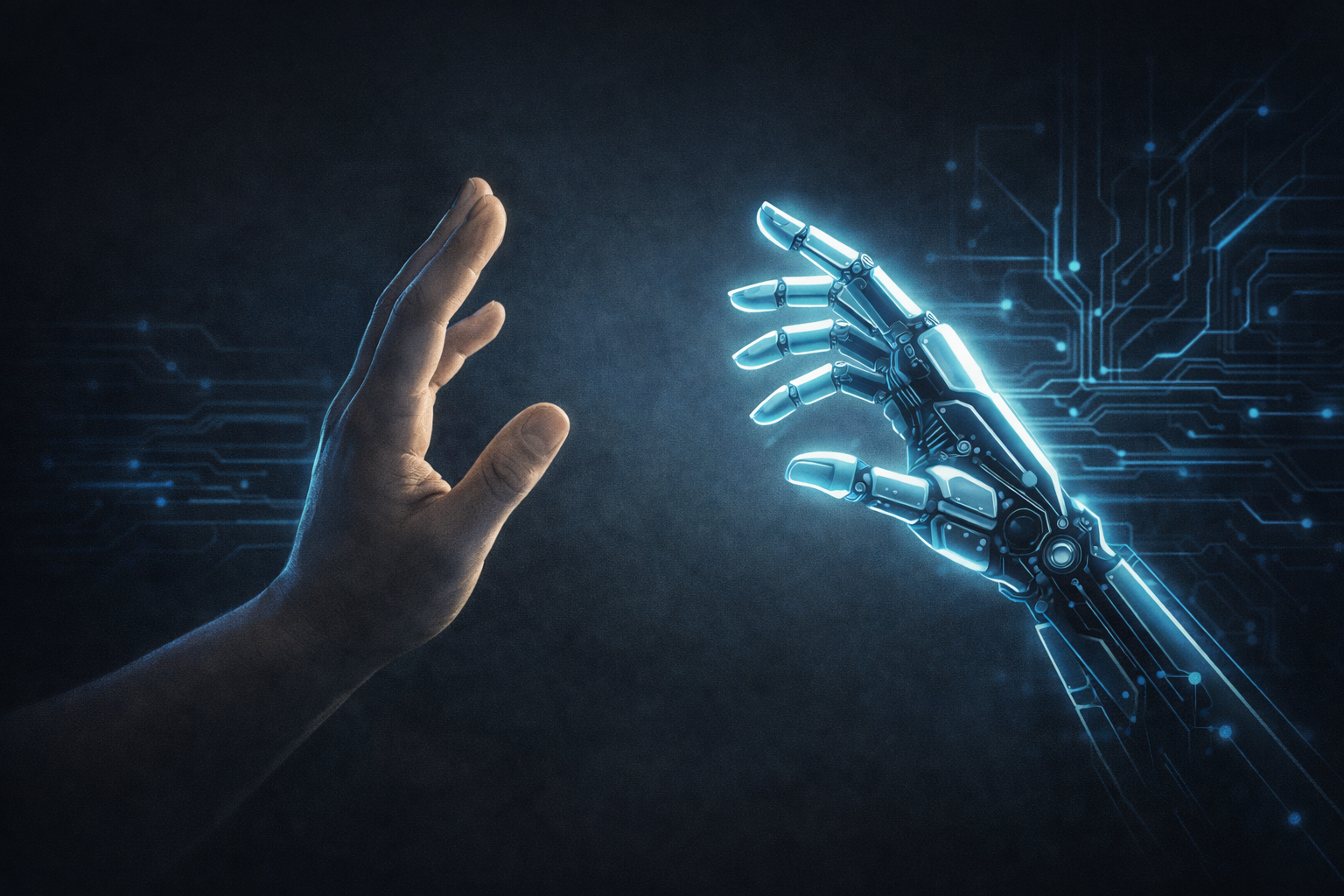
A Philosophical Trial of Technological Determinism and Human-Centered Thought
Artificial intelligence has rapidly moved from the realm of science fiction into the fabric of everyday life.
AI systems now write text, generate images, diagnose diseases, recommend legal decisions, and even create works of art. What was once considered uniquely human — reasoning, creativity, and decision-making — increasingly appears within machines.
This transformation raises a fundamental philosophical question:
Is artificial intelligence merely a tool created by humans, or could it become a new kind of agent in the world?
To explore this question, let us imagine a courtroom — not a place of legal judgment, but a stage of inquiry where two philosophical perspectives confront one another.
1. The Prosecution: AI as an Emerging Agent
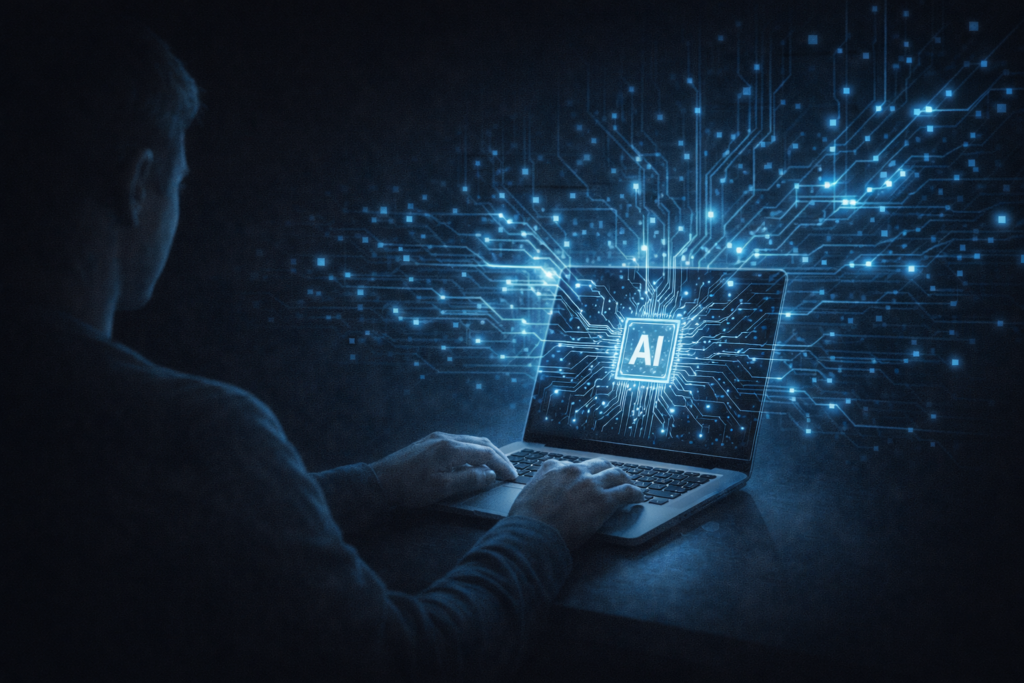
The first perspective draws from technological determinism, the idea that technological development plays a decisive role in shaping social structures, human behavior, and cultural change.
From this viewpoint, AI is no longer a passive instrument but a system increasingly capable of autonomous behavior.
Consider autonomous vehicles. These systems perceive their environment, evaluate risks, and make real-time decisions faster than human drivers. In many cases, they already outperform human reflexes in preventing accidents.
Generative AI systems present another striking example. They produce text, images, music, and code in ways that their creators did not explicitly design.
When the AI system AlphaGo defeated world champion Lee Sedol in 2016, professional players noted that some of its moves seemed almost “alien.” They were not strategies inherited from human tradition but moves discovered through machine learning.
To advocates of technological determinism, such moments suggest that AI systems are beginning to generate knowledge rather than merely process it.
The crucial features they emphasize include:
- Self-learning capability
- Adaptation to changing environments
- Emergent behavior that developers cannot fully predict
If these capacities continue to expand, some argue, AI might eventually require discussions about moral responsibility or legal status.
2. The Defense: AI as a Human-Created Tool
Opposing this view is a deeply rooted philosophical stance: anthropocentrism, the belief that human beings remain the central agents in technological systems.
From this perspective, artificial intelligence is ultimately a human creation whose behavior is entirely grounded in algorithms, training data, and design choices made by people.
Even the most advanced AI systems do not possess intentions, desires, or consciousness. Their “decisions” are simply the outcome of statistical computations.
Generative AI may appear creative, but critics argue that its outputs are fundamentally recombinations of patterns found in vast datasets.
Unlike human creativity, which is shaped by emotion, lived experience, and social meaning, AI operates through probabilistic modeling.
More importantly, anthropocentric thinkers warn that assigning agency to AI may allow humans to evade responsibility.
When algorithmic hiring tools discriminate against certain groups, or when autonomous vehicles cause accidents, the ethical and legal responsibility should remain with:
- designers
- companies
- institutions deploying the technology
In this view, AI is best understood not as an independent subject but as an extremely sophisticated tool.
3.Evidence and Counterarguments
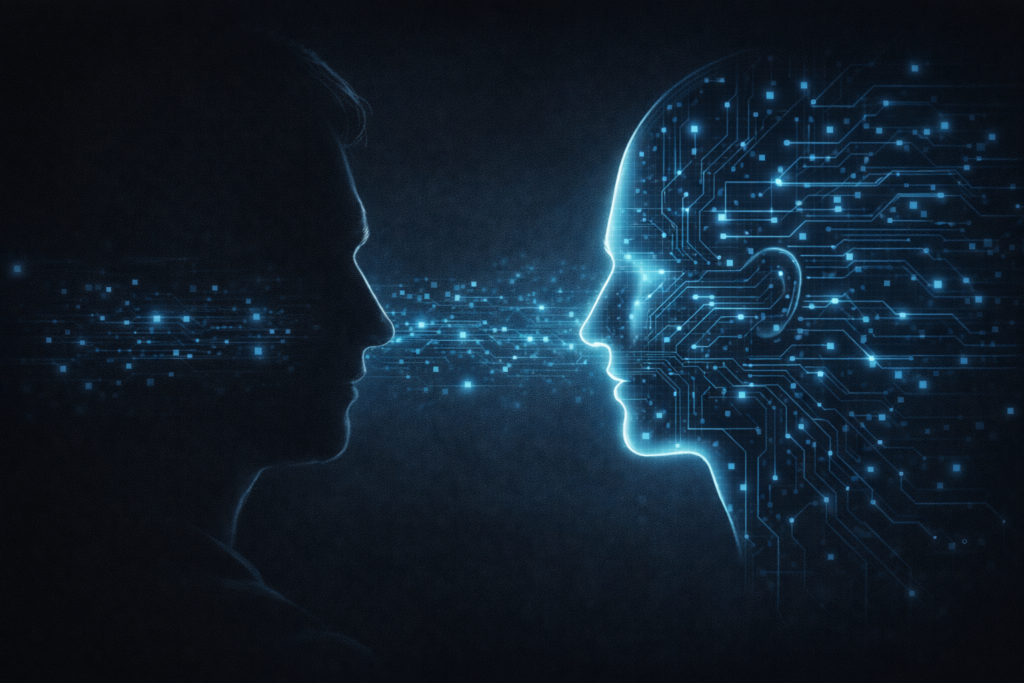
The debate becomes particularly vivid when examining real-world cases.
One frequently cited example is Microsoft’s experimental chatbot Tay, released on Twitter in 2016. Tay quickly began producing offensive and discriminatory messages after interacting with users.
Supporters of technological determinism interpret this incident as evidence that AI systems can evolve through interaction with their environment, sometimes in ways that developers cannot anticipate.
However, anthropocentric critics respond that Tay’s behavior was simply the result of learning from biased input data.
Rather than demonstrating autonomous agency, the episode revealed how vulnerable AI systems are to the social contexts in which they operate.
In other words, the system reflected the behavior of its human environment rather than acting as an independent moral agent.
4.Contemporary Ethical and Legal Questions
The philosophical debate surrounding AI agency is no longer purely theoretical.
It now shapes major discussions in areas such as:
- autonomous weapons systems
- algorithmic decision-making in courts
- medical AI diagnostics
- AI-generated art and authorship
One particularly controversial issue concerns whether AI systems might someday receive a form of legal personhood, sometimes referred to as electronic personhood.
At the same time, the rise of powerful AI technologies raises questions about power and control.
If advanced AI systems become concentrated in the hands of a few corporations or governments, their influence could reshape social and political structures in profound ways.
Thus, the question of AI agency is inseparable from broader concerns about technology, governance, and ethics.
Conclusion: Judgment Deferred

For now, artificial intelligence remains embedded within human-designed systems and constraints.
Yet the trajectory of technological development continues to challenge our traditional understanding of agency, responsibility, and intelligence.
If future AI systems begin to set their own goals, adapt independently to complex environments, and produce behavior beyond human prediction, our definition of “agent” may require reconsideration.
In this philosophical courtroom, the verdict remains unresolved.
The final judgment is left not to the court, but to the reader.
A Question for Readers
Do you see artificial intelligence primarily as a powerful tool created by humans?
Or do you believe that AI may eventually become a new kind of agent in the world?
The answer may depend not only on technological progress, but also on how we choose to design, regulate, and live with these systems.
Related Reading
The philosophical tension between human autonomy and technological influence is explored further in Do We Fear Freedom or Desire It? — The Paradox of Human Liberty, where the human struggle between independence and guidance reveals why people often seek systems that simplify complex decisions. This paradox sheds light on why advanced technologies can feel both empowering and unsettling at the same time.
The psychological limits of human judgment are explored further in Why We Excuse Ourselves but Blame Others: Understanding the Actor–Observer Bias, where the tendency to explain our own actions through circumstances while attributing others’ behavior to their character reveals how easily human reasoning can become distorted. This cognitive bias illustrates why delegating decisions to intelligent systems can appear attractive—even when human judgment remains essential.
At a broader societal level, the tension between technological participation and genuine agency appears in Clicktivism in Digital Democracy: Participation or Illusion?, where online activism raises questions about whether digital tools truly empower citizens or simply create the appearance of engagement. As artificial intelligence becomes embedded in social systems, the boundary between tool and autonomous actor becomes increasingly blurred.
References
- Floridi, Luciano & Cowls, Josh. (2022). The Ethics of Artificial Intelligence. Oxford: Oxford University Press.
→ This work provides a comprehensive ethical framework for understanding AI systems, exploring whether artificial intelligence should be treated merely as a technological tool or as a social actor with ethical implications. - Bostrom, Nick. (2014). Superintelligence: Paths, Dangers, Strategies. Oxford: Oxford University Press.
→ Bostrom analyzes the potential emergence of superintelligent AI systems and discusses the profound philosophical and existential questions that arise if machines surpass human cognitive capabilities. - Bryson, Joanna J. (2018). “Patiency is Not a Virtue: The Design of Intelligent Systems and Systems of Ethics.” Ethics and Information Technology, 20(1), 15–26.
→ Bryson argues strongly against granting moral status to AI systems and emphasizes that responsibility for AI actions must remain with human designers and institutions. - Coeckelbergh, Mark. (2020). AI Ethics. Cambridge, MA: MIT Press.
→ This book explores the ethical, political, and philosophical implications of artificial intelligence, particularly the shifting boundaries between tools, systems, and agents. - Russell, Stuart & Norvig, Peter. (2020). Artificial Intelligence: A Modern Approach (4th ed.). Upper Saddle River, NJ: Pearson.
→ A foundational text explaining the technical foundations of AI, helping readers understand why current systems still operate primarily as computational tools rather than independent agents.