Tag: human agency

  • The Trial of Free Will

    Is Human Freedom an Illusion or a Reality?

    The Weight of the Question

    We live with the persistent feeling that we choose.

    We choose what to eat in the morning, which career to pursue, how to respond in moments of crisis. These decisions feel like ours — deliberate, intentional, free.

    But what if that feeling is deceptive?

    What if every thought, every intention, every choice is simply the unfolding of prior causes — neural activity, genetic predispositions, environmental influences?

    Today, we step onto a stage of inquiry where two long-standing rivals confront one another: determinism and the defense of free will.


    1. The Case for Determinism: Freedom as Illusion
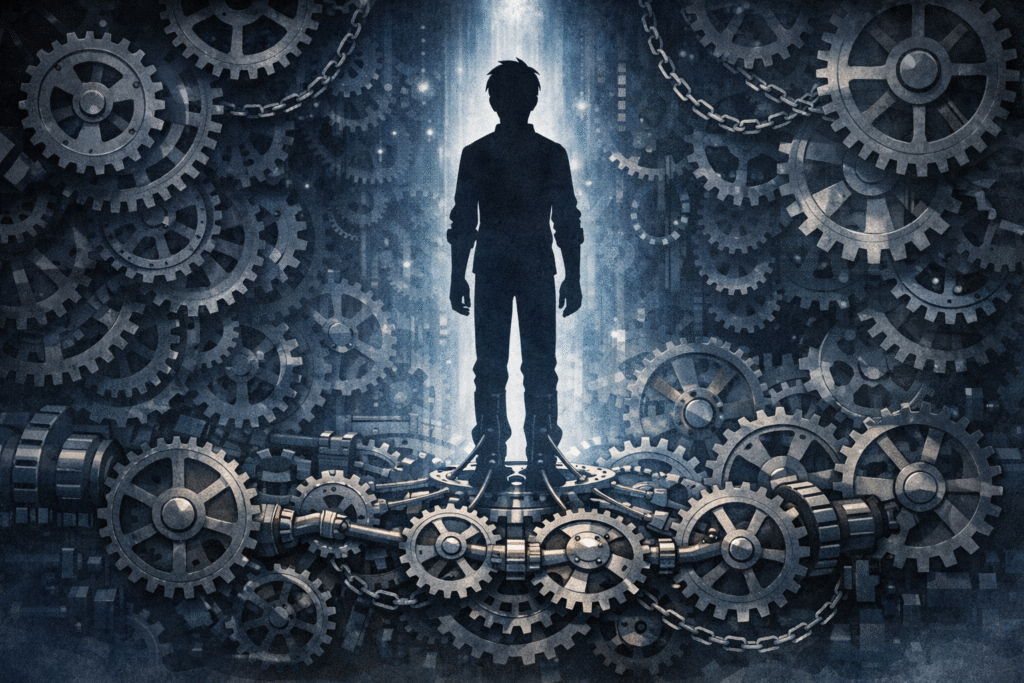
    Human silhouette connected to mechanical gears symbolizing determinism

    Determinism holds that every event is caused by preceding conditions in accordance with natural laws. From this perspective, human thought and action are no exception.

    Spinoza famously argued that free will is merely our ignorance of causes. We feel free because we do not perceive the chain of necessity behind our desires.

    Modern neuroscience adds further tension to the debate. In Benjamin Libet’s experiments, brain activity signaling an action appeared before participants reported consciously deciding to act. If the brain initiates movement before conscious intention arises, then what becomes of free choice?

    From this view, free will may be little more than post-hoc rationalization — a story we tell ourselves after the brain has already acted.


    2. The Defense of Freedom: Responsibility and Moral Agency

    Person standing at a crossroads representing human free will

    Yet the opposing side insists: freedom must be real.

    If every action were predetermined, how could moral responsibility exist? Praise, blame, justice — all would lose their grounding.

    Immanuel Kant argued that freedom is a necessary condition for moral law. Jean-Paul Sartre went further, claiming that human beings are “condemned to be free,” burdened with the responsibility of choice.

    Defenders of free will also caution against over-interpreting neuroscience. Libet’s experiments concern simple motor movements, not complex moral deliberation. The act of resisting temptation, reflecting on consequences, or sacrificing personal gain for ethical principles may not be reducible to automatic neural impulses.


    3. A Third Path: Compatibilism

    Between these poles lies compatibilism — the attempt to reconcile causality and freedom.

    Philosophers such as Daniel Dennett argue that freedom does not require independence from causation. Rather, freedom consists in acting according to one’s own motives and reasoning processes, even if those processes have causal histories.

    In this sense, we may inhabit a determined universe yet still possess a form of agency “worth wanting.”


    4. Why This Debate Matters Today

    This is not merely an abstract philosophical puzzle.

    Law and Justice

    If free will is illusory, should punishment give way entirely to rehabilitation?

    Moral Judgment

    Can we meaningfully blame or praise individuals if they could not have acted otherwise?

    Artificial Intelligence
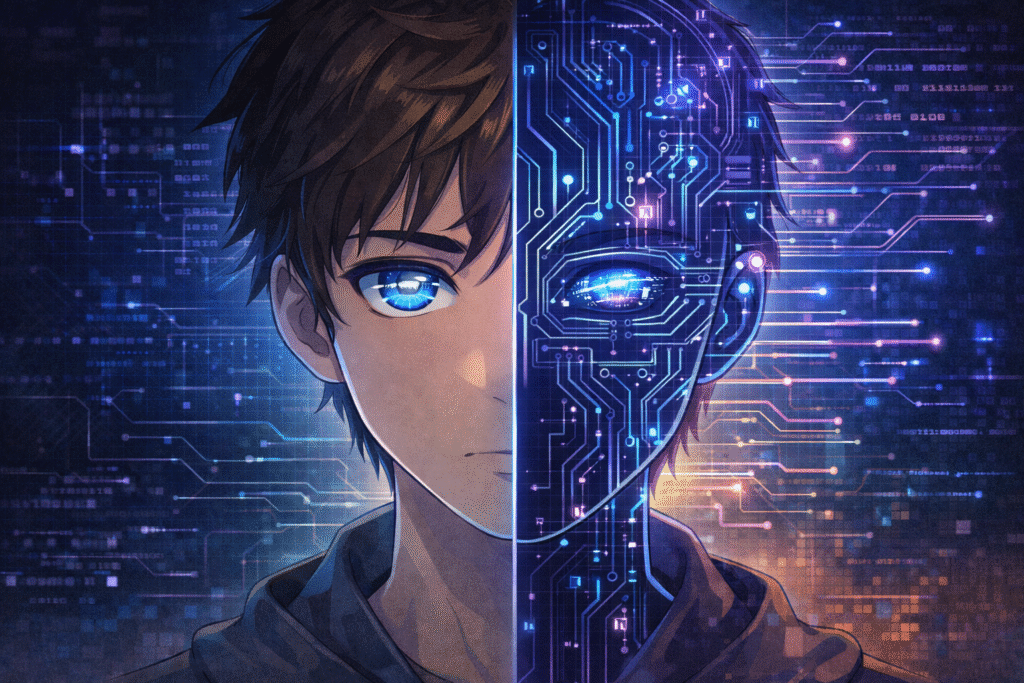
    Half human half AI face symbolizing artificial decision making

    As AI systems become increasingly autonomous, the debate takes on new urgency. If humans themselves operate under deterministic constraints, what distinguishes human agency from machine decision-making.

    Conclusion: An Open Verdict

    The stage remains undecided.

    Determinism offers scientific weight.
    Free will defends moral dignity.
    Compatibilism seeks reconciliation.

    Perhaps the deeper question is not whether we are metaphysically free, but how we ought to live in light of this uncertainty.

    If we are not free, who is responsible?
    If we are free, how do we bear the weight of that freedom?

    The trial continues — not in a courtroom, but within each of us.

    References

    1. Spinoza, Baruch. (1677/1994). Ethics. Translated by Edwin Curley. Princeton: Princeton University Press.
    Spinoza argues that human beings are entirely subject to the causal order of nature. What we call “free will,” he contends, is merely ignorance of the causes that determine our actions. His determinist framework continues to serve as a foundational critique of autonomous agency.

    2. Kant, Immanuel. (1788/1997). Critique of Practical Reason. Translated by Mary Gregor. Cambridge: Cambridge University Press.
    Kant maintains that moral responsibility presupposes freedom. For him, free will is not an empirical observation but a necessary postulate of practical reason. Without freedom, the coherence of moral law and ethical accountability would dissolve.

    3. Sartre, Jean-Paul. (1943/1992). Being and Nothingness. Translated by Hazel E. Barnes. New York: Washington Square Press.
    Sartre famously describes human beings as “condemned to be free.” In his existentialist account, freedom is inseparable from responsibility, and individuals continuously define themselves through their choices. His perspective intensifies the debate by grounding freedom in lived experience rather than abstract metaphysics.

    4. Libet, Benjamin. (2004). Mind Time: The Temporal Factor in Consciousness. Cambridge, MA: Harvard University Press.
    Libet’s neuroscientific experiments suggest that neural activity associated with decision-making can precede conscious awareness. This finding has been widely interpreted as evidence challenging traditional conceptions of free will, reinforcing determinist interpretations from a scientific perspective.

    5. Dennett, Daniel C. (1984/2003). Elbow Room: The Varieties of Free Will Worth Wanting. Cambridge, MA: MIT Press.
    Dennett defends compatibilism, arguing that meaningful forms of freedom can exist within a causally structured universe. Rather than seeking absolute metaphysical independence, he reframes free will as the kind of agency that sustains responsibility, rational deliberation, and social cooperation.
  • Do Humans Control Technology, or Does Technology Control Us?

    Is Technology a Tool—or a New Master?

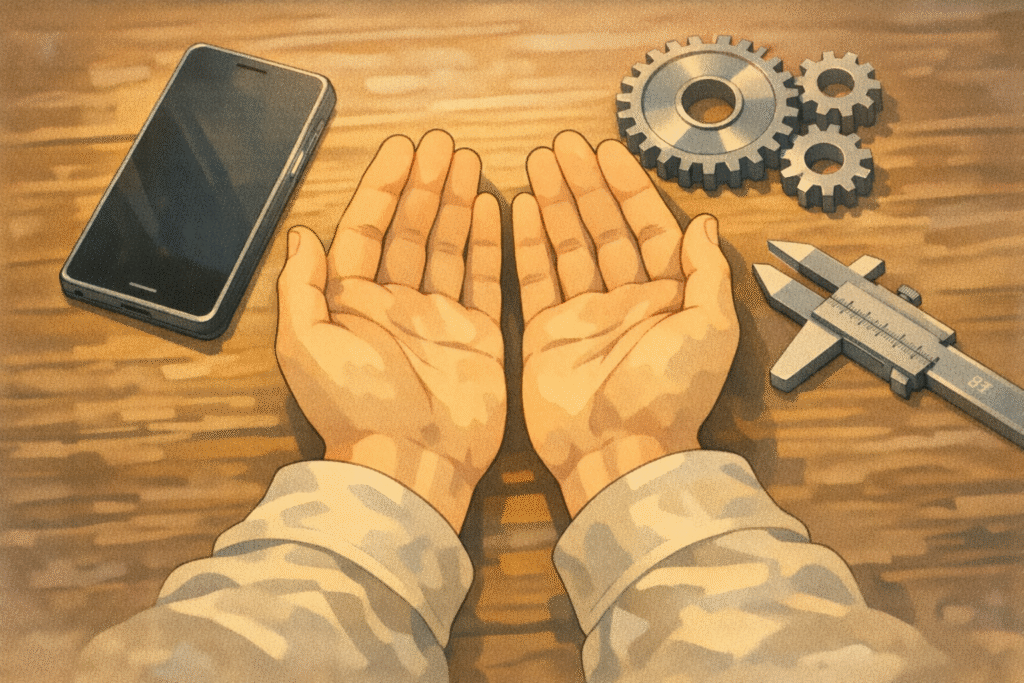
    Technology shown as a neutral tool in human hands

    We live inside technology.

    A day without checking a smartphone feels almost unimaginable.
    Artificial intelligence answers our questions.
    Big data and algorithms shape what we buy, what we read, and even how we form relationships.

    On the surface, technology appears to be nothing more than a collection of tools created by humans.
    Yet in practice, our lives are increasingly structured by those very tools.

    This leads to a fundamental question:

    Do we control technology, or has technology begun to control us?


    1. The Instrumental View: Humans as Masters of Technology

    1.1 Technology as a Human Creation

    From this perspective, technology is a product of human necessity and ingenuity.

    From fire and basic tools to the steam engine and electricity, technology has always emerged to serve human needs.
    Light bulbs illuminate darkness.
    The internet accelerates the spread of knowledge.
    Smartphones simplify communication.

    Seen this way, technology is neutral.
    Its impact depends entirely on how humans design, use, and regulate it.

    1.2 Human Choice and Responsibility

    According to this view, technology does not determine social outcomes.
    Humans do.

    Whether technology liberates or harms society ultimately reflects political decisions, cultural values, and ethical priorities.


    2. Technological Determinism: When Technology Shapes Humanity

    2.1 Technology as a Social Force

    A contrasting perspective argues that technology is never merely a tool.

    This view—often called technological determinism—holds that technology actively reshapes social structures, institutions, and even patterns of thought.

    The invention of the printing press did more than increase book production.
    It transformed knowledge distribution, fueled religious reform, and reshaped political power.

    Similarly, the internet and social media have altered how public opinion forms and how social movements emerge.

    2.2 Algorithmic Mediation of Reality

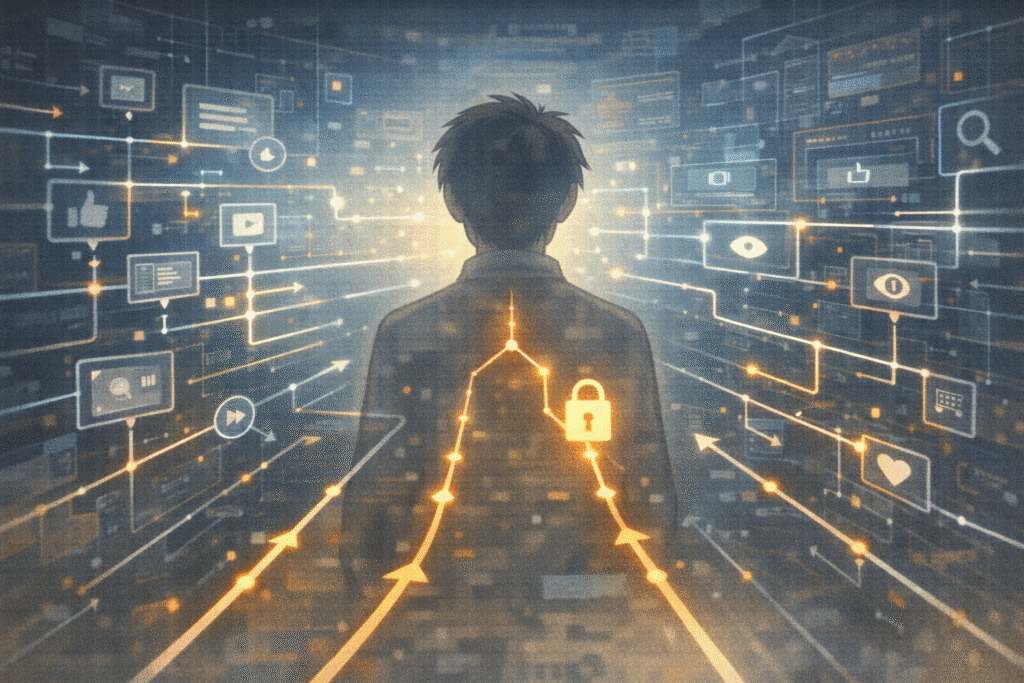
    Today, algorithms decide which news we see, which posts gain visibility, and which voices are amplified or silenced.

    In such conditions, humans are no longer fully autonomous choosers.
    We operate within frameworks constructed by technological systems.

    Technology does not simply assist decision-making—it structures perception itself.

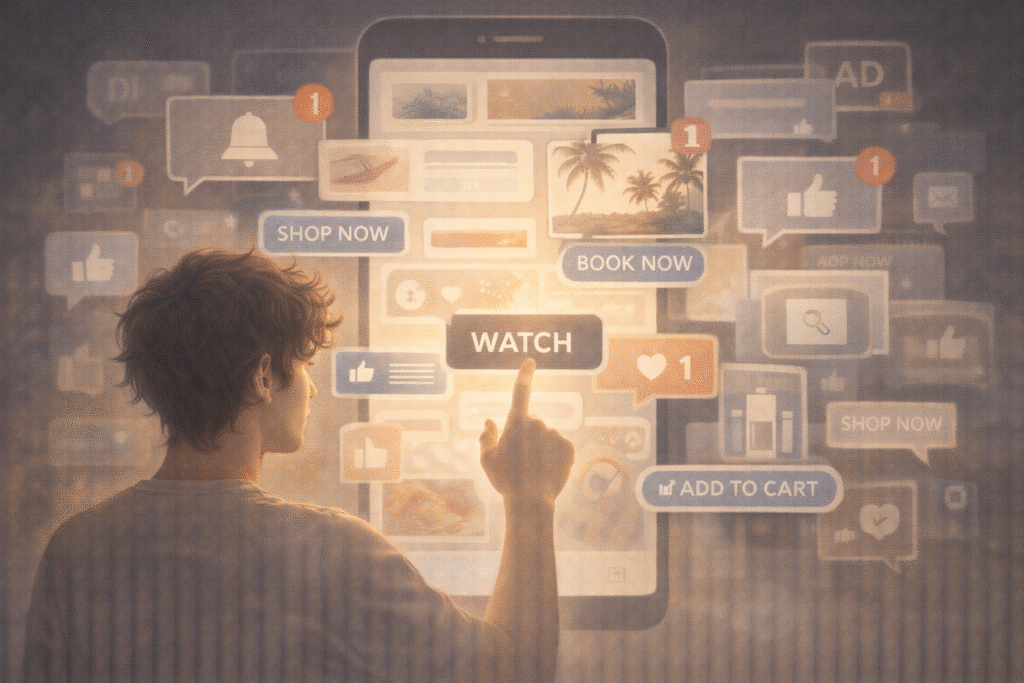
    Algorithms subtly shaping human choices and attention

    3. The Boundary Between Control and Dependence

    3.1 Erosion of Human Control

    As technology grows more complex, human control often weakens.

    • Smartphone dependency: We use devices freely, yet our attention and time are increasingly governed by them.
    • Algorithmic curation: We believe we choose information, but often select only from what platforms present.
    • AI-driven decisions: In finance, medicine, and hiring, AI systems now generate outcomes that humans merely review.

    What appears as convenience gradually becomes a form of governance.

    3.2 Technology as a New Power

    Technology approaches us with the promise of efficiency and comfort.
    Yet beneath that promise lies a quiet restructuring of habits, priorities, and values.

    In this sense, technology functions as a new kind of power—subtle, pervasive, and difficult to resist.


    4. Freedom, Responsibility, and Ethical Control

    4.1 Are We Becoming Subordinate to Technology?

    This does not mean humans are powerless.

    Technology does not emerge independently of human intention.
    Its goals, constraints, and accountability mechanisms are still socially constructed.

    4.2 The Demand for Transparency and Accountability

    What matters is whether societies demand:

    • transparency in how algorithms function,
    • clarity about the data AI systems learn from,
    • accountability for harms caused by automated decisions.

    Without such safeguards, technology risks becoming a system of domination rather than liberation.


    Conclusion: Master, Subject, or Both?

    Technology operating as a powerful structure shaping society

    The relationship between humans and technology cannot be reduced to a simple question of control.

    Technology is a human creation—but once deployed, it reorganizes society and reshapes human behavior.

    In this sense, humans are both masters and subjects of technology.

    The decisive issue is not technology itself, but the ethical, political, and social frameworks that surround it.

    As one paradoxical insight suggests:

    We believe we use technology—but technology also uses us.

    Recognizing this tension is the first step toward restoring balance between human agency and technological power.

    Related Reading

    The tension between technological agency and human autonomy is further examined in Automation of Politics: Can Democracy Survive AI Governance? where algorithmic power and collective decision-making are debated.
    At the level of everyday experience, The Standardization of Experience reflects on how digital systems subtly shape personal choice and perception.


    References

    1. The Whale and the Reactor
      Winner, L. (1986). The Whale and the Reactor. University of Chicago Press.
      → Argues that technologies embody political and social values rather than remaining neutral tools.
    2. The Technological Society
      Ellul, J. (1964). The Technological Society. Vintage Books.
      → A classic work asserting that technology develops according to its own internal logic, shaping human society in the process.
    3. The Rise of the Network Society
      Castells, M. (1996). The Rise of the Network Society. Blackwell.
      → Analyzes how information and network technologies restructure social organization and power relations.
    4. The Question Concerning Technology
      Heidegger, M. (1977). The Question Concerning Technology. Harper & Row.
      → Explores technology as a mode of revealing that shapes how humans understand and relate to the world.
    5. The Age of Surveillance Capitalism
      Zuboff, S. (2019). The Age of Surveillance Capitalism. PublicAffairs.
      → Critically examines how digital technologies predict, influence, and monetize human behavior.
  • Everyday Automation: Smart Homes, Auto-Payments, and the Hidden Cost of Convenience

    “Alexa, turn off the lights.”
    “Siri, what’s the weather today?”
    “No need for your wallet — it’s an automatic payment.”

    Lights respond to voices, music plays without touch, and refrigerators reorder groceries on their own.
    Automation has quietly become the background of everyday life.

    It feels effortless.
    But in this growing familiarity, are there costs we no longer recognize?


    1. Automation Saves Time — and Silently Reduces Awareness

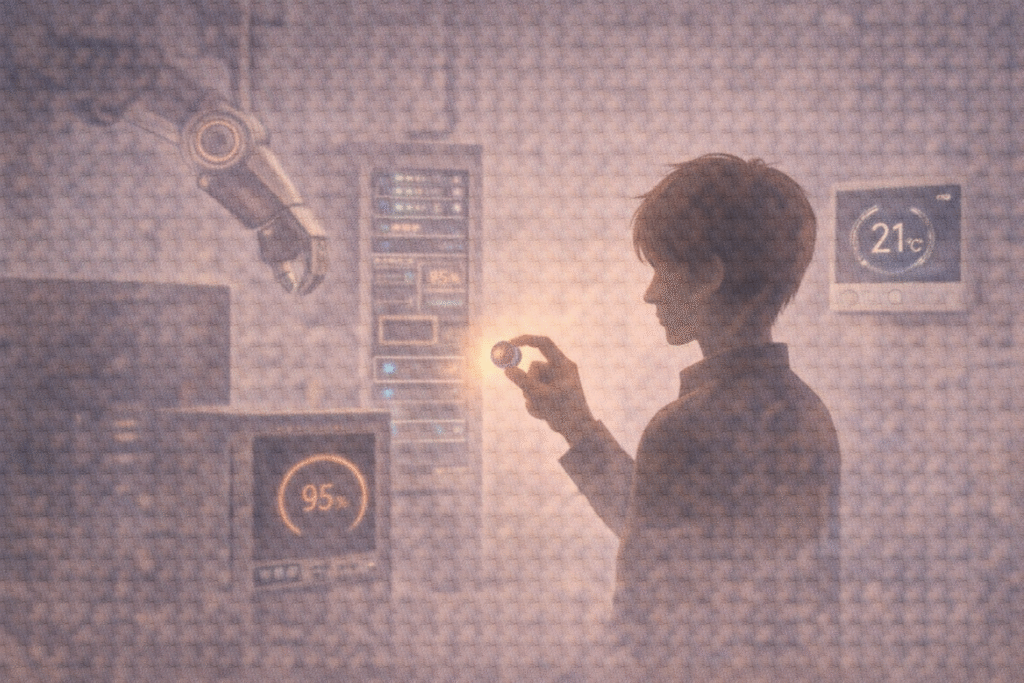
    Automated smart home adjusting daily life without human action

    Everyday life is shaped by countless small decisions.
    What to eat. When to turn off the lights. Whether to lock the door.

    Automation now handles many of these choices without requiring our attention.

    Smart thermostats adjust themselves.
    Lights turn on and off automatically.
    Payments are completed before we consciously register them.

    Nothing is forced.
    Yet something subtle changes.

    Decisions still happen — but we no longer experience ourselves as the ones deciding.
    Convenience replaces deliberation, and ease gradually weakens our sense of agency.

    Automation does not take control away.
    It simply makes control feel unnecessary.


    2. When Algorithms Choose With Us — and For Us

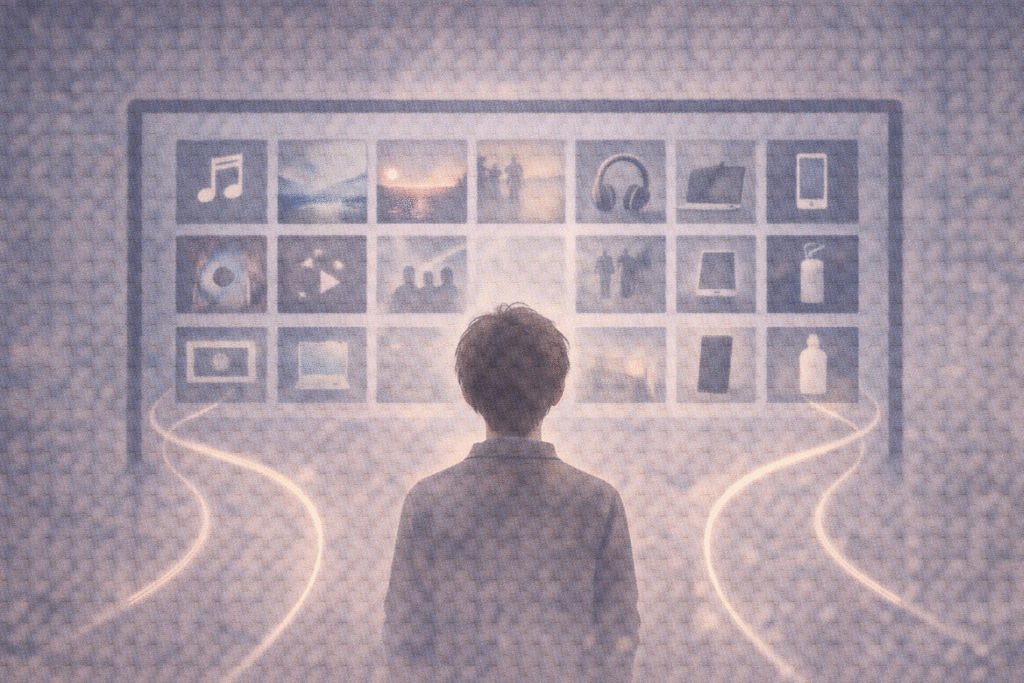
    Algorithmic recommendations shaping personal choices

    Recommendations now guide much of daily life.
    Music, movies, products, even news are selected before we actively search.

    This feels personal.
    But personalization also narrows experience.

    When choices are filtered through the same algorithms, novelty declines.
    We encounter what aligns with our past behavior — not what challenges or surprises it.

    Over time, preference becomes repetition.
    We grow comfortable inside systems that teach us what to want — and then confirm it.

    Convenience, here, quietly transforms freedom into predictability.


    3. Who Is the Automated Home Really For?

    Smart homes promise comfort, efficiency, and security.
    Yet automation does not serve everyone equally.

    Older adults may struggle with unfamiliar interfaces.
    Visually impaired users face touch-screen barriers.
    For some households, smart technology remains inaccessible.

    Automation expands possibility for some —
    while creating new forms of exclusion for others.


    4. Who Owns the Data Behind Convenience?

    Automation relies on constant data collection.

    Smart appliances track habits.
    Voice assistants store speech patterns.
    Location services monitor movement.

    Most of this information is stored beyond users’ direct control.
    We benefit from convenience without fully knowing how our data circulates.

    The hidden cost of automation may not be money —
    but intimacy without transparency.


    5. Familiarity Dulls Reflection

    What once felt innovative now feels normal.

    “It’s just easier.”
    “Everyone uses it.”
    “I couldn’t go back.”

    Familiarity discourages questioning.

    Automation is a tool — but tools shape those who rely on them.
    Without reflection, convenience quietly becomes governance.

    Human agency within an automated technological environment

    Conclusion: Convenience Should Not Replace Conscious Choice

    Smart homes, auto-payments, algorithmic recommendations —
    automation now frames everyday life.

    The question is not whether automation is useful.
    It is whether the things done for us still align with what we value.

    Technology should support human judgment, not quietly replace it.

    Convenience works best when paired with awareness.

    References

    Carr, N. (2014). The Glass Cage: How Our Computers Are Changing Us. W. W. Norton & Company.
    Carr critically examines how automation affects human judgment, attention, and agency. Through examples ranging from aviation to everyday technology, he shows how convenience can weaken our capacity for active decision-making.

    Zuboff, S. (2019). The Age of Surveillance Capitalism: The Fight for a Human Future at the New Frontier of Power. PublicAffairs.
    Zuboff exposes how automated services rely on large-scale data extraction and behavioral prediction. Her work reveals the hidden economic logic behind “smart” technologies and their implications for autonomy and democracy.

    Parisi, L. (Ed.). (2016). Automate This: How Algorithms Came to Rule Our World. Princeton Architectural Press.
    This collection explores how algorithms reshape decision-making, perception, and social life. It provides philosophical insight into how automated systems subtly transform freedom into designed choice.

  • If AI Can Predict Human Desire, Is Free Will an Illusion?

    We believe our choices are our own.
    What to wear in the morning, what to eat for lunch, even life-changing decisions—
    we trust that they come from our inner will.

    Yet today, artificial intelligence analyzes our search histories, purchases, and online behavior with startling accuracy.
    It often knows what we want before we consciously decide.

    If AI can predict our desires almost perfectly,
    is free will still real—or merely a convincing illusion?


    1. The Age of Predictive Algorithms

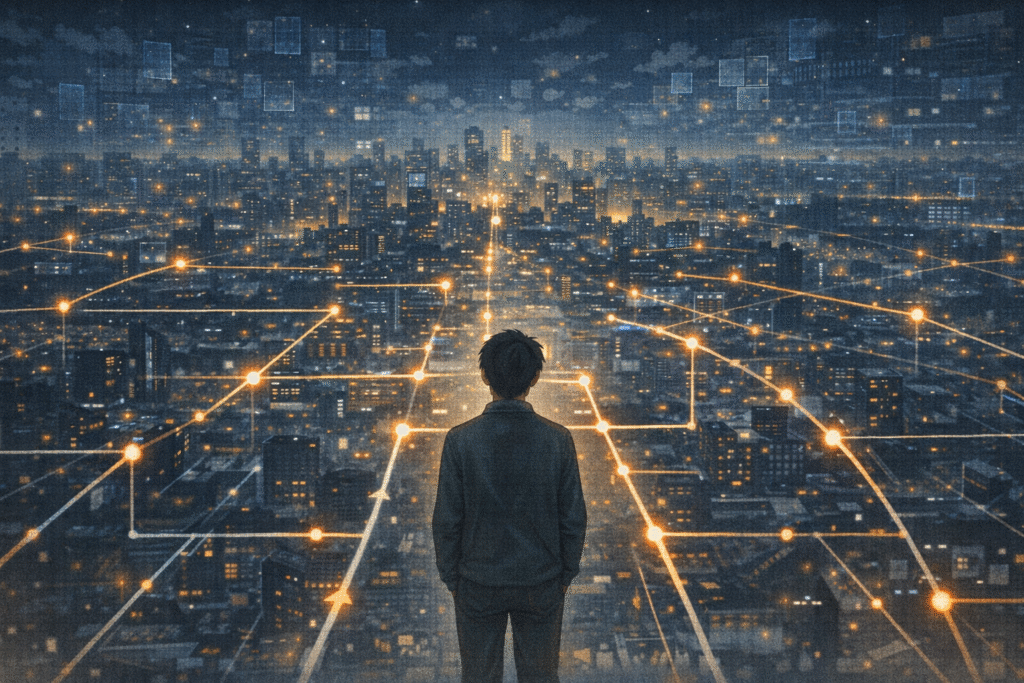
    Individual facing algorithm-driven choices on a digital screen

    Recommendation systems already guide much of our everyday decision-making.
    Streaming platforms anticipate which films we will enjoy, online stores predict what we might buy next, and social media curates content tailored to our emotional responses.

    In many cases, we believe we choose freely,
    but what we encounter has already been filtered, ranked, and presented by algorithms.

    This raises a disturbing possibility:
    our decisions may not be independent acts of will, but statistically predictable outcomes embedded in data patterns.


    2. Free Will and Determinism Revisited

    Philosophically, this dilemma is not new.
    If human behavior is shaped by genetics, environment, and past experiences, does free will truly exist?

    In a deterministic universe, AI does not eliminate freedom—it merely reveals how predictable our choices already are.

    However, if free will is not absolute independence from all causes,
    but rather the capacity to reflect, assign meaning, and take responsibility within given conditions,
    then prediction does not necessarily negate freedom.

    Human freedom may lie not in escaping patterns,
    but in interpreting and responding to them consciously.


    3. The Danger of Desire Manipulation

    Visualization of human desire shaped by algorithms and data patterns

    The real danger emerges when prediction turns into manipulation.

    Targeted advertising, emotionally optimized content, and data-driven political messaging no longer merely anticipate desire—they actively shape it.
    In such cases, individuals feel autonomous while unknowingly following pre-designed behavioral paths.

    When desire is engineered rather than chosen,
    free will risks becoming a carefully maintained illusion,
    and societies become vulnerable to subtle forms of control.


    4. Rethinking Freedom in the AI Era

    If freedom depends on unpredictability alone,
    then AI threatens its very existence.

    But if freedom means the ability to reflect on one’s desires,
    to accept or reject them,
    and to act with responsibility despite external influence,
    then human agency remains intact.

    AI may predict our impulses,
    but it cannot replace the reflective capacity to question them.

    5. Reclaiming Your Agency: Practicing Freedom in an Algorithmic World

    If freedom is not the absence of prediction, but the capacity for reflection,
    then freedom must be practiced, not assumed.

    You do not need to abandon technology to protect your agency.
    What you need is deliberate friction — moments that interrupt automated desire.

    One way to do this is through what might be called strategic randomness:
    small, intentional disruptions that remind us we are not merely reactive beings.


    Conclusion

    Human agency emerging within an algorithmic world

    The rise of AI prediction forces us to confront an uncomfortable question:
    Is free will an illusion, or simply misunderstood?

    Even if our desires follow recognizable patterns,
    the human capacity to interpret, resist, and redefine those desires has not disappeared.

    Perhaps the real question is not
    “Can AI predict human desire?”
    but rather,

    “How will we redefine freedom in a world where prediction is everywhere?”


    Related Reading

    This concern naturally extends to a broader philosophical question about human agency and technological superiority, explored further in Can Technology Surpass Humanity?

    On a practical level, similar issues appear in everyday algorithmic systems discussed in Algorithmic Bias: How Recommendation Systems Narrow Our Worldview.

    References

    1.Libet, B. (1985). Unconscious cerebral initiative and the role of conscious will in voluntary action. Behavioral and Brain Sciences, 8(4), 529–566.
    → A foundational experiment suggesting that neural activity precedes conscious awareness of decision-making, igniting modern debates on free will.

    2.Dennett, D. C. (2003). Freedom Evolves. New York: Viking.
    → Argues that free will is compatible with determinism and emerges through evolutionary and social complexity rather than metaphysical independence.

    3.Zuboff, S. (2019). The Age of Surveillance Capitalism. New York: PublicAffairs.
    → Analyzes how data-driven prediction and behavioral modification threaten autonomy and democratic agency.

    4.Frankfurt, H. G. (1971). Freedom of the will and the concept of a person. Journal of Philosophy, 68(1), 5–20.
    → Introduces the idea of second-order desires, redefining freedom as reflective endorsement rather than mere choice.

    5.Bostrom, N. (2014). Superintelligence: Paths, Dangers, Strategies. Oxford: Oxford University Press.
    → Explores how advanced AI could reshape human autonomy, control, and moral responsibility.