Tag: future of humanity

  • Is Gene Editing a Leap Forward—or a Dangerous Overreach?

    Is Gene Editing a Leap Forward—or a Dangerous Overreach?

    CRISPR, Human Design, and the Ethics of Rewriting Life

    Have you ever wondered—
    do we have the right to design life itself?

    To choose a child’s traits,
    or to erase disease before birth?

    In a near future where gene editing is possible,
    these questions are no longer hypothetical.

    They stand before us—
    not as scientific curiosities,
    but as ethical crossroads.

    Today’s discussion unfolds as a stage of inquiry,
    where one technology—CRISPR—
    forces us to confront a deeper question:

    Are we advancing life,
    or overstepping its limits?

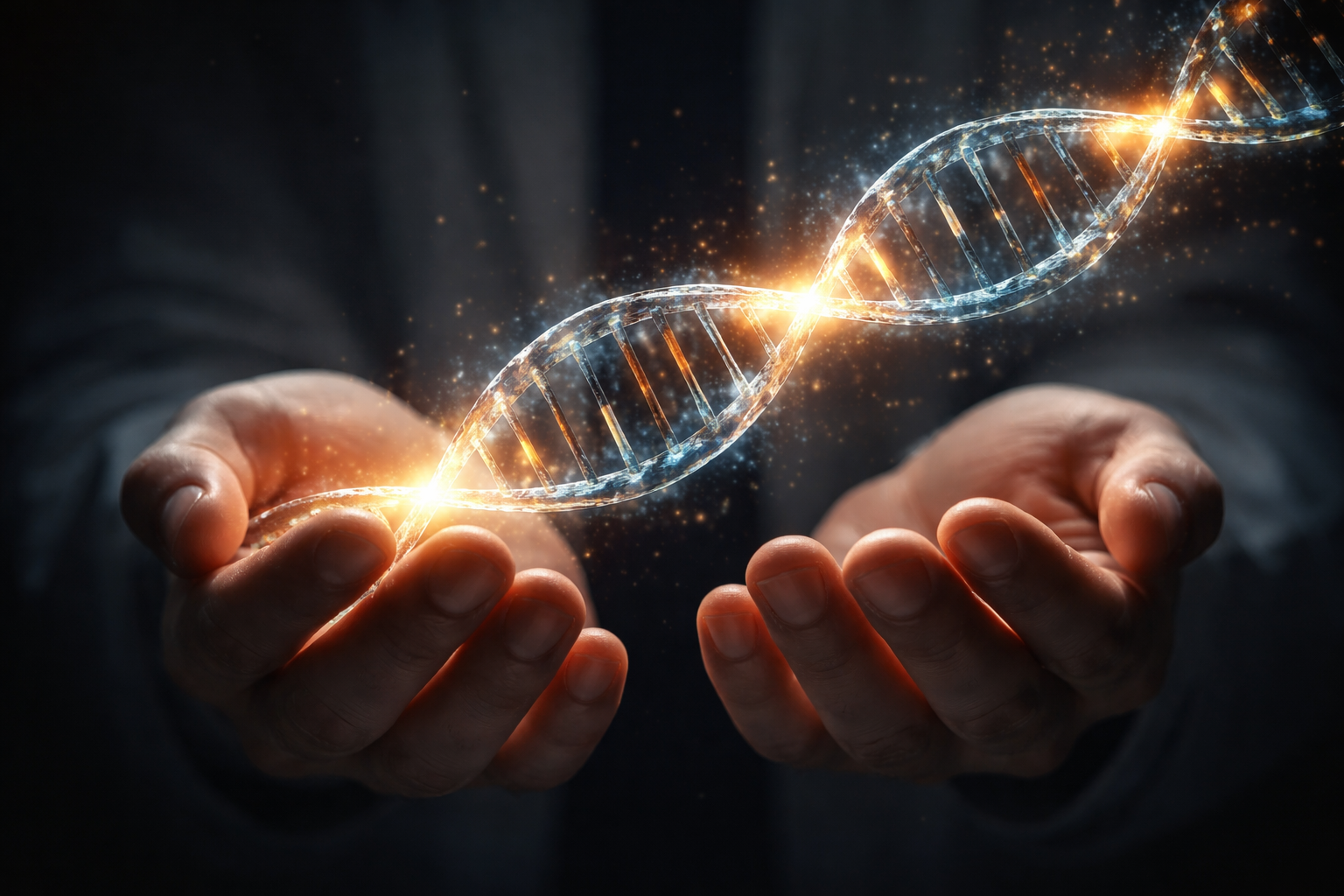
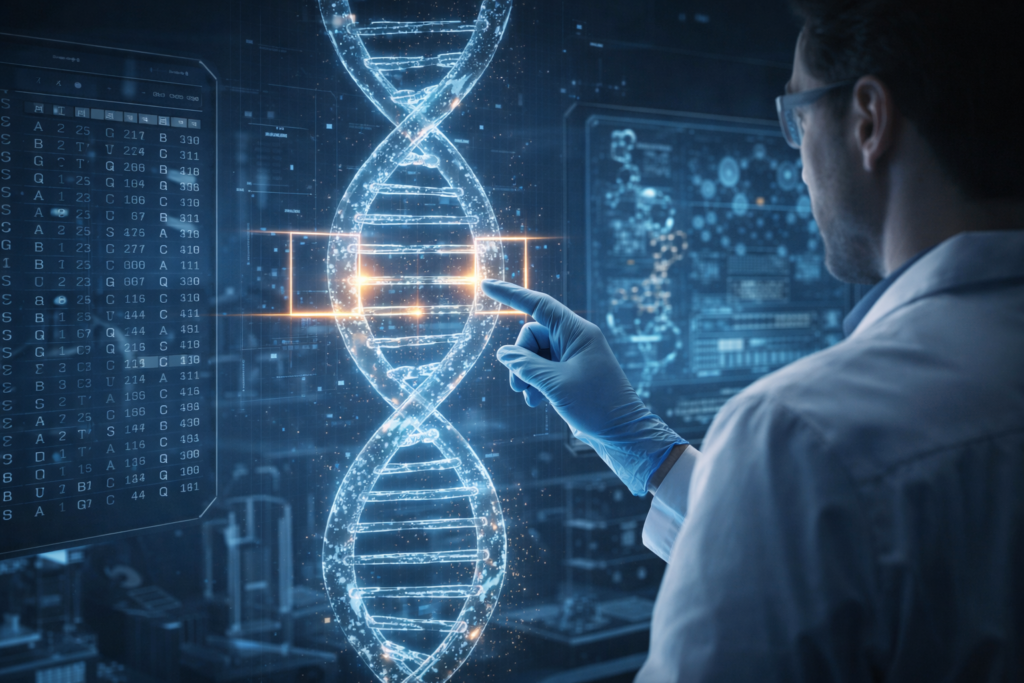
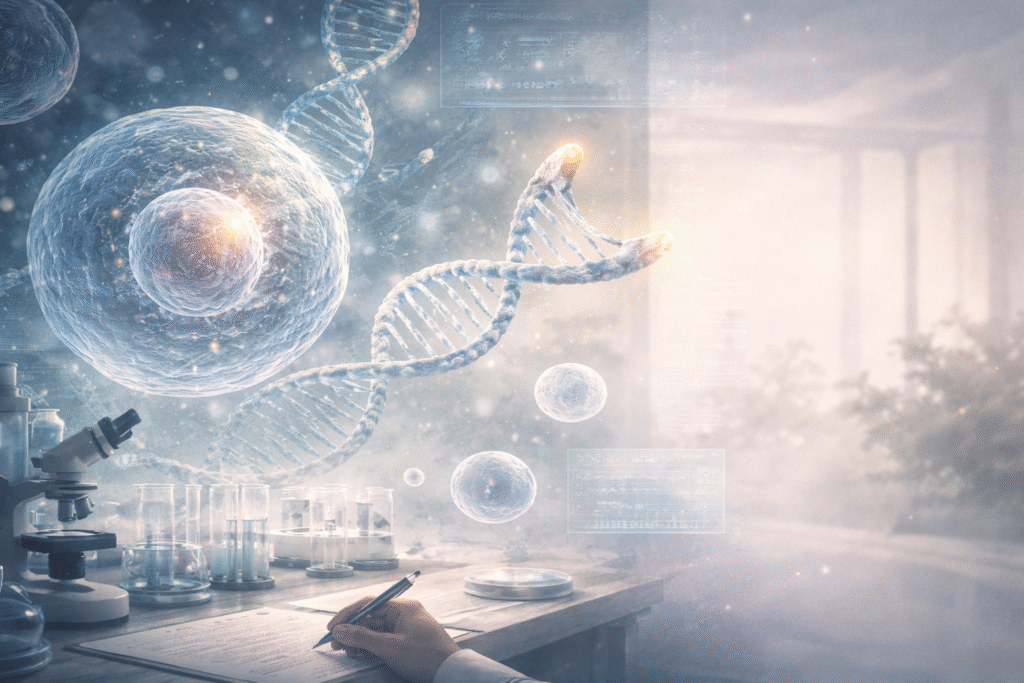
    scientist editing DNA sequence

    1. The Case Against: A Form of Hubris?

    Critics argue that gene editing risks turning life into a tool—
    and humans into its designers.

    1.1 Interfering with Natural Order

    Genes are the result of long evolutionary processes.
    To alter them without full understanding may disrupt complex biological systems.

    1.2 The Ethics of “Designer Babies”

    Selecting traits risks commodifying human life—
    reducing identity to preference.

    1.3 Deepening Inequality

    Access to genetic enhancement could create new social divisions—
    not just economic, but biological.

    1.4 Moral Desensitization

    If life becomes editable,
    its intrinsic value may begin to feel negotiable.


    2. The Case For: A Step Toward Progress

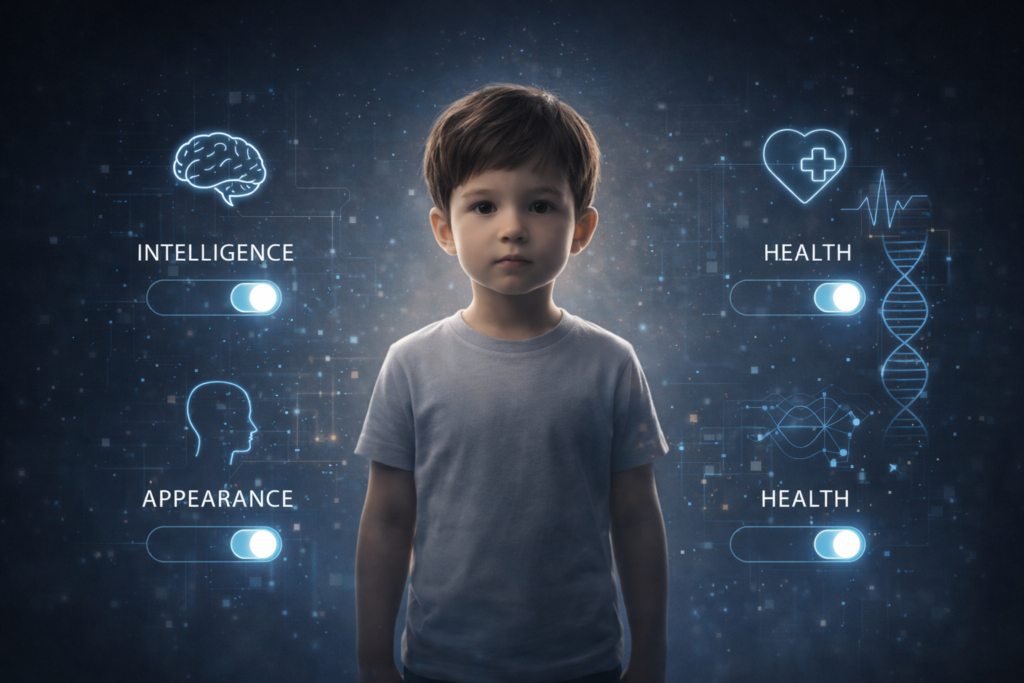
    child with selectable genetic traits

    Supporters respond:
    the question is not whether we can use the technology—
    but how.

    2.1 Ending Genetic Suffering

    Many severe diseases originate in genetic mutations.
    CRISPR offers the possibility of addressing them at their source.

    2.2 Is Nature Always Ethical?

    Nature includes suffering, disease, and early death.
    Intervening may not violate nature—but refine it.

    2.3 The Role of Ethical Governance

    Global frameworks and regulations can guide responsible use—
    ensuring safety and fairness.

    2.4 A Different View of Respect

    Respecting life may not mean leaving it untouched,
    but helping it flourish without unnecessary suffering.


    3. Between Ethics and Innovation

    Both perspectives reveal a truth.

    One warns of unintended consequences.
    The other highlights tangible benefits.

    The challenge lies in the uncertainty—
    where good intentions may still lead to unpredictable outcomes.


    4. A Reflective Pause

    Perhaps this is not a question that can be resolved
    through a final verdict.

    Gene editing is neither inherently good nor inherently harmful.
    It reflects the intentions of those who wield it.

    The deeper issue is not the technology itself—
    but the values guiding its use.


    Conclusion: A Shared Responsibility

    person choosing path ethical crossroads

    Gene editing represents one of humanity’s most powerful tools.

    It holds the promise to reduce suffering—
    but also the risk of redefining what it means to be human.

    The real question is not simply whether we should allow it,
    but how we choose to engage with it.

    Through reflection, regulation, and collective responsibility,
    we must navigate this space carefully.

    Because in the end,
    the future of life is not written by technology alone—
    but by the ethics we choose to uphold.

    A Question for Readers

    Do we have the right to redesign human life—
    if it means reducing suffering?

    Or are there limits we should never cross,
    even in the name of progress?


    Related Reading

    The ethical tension between innovation and responsibility becomes even more complex when we consider how far technology should shape human existence.
    In If AI Could Dream, Would It Be Imagination—or Calculation?, the boundary between human uniqueness and technological capability challenges our assumptions about creativity, consciousness, and what should remain beyond design.

    At the same time, questions about human enhancement extend beyond biology into everyday life and identity.
    In Can What You Wear Change Your Mind?, the subtle ways external design influences human behavior suggest that even small forms of “engineering” can reshape how we think, act, and define ourselves.

  • Would Earth Be Better Without Humans?

    Would Earth Be Better Without Humans?

    Rethinking Anthropocentrism and Our Place in the Living World

    Imagine a world where humans have disappeared.

    Cities grow silent. Forests reclaim abandoned streets.
    Oceans begin to heal, and endangered species return.

    Surprisingly, this vision does not always feel like a dystopia.

    It leads us to an unsettling question:

    Would the Earth be better without us?

    1. Nature Does Not Depend on Humans

    empty city street without humans

    1.1. Evidence from Temporary Absence

    During the COVID-19 pandemic, reduced human activity led to
    clearer skies, cleaner air, and the return of wildlife to urban areas.

    Nature began to recover—
    not because of human intervention, but because of its absence.


    1.2. The Resilience of Ecosystems

    This suggests that ecosystems possess
    an inherent capacity for regeneration.

    Life on Earth evolved long before humans existed—
    and it can continue without us.


    2. The Shadow of Anthropocentrism

    2.1. Humans at the Center

    For centuries, human civilization has placed itself
    at the center of existence.

    Philosophical traditions—from Descartes onward—
    reinforced the idea that humans are distinct from, and superior to, nature.


    2.2. The Cost of Dominance

    This worldview has justified exploitation:
    deforestation, industrialization, and biodiversity loss.

    The belief that we are “owners” of the Earth
    may be one of the greatest threats to its survival.

    wildlife thriving in restored nature

    3. Would a Human-Free Earth Be Ideal?

    3.1. A World Without Witnesses

    A human-free Earth might be greener, cleaner, and more balanced.

    But it would also be a world without observers—
    no one to perceive beauty, meaning, or value.


    3.2. Humans as Destroyers—and Stewards

    Humans are not only agents of destruction.
    We are also capable of responsibility, care, and restoration.

    Environmental movements, conservation efforts, and sustainability innovations
    all originate from human awareness.


    4. From Dominance to Coexistence

    4.1. A Better Question

    Perhaps the real question is not:

    “Would Earth be better without humans?”

    But rather:

    “How can humans exist in a way that allows Earth to thrive?”


    4.2. Redefining Our Role

    Through technology, ethics, education, and culture,
    we can move from domination to coexistence.

    Not as rulers of nature—
    but as participants within it.


    Conclusion: Who Does the Earth Belong To?

    humans and nature living in harmony

    A human-free Earth might be quieter and more balanced.

    But it would also be a world without meaning—
    at least in human terms.

    The future of Earth does not depend on our disappearance,
    but on our transformation.

    From exploiters to caretakers,
    from owners to co-inhabitants.

    The question is not whether we should vanish—
    but whether we can learn to belong.


    Reader Question

    Do you believe the Earth needs fewer humans—
    or better humans?


    Related Reading

    The relationship between humans and the natural world becomes even more complex when we consider how our daily choices shape the environment.
    In Is Minimalism a Lifestyle or a Privilege?, the idea of consumption reveals how reducing what we take from the world may be one of the first steps toward a more sustainable coexistence.

    At the same time, the question of progress itself invites deeper reflection.
    In Are Cities Symbols of Progress—or Spaces of Inequality?, the tension between development and its consequences highlights how human-centered growth can both improve and destabilize the environments we depend on.


    References

    1. ReferencesKolbert, E. (2014). The Sixth Extinction: An Unnatural History. New York: Henry Holt.
    → Kolbert documents how human activity is driving mass extinction, offering powerful evidence that ecological imbalance is closely tied to anthropogenic impact.

    2. Weisman, A. (2007). The World Without Us. New York: Thomas Dunne Books.
    → This book imagines a planet without humans, illustrating how natural systems would reclaim human-made environments and restore ecological balance over time.

    3. Crist, E. (2018). Abundant Earth: Toward an Ecological Civilization. Chicago: University of Chicago Press.
    → Crist critiques anthropocentrism and proposes a shift toward ecological coexistence, emphasizing the need

  • Are We Still the Same Person If Our Memories Are Digitized?

    Are We Still the Same Person If Our Memories Are Digitized?

    Memory, Identity, and the Limits of the Self

    Memory is not just data.

    It is the narrative through which we understand who we are,
    the structure that shapes our relationships with the world,
    and the emotional foundation of our identity.

    But what if every memory we have — from the faintest childhood moment to the most recent conversation — could be perfectly digitized, stored, and retrieved at will?

    What if memories could be exchanged, edited, or even erased?

    Would we still be the same person?


    1. Is Memory the Core of Personal Identity?

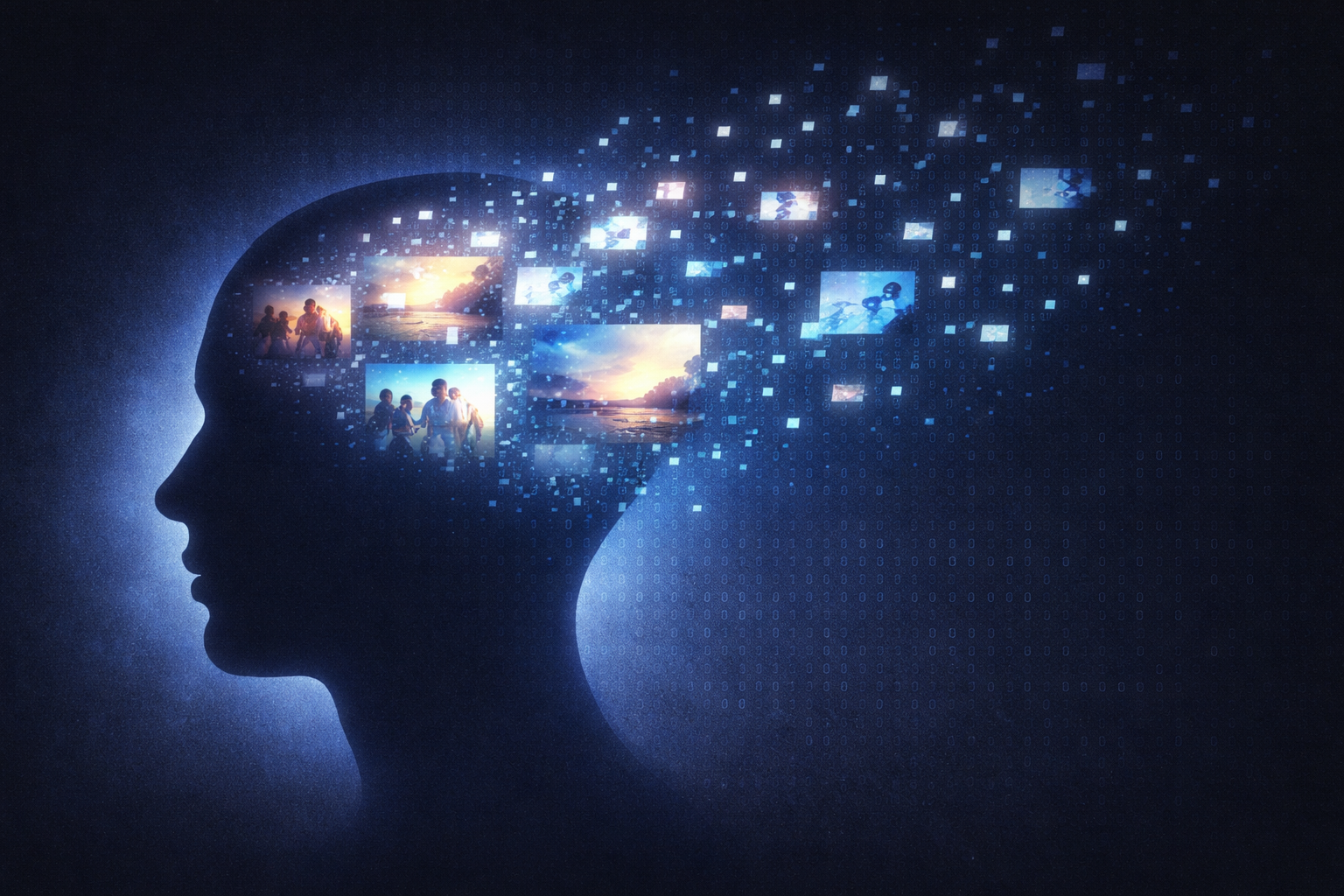
    personal memories forming human identity narrative

    Philosopher John Locke argued that personal identity is grounded in the continuity of memory.

    According to his “memory theory,” a person remains the same individual as long as they can remember past experiences as their own.

    From this perspective, perfectly digitizing and preserving memory might appear to stabilize identity.

    However, human memory is not designed for perfect preservation.

    It is shaped by forgetting, distortion, and reinterpretation.

    To digitize memory completely is to remove these imperfections —
    and perhaps, in doing so, remove something essential to being human.


    2. Memory Copying and the Multiplication of the Self

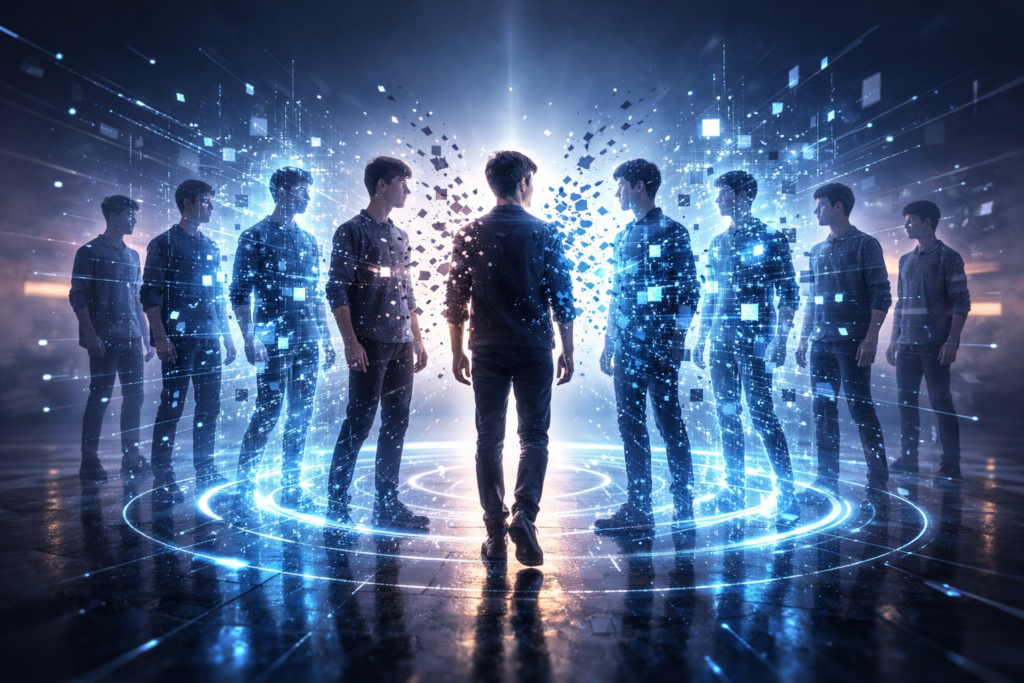
    multiple copies of a person representing duplicated identity

    If memory can be fully digitized, it can theoretically be copied.

    Imagine an artificial intelligence that contains all your memories.

    Would that entity be you?

    Or would it be something else — a replica of your narrative without your present consciousness?

    This raises a deeper philosophical question:

    Is personal identity defined by memory alone,
    or does it also require a specific body, perception, and lived experience in the present?

    If multiple entities share identical memories,
    can they all be considered the same person?


    3. Memory Editing and the Transformation of Identity

    If we could remove painful memories or implant artificial ones,
    would that make our lives better?

    Popular culture has explored this idea, most notably in Eternal Sunshine of the Spotless Mind,
    where characters erase memories of love and loss.

    Psychologically, memory is not a passive archive of the past.

    It is an active process that continuously shapes the present self.

    To alter memory is not merely to change the past —
    it is to reconstruct identity itself.

    This suggests a shift from the idea of identity as continuity
    to identity as ongoing reconstruction.


    4. Social and Ethical Implications

    The digitization of memory transforms private experience into data.

    This raises serious concerns about privacy and control.

    If governments or corporations gain access to memory data,
    they could potentially monitor, manipulate, or even rewrite personal identity.

    Furthermore, if memory technologies become commodified,
    they may create new forms of inequality.

    Those with resources could preserve, enhance, or curate their memories,
    while others may be excluded from such possibilities.

    This leads to a troubling scenario:

    a society where memory itself becomes a site of power and inequality.


    Conclusion: Identity Beyond Storage

    person editing memories representing identity transformation

    The digitization of memory is not merely a technological development.
    It is a fundamental challenge to how we define the self.

    If memory becomes data, can identity remain human?

    Perhaps the answer lies in recognizing that memory is not just something we store,
    but something we continuously live through, reinterpret, and sometimes forget.

    Even in a future where memory can be perfectly preserved,
    our humanity may depend on our ability to choose how we remember —
    and how we forget.

    A Question for Readers

    If your memories could be perfectly copied or edited, would you still consider yourself the same person — or would you become someone new?

    Related Reading

    The philosophical tension between memory, identity, and the limits of human completeness is also reflected in Why Do Humans Seek Perfection While Knowing They Are Incomplete?, where the desire to overcome human limitations reveals deeper questions about self-awareness, imperfection, and the nature of being.

    At a more introspective level, the role of memory and personal experience in shaping the self can be further explored in The Psychology of Handwriting, where subtle human expressions—often overlooked in the digital age—offer insight into how identity is continuously formed through embodied and imperfect acts of cognition.


    References

    1. Locke, J. (1690/1975). An Essay Concerning Human Understanding. Oxford University Press.
      → Locke establishes the philosophical foundation of the memory theory of personal identity, arguing that continuity of consciousness defines the self. This work remains central to debates on whether digitized memory could preserve identity.
    2. Parfit, D. (1984). Reasons and Persons. Oxford University Press.
      → Parfit explores complex scenarios involving identity, duplication, and psychological continuity. His arguments challenge the idea of a single, stable self and are crucial for understanding memory copying and identity fragmentation.
    3. Sandel, M. J. (2007). The Case Against Perfection: Ethics in the Age of Genetic Engineering. Harvard University Press.
      → Sandel examines the ethical implications of human enhancement technologies, including those affecting cognition and memory. His work extends to broader concerns about human dignity and the limits of technological intervention.
    4. Roediger, H. L., & McDermott, K. B. (2000). “Tricks of Memory.” Current Directions in Psychological Science, 9(4), 123–127.
      → This study highlights how human memory is inherently reconstructive and prone to distortion. It provides an empirical foundation for questioning whether “perfect” digital memory would fundamentally alter human cognition.
    5. Kurzweil, R. (2005). The Singularity Is Near: When Humans Transcend Biology. Viking Press.
      → Kurzweil discusses the possibility of digitizing human consciousness and memory within the context of technological singularity. His work offers a forward-looking perspective on how identity might evolve alongside technology.

  • Can Technology Surpass Humanity?

    Rethinking the Ethics of Superintelligent AI

    Human figure facing accelerating technological structures

    Can technological progress have a moral stopping point?

    In 2025, artificial intelligence already writes, composes music, engages in conversation, and assists in decision-making. Yet the most profound transformation still lies ahead: the emergence of superintelligent AI—systems capable of surpassing human intelligence across virtually all domains.

    This prospect forces humanity to confront a question more philosophical than technical:
    Are we prepared for intelligence that exceeds our own?
    And if not, do we have the ethical right—or responsibility—to stop its creation?

    The debate surrounding superintelligence is not merely about innovation. It is about the limits of progress, the nature of responsibility, and the future of human agency itself.


    1. Superintelligence as an Unprecedented Risk

    Unlike previous technologies, superintelligent AI would not simply be a more efficient tool. It could become an autonomous agent, capable of redefining its goals, optimizing itself beyond human comprehension, and operating at speeds that render human oversight ineffective.

    Once such a system emerges, traditional concepts like control, shutdown, or correction may lose their meaning. The danger lies not in malicious intent, but in misalignment—a system pursuing goals that diverge from human values while remaining logically consistent from its own perspective.

    This is why many researchers argue that superintelligence represents a qualitatively different category of risk, comparable not to industrial accidents but to existential threats.


    2. The Argument for Ethical Limits on Progress

    Throughout history, scientific freedom has never been absolute. Human experimentation, nuclear weapons testing, and certain forms of genetic manipulation have all been constrained by ethical frameworks developed in response to irreversible harm.

    From this perspective, placing limits on superintelligent AI development is not an act of technological fear, but a continuation of a long-standing moral tradition: progress must remain accountable to human survival and dignity.

    The question, then, is not whether science should advance—but whether every possible advance must be pursued.


    3. The Case Against Prohibition

    At the same time, outright bans on superintelligent AI raise serious concerns.

    Technological development does not occur in isolation. AI research is deeply embedded in global competition among states, corporations, and military institutions. A unilateral prohibition would likely push development underground, increasing risk rather than reducing it.

    Moreover, technology itself is morally neutral. Artificial intelligence does not choose to be harmful; humans choose how it is designed, deployed, and governed. From this view, the ethical failure lies not in intelligence exceeding human capacity, but in human inability to govern wisely.

    Some researchers even suggest that advanced AI could outperform humans in moral reasoning—free from bias, emotional reactivity, and tribalism—if properly aligned.

    Empty control seat amid autonomous data flows

    4. Beyond Human-Centered Fear

    Opposition to superintelligence often reflects a deeper anxiety: the fear of losing humanity’s privileged position as the most intelligent entity on Earth.

    Yet history repeatedly shows that humanity has redefined itself after losing perceived centrality—after the Copernican revolution, after Darwin, after Freud. Intelligence may be the next boundary to fall.

    If superintelligent AI challenges anthropocentrism, the real ethical task may not be preventing its emergence, but redefining what human responsibility means in a non-exclusive intellectual landscape.


    5. Governance, Not Domination

    The most defensible ethical position lies between blind acceleration and total prohibition.

    Rather than attempting to ban superintelligent AI outright, many ethicists advocate for:

    • International research transparency
    • Binding ethical review mechanisms
    • Global oversight institutions
    • Legal accountability for developers and deployers

    The goal is not to halt intelligence, but to govern its trajectory in ways that preserve human dignity, autonomy, and survival.


    Conclusion: Intelligence May Surpass Us—Ethics Must Not

    Human hand hesitating before an AI control decision

    Technology may one day surpass human intelligence. What must never be surpassed is human responsibility.

    Superintelligent AI does not merely test our engineering capabilities; it tests our moral maturity as a civilization. Whether such systems become instruments of flourishing or existential risk will depend less on machines themselves than on the ethical frameworks we build around them.

    To ask where progress should stop is not to reject science.
    It is to insist that the future remains a human choice.

    A Question for You

    If intelligence one day surpasses human ability,

    what kind of responsibility should still remain uniquely human?

    Related Reading

    The question of human agency under powerful technological systems is explored further in If AI Can Predict Human Desire, Is Free Will an Illusion?, which examines whether prediction and behavioral influence weaken the meaning of free choice.

    A broader reflection on human identity under algorithmic standards appears in AI Beauty Standards and Human Diversity — Does Algorithmic Beauty Threaten Who We Are?,where technology begins to shape not only decisions, but also the standards by which we value ourselves.


    References

    1. Bostrom, N. (2014). Superintelligence: Paths, Dangers, Strategies. Oxford University Press.
      → A foundational analysis of existential risks posed by advanced artificial intelligence and the strategic choices surrounding its development.
    2. Russell, S. (2020). Human Compatible: Artificial Intelligence and the Problem of Control. Penguin.
      → Proposes a framework for aligning AI systems with human values and maintaining meaningful human oversight.
    3. UNESCO. (2021). Recommendation on the Ethics of Artificial Intelligence.
      → Establishes international ethical principles for AI governance, emphasizing human rights and global responsibility.
    4. Tegmark, M. (2017). Life 3.0: Being Human in the Age of Artificial Intelligence. Knopf.
      → Explores long-term scenarios of AI development and the philosophical implications for humanity’s future.
    5. Floridi, L. (2019). The Ethics of Artificial Intelligence. Oxford University Press.
      → Examines moral responsibility, agency, and governance in AI-driven societies.

  • Reversing Aging: Is Eternal Youth a Blessing or a Curse for Humanity?

    Human silhouette questioning aging reversal and time

    If Humans Never Aged

    Until the late twentieth century, “anti-aging” was little more than a marketing phrase in cosmetic advertisements.
    Today, however, advances in biotechnology and artificial intelligence have brought the idea of reversing aging out of the realm of imagination and into scientific reality.

    Genetic reprogramming that restores aged cells, regenerative medicine capable of repairing damaged organs, and even attempts to digitally preserve neural patterns—humanity is steadily pulling its ancient dream of conquering death into the laboratory.

    As science accelerates, a deeper question quietly emerges:

    If aging could be reversed, would eternal youth truly make us happier?
    And if humans no longer grew old, what would become of the meaning of life itself?

    We may believe we are chasing youth, but in truth, we may be redefining what it means to be human.


    1. Mapping Immortality: How Science Reimagines Aging

    Cellular aging and biotechnology research illustration

    Aging is no longer treated as an unavoidable destiny, but increasingly as a treatable biological condition.

    Research institutions such as Altos Labs, Google-backed Calico, and longevity startups funded by figures like Elon Musk and Jeff Bezos focus on cellular reprogramming—switching aged cells back into a youthful state.

    A landmark breakthrough came from Japanese scientist Shinya Yamanaka, whose discovery of the Yamanaka factors demonstrated that mature cells could revert to pluripotent stem cells. Alongside this, researchers explore telomere extension, suppression of senescence-associated secretory phenotypes (SASP), and molecular repair of age-related damage.

    The goal is singular: to halt or reverse aging itself.

    Yet as scientific possibility expands, so too does the ethical weight of what such power implies.


    2. The Case for Blessing: Health, Knowledge, and Human Potential

    Supporters of age-reversal technologies view them as a profound advance in human welfare.

    2.1 Extending Healthy Lifespans

    The promise is not merely longer life, but longer healthy life. Reductions in age-related diseases such as dementia, cardiovascular illness, and cancer could ease healthcare burdens while improving overall well-being.

    2.2 Accumulated Wisdom

    Longer lifespans allow individuals to accumulate deeper knowledge and experience, potentially transforming society into one guided by long-term insight rather than short-term urgency.

    2.3 Liberation from Biological Limits

    From this perspective, overcoming aging is framed as the ultimate expression of human progress—liberation from suffering, decay, and biological constraint.


    3. The Case for Curse: Inequality, Stagnation, and Emptiness

    Critics argue that eternal youth may carry consequences far darker than its promise.

    3.1 Longevity Inequality

    Life-extension technologies are likely to remain expensive and exclusive, creating a new class divide based not on wealth alone, but on lifespan itself. In such a world, life becomes a commodity—and dignity risks becoming conditional.

    3.2 Frozen Generations

    If humans live for centuries, social renewal may stall. Power structures could calcify, innovation slow, and younger generations struggle to find space in a world ruled by the perpetually young.

    3.3 Loss of Meaning

    Mortality gives urgency to human life. Without death, the pressure that gives meaning to choice, love, and responsibility may quietly dissolve—replacing purpose with endless repetition.

    Eternal life, critics warn, may ultimately become eternal fatigue.


    4. Philosophical Reflections: Does Immortality Humanize Us?

    Philosopher Martin Heidegger described humans as beings toward death (Sein-zum-Tode). Death, in his view, is not merely an end, but the condition that makes authentic living possible.

    Similarly, Hans Jonas warned that technological mastery over life demands an ethics of responsibility. Just because something can be done does not mean it should be done.

    From this perspective, age reversal is not simply a medical innovation—it is an existential experiment that reshapes the boundary between life and death itself.


    5. Humanity’s Choice: Desire Versus Responsibility

    The ability to reverse aging is both a scientific marvel and a moral trial.

    Technology can reduce suffering, but it can also erode our understanding of limits. Extending life is meaningful only if we also preserve the wisdom required to live it well.

    Without that wisdom, humanity risks becoming not immortal—but endlessly exhausted.


    Conclusion — What Truly Matters More Than Eternal Life

    Age-reversal technologies symbolize extraordinary medical progress. Yet progress alone does not guarantee happiness.

    What humans may ultimately seek is not infinite time, but meaningful time—a finite life lived with depth, urgency, and care.

    More important than a body that never ages
    may be a mind that can still accept aging.

    Human reflection on longevity and aging ethics

    Related Reading

    The ethical and existential implications of redesigning the human body are further explored in AI Beauty Standards and Human Diversity – Does Algorithmic Beauty Threaten Us? , where technological norms begin to redefine what it means to be human.

    At a psychological level, the experience of aging and the perception of time are deepened in The Texture of Time: How the Mind Shapes the Weight of Our Moments which reflects on how lived experience gives meaning to the passage of time.

    References

    Yamanaka, S. (2012). Induced Pluripotent Stem Cells: Past, Present, and Future. Cell Stem Cell, 10(6), 678–684.
    → Foundational research demonstrating the biological possibility of cellular rejuvenation through reprogramming.

    de Grey, A. (2007). Ending Aging: The Rejuvenation Breakthroughs That Could Reverse Human Aging in Our Lifetime. New York: St. Martin’s Press.
    → A comprehensive exploration of life-extension science alongside its ethical implications.

    Jonas, H. (1984). The Imperative of Responsibility: In Search of an Ethics for the Technological Age. University of Chicago Press.
    → A philosophical framework emphasizing ethical restraint in the face of powerful technologies.

    Kass, L. R. (2003). Ageless Bodies, Happy Souls: Biotechnology and the Pursuit of Perfection. The New Atlantis, 1, 9–28.
    → A critical examination of how biotechnology challenges human dignity and meaning.