Tag: everyday life

  • The Sociology of Waiting in Line

    Why Do People Willingly Queue?

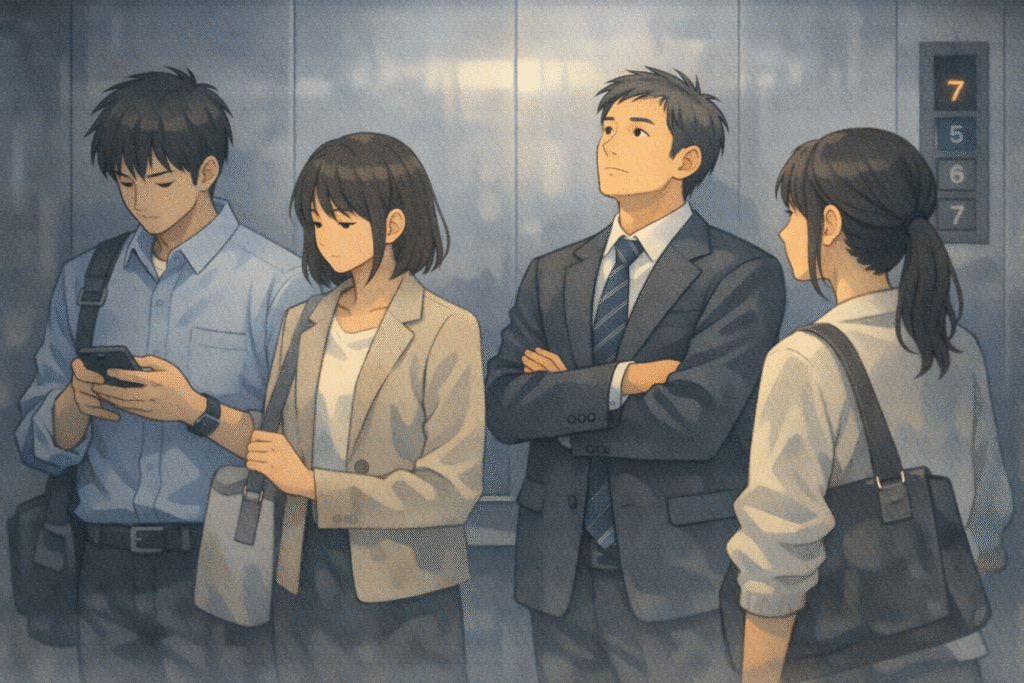
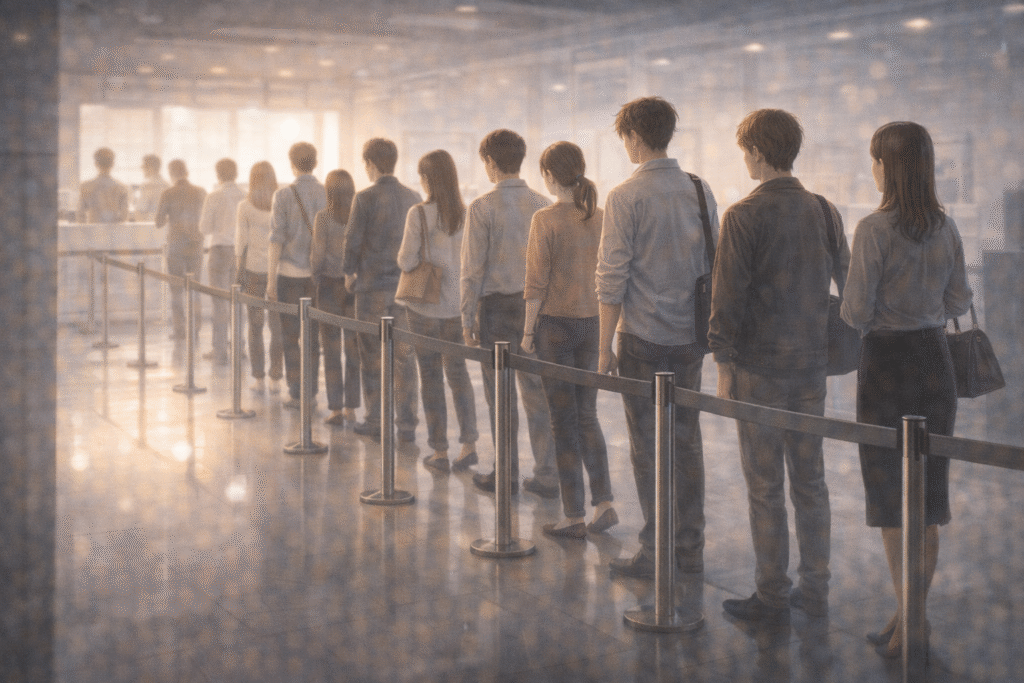
    People standing in line representing fairness and social order

    1. Why Do We Line Up So Willingly?

    We stand in lines almost every day—
    at amusement parks, popular restaurants, hospital counters, and even online shopping platforms where “waiting numbers” appear on our screens.

    At first glance, lining up looks like nothing more than inconvenient waiting.
    Yet people rarely question it. On the contrary, they often accept it willingly.
    Why do we voluntarily endure waiting instead of seeking alternatives?

    The answer lies not in patience alone, but in the social meaning embedded in queues.


    1.1. Lines as a Guarantee of Fairness

    The most fundamental function of a line is fairness.
    The rule is simple: first come, first served.

    Sociologists describe this as the first-come, first-served norm, a powerful yet easily shared social agreement.
    It reassures individuals that their turn will be respected.

    If someone cuts the line at a hospital reception desk, frustration spreads immediately.
    The anger is not about time alone—it is about the violation of fairness.
    Without lines, trust erodes quickly and social conflict intensifies.


    2. Waiting Turns Time into Meaning

    Interestingly, waiting in line does more than organize order—it reshapes experience.

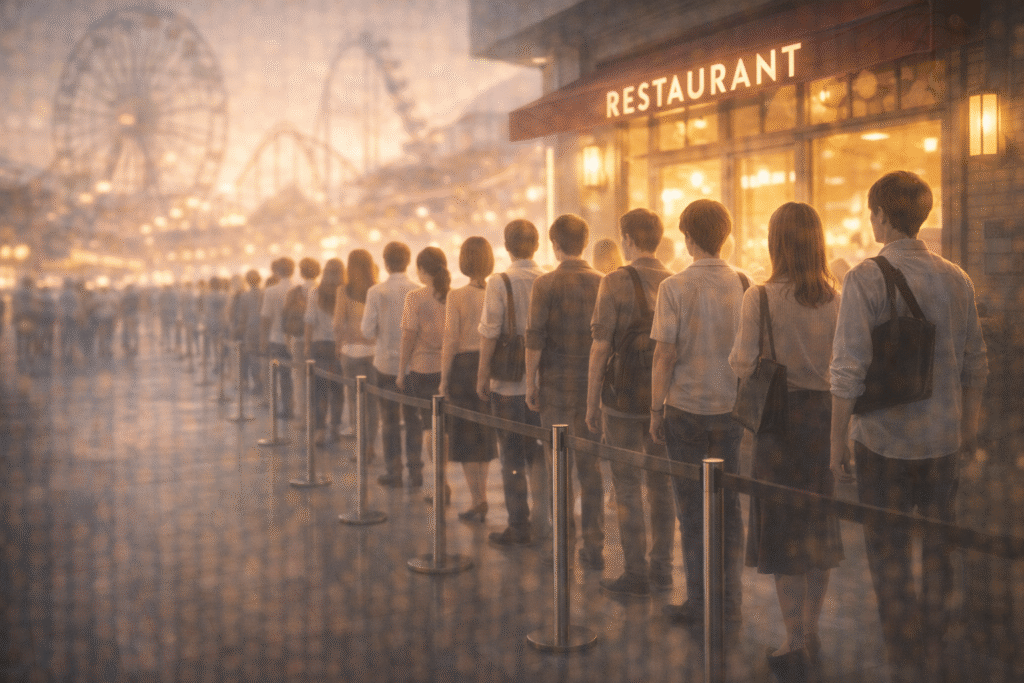
    At amusement parks, waiting two hours for a roller coaster often heightens anticipation.
    People feel that the experience must be more rewarding because they invested time.

    The same applies to long restaurant lines.
    A crowded queue becomes a social signal: this place must be worth it.
    Even ordinary food can feel more valuable when framed by a visible line.

    Long queue outside a popular place signaling value and demand

    3. Lines Create Social Bonds

    Standing in line often produces a subtle sense of solidarity.
    People waiting for the same goal share space, time, and expectation.

    Fans lining up for concert tickets may begin as competitors,
    but often end up feeling like comrades.
    Small conversations, shared complaints, and mutual understanding emerge.

    Lining up is not only about waiting—it is also about belonging.


    4. Lines as Tools of Power and Control

    Despite their appearance of fairness, lines can also function as instruments of power.

    Who controls the line matters.
    VIP lanes, priority access, and exclusive queues immediately reveal inequality.

    Luxury brands deliberately create long lines to increase perceived value.
    Standing in line itself becomes a status symbol—
    a sign of inclusion in a desirable group.

    In these cases, waiting is no longer neutral; it is carefully designed.


    5. Digital Lines in the Online Age

    Lines have not disappeared in digital society—they have simply changed form.

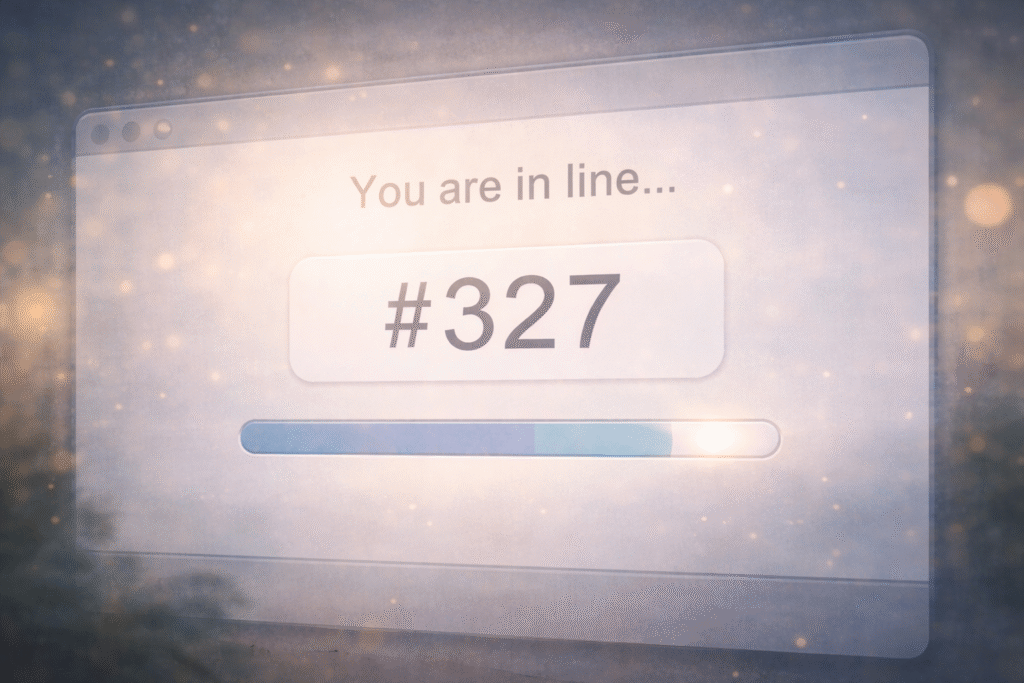
    Online ticket platforms display messages like “You are number 10,524 in line.”
    Video games restrict access with server queues.
    Physical waiting has become virtual waiting.

    Because digital queues are invisible, trust becomes fragile.
    Platforms compensate by showing estimated wait times and live updates,
    attempting to preserve the sense of fairness that physical lines once provided.


    Digital waiting queue on a screen representing online waiting

    Conclusion

    Waiting in line is far more than idle time.

    It is a social mechanism where fairness, expectation, belonging, and power intersect.
    Within the lines we casually join each day,
    the hidden order of society quietly reveals itself.


    References

    1. Mann, L. (1969). Queue Culture: The Waiting Line as a Social System.
      American Journal of Sociology, 75(3), 340–354.
      → A foundational study analyzing queues as structured social systems that sustain order and fairness.
    2. Schweingruber, D., & Berns, N. (2005). Shaping the Social Experience of Waiting.
      Symbolic Interaction, 28(3), 347–367.
      → Examines how theme parks transform waiting into a designed experience of anticipation.
    3. Maister, D. H. (1985). The Psychology of Waiting Lines.
      Harvard Business School Service Notes.
      → Explores how perceived fairness and engagement shape satisfaction during waiting.
  • The Standardization of Experience

    Why Travel, Hobbies, and Life Are Becoming Increasingly Similar

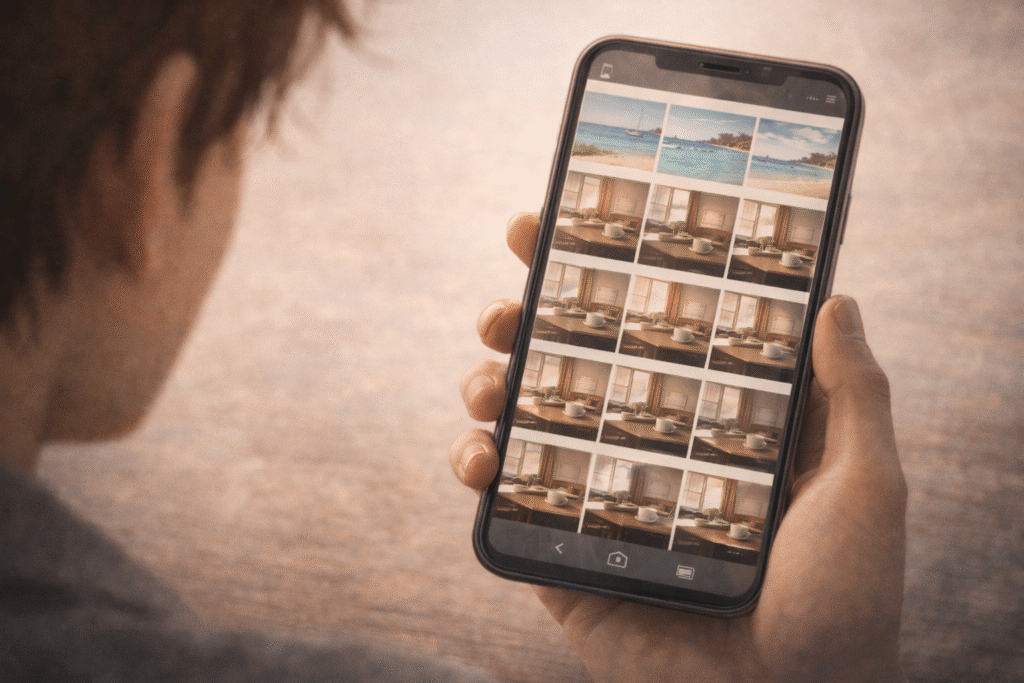
    Similar travel photos repeating across social media

    1. Why Are Our Experiences Becoming So Alike?

    Scrolling through travel photos online, familiar scenes appear again and again.

    Similar cafés, identical poses, the same backdrops, almost interchangeable captions.

    Hobbies follow the same pattern.
    Trending workouts, recommended activities, and “hot right now” interests spread rapidly.

    Although we live separate lives,
    the shape of our experiences is becoming strikingly similar.

    This question naturally arises:

    Why are “personal experiences” slowly disappearing?


    2. How Recommendation Systems Flatten Experience

    AI-assisted imagery:
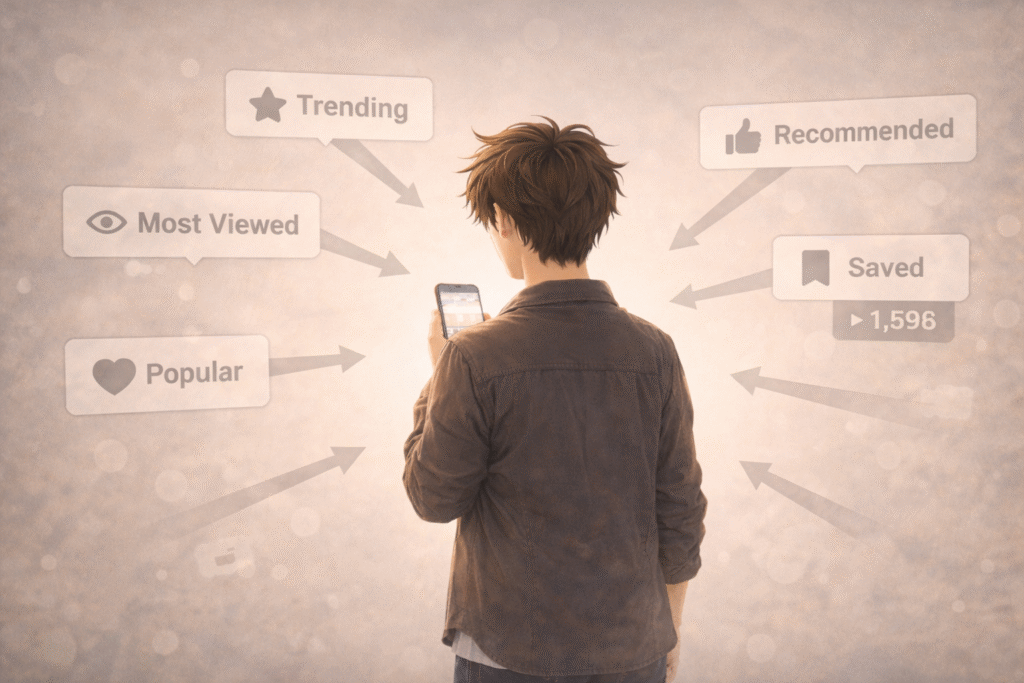
    A person hesitating in front of a recommendation screen, surrounded by repeated choices.


    2.1 The Age of Algorithmic Choice

    Today, many experiences begin not with exploration, but with recommendation.

    Travel destinations are introduced as “most saved places.”
    Music arrives as “playlists curated for you.”
    Hobbies are presented as “what people are doing most right now.”

    Algorithms reduce decision fatigue efficiently,
    but they also guide experiences along similar paths.

    In exchange for convenience,
    we receive experiences that are increasingly standardized.

    Algorithm recommendations shaping similar life choices

    2.2 Social Proof and the Comfort of Safe Choices

    Psychology describes our tendency to value what many others choose as social proof.

    Likes, reviews, and view counts function as indicators of quality.
    As a result, people select experiences that seem less likely to fail.

    Unfamiliar or uncertain experiences are avoided,
    and this repetition gradually erodes diversity.


    2.3 When Experience Becomes Performance

    Experience is no longer just something we live through.

    It becomes something to display, document, and explain.

    Places that photograph well are favored.
    Experiences that are easy to describe are preferred.
    Personal yet inexpressible moments quietly disappear.


    3. Is Experience a Commodity — or a Trace of Being?

    Philosophically, experience is not something to be consumed or exchanged.

    It is a trace of time that shapes who we are.

    Standardized experience shifts the question from
    “What did this mean to me?”
    to
    “How will this look to others?”

    At that moment, experience becomes an external product rather than internal accumulation.

    True experience is often inefficient, difficult to explain,
    and sometimes includes failure.

    Yet it is precisely there that people discover their own rhythm and sensibility.


    4. Conclusion: Reclaiming One’s Own Experience

    AI-assisted imagery:
    A solitary figure reflecting in a quiet space, recovering personal experience.


    The problem is not recommendation systems themselves,
    but our uncritical dependence on them.

    When we follow the same paths without asking what they mean to us,
    our lives begin to resemble one another.

    Wisdom today does not lie in endlessly seeking novelty.

    Quiet reflection on reclaiming personal experience

    It lies in pausing before a given choice and asking:

    “Why does this experience matter to me?”

    Returning experience to the individual —
    that is the most personal form of resistance
    in an age of standardization.


    📚 References

    1. Han, B.-C. (2017). The Expulsion of the Other. Cambridge: Polity Press.
      Han analyzes how sameness replaces difference in contemporary society, offering insight into how standardized experiences weaken individuality.
    2. Zuboff, S. (2019). The Age of Surveillance Capitalism. New York: PublicAffairs.
      Zuboff examines how platforms and algorithms predict and shape human behavior, revealing how experience design is shifting from individuals to systems.
    3. Pine, B. J., & Gilmore, J. H. (1999). The Experience Economy. Boston: Harvard Business School Press.
      This foundational work explains how experiences become economic goods, providing a framework for understanding the commodification and standardization of experience today.