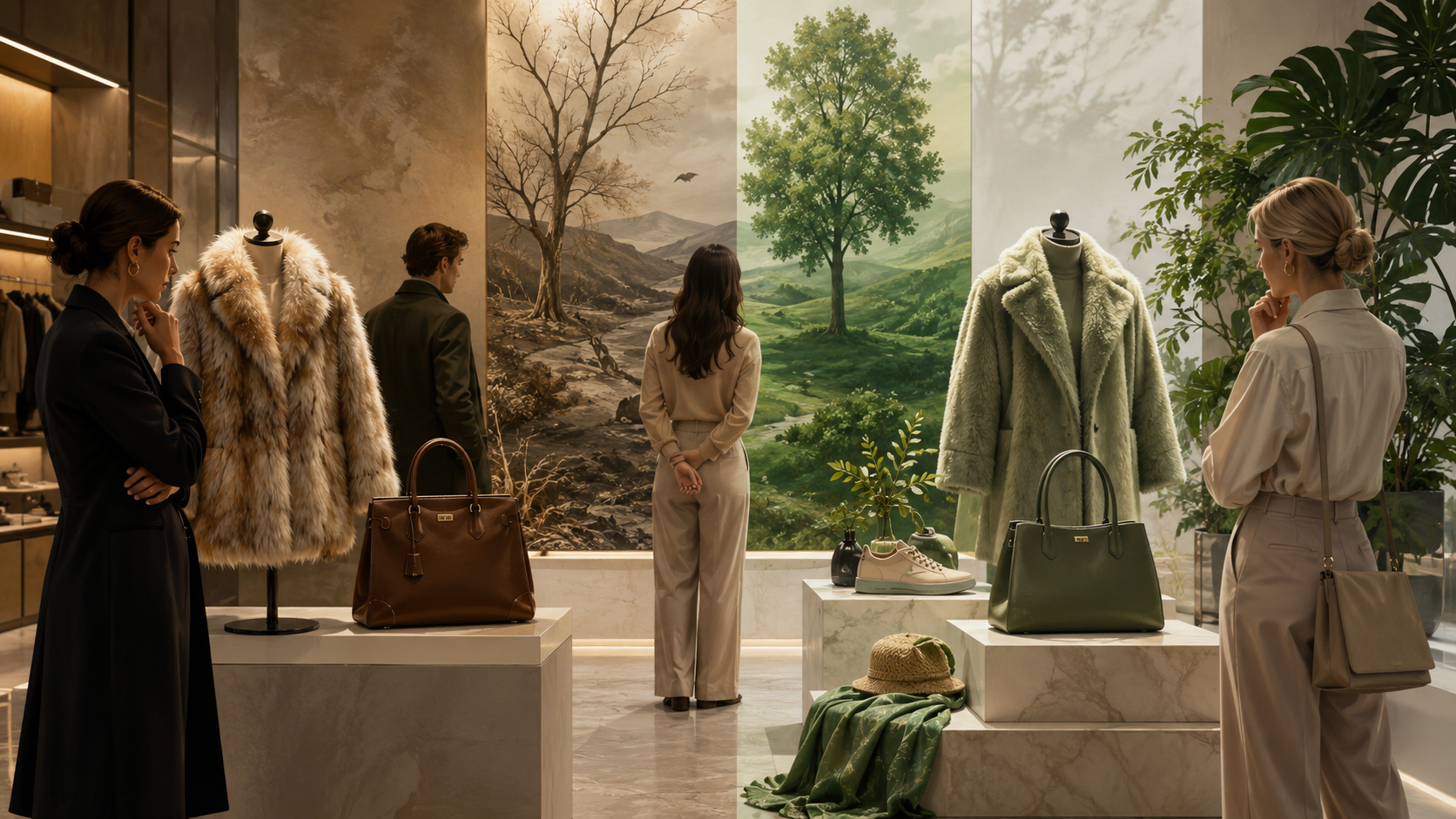
Ethical Fashion and the Conflict Over Traditional Materials
California became the first U.S. state to prohibit the sale of most new fur products, reflecting a broader shift in attitudes toward animal-based fashion. Animal welfare organizations celebrated the decision, while many workers in the fur industry argued that their livelihoods were being threatened.
Major fashion brands have also moved away from fur as consumer expectations around animal welfare and sustainability have changed.
These examples reflect a growing global debate. Fashion has long relied on materials such as leather, fur, wool, silk, and feathers. Yet as awareness of animal welfare and environmental sustainability grows, many consumers are asking a difficult question:
Can fashion remain both stylish and ethical?
1. The Long History of Animal-Based Fashion
Why Traditional Materials Became Popular
For thousands of years, animal-derived materials served practical purposes.
Fur protected people from harsh winters. Leather provided durable clothing, footwear, and tools. Wool offered warmth and flexibility long before synthetic fabrics existed.
Over time, these materials became more than necessities. They evolved into symbols of luxury, status, and craftsmanship.
Even today, many consumers prefer genuine leather products because of their durability and longevity. Supporters argue that high-quality natural materials often last longer than cheaper synthetic alternatives.
Cultural and Economic Importance
Traditional materials also support industries and communities around the world.
Leather workers, shepherds, wool producers, and artisans often depend on these materials for their income. In some regions, animal-based fashion is closely tied to local heritage and cultural identity.
As a result, calls to eliminate animal-derived materials can have economic consequences that extend beyond the fashion industry itself.
2. The Rise of Ethical and Vegan Fashion
A Shift in Consumer Values
Over the past decade, ethical fashion has moved from a niche movement into the mainstream.
Many consumers now want products that align with their values regarding animal welfare, sustainability, and social responsibility.
Fashion brands have responded by introducing alternatives to traditional materials, including:
- Plant-based leather made from mushrooms, cactus, or pineapple fibers
- Recycled synthetic materials
- Bioengineered fabrics
- Animal-free luxury products
Several major fashion houses have phased out fur entirely, citing ethical concerns and changing consumer expectations.
The Animal Welfare Argument
Animal rights advocates argue that fashion should not depend on animal suffering.
Investigations into some fur farms and industrial production systems have raised serious concerns about animal treatment. Critics argue that modern society no longer requires animal-based luxury products and therefore has a moral responsibility to pursue alternatives.
From this perspective, ethical fashion is not merely a consumer preference but a reflection of evolving social values.
3. Is Vegan Fashion Always Better?
The Environmental Dilemma
The debate becomes more complicated when environmental concerns enter the discussion.
Many people assume that synthetic alternatives are automatically more sustainable. However, reality is often more complex.
Artificial leather frequently contains petroleum-based plastics. Manufacturing and disposal can contribute to pollution and microplastic contamination.
Meanwhile, some defenders of natural leather emphasize its durability and long lifespan, although its environmental impact varies considerably depending on sourcing and processing methods.
This raises an important question:
Should sustainability be measured by animal welfare alone, or by the full environmental lifecycle of a product?
The Problem of Greenwashing
Another challenge is “greenwashing”—when companies market products as environmentally friendly without providing meaningful evidence.
Consumers increasingly demand transparency about sourcing, production methods, labor conditions, and environmental impact.
As ethical fashion grows, scrutiny of corporate claims is likely to intensify.
4. Fashion, Identity, and Consumer Responsibility
Clothing as a Moral Statement
Fashion is no longer viewed solely as a matter of appearance.
For many people, purchasing decisions have become expressions of personal values. Choosing vegan products, recycled materials, or ethically sourced clothing allows consumers to align their purchases with broader beliefs about society and the environment.
As a result, fashion choices increasingly function as ethical statements as well as style preferences.
Can Consumers Change the Industry?
Consumer behavior has already influenced major brands.
Growing demand for ethical products has encouraged investment in sustainable materials, improved transparency, and greater attention to supply chains.
Yet some critics argue that responsibility should not fall entirely on consumers. Governments, industry organizations, and corporations also play important roles in establishing standards and encouraging innovation.
5. Finding a Balance Between Ethics and Practicality
Beyond Simple Answers
The conflict between traditional materials and ethical fashion is not easily resolved.
Animal-based materials raise legitimate concerns about welfare and sustainability. At the same time, synthetic alternatives may introduce new environmental challenges.
A balanced approach may involve:
- Improving animal welfare standards
- Developing innovative sustainable materials
- Increasing supply-chain transparency
- Supporting workers affected by industry transitions
- Encouraging informed consumer choices
Rather than framing the issue as a simple choice between good and bad, many experts advocate for a broader conversation about responsible production and consumption.
Conclusion
The debate over fashion and animal ethics reflects larger questions about how modern societies balance tradition, innovation, sustainability, and morality.
Animal-derived materials have a long history and continue to support industries around the world. At the same time, growing awareness of animal welfare and environmental challenges has encouraged consumers and brands to rethink long-standing practices.
The future of fashion may not lie in choosing one side of the debate, but in finding ways to reduce harm while preserving creativity, quality, and cultural diversity.
As technology advances and consumer values evolve, the most important question may no longer be what our clothes are made from, but what our choices say about the world we want to create.
Reader Question
Should animal welfare concerns outweigh centuries of tradition in fashion, even if doing so affects industries and communities that depend on animal-based materials?
When ethical values, environmental sustainability, and economic realities point in different directions, what should consumers prioritize when making purchasing decisions?
Related Reading
Changing how products are made raises questions about who bears the costs of ethical reform. In The Unequal Cost of Going Green, we examine how an environmental transition can distribute benefits and burdens unevenly among workers, consumers, and communities. Although animal welfare and climate justice involve different concerns, both ask how changes in production can address harm while taking account of the people whose livelihoods depend on existing industries.
References
1. Fletcher, Kate. (2014). Sustainable Fashion and Textiles: Design Journeys (2nd ed.). Routledge.
This influential work examines sustainability across the full lifecycle of fashion and textiles, including material selection, production, use, reuse, recycling, and consumption. It provides a broad framework for understanding why ethical fashion cannot be evaluated through a single issue such as animal welfare, but must also consider environmental impact, durability, production systems, and patterns of consumption. Routledge
2. European Environment Agency. (2022). Textiles and the Environment: The Role of Design in Europe’s Circular Economy. EEA.
This report examines the environmental and climate impacts of textile production and consumption across the product lifecycle. It is particularly relevant to the article’s discussion of material choices, durability, resource use, waste, and the need to evaluate fashion products through their broader environmental impacts rather than through a simple distinction between natural and synthetic materials.
3. European Environment Agency. (2021). Plastic in Textiles: Towards a Circular Economy for Synthetic Textiles in Europe. EEA.
The report explains how synthetic textile fibres depend heavily on fossil-fuel resources and can contribute to greenhouse-gas emissions, non-renewable resource use, waste, and microplastic pollution. It supports the article’s argument that replacing animal-derived materials with synthetic alternatives does not automatically resolve the environmental challenges associated with fashion.
4. Muthu, Subramanian Senthilkannan, & Ramchandani, Mukta. (2024). Vegan Alternatives for Leather. Springer.
This book evaluates traditional leather alongside emerging alternatives including plant-based, mycelium-based, and synthetic vegan leathers. It examines environmental footprints, toxicity, life-cycle assessment, manufacturing, consumer behavior, and the trade-offs involved in replacing animal-derived leather, providing a useful foundation for assessing whether vegan materials are necessarily more sustainable. Springer
5. European Commission. (2023–2026). European Citizens’ Initiative “Fur Free Europe”. European Commission.
The European Commission’s examination of the Fur Free Europe initiative illustrates the continuing public and policy debate surrounding animal welfare, fur production, consumer products, and the economic and social consequences of changing animal-welfare standards. It provides contemporary institutional context for the article’s broader question of how fashion should balance animal welfare with established industries and economic interests.