The classroom is more than a place for academic learning.
It is a small society where students with different backgrounds, personalities, and experiences spend much of their daily lives together.
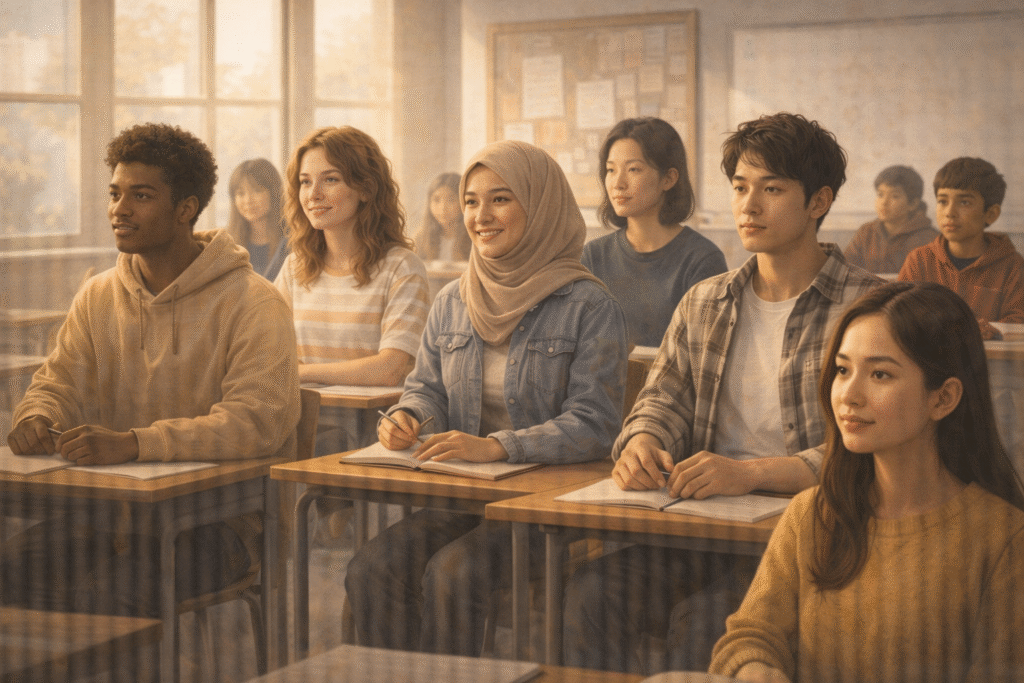
Some students are outgoing and expressive, while others are quiet and reflective.
Differences appear in family backgrounds, regions, languages, cultures, religions, physical conditions, gender identities, and personal interests.
In this sense, the classroom is one of the most visible spaces where diversity is lived, not just discussed.
1. What Does Diversity Mean?
1.1 Beyond Difference: Diversity as Value
Diversity is not simply about acknowledging differences.
It is about recognizing those differences as meaningful and valuable.
UNESCO defines diversity across multiple dimensions—culture, language, religion, ethnicity, gender, physical ability, and socioeconomic background—and emphasizes it as a core principle of human rights.
1.2 Equality vs. Equity
Respecting diversity does not mean treating everyone exactly the same.
It means understanding different needs and circumstances and responding with fairness and care.
2. Forms of Diversity in the Classroom
2.1 Cultural and Linguistic Differences
Students from multicultural families or those who have transferred from other countries may experience language barriers and cultural isolation.
2.2 Learning Styles and Pace
Some students learn best through visuals, others through discussion or hands-on activities.
A slower pace does not indicate lower ability.
2.3 Physical and Psychological Differences
Students may have disabilities or experience emotional instability, requiring thoughtful support and accommodation.
2.4 Differences in Interests and Values
Music preferences, fashion, career goals, and social or political views can vary widely within the same classroom.
3. Practicing Respect in Everyday School Life
3.1 Language Matters
Derogatory or mocking language—even as a joke—can cause harm.
Correctly pronouncing names and using preferred forms of address are small but powerful acts of respect.
3.2 Listening as Respect
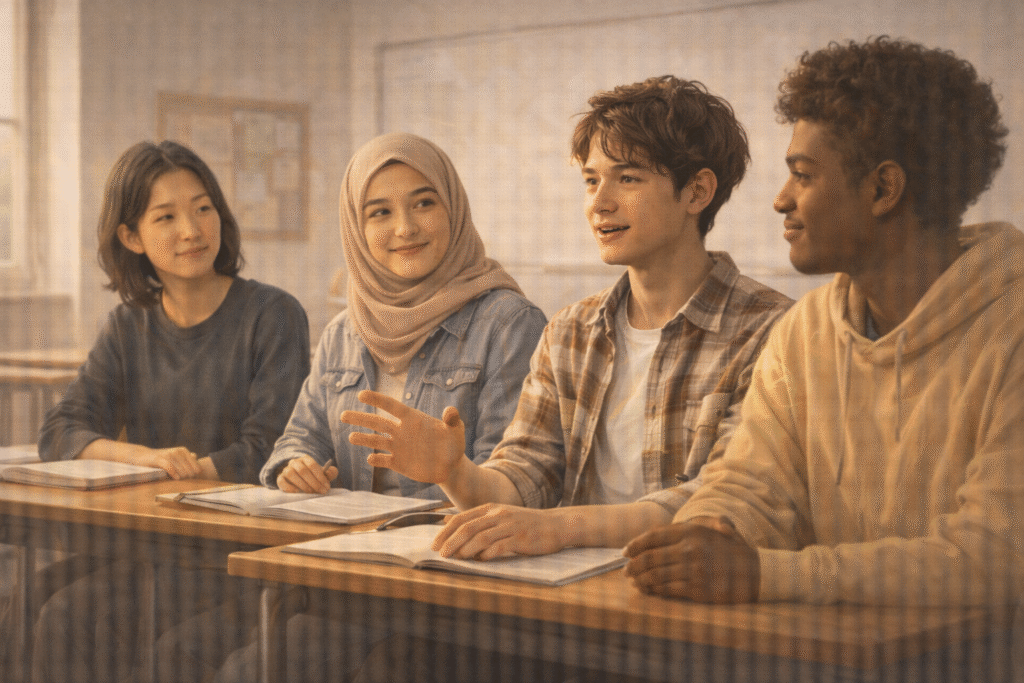
Listening without interruption and acknowledging different perspectives builds trust.
Saying “I see why you think that” can be meaningful even without agreement.
3.3 Learning About Differences
Curiosity leads to understanding.
For example, learning why a classmate observes fasting can encourage natural and respectful consideration during lunchtime.
3.4 Designing Inclusive Activities
Group work should allow students with different strengths to participate meaningfully.
Rotating roles—such as leader, presenter, or recorder—helps ensure inclusion.
4. Roles of Teachers and Students
4.1 The Role of Teachers
Teachers can:
- Integrate diverse perspectives into learning materials
- Monitor exclusion and intervene early
- Guide conflicts toward educational dialogue rather than punishment
4.2 The Role of Students
Students can:
- View differences as opportunities to learn
- Speak out against bullying or hate speech
- Remain open to perspectives different from their own
5. Why Respecting Diversity Benefits Everyone
- Social skills improve through exposure to multiple viewpoints
- Creativity increases as diverse experiences generate new ideas
- Communities grow stronger through trust, cooperation, and mutual respect
Conclusion

Respecting diversity does not begin with grand policies or large-scale programs.
It begins with small, everyday actions—listening carefully, using names correctly, and showing genuine curiosity about others.
When these actions become habits, habits form culture.
And when respect becomes part of classroom culture, it shapes the society students will one day help lead.
📅 A 7-Day Diversity Respect Challenge (Optional Classroom Activity)
| Day | Action | Description |
|---|---|---|
| Day 1 | Use names correctly | Address classmates using their preferred names |
| Day 2 | Five-minute listening | Listen without interrupting for five minutes |
| Day 3 | Ask respectfully | Ask about a different culture or interest |
| Day 4 | Change seats | Sit with someone you rarely talk to |
| Day 5 | Give a sincere compliment | Acknowledge effort or kindness |
| Day 6 | Encourage inclusion | Suggest balanced role distribution in group work |
| Day 7 | Reflect on bias | Write down and reflect on personal assumptions |
References
- Banks, J. A., & Banks, C. A. M. (2019). Multicultural Education: Issues and Perspectives (10th ed.). Wiley.
→ A foundational work offering theoretical frameworks and practical strategies for multicultural education. - Gay, G. (2018). Culturally Responsive Teaching: Theory, Research, and Practice (3rd ed.). Teachers College Press.
→ Explains how teaching practices can respect and reflect students’ cultural backgrounds. - Nieto, S., & Bode, P. (2018). Affirming Diversity: The Sociopolitical Context of Multicultural Education (7th ed.). Pearson.
→ Connects diversity education with broader social and political contexts.