Tag: emotional intelligence

  • Why We Excuse Ourselves but Blame Others

    — Understanding the Actor–Observer Bias
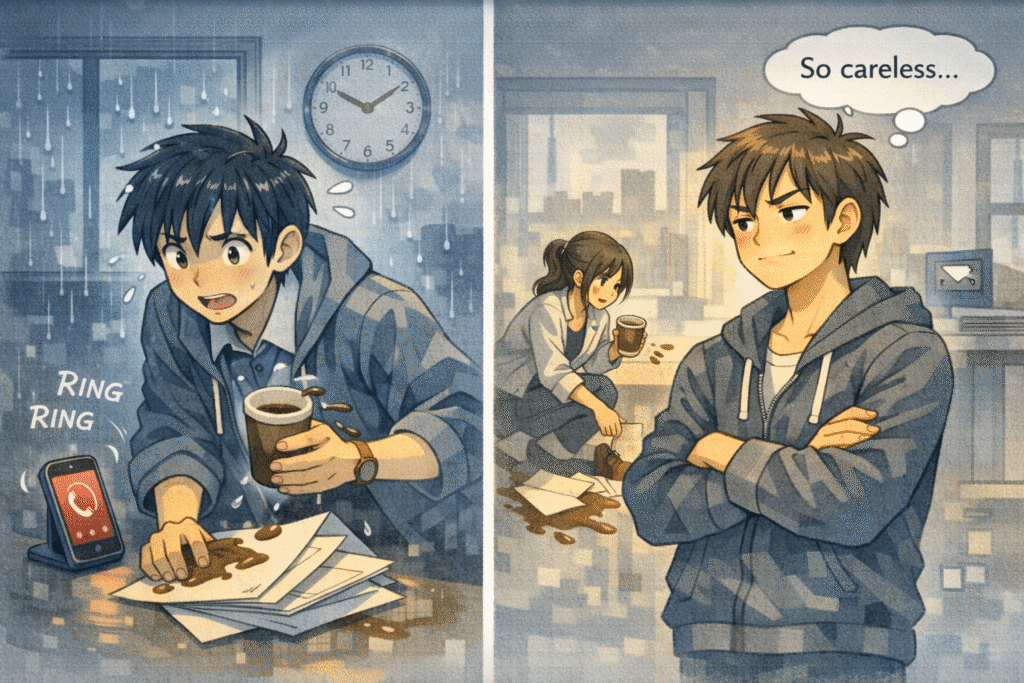
    Different perspectives in judging behavior

    When I make a mistake,
    “I had a good reason.”

    When someone else makes the same mistake,
    “What’s wrong with them?”

    Have you noticed this pattern?

    If someone cuts in traffic, we feel anger.
    But when we cut in because we are late,
    we expect understanding.

    This common psychological tendency is known as the Actor–Observer Bias.


    1. My Behavior Is Situational. Yours Is Personal.
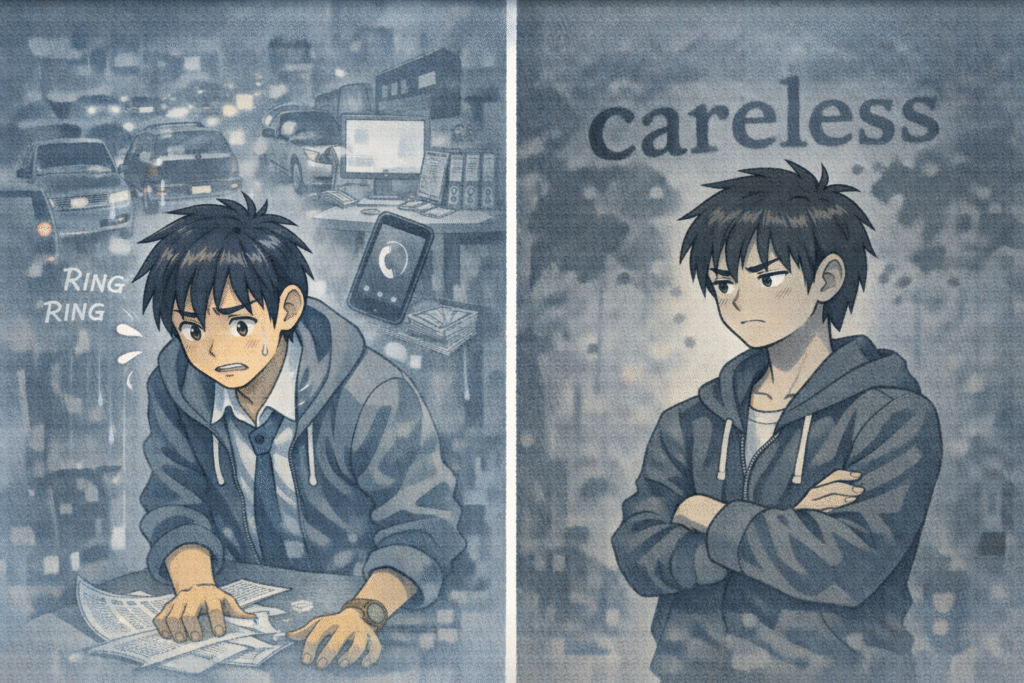
    Situational versus personal attribution bias

    The concept was introduced by Edward Jones and Richard Nisbett in the 1970s.

    The idea is simple:

    When I fail → It was the situation.
    When you fail → It was your personality.

    If I miss a deadline,
    “I was overwhelmed.”

    If you miss a deadline,
    “You’re irresponsible.”

    As actors in our own lives, we see context.
    As observers of others, we see character.


    2. The Power of Perspective

    This bias stems from point of view.

    When I act, I know what I was feeling,
    what constraints I faced,
    what pressure I experienced.

    When I observe you,
    I see only the visible behavior.

    My inner world is vivid to me.
    Yours is invisible.

    That asymmetry creates distorted judgment.


    3. Why It Damages Relationships

    The bias becomes sharper in close relationships.

    If I respond late:
    “I had a stressful day.”

    If you respond late:
    “You don’t care anymore.”

    We interpret our own behavior through circumstance,
    but others’ behavior through intention.

    Over time, this pattern breeds misunderstanding and resentment.


    4. How to Reduce the Bias

    Awareness is the first step.

    Before judging, try asking:

    “What situation might they be in?”
    “Would I act differently under the same pressure?”

    Switching perspective softens attribution.

    Replacing
    “Why are they like that?”
    with
    “What might have happened?”

    can transform conflict into understanding.


    Conclusion
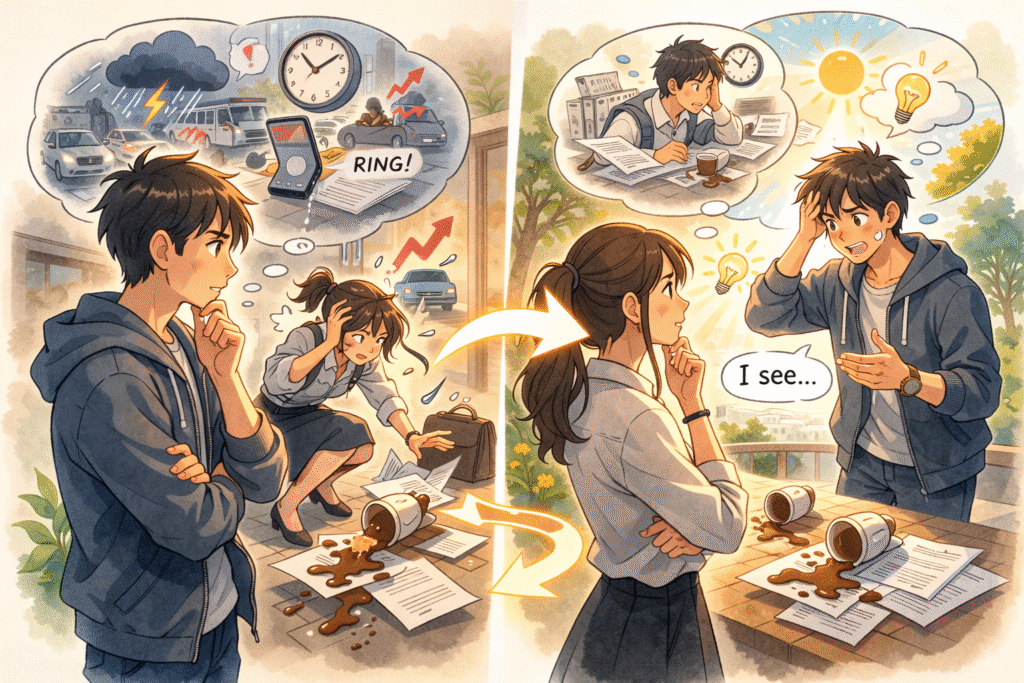
    Changing perspective to reduce blame

    We see ourselves in full color and others in outline.

    The Actor–Observer Bias is not a flaw of bad character.
    It is a built-in feature of human cognition.

    But once we recognize it,
    we gain a choice.

    A choice to pause.
    A choice to interpret more gently.
    A choice to understand before blaming.

    Sometimes, empathy begins with changing the angle of view.

    Related Reading

    The psychological roots of self-perception and social comparison are further explored in The Sociology of Selfies, where identity and recognition are analyzed in digital contexts.
    From a structural perspective, The Age of Overexposure: Why Do We Turn Ourselves into Products? expands this discussion by questioning how social systems amplify performative identity.


    References

    1. Jones, E. E., & Nisbett, R. E. (1972). The Actor and the Observer: Divergent Perceptions of the Causes of Behavior. In Attribution: Perceiving the Causes of Behavior.
    → This foundational work formally introduced the actor–observer bias and demonstrated how individuals attribute their own actions to situational factors while attributing others’ actions to personality traits.

    2. Ross, L. (1977). The Intuitive Psychologist and His Shortcomings. In Advances in Experimental Social Psychology.
    → Ross developed the concept of the fundamental attribution error, closely related to the actor–observer bias, highlighting how people underestimate situational influences when judging others.

    3. Gilbert, D. T. (1998). Ordinary Personology. In The Handbook of Social Psychology.
    → Gilbert explains how everyday people form quick judgments about others and why attribution biases persist even when we attempt to be objective.


  • Social Attractiveness and the Psychology of Likeability

    Why We Are Drawn to Some People Beyond Physical Appearance

    Natural conversation reflecting social attractiveness

    Why do some people naturally draw us in?

    We meet countless individuals every day. Yet, with certain people, conversation flows more easily, emotional distance fades, and we simply enjoy being around them. This attraction rarely comes down to looks alone. Instead, it emerges from a complex psychological and social phenomenon known as social attractiveness.

    Social attractiveness refers to how much a person feels emotionally comfortable, engaging, and pleasant to be around. It is not something we are simply born with—it is shaped through everyday attitudes, behaviors, and interactions.


    1. Empathy: The Feeling of Being Truly Understood

    1.1 Emotional Attunement and Active Listening

    At the core of social attractiveness lies empathy, particularly empathetic listening. This goes beyond agreeing with someone’s words. It means sensing emotional undertones, responding with care, and showing genuine interest in another person’s inner experience.

    1.2 Why Empathy Builds Trust

    When someone responds with curiosity—“What part was most difficult for you?”—rather than quick judgment, they create emotional safety. People naturally gravitate toward those who make them feel heard and understood.

    Empathetic listening builds emotional connection

    2. Humor: Easing Tension and Creating Connection

    2.1 Humor as Social Glue

    Humor is not about being funny at all costs. Rather, it helps release tension and builds emotional closeness. Light, situational humor can make interactions feel relaxed and human.

    2.2 Emotional Flexibility and Likeability

    Research suggests that humor signals emotional flexibility and psychological resilience. People who can laugh appropriately are often perceived as more trustworthy and approachable.


    3. Self-Disclosure: Sharing Without Overexposing

    3.1 The Balance of Openness

    Socially attractive people strike a balance between being too closed and too revealing. Appropriate self-disclosure allows others to feel included without feeling burdened.

    3.2 Shared Stories, Shared Trust

    When someone gently connects their own experience to another’s—“I went through something similar once”—it creates a bridge of shared understanding. Mutual openness strengthens relational bonds.


    4. Nonverbal Communication: What Is Said Without Words

    4.1 The Power of Facial Expressions and Eye Contact

    Nonverbal cues often communicate more than words. Smiling, nodding, and maintaining eye contact convey attentiveness and respect.

    4.2 Creating Psychological Safety

    Such signals reassure others that they are welcome and valued. Importantly, these skills can be consciously practiced and refined over time.


    5. Respect and Consideration: The Foundation of Lasting Attraction

    5.1 Everyday Courtesy as Social Strength

    At the deepest level, social attractiveness rests on respect—listening without judgment, acknowledging differences, and responding thoughtfully.

    5.2 Why Quiet Consideration Lasts Longest

    Some people are not loud, witty, or charismatic, yet they remain memorable because of their consistent kindness and consideration. Social attractiveness is ultimately less about performance and more about relational quality.


    Conclusion: Social Attractiveness Can Be Cultivated

    Quiet respect creates lasting social attractiveness

    Likeability is not a fixed personality trait—it is a learnable social skill. Rather than striving to be impressive, focusing on being warm, attentive, and respectful naturally draws others closer.

    Small habits—listening sincerely, expressing care through gestures, and opening up thoughtfully—gradually shape how others experience us. Over time, these practices turn social attractiveness into something quietly but powerfully human.

    References

    1. Wilson, T. D. (2002). Strangers to Ourselves: Discovering the Adaptive Unconscious. Harvard University Press.
      → Explores unconscious processes behind social judgment and attraction, offering insight into invisible mechanisms of interpersonal appeal.
    2. Kahneman, D. (2011). Thinking, Fast and Slow. Farrar, Straus and Giroux.
      → Explains intuitive and analytical thinking systems that shape first impressions and social evaluations.
    3. Hall, E. T. (1959). The Silent Language. Anchor Books.
      → A foundational work on nonverbal communication, showing how gestures, space, and timing influence social perception across cultures.