Tag: emotional expression

  • Why Do Emojis Convey Emotion Better Than Words?

    — The Psychology of Visual Language
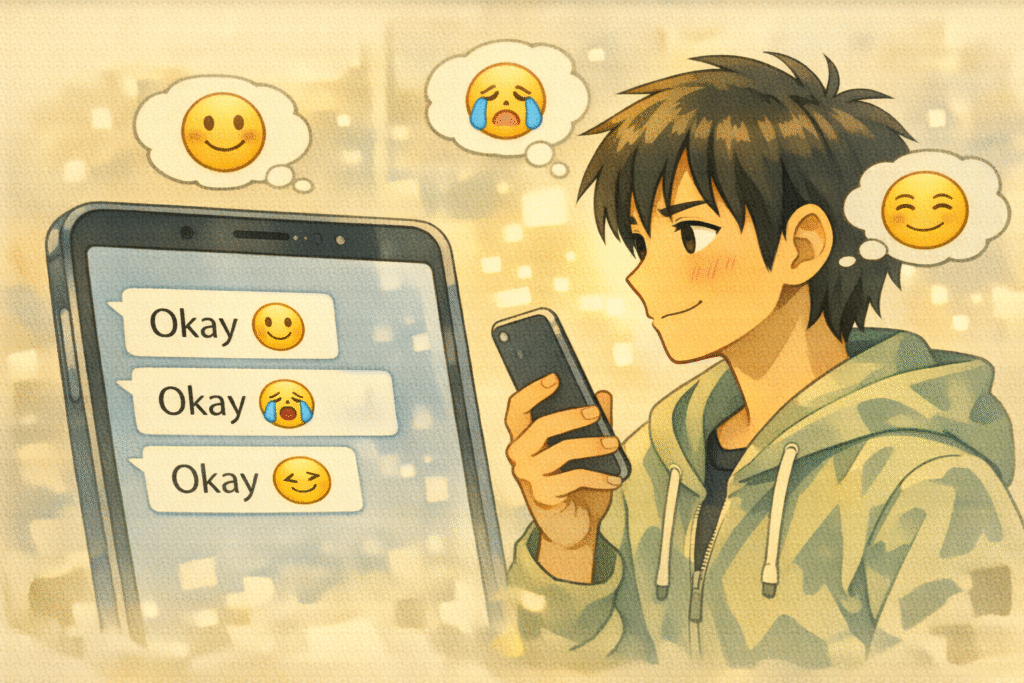
    Same text message showing different emotions with emojis

    “Okay.”

    “Okay 🙂”

    “Okay 😭”

    The word is the same.
    But the feeling changes completely.

    In an age where most conversations happen on screens,
    emojis are no longer decoration.
    They are emotional tools.

    Sometimes, a tiny icon communicates more clearly than a full sentence.

    So why does a small visual symbol carry such powerful emotional weight?


    1. Emojis Replace Lost Facial Expressions
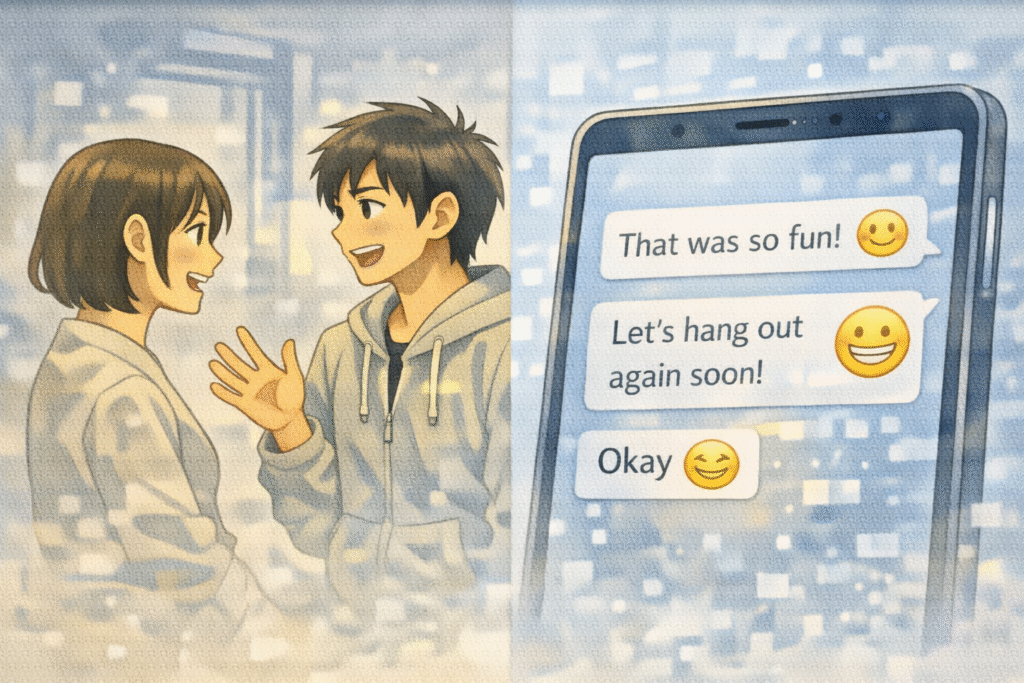
    Emoji replacing facial expression in digital communication

    Human communication is deeply nonverbal.

    In face-to-face conversations,
    tone of voice, facial expression, eye movement, and gestures
    all shape meaning.

    But digital text strips these cues away.

    Emojis step in as substitutes for facial expressions.

    🙂 softens a statement.
    😅 signals nervous humor.
    🙃 suggests irony.

    They restore emotional nuance that plain text cannot easily provide.


    2. Emojis Compress Emotion Efficiently

    Psychology suggests that symbols can compress complex information into simple forms.

    Instead of writing:
    “I support you even if I cannot say much,”
    we might simply send:

    💪✨

    A single emoji can carry encouragement, warmth, and solidarity.

    Emojis allow emotional richness without slowing conversation.

    They are efficient containers of feeling.


    3. Emojis Clarify Intent

    Digital text is highly ambiguous.

    “Nice job.”
    Is it sincere? Sarcastic? Passive-aggressive?

    Add an emoji:

    “Nice job 😍” → Genuine praise
    “Nice job 😏” → Playful teasing
    “Nice job 🤨” → Suspicion

    Emojis reduce misinterpretation by signaling intent.

    They act as emotional safety devices in fragile digital spaces.


    4. Emojis as a Global Emotional Language

    Words differ across cultures.
    Smiles do not.

    😊 👍 ❤️

    These symbols transcend linguistic boundaries.

    In cross-cultural communication, emojis often bridge emotional gaps faster than translated sentences.

    They represent a new shared visual vocabulary of empathy.


    Conclusion: A Quiet Evolution of Language
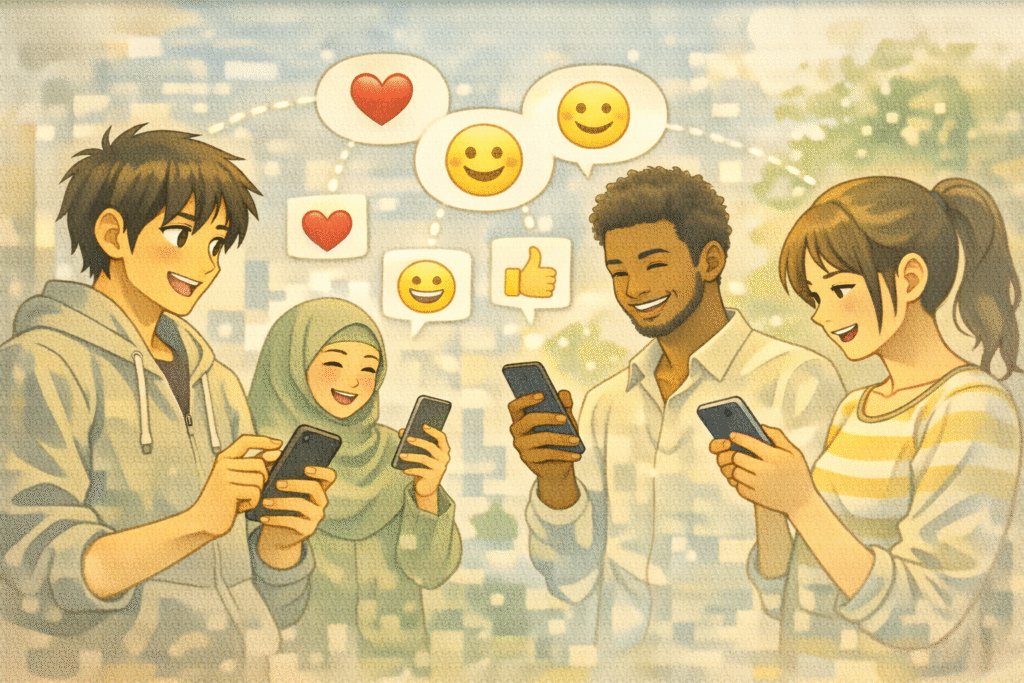
    Emojis connecting people across cultures

    Emojis are not replacing language.
    They are expanding it.

    They compensate for the emotional limitations of text-based communication.

    They make digital interaction warmer, softer, and more human.

    Next time you send a message,
    ask not only what you want to say,
    but how you want it to feel.

    Sometimes, a symbol speaks before the sentence does.

    Related Reading

    The transformation of communication and identity is further explored in The Sociology of Selfies, which investigates how digital expression reshapes social presence.
    On a political and structural level, Automation of Politics: Can Democracy Survive AI Governance? considers how algorithmic systems increasingly mediate human interaction and decision-making.

    References

    1. Evans, V. (2017). The Emoji Code: The Linguistics Behind Smiley Faces and Scaredy Cats. Picador.
    → This book frames emoji as an evolutionary stage of digital language. Evans argues that emoji function as pragmatic emotional markers, restoring tone and nuance lost in text-only communication.

    2. Danesi, M. (2016). The Semiotics of Emoji: The Rise of Visual Language in the Age of the Internet. Bloomsbury Academic.
    → Danesi explores emoji through semiotics, showing how visual symbols increasingly operate as meaningful linguistic units rather than decorative elements in digital discourse.

    3. Crystal, D. (2008). Txtng: The Gr8 Db8. Oxford University Press.
    → Crystal’s work on digital language provides theoretical grounding for understanding how abbreviated forms, emoticons, and emoji reshape emotional and pragmatic communication online.
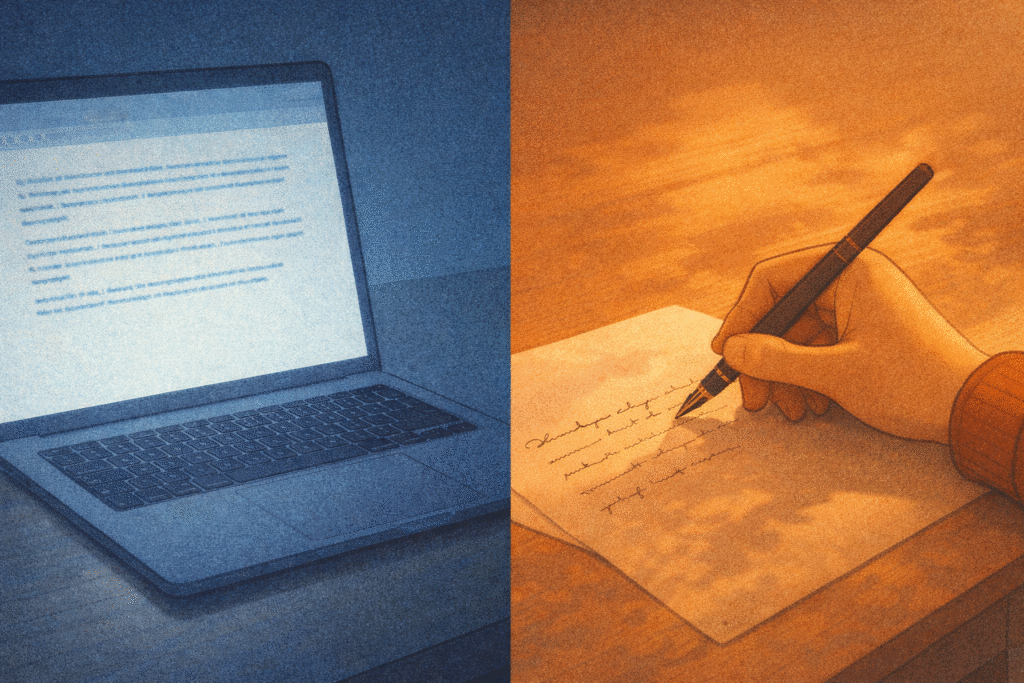
  • The Psychology of Handwriting

    The Warmth of the Human Touch in an Age Without Pens

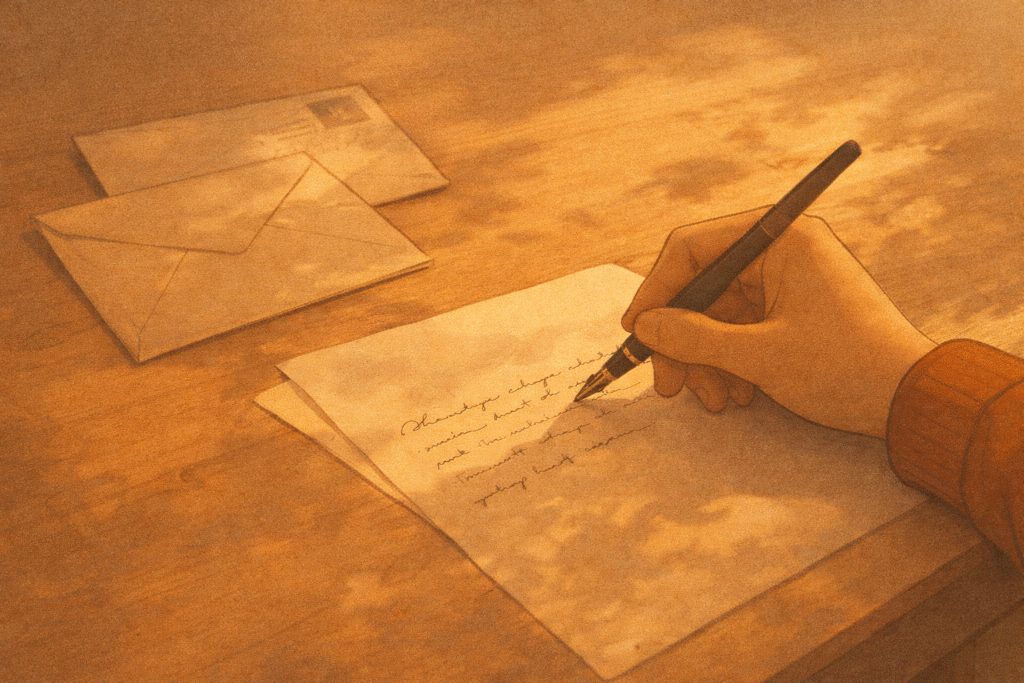
    Handwritten letter and fountain pen on a sunlit wooden desk

    1. When Was the Last Time You Wrote a Letter by Hand?

    When was the last time you wrote a letter by hand?

    A few days ago, I found myself holding a pen again.
    After hours of typing on a keyboard, my hand felt strangely unfamiliar with the weight of ink and paper.
    Yet as the pen moved across the page, there was a quiet satisfaction—
    a subtle texture that no digital font could reproduce.

    The handwriting was imperfect, even clumsy at times,
    but each letter seemed to carry intention.
    I could have sent an email.
    Instead, I chose to write by hand because I wanted to send something warmer than words alone.

    Sometimes, when we look at old letters, we recognize the person before we read the message.
    In the curves and pressure of the writing, we sense their presence.
    Handwriting is not merely text—it is a trace of a human moment.


    2. Handwriting as Language: Movement That Holds Emotion

    Handwritten notes beside a laptop and smartphone

    Handwriting has often been called a mirror of the mind.

    Psychologist Ludwig Klages once wrote that “writing is not done by the hand, but by the soul.”
    Tension appears in tight, rigid letters.
    Calmness flows through generous, open strokes.

    Unlike typing—where emotion is flattened into uniform fonts—
    handwriting records the body’s rhythm, hesitation, and emotional state.
    The tremble of a line, the uneven spacing, the sudden pressure of ink
    all become part of the message.

    That is why we often feel closer to handwritten words.
    Even when the writing is messy, it feels honest.
    Its imperfection makes it unmistakably human.


    3. The Digital Paradox: Speed Without Intimacy

    In the digital age, handwriting is slowly disappearing.

    Schools rely less on handwritten assignments.
    Workplaces replace signatures with digital approvals.
    Efficiency dominates communication.

    And yet, the longing for handwriting remains.

    People photograph handwritten notes and share them online,
    as if trying to reinsert warmth into a cold medium.
    We instinctively trust handwritten words more than typed ones,
    because speed cannot replace sincerity.

    The paradox is clear:
    the faster communication becomes,
    the more we crave signs of slowness.


    4. Handwriting as a Vessel of Memory

    Handwriting is also a carrier of memory.

    Letters, notebooks, and postcards left behind
    preserve more than information—they preserve presence.
    They hold the movement of a person’s hand,
    a silent echo of how they once existed in the world.

    People pass away, but their handwriting remains.
    Long after voices fade, written traces continue to testify:
    someone was here.

    In this sense, handwriting becomes an emotional artifact—
    a human imprint that time does not easily erase.


    5. Conclusion: Writing by Hand Is Writing the Self

    In a world driven by speed, handwriting returns as an act of resistance.

    Keyboards offer convenience,
    but the warmth of meaning still emerges from the hand.

    Writing a handwritten letter in warm window light

    When you wish to convey care rather than efficiency,
    consider writing a single line by hand.

    Ink fades slowly.
    Paper ages gently.
    And the words you write today may one day carry your presence
    long after the moment has passed.

    Handwriting is not about nostalgia.
    It is about leaving behind something unmistakably human.

    📚 References

    Sennett, Richard. (2008). The Craftsman. Yale University Press.
    → Sennett examines how manual practices shape self-formation and human dignity. Handwriting can be understood within this framework as a bodily language through which identity and presence are expressed.

    Varnhagen, Vera. (2006). “Handwriting and Personality: An Analysis of Expressive Movement.” Journal of Nonverbal Behavior, 30(2), 91–107.
    → This study explores how emotional states and personality traits are reflected in handwriting through movement, pressure, and rhythm, offering a psychological basis for interpreting handwritten expression.

    Baron, Naomi S. (2000). Alphabet to Email: How Written English Evolved and Where It’s Heading. Routledge.
    → Baron traces the evolution of written communication and analyzes how digital writing alters emotional expression and interpersonal connection, providing essential context for understanding the loss of handwriting’s affective depth.