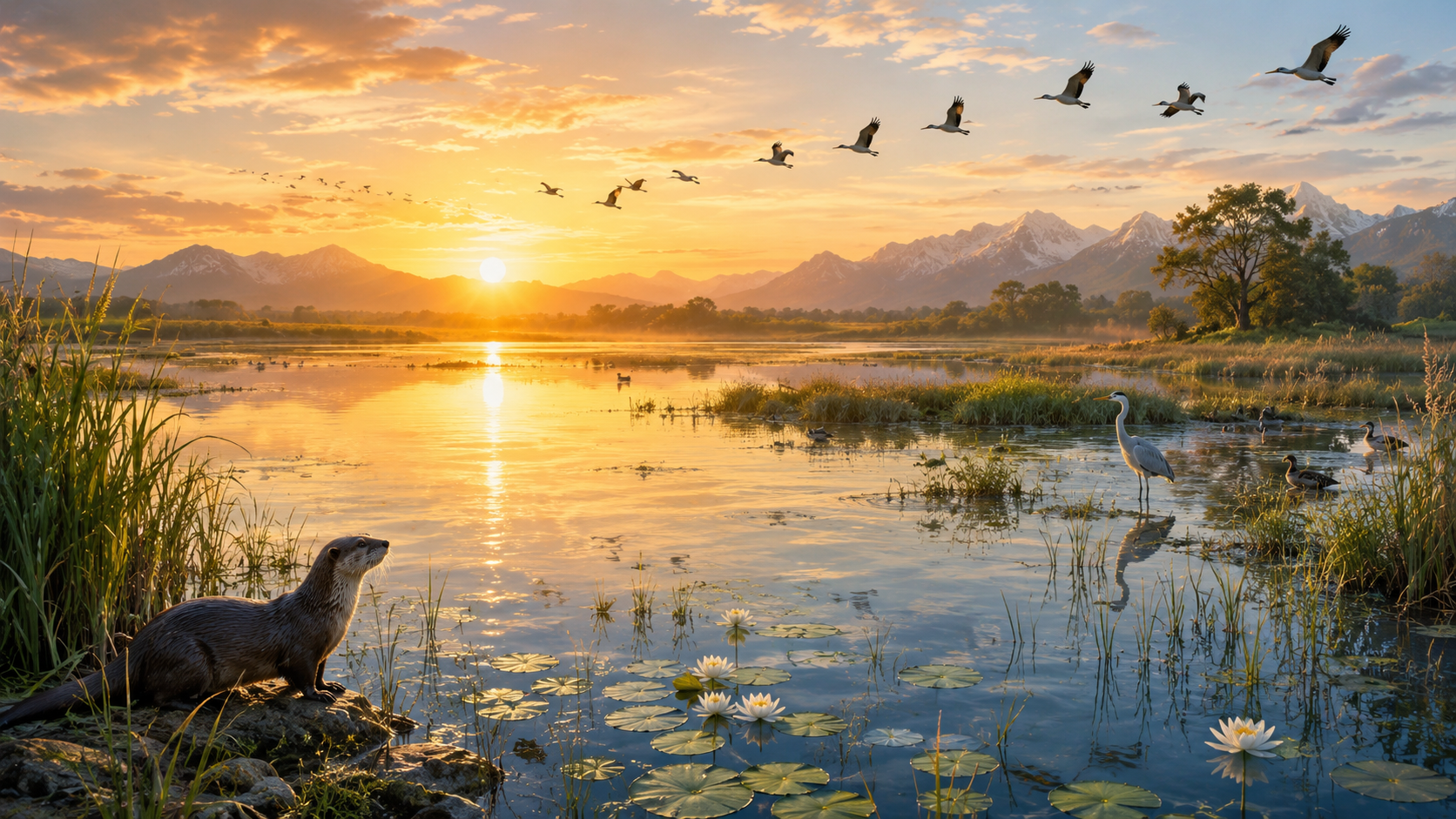
Nature’s Life-Support System for Water, Wildlife, and Climate
Wetlands are among the most valuable yet often overlooked ecosystems on Earth. Found where land and water meet, they include marshes, swamps, peatlands, mangrove forests, floodplains, and shallow lakes. Although they occupy only a small portion of the planet’s surface, wetlands support an extraordinary diversity of life while providing essential services that benefit both nature and humanity.
Scientists often describe wetlands as “the kidneys of the Earth” because they naturally filter water, and as “nature’s sponges” because they absorb and slowly release floodwaters. They also store large amounts of carbon, helping to reduce the impacts of climate change. In recognition of their global importance, the Ramsar Convention on Wetlands encourages countries around the world to protect and wisely manage these unique ecosystems.
Despite these remarkable benefits, wetlands continue to disappear due to urban development, pollution, agricultural expansion, and climate change. Understanding why wetlands matter is therefore not simply an environmental issue—it is about protecting the natural systems that make life possible.
1. A Home for Extraordinary Biodiversity
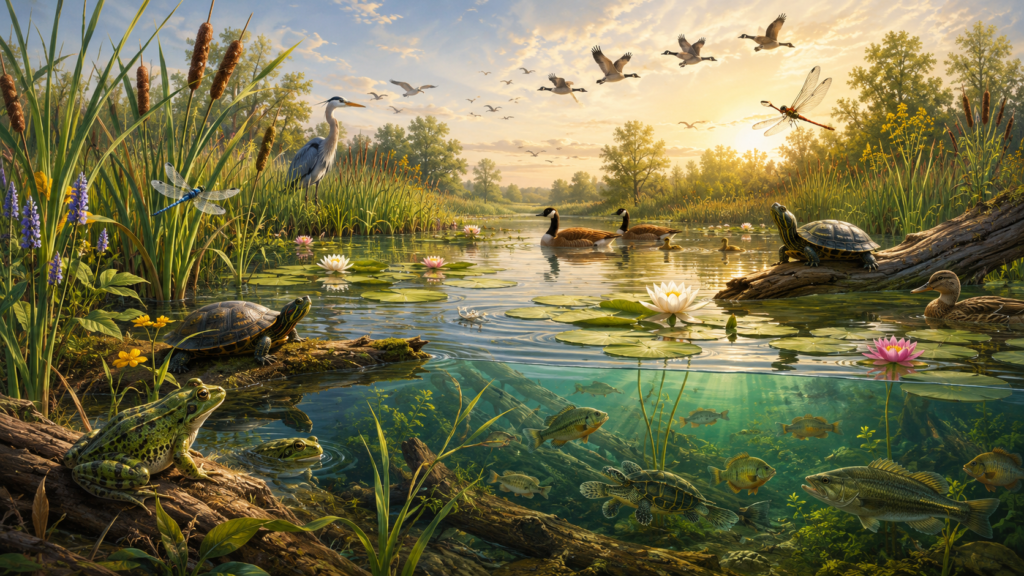
Wetlands are unique because they exist where water and land interact. This constantly changing environment creates ideal conditions for an incredible variety of plants and animals.
Unlike many other ecosystems, wetlands experience regular changes in water levels throughout the year. Some areas remain permanently flooded, while others become wet only during certain seasons. These changing conditions create numerous habitats that support different species, making wetlands among the most biologically productive ecosystems on Earth.
Wetland plants such as reeds, cattails, water lilies, sedges, and mangroves have evolved remarkable adaptations that allow them to thrive in waterlogged soils. Their roots stabilize the ground, reduce erosion, and provide shelter for countless organisms. These plants also produce oxygen, absorb nutrients from the water, and form the foundation of complex food webs.
Animal life in wetlands is equally diverse. Frogs, turtles, otters, fish, dragonflies, insects, and countless microorganisms depend on wetlands for food, breeding, or shelter. Many endangered species survive only because healthy wetlands still exist.
Perhaps the most famous visitors are migratory birds. Every year, millions of birds travel thousands of kilometers between continents, relying on wetlands as safe places to rest and feed during their journeys. Without these stopover habitats, many migratory species would struggle to complete their migrations successfully.
Because wetlands support such a remarkable concentration of biodiversity, protecting them helps conserve entire ecological communities rather than individual species alone.
2. Nature’s Water Purification System
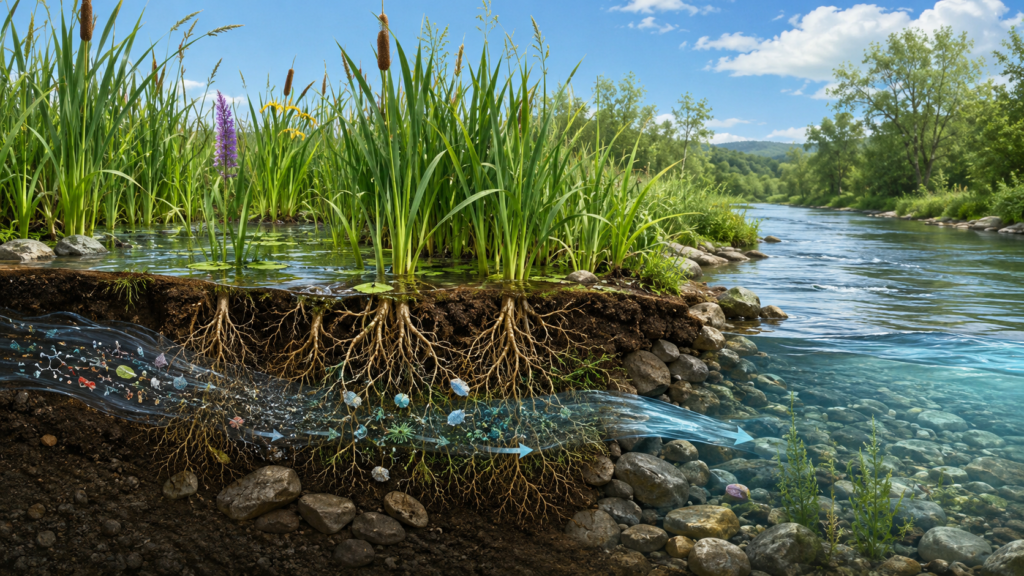
One of the most valuable services wetlands provide is their natural ability to improve water quality.
As water flows through a wetland, it slows down. Suspended sediments gradually settle to the bottom, while wetland plants absorb excess nutrients such as nitrogen and phosphorus that could otherwise pollute rivers and lakes.
At the same time, bacteria and other microorganisms living in wetland soils break down organic matter and help remove harmful pollutants through natural biological processes.
Together, plants, soil, and microorganisms create an efficient natural filtration system.
For this reason, wetlands are often compared to living water treatment facilities. Unlike artificial treatment plants, however, wetlands perform this work continuously without consuming electricity or requiring expensive infrastructure.
The benefits extend far beyond wildlife. Cleaner rivers improve drinking water supplies, support healthier fisheries, reduce water treatment costs, and create safer environments for both people and ecosystems.
In many parts of the world, restoring wetlands has become an effective and sustainable strategy for improving freshwater quality while reducing environmental management costs.
3. Nature’s Protection Against Floods
Wetlands are also one of nature’s most effective defenses against floods.
During periods of heavy rainfall, rivers can rise rapidly and overflow into surrounding communities. Wetlands help reduce this risk by temporarily storing enormous amounts of water.
Rather than allowing rainwater to rush downstream immediately, wetlands absorb excess water much like a giant natural sponge. As rainfall decreases, they slowly release the stored water back into rivers and groundwater systems.
This gradual release reduces flood peaks, limits soil erosion, and protects homes, farmland, and infrastructure from severe damage.
As climate change increases the frequency of extreme rainfall events in many regions, governments are increasingly recognizing wetlands as an important part of disaster prevention strategies.
Instead of relying only on dams, levees, or concrete flood barriers, many countries now restore wetlands as nature-based solutions that work with natural processes rather than against them.
This approach often provides long-term environmental and economic benefits while strengthening ecosystem resilience.
4. Wetlands and Climate Change
In recent decades, scientists have discovered another remarkable function of wetlands: their ability to store carbon.
Healthy wetlands remove carbon dioxide from the atmosphere through photosynthesis. Instead of releasing this carbon quickly back into the air, waterlogged soils slow decomposition, allowing large amounts of carbon to remain stored underground for centuries or even thousands of years.
Peatlands are particularly important because they contain one of the largest carbon reserves on Earth despite covering only a small percentage of the planet’s surface.
Coastal wetlands—including mangrove forests, salt marshes, and seagrass meadows—are equally valuable. These ecosystems store what scientists call blue carbon, carbon captured and stored by coastal vegetation and marine ecosystems.
When wetlands are drained, burned, or converted into farmland or urban areas, much of this stored carbon is released into the atmosphere as greenhouse gases, accelerating global warming.
Protecting wetlands therefore contributes not only to biodiversity conservation but also to international efforts to reduce climate change.
Increasingly, environmental policies recognize that conserving wetlands is one of the most cost-effective ways to protect both ecosystems and the global climate.
5. Why Wetland Conservation Matters More Than Ever
Despite their enormous ecological value, wetlands remain among the most threatened ecosystems in the world.
Expanding cities often reclaim wetlands for housing, roads, and industrial development. Agricultural projects frequently drain wetlands to create farmland, while pollution from fertilizers, chemicals, and plastic waste damages delicate ecological balances.
Climate change adds further pressure through rising sea levels, changing rainfall patterns, prolonged droughts, and stronger storms.
The loss of wetlands affects far more than local wildlife. It reduces water quality, increases flood risks, weakens natural carbon storage, and threatens the countless ecosystem services upon which human societies depend.
Protecting wetlands therefore requires more than setting aside protected areas. Sustainable land management, pollution control, ecological restoration, responsible water use, and international cooperation are all essential.
Around the world, governments, scientists, conservation organizations, and local communities are working together to restore degraded wetlands. These restoration projects not only bring wildlife back but also improve water security, strengthen climate resilience, and create healthier environments for future generations.
Every restored wetland represents an investment in both nature and humanity.
Conclusion: Nature’s Life-Support System
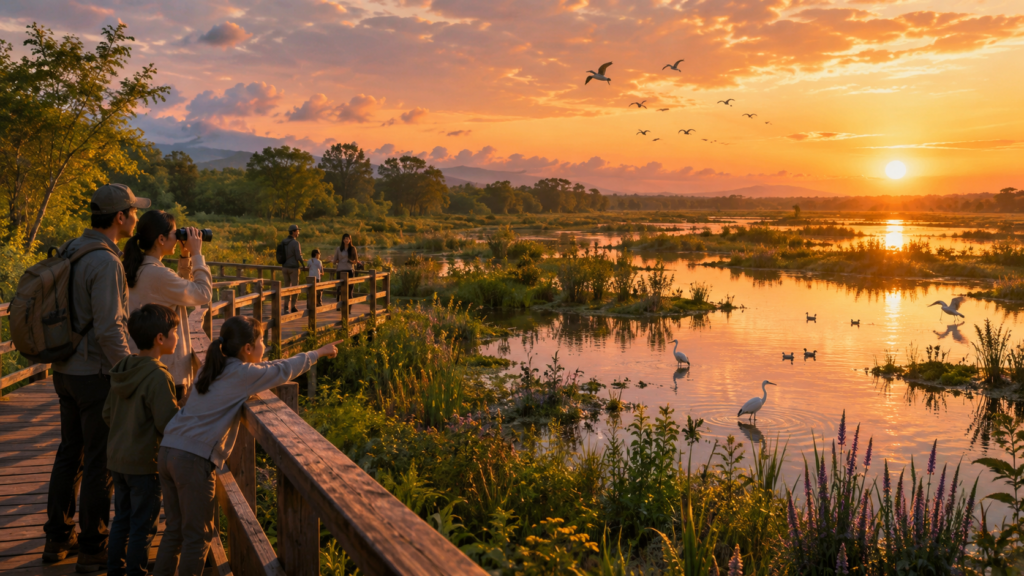
Wetlands may appear quiet and ordinary, but they perform some of nature’s most extraordinary work. They support countless species, purify water, reduce flood risks, and help regulate the Earth’s climate—all while quietly sustaining the natural balance on which life depends.
As environmental challenges continue to grow, protecting wetlands becomes more than an act of conservation. It is an investment in clean water, biodiversity, climate resilience, and the well-being of future generations. By preserving these remarkable ecosystems, we are ultimately protecting one of nature’s most effective life-support systems.
A Question for Readers
Wetlands quietly provide clean water, protect wildlife, reduce floods, and help slow climate change—often without us noticing.
If a wetland near your community disappeared tomorrow, which of its benefits do you think people would miss first, and why?
Related Reading
Our understanding of wetlands begins with understanding water itself. In The Origins of Medicine, we explored how clean water and healthy environments have shaped human health throughout history. Wetlands continue to play that same life-supporting role by naturally filtering water and maintaining healthy ecosystems.
Wetlands also remind us that scientific progress depends on understanding complex natural systems. This idea connects naturally with The New Space Age: From Moon Missions to the Space Economy, which shows how scientific exploration—whether on Earth or beyond—helps humanity better understand and protect our shared future.
References
1. Mitsch, William J., and James G. Gosselink. Wetlands. 5th ed., Wiley, 2015.
Widely regarded as one of the definitive textbooks on wetland ecology, this book explains how wetlands function, why they support exceptional biodiversity, and how they contribute to water purification, flood control, and climate regulation. It is a foundational reference for both students and environmental professionals.
2. Keddy, Paul A. Wetland Ecology: Principles and Conservation. 2nd ed., Cambridge University Press, 2010.
Keddy provides a comprehensive introduction to wetland ecosystems, exploring their ecological processes, biodiversity, and the challenges of conservation. The book emphasizes the importance of wetlands for maintaining ecological balance in a rapidly changing world.
3. Millennium Ecosystem Assessment. Ecosystems and Human Well-being: Wetlands and Water Synthesis. World Resources Institute, 2005.
This landmark international assessment explains how wetlands provide essential ecosystem services, including clean water, flood mitigation, food production, and biodiversity conservation. It remains one of the most influential reports linking healthy ecosystems to human well-being.
4. Ramsar Convention Secretariat. The Ramsar Convention Manual: A Guide to the Convention on Wetlands. 7th ed., Ramsar Convention Secretariat, 2022.
This official guide introduces the Ramsar Convention, the world’s leading international agreement for wetland conservation. It explains the ecological importance of wetlands and outlines global efforts to promote their wise use and long-term protection.
5. IPCC. Climate Change 2023: Synthesis Report. Intergovernmental Panel on Climate Change, 2023.
The IPCC highlights the importance of protecting natural ecosystems, including wetlands, as part of climate mitigation and adaptation strategies. The report emphasizes that conserving carbon-rich ecosystems is essential for achieving long-term climate resilience.