Tag: digital culture

  • How Search Boxes Shape the Way We Think

    The Invisible Influence of Algorithms in the Digital Age

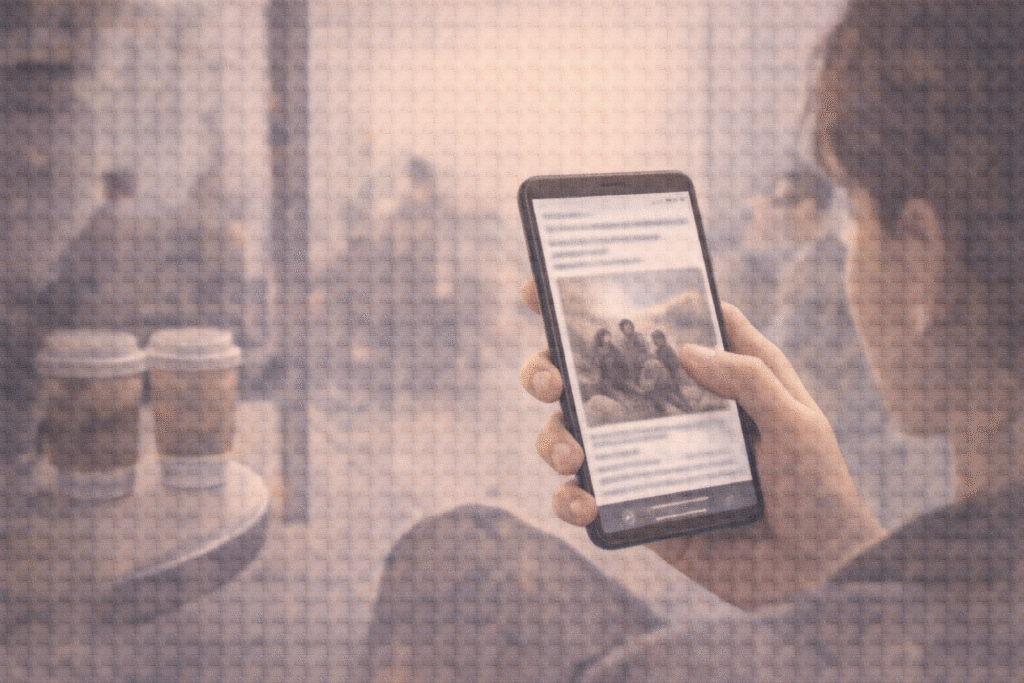
    Search box autocomplete shaping user questions

    1. When Search Boxes Decide the Question

    Search boxes do more than provide answers.
    They subtly change the way we ask questions in the first place.

    Think about autocomplete features.
    You begin typing “today’s weather,” and before finishing, the search box suggests
    “today’s weather air pollution.”

    Without intending to, your attention shifts.
    You were looking for the weather, but now you are thinking about air quality.

    Autocomplete does not simply predict words.
    It redirects thought.
    Questions that once originated in your mind quietly become questions proposed by an algorithm.


    2. How Search Results Shape Our Thinking

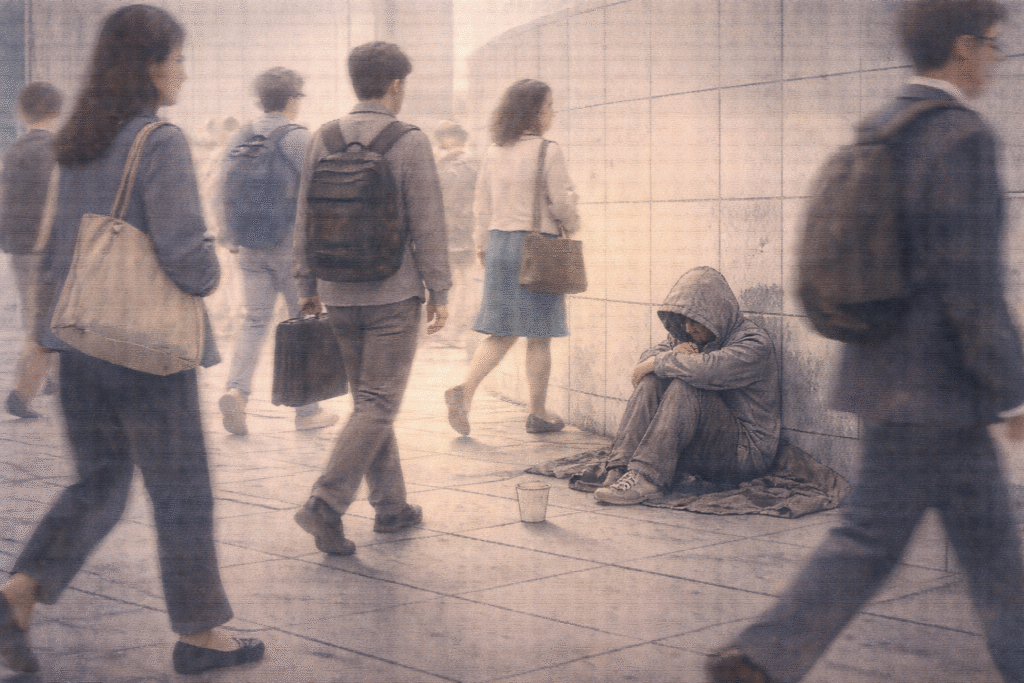
    Algorithmic bias in ranked search results

    Search results are not neutral lists.
    They are ranked, ordered, and designed to capture attention.

    Most users focus on the first page—often only the top few results.
    Information placed at the top is easily perceived as more accurate, reliable, or “true.”

    For example, when searching for a diet method, if the top results emphasize dramatic success,
    we tend to accept that narrative, even when contradictory evidence exists elsewhere.

    In this way, search results do not merely reflect opinions.
    They actively guide the direction of our thinking.


    3. The Invisible Power Behind the Search Box

    At first glance, a search box appears to be a simple input field.
    Behind it, however, lie powerful algorithms shaped by commercial and institutional interests.

    Sponsored content often appears at the very top of search results.
    Even when labeled as advertisements, users unconsciously associate higher placement with credibility.

    As a result, companies invest heavily to secure top positions,
    knowing that visibility translates directly into trust and choice.

    Our decisions—what we buy, read, or believe—are often influenced
    long before we realize it.


    4. Search Boxes Across Cultures and Nations

    Search engines differ across countries and cultures.
    Google dominates in the United States, Naver in South Korea, Baidu in China.

    Searching the same topic on different platforms can yield strikingly different narratives,
    frames, and priorities.

    A historical event, for instance, may be presented through contrasting lenses depending on the search environment.

    We do not simply search the world as it is.
    We see the world through the window our search box provides—and each window has its own tint.


    5. Learning to Question the Search Box

    How can we avoid being confined by algorithmic guidance?

    The answer lies in cultivating critical habits:

    • Ask whether an autocomplete suggestion truly reflects your original question
    • Look beyond the top-ranked results
    • Compare information across platforms and languages

    These small practices widen the intellectual space in which we think.

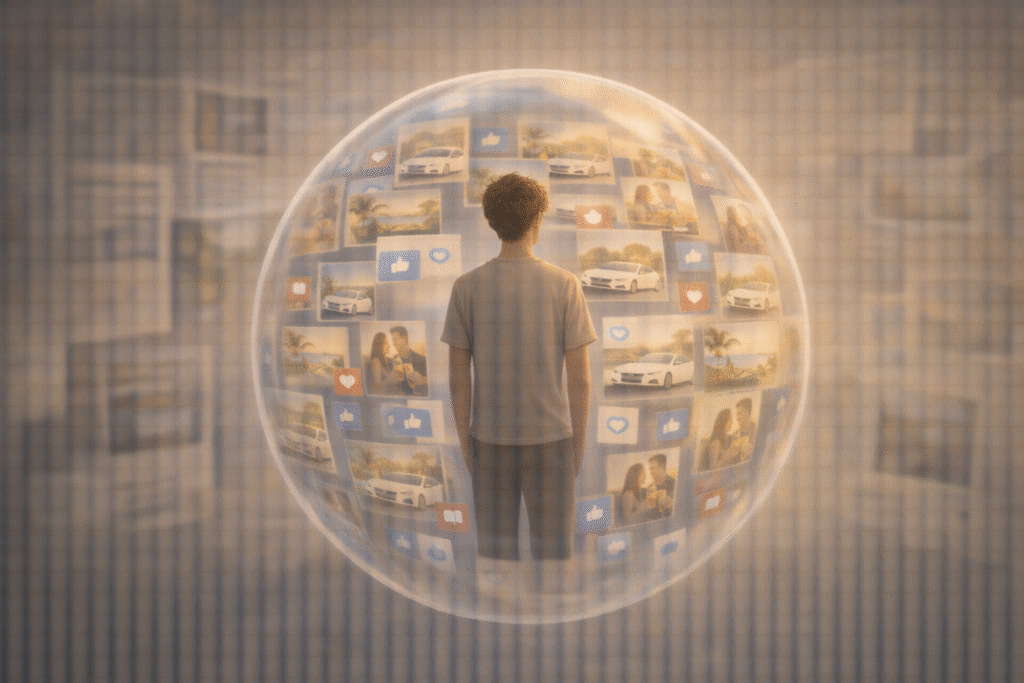
    Critical awareness of algorithmic influence

    Conclusion

    Search boxes are not passive tools for finding answers.
    They shape questions, guide attention, and quietly train our ways of thinking.

    In the digital age, the challenge is not to reject these tools,
    but to use them without surrendering our autonomy.

    True digital literacy begins when we recognize
    that the most powerful influence of a search box
    lies not in the answers it gives,
    but in the questions it encourages us to ask.


    References

    Pariser, E. (2011). The Filter Bubble: What the Internet Is Hiding from You. New York: Penguin Press.
    → Explores how personalized algorithms narrow users’ worldviews while shaping perception and judgment.

    Noble, S. U. (2018). Algorithms of Oppression: How Search Engines Reinforce Racism. New York: NYU Press.
    → Critically examines how search engines reflect and amplify social biases rather than remaining neutral tools.

    Beer, D. (2009). Power through the Algorithm? New Media & Society, 11(6), 985–1002.
    → Analyzes algorithms as invisible forms of power that structure everyday cultural practices.

  • The Standardization of Experience

    Why Travel, Hobbies, and Life Are Becoming Increasingly Similar

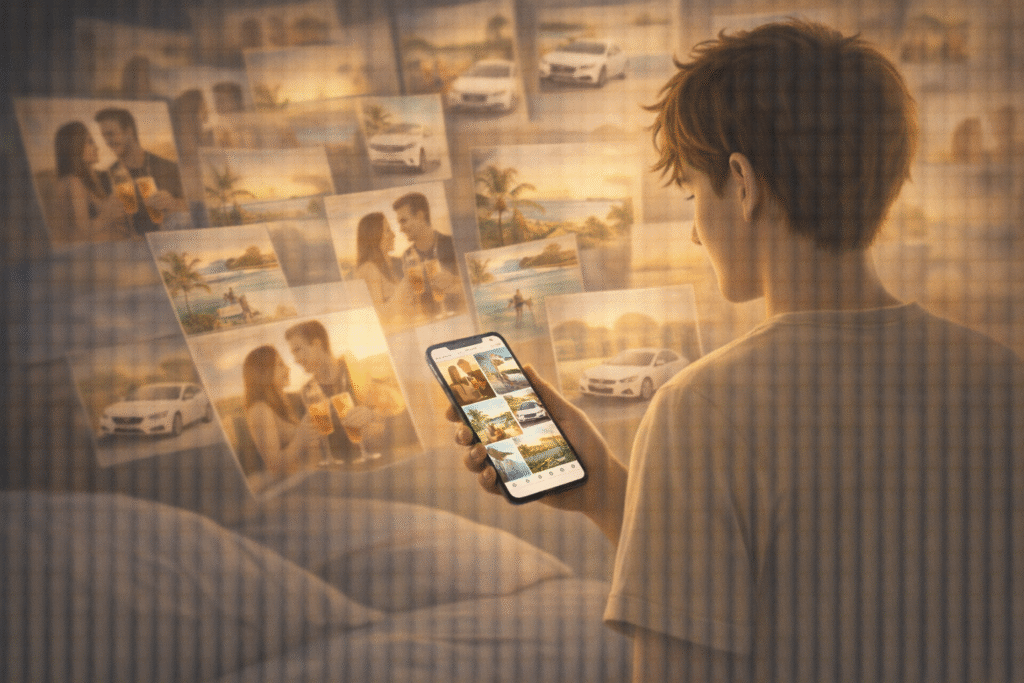
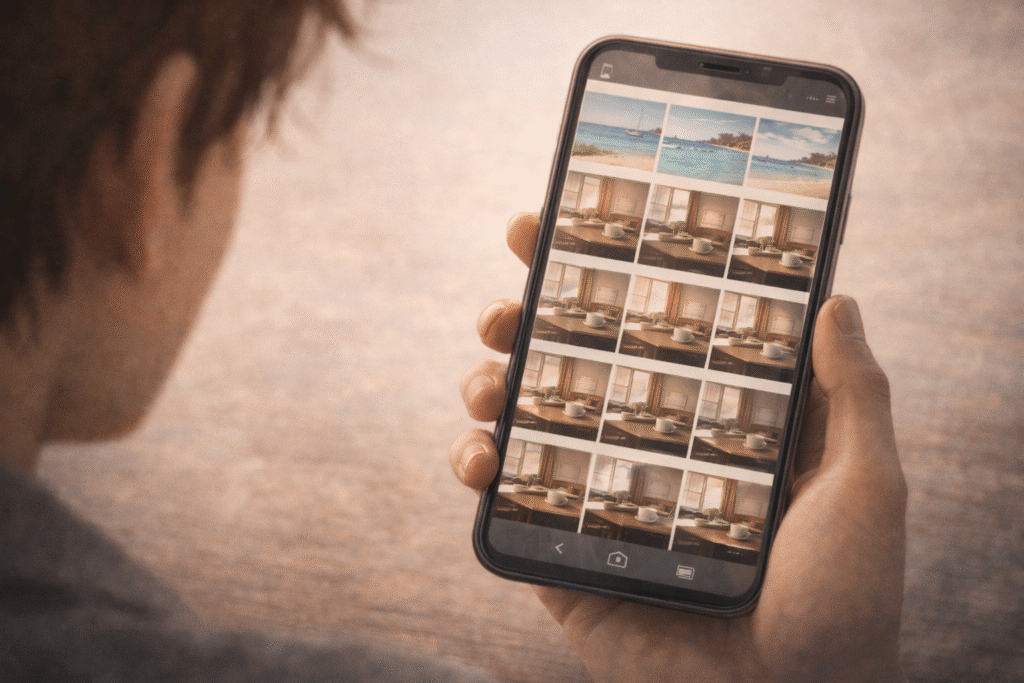
    Similar travel photos repeating across social media

    1. Why Are Our Experiences Becoming So Alike?

    Scrolling through travel photos online, familiar scenes appear again and again.

    Similar cafés, identical poses, the same backdrops, almost interchangeable captions.

    Hobbies follow the same pattern.
    Trending workouts, recommended activities, and “hot right now” interests spread rapidly.

    Although we live separate lives,
    the shape of our experiences is becoming strikingly similar.

    This question naturally arises:

    Why are “personal experiences” slowly disappearing?


    2. How Recommendation Systems Flatten Experience

    AI-assisted imagery:
    A person hesitating in front of a recommendation screen, surrounded by repeated choices.


    2.1 The Age of Algorithmic Choice

    Today, many experiences begin not with exploration, but with recommendation.

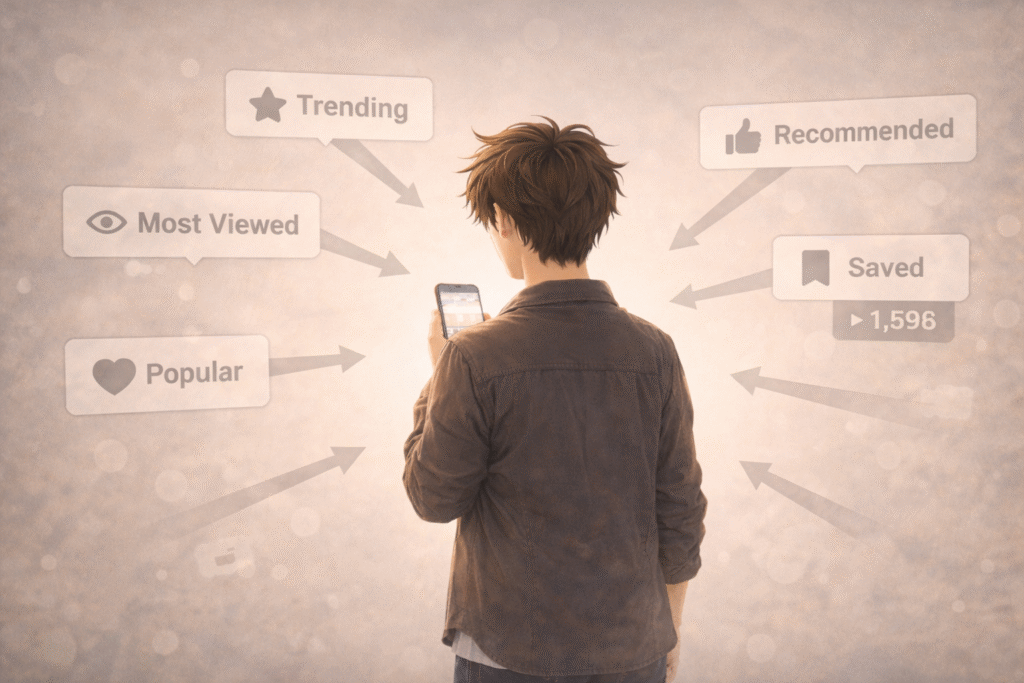
    Travel destinations are introduced as “most saved places.”
    Music arrives as “playlists curated for you.”
    Hobbies are presented as “what people are doing most right now.”

    Algorithms reduce decision fatigue efficiently,
    but they also guide experiences along similar paths.

    In exchange for convenience,
    we receive experiences that are increasingly standardized.

    Algorithm recommendations shaping similar life choices

    2.2 Social Proof and the Comfort of Safe Choices

    Psychology describes our tendency to value what many others choose as social proof.

    Likes, reviews, and view counts function as indicators of quality.
    As a result, people select experiences that seem less likely to fail.

    Unfamiliar or uncertain experiences are avoided,
    and this repetition gradually erodes diversity.


    2.3 When Experience Becomes Performance

    Experience is no longer just something we live through.

    It becomes something to display, document, and explain.

    Places that photograph well are favored.
    Experiences that are easy to describe are preferred.
    Personal yet inexpressible moments quietly disappear.


    3. Is Experience a Commodity — or a Trace of Being?

    Philosophically, experience is not something to be consumed or exchanged.

    It is a trace of time that shapes who we are.

    Standardized experience shifts the question from
    “What did this mean to me?”
    to
    “How will this look to others?”

    At that moment, experience becomes an external product rather than internal accumulation.

    True experience is often inefficient, difficult to explain,
    and sometimes includes failure.

    Yet it is precisely there that people discover their own rhythm and sensibility.


    4. Conclusion: Reclaiming One’s Own Experience

    AI-assisted imagery:
    A solitary figure reflecting in a quiet space, recovering personal experience.


    The problem is not recommendation systems themselves,
    but our uncritical dependence on them.

    When we follow the same paths without asking what they mean to us,
    our lives begin to resemble one another.

    Wisdom today does not lie in endlessly seeking novelty.

    Quiet reflection on reclaiming personal experience

    It lies in pausing before a given choice and asking:

    “Why does this experience matter to me?”

    Returning experience to the individual —
    that is the most personal form of resistance
    in an age of standardization.


    📚 References

    1. Han, B.-C. (2017). The Expulsion of the Other. Cambridge: Polity Press.
      Han analyzes how sameness replaces difference in contemporary society, offering insight into how standardized experiences weaken individuality.
    2. Zuboff, S. (2019). The Age of Surveillance Capitalism. New York: PublicAffairs.
      Zuboff examines how platforms and algorithms predict and shape human behavior, revealing how experience design is shifting from individuals to systems.
    3. Pine, B. J., & Gilmore, J. H. (1999). The Experience Economy. Boston: Harvard Business School Press.
      This foundational work explains how experiences become economic goods, providing a framework for understanding the commodification and standardization of experience today.
  • The Sociology of Selfies

    How Self-Representation and the Desire for Recognition Shape Digital Identity

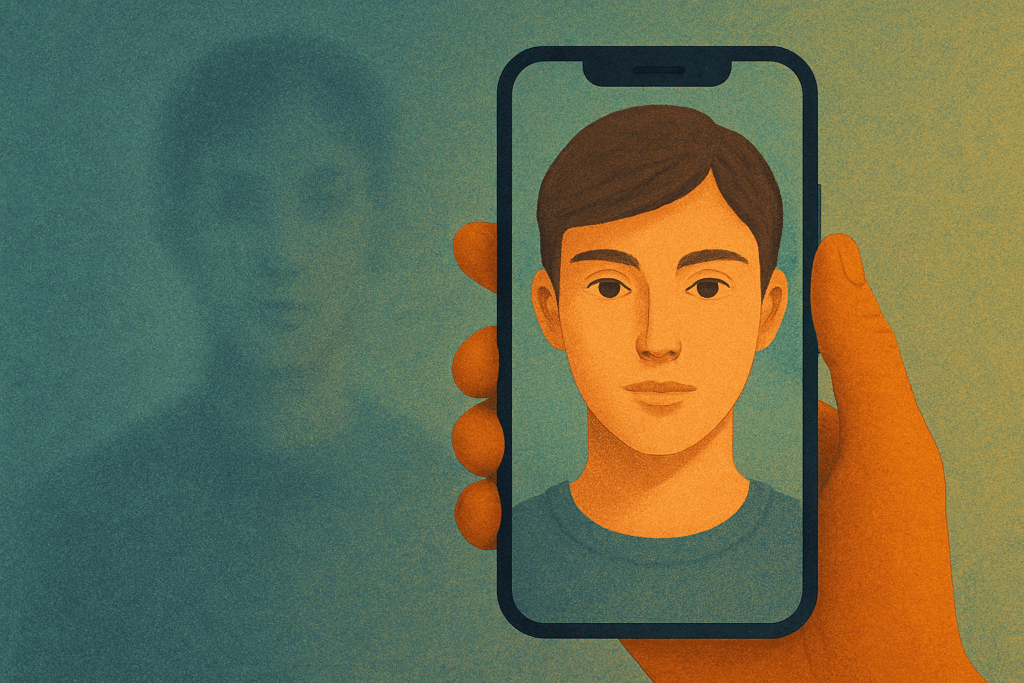
    selfie and digital identity reflection

    Introduction: A Selfie Is Not Just a Photo

    On the subway, in cafés, or while traveling, we instinctively raise our smartphones.
    In the frame, we appear slightly brighter, slightly more confident, slightly more composed.

    A selfie is not merely a record of the self.
    It is a carefully constructed moment shaped by the awareness of being seen.

    Behind this seemingly casual gesture lies a deeper social message—
    a desire for recognition and a question that quietly follows us:
    How do I want to be perceived by others?


    Selfies as a Technology of Self-Presentation

    The evolution of smartphone cameras has turned everyday users into curators of their own personal brands.

    Lighting, filters, angles, and backgrounds are not neutral choices.
    They function as symbols that communicate identity.

    A selfie taken against a scenic landscape performs freedom.
    A selfie at a desk performs discipline and diligence.

    In this sense, selfies are not simple records of reality.
    They are acts of self-presentation, or what sociologists describe as a performance of identity.


    Recognition and the Social Psychology of “Likes”

    When we upload a selfie, we are not simply waiting for numbers to increase.
    We are waiting for acknowledgment.

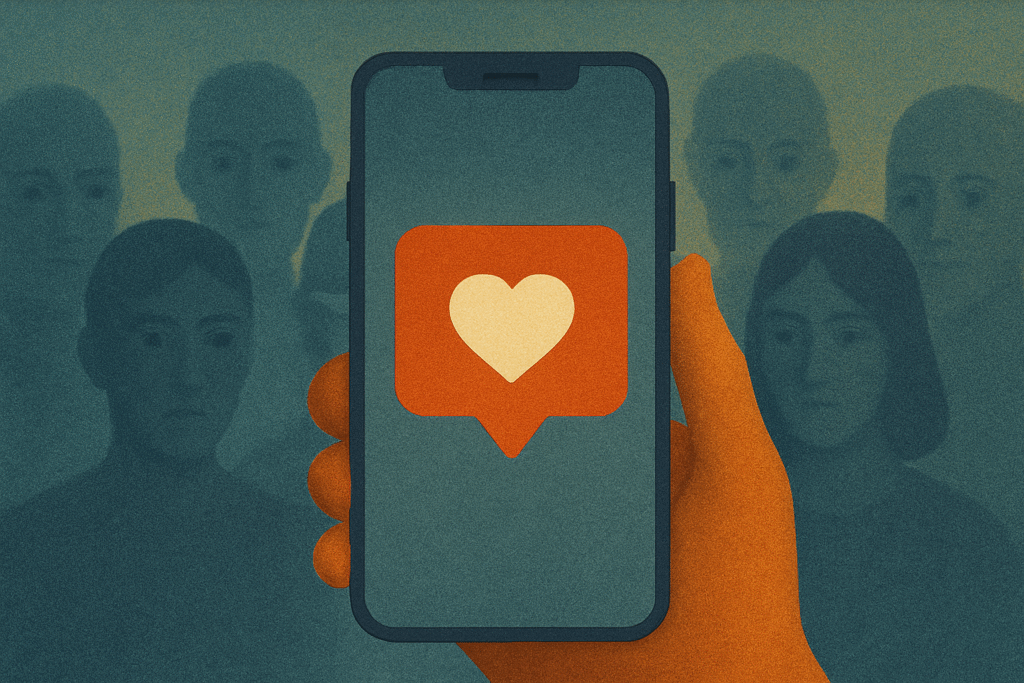
    Each “like” operates as a social signal that says, I see you.

    Sociologist Charles Horton Cooley famously described the looking-glass self
    the idea that individuals form their self-image through the imagined reactions of others.

    In the digital age, selfies place this mirror directly onto the smartphone screen.
    As a result, people often begin to prioritize the visible self over the experienced self.

    Self-expression becomes inseparable from social validation,
    and identity turns into a negotiation between who we are and how we are received.

    social media likes and recognition desire

    The Paradox of Freedom and Anxiety

    Selfies promise freedom.
    We choose how to present ourselves, when to post, and what to reveal.

    Yet this freedom often coexists with anxiety.

    Filters subtly reflect perceived social expectations.
    Endless streams of perfected faces invite comparison and self-doubt.

    For younger generations especially, selfies can become tools of proof—
    evidence that one is worthy, attractive, or socially accepted.

    Thus, selfie culture exists at the boundary between autonomy and control,
    where self-expression is constantly shaped by imagined audiences.


    From the Seen Self to the Lived Self

    Selfies are mirrors of contemporary society.
    They express a human desire to be acknowledged, remembered, and valued.

    But when attention shifts entirely to the seen self,
    there is a risk of losing contact with the lived self.

    Occasionally lowering the camera and stepping outside the frame
    allows space to reconnect with experience beyond representation.

    Only then can selfies transform from instruments of performance
    into tools of self-understanding.

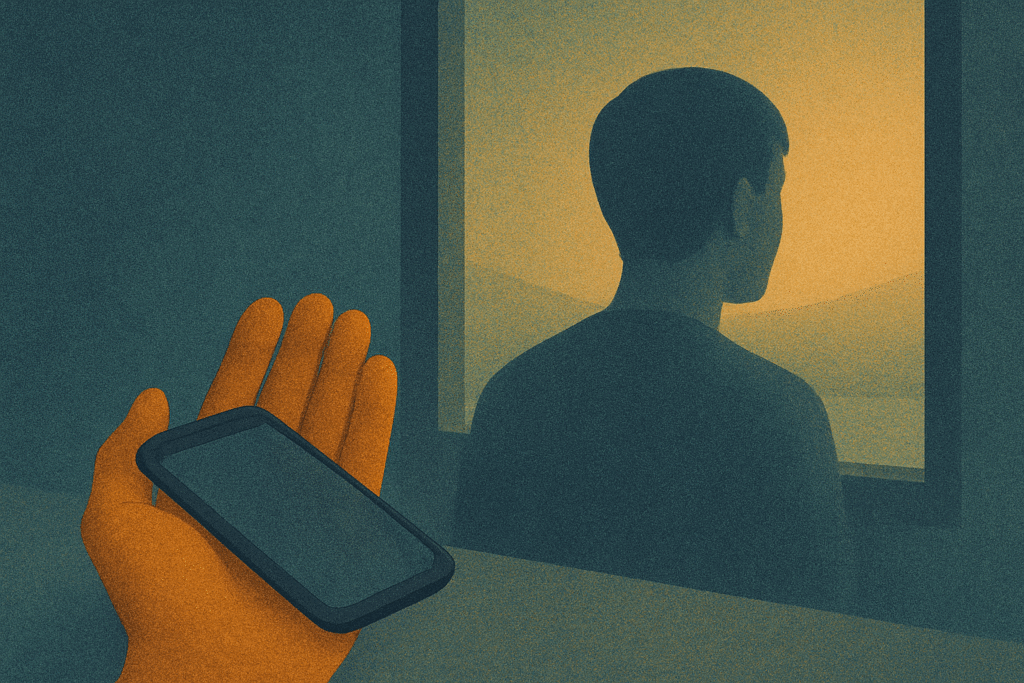
    stepping away from social media reflection

    Conclusion

    Selfies are neither shallow nor inherently harmful.
    They are social languages shaped by recognition, identity, and visibility.

    The challenge is not to abandon selfies,
    but to remain aware of the difference between being seen and truly existing.

    In that awareness, digital self-representation can become
    not a performance for approval,
    but a reflection of a life genuinely lived.


    📚 References

    Senft, T. M., & Baym, N. K. (2015).
    What Does the Selfie Say? Investigating a Global Phenomenon.
    International Journal of Communication, 9, 1588–1606.
    This study frames selfies as social and communicative acts rather than trivial images, explaining how identity and recognition are negotiated through digital self-representation.

    Goffman, E. (1959).
    The Presentation of Self in Everyday Life.
    New York: Anchor Books.
    Goffman’s theory of social performance provides a foundational framework for understanding selfies as staged expressions of identity in everyday interactions.

    Marwick, A. E. (2013).
    Status Update: Celebrity, Publicity, and Branding in the Social Media Age.
    New Haven, CT: Yale University Press.
    This work explores how social media encourages self-branding and visibility-seeking behaviors, offering crucial insight into recognition economies that shape selfie culture.