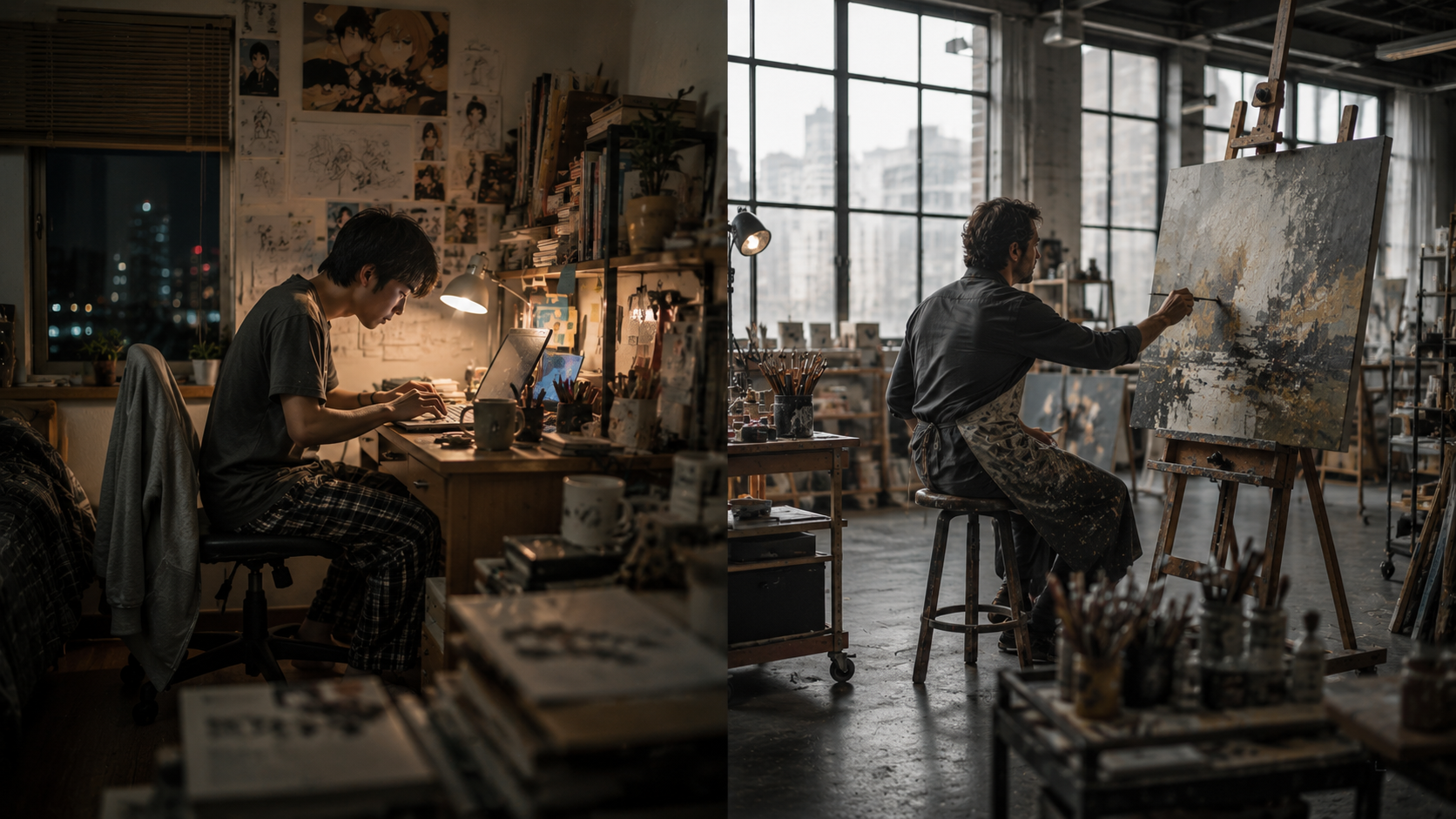
When Hobbies Become Work, and Passion Becomes Responsibility
A person who enjoys photography uploads beautiful landscape images to social media and receives praise from friends and followers. Over time, people begin hearing a new kind of request:
“Could you photograph my wedding?”
At that moment, a hobby quietly begins crossing into professional territory.
What was once personal enjoyment suddenly carries responsibility, expectation, and risk. A wedding is not simply another casual photo session. It is a once-in-a-lifetime memory. If the photographer lacks experience, technical skill, or emotional judgment, disappointment may follow.
This is where an important social question emerges:
When does a passionate amateur become a professional? And should every hobby eventually pursue professional standards?
In the digital age, where platforms like YouTube, Instagram, TikTok, and online marketplaces allow almost anyone to share creative work publicly, the boundary between hobby and profession has become increasingly blurred. This transformation is changing not only creative industries, but also society’s understanding of expertise itself.
1. When Does a Hobby Become More Than a Hobby?

Passion and Personal Identity
For some people, hobbies remain simple forms of relaxation. Painting, cooking, writing, gaming, photography, or music may exist purely for enjoyment and self-expression.
For others, however, hobbies gradually become serious personal pursuits. A casual interest can evolve into deep commitment, skill development, and even professional ambition.
A person who enjoys cooking at home may eventually wonder:
“Could I open a restaurant someday?”
A gamer may begin livestreaming professionally. A hobby musician may upload original songs online and attract thousands of listeners. A writer posting stories online may eventually receive publishing offers.
The modern digital environment encourages this transition by making creative exposure easier than ever before.
The Pressure to Monetize Passion
At the same time, modern society increasingly pressures people to monetize their hobbies.
Social media culture constantly promotes the idea that:
- passion should become productivity
- creativity should become income
- hobbies should become side businesses
As a result, some people begin feeling that “simply enjoying” a hobby is no longer enough.
This creates a psychological tension:
Should hobbies remain spaces of freedom, or should they become opportunities for professional success?
2. What Separates Professionals from Amateurs?
Responsibility and Economic Pressure
One major difference between amateurs and professionals involves responsibility.
Amateurs usually create for personal enjoyment, curiosity, or emotional satisfaction. Their activities are not necessarily tied to financial survival.
Professionals, however, must maintain consistent quality because clients, audiences, or employers depend on their work.
A wedding photographer cannot simply “experiment” freely in the same way a hobby photographer might. A professional chef cannot casually fail during restaurant service. Expertise becomes tied to accountability.
This economic pressure fundamentally changes the nature of creative activity.
Trust and Standards
Another important distinction involves trust.
Professionals are expected to:
- meet technical standards
- deliver reliable results
- handle pressure consistently
Amateurs often possess greater freedom to experiment creatively because mistakes carry fewer consequences.
Ironically, however, amateurs sometimes introduce innovation precisely because they are less constrained by professional norms.
Historically, many creative revolutions began outside institutional systems. Independent filmmakers, online creators, self-taught artists, and amateur musicians have often challenged traditional industries by approaching creativity differently.
This is why the relationship between professionals and amateurs is often both cooperative and competitive.
3. Conflict Between Traditional Experts and New Creators
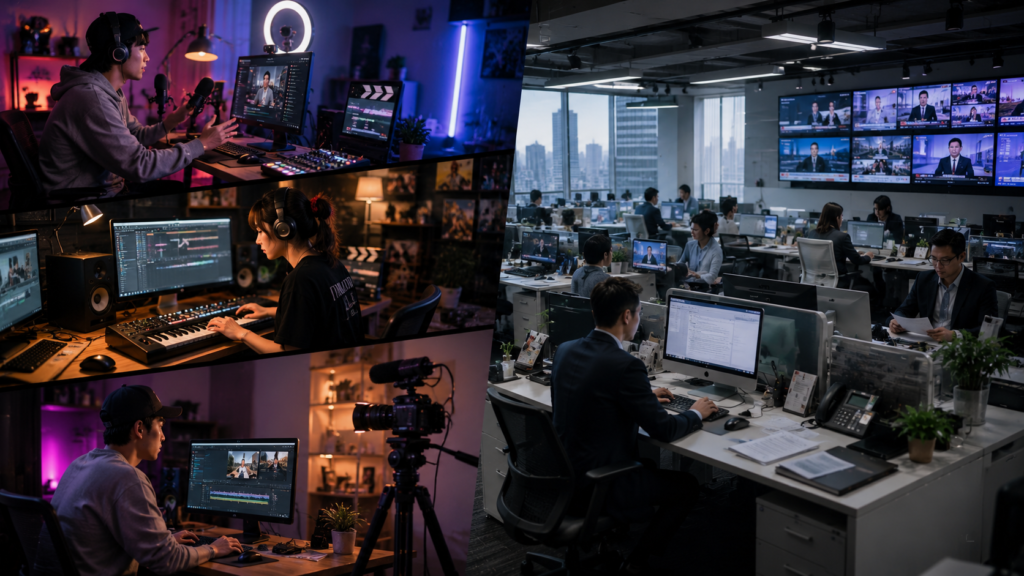
YouTubers and Traditional Journalism
One of the clearest examples appears in media.
In the past, news production was dominated by trained journalists working within established institutions. Today, independent creators can produce commentary, interviews, documentaries, and live broadcasts using only smartphones and online platforms.
Traditional journalists sometimes criticize this shift by arguing that untrained creators may spread misinformation or weaken professional standards.
Independent creators respond differently. They argue that digital platforms democratize communication and allow more diverse voices to participate in public discussion.
This conflict reflects a larger social question:
Should expertise belong only to formally trained professionals, or can digital participation create new forms of legitimacy?
Independent Artists and Platform Culture
Music provides another example.
In previous decades, musicians often needed record labels and industry approval to reach audiences. Today, artists can independently upload songs to streaming platforms and build global fanbases without traditional gatekeepers.
Some professionals welcome this openness. Others worry that unlimited accessibility lowers artistic standards and creates oversaturated markets.
At the same time, audiences themselves increasingly value authenticity over institutional prestige. Many people now prefer independent creators precisely because they feel more personal, experimental, and emotionally honest.
The rise of amateur creators therefore challenges not only economic systems, but also cultural authority itself.
4. Should Every Hobby Become Professional?
Fields That Require Expertise
Certain activities genuinely require professional standards because mistakes may cause harm.
Fields involving:
- medicine
- psychological counseling
- aviation
- diving
- technical safety
cannot rely solely on enthusiasm.
In these areas, professional training protects public trust and ethical responsibility.
The Importance of Free Creative Spaces
Other hobbies flourish precisely because they remain open and accessible.
Drawing, journaling, creative writing, casual music-making, gardening, or recreational cooking do not necessarily require professional validation. Their value often comes from emotional expression rather than economic productivity.
In fact, excessive professionalization may sometimes destroy the original joy of a hobby.
A person who once loved photography may begin experiencing stress once every image becomes connected to money, client expectations, and performance metrics.
This is why many people intentionally keep hobbies separate from work. They wish to preserve spaces untouched by economic pressure.
5. Finding Balance Between Passion and Expertise
Responsibility from New Creators
When amateurs enter professional spaces, responsibility becomes important.
Passion alone is not always enough. People who wish to turn hobbies into careers often need:
- technical education
- ethical awareness
- practical experience
- emotional maturity
Professionalism is not simply about talent. It is also about reliability and accountability.
Openness from Traditional Experts
At the same time, professionals may also need flexibility.
Digital culture has permanently changed how creative work is produced and distributed. Attempting to completely exclude newcomers is neither realistic nor healthy for cultural development.
Instead of viewing amateurs purely as threats, professional communities may benefit from mentorship, collaboration, and openness toward new creative approaches.
Many industries evolve precisely because outsiders introduce fresh perspectives.
Conclusion
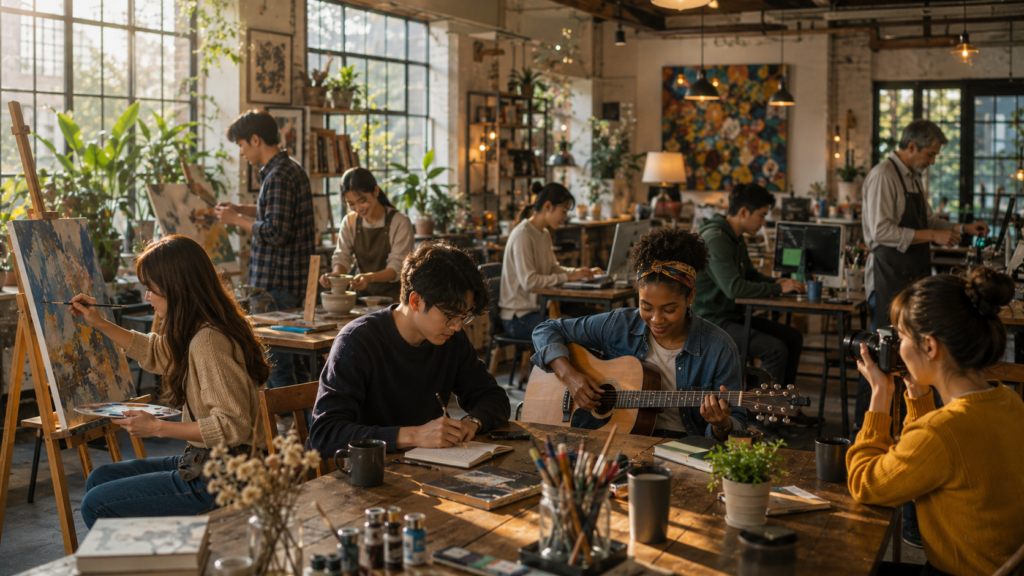
The boundary between amateurism and professionalism is becoming increasingly fluid.
Digital platforms allow ordinary individuals to publish creative work instantly, challenge established industries, and even build careers from personal passions. This creates exciting opportunities, but also raises important questions about quality, responsibility, and expertise.
Not every hobby needs to become a profession. Some activities are valuable precisely because they remain personal, playful, and free from economic pressure.
At the same time, professionalism still matters in fields that require trust, consistency, and accountability.
Perhaps the healthiest society is not one that forces everyone to become professionals, nor one that dismisses expertise entirely.
Instead, it may be a society where:
- amateurs are free to explore creatively
- professionals are respected for the discipline and responsibility they bring
In the end, hobbies and professions do not have to be enemies.
Sometimes, the most meaningful creativity emerges precisely where passion and expertise meet.
Reader Question
Should every passion eventually become a profession, or do hobbies lose their meaning once they become work?
Related Reading
The evolution of expertise is closely connected to the development of cities, institutions, and modern civilization. Are Cities Symbols of Progress—or Spaces of Inequality? explores how urbanization has transformed education, professions, and social mobility, providing a broader historical context for understanding why the boundary between professionals and amateurs continues to evolve.
If hobbies increasingly become symbols of productivity and status, can leisure still remain a space of genuine freedom and personal expression? Can Everyone Afford a Hobby? The Hidden Cost of Leisure and Access examines how economics, class, and accessibility shape modern leisure culture, revealing why the line between amateur passion and professional work is often influenced by social and economic conditions.
References
1. Bourdieu, P. (1993). The Field of Cultural Production: Essays on Art and Literature. Columbia University Press.
Pierre Bourdieu analyzes how cultural authority and legitimacy are formed within artistic and professional fields. The book helps explain why professionals often defend boundaries against amateurs and how cultural status becomes socially constructed.
2. Becker, H. S. (1982). Art Worlds. University of California Press.
Howard Becker argues that art and creativity emerge through collaborative social systems rather than isolated genius. His work highlights how amateurs, professionals, audiences, and institutions collectively shape creative industries.
3. Csikszentmihalyi, M. (1996). Creativity: Flow and the Psychology of Discovery and Invention. Harper Perennial.
This book explores creativity, immersion, and “flow,” explaining how passionate amateurs often produce innovation through intrinsic motivation rather than economic pressure.
4. Thornton, S. (2008). Seven Days in the Art World. W. W. Norton & Company.
Sarah Thornton examines how expertise, prestige, criticism, and institutional power operate inside the contemporary art world, revealing how professional authority is socially maintained.
5. Carr, D. (2011). Open-Source Democracy: How Online Communication Is Changing Offline Politics. Demos.
This work discusses how digital communication allows ordinary individuals to participate in influence, activism, and content creation, challenging traditional expert-centered systems.