“Alexa, turn off the lights.”
“Siri, what’s the weather today?”
“No need for your wallet — it’s an automatic payment.”
Lights respond to voices, music plays without touch, and refrigerators reorder groceries on their own.
Automation has quietly become the background of everyday life.
It feels effortless.
But in this growing familiarity, are there costs we no longer recognize?
1. Automation Saves Time — and Silently Reduces Awareness
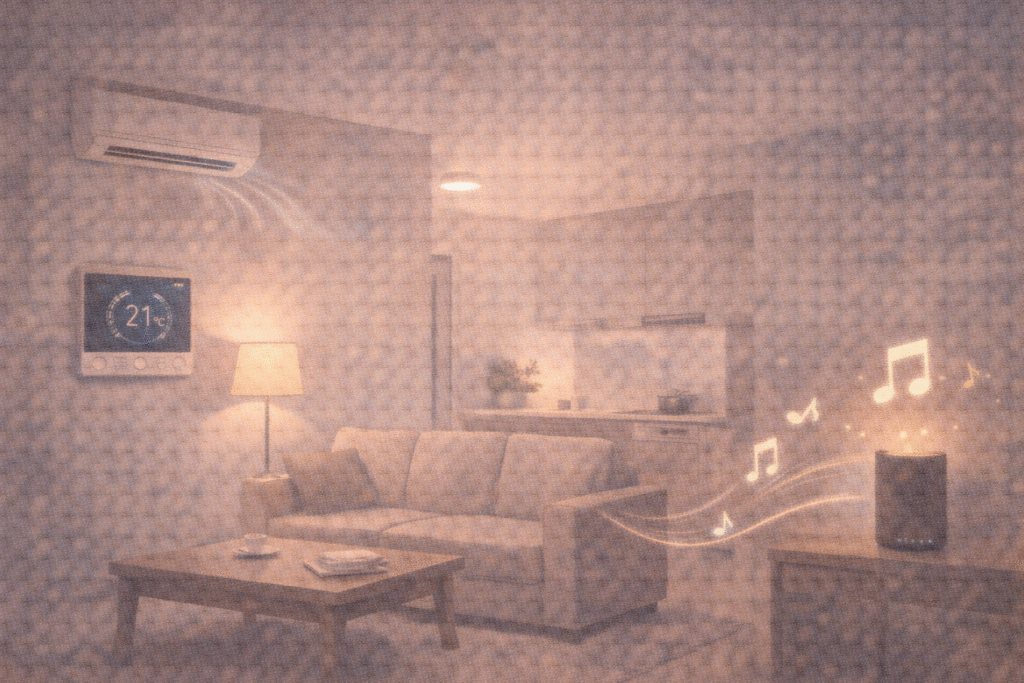
Everyday life is shaped by countless small decisions.
What to eat. When to turn off the lights. Whether to lock the door.
Automation now handles many of these choices without requiring our attention.
Smart thermostats adjust themselves.
Lights turn on and off automatically.
Payments are completed before we consciously register them.
Nothing is forced.
Yet something subtle changes.
Decisions still happen — but we no longer experience ourselves as the ones deciding.
Convenience replaces deliberation, and ease gradually weakens our sense of agency.
Automation does not take control away.
It simply makes control feel unnecessary.
2. When Algorithms Choose With Us — and For Us
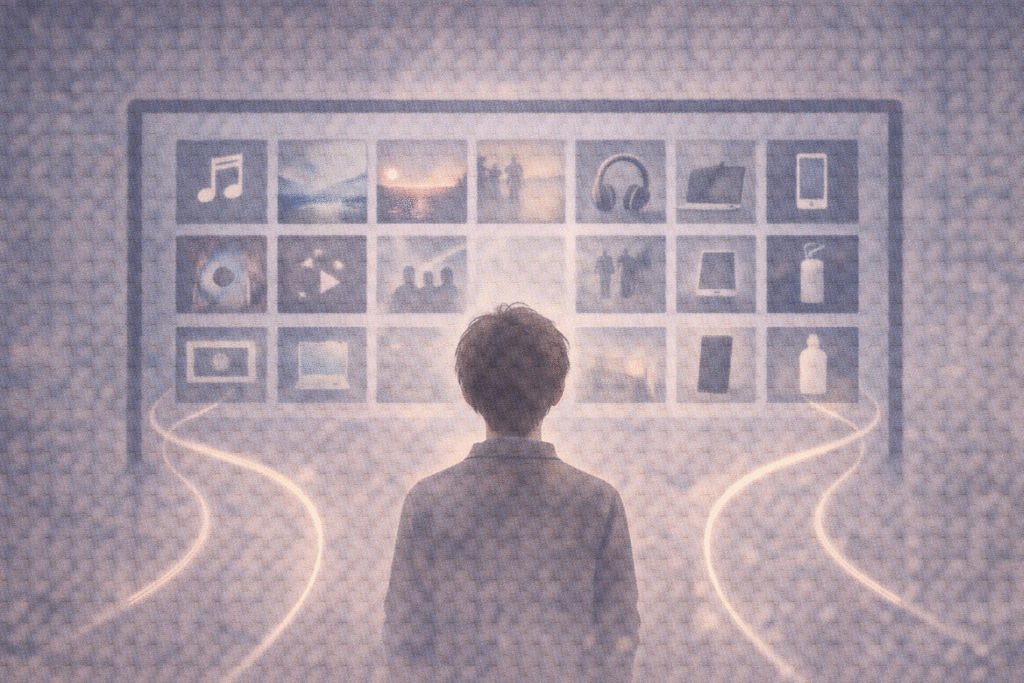
Recommendations now guide much of daily life.
Music, movies, products, even news are selected before we actively search.
This feels personal.
But personalization also narrows experience.
When choices are filtered through the same algorithms, novelty declines.
We encounter what aligns with our past behavior — not what challenges or surprises it.
Over time, preference becomes repetition.
We grow comfortable inside systems that teach us what to want — and then confirm it.
Convenience, here, quietly transforms freedom into predictability.
3. Who Is the Automated Home Really For?
Smart homes promise comfort, efficiency, and security.
Yet automation does not serve everyone equally.
Older adults may struggle with unfamiliar interfaces.
Visually impaired users face touch-screen barriers.
For some households, smart technology remains inaccessible.
Automation expands possibility for some —
while creating new forms of exclusion for others.
4. Who Owns the Data Behind Convenience?
Automation relies on constant data collection.
Smart appliances track habits.
Voice assistants store speech patterns.
Location services monitor movement.
Most of this information is stored beyond users’ direct control.
We benefit from convenience without fully knowing how our data circulates.
The hidden cost of automation may not be money —
but intimacy without transparency.
5. Familiarity Dulls Reflection
What once felt innovative now feels normal.
“It’s just easier.”
“Everyone uses it.”
“I couldn’t go back.”
Familiarity discourages questioning.
Automation is a tool — but tools shape those who rely on them.
Without reflection, convenience quietly becomes governance.
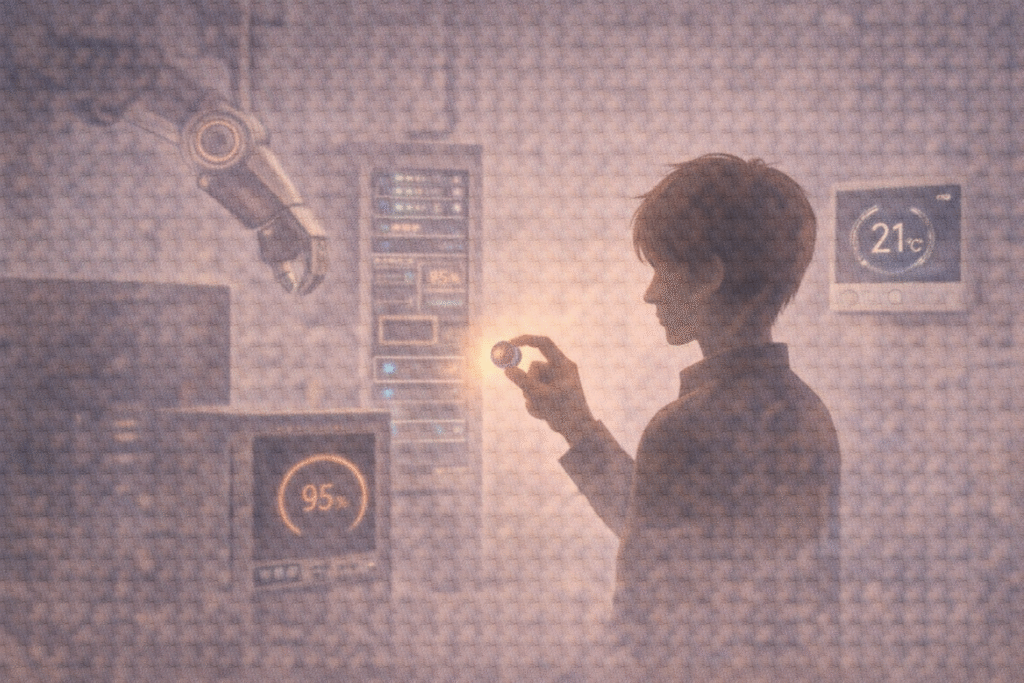
Conclusion: Convenience Should Not Replace Conscious Choice
Smart homes, auto-payments, algorithmic recommendations —
automation now frames everyday life.
The question is not whether automation is useful.
It is whether the things done for us still align with what we value.
Technology should support human judgment, not quietly replace it.
Convenience works best when paired with awareness.
References
Carr, N. (2014). The Glass Cage: How Our Computers Are Changing Us. W. W. Norton & Company.
Carr critically examines how automation affects human judgment, attention, and agency. Through examples ranging from aviation to everyday technology, he shows how convenience can weaken our capacity for active decision-making.
Zuboff, S. (2019). The Age of Surveillance Capitalism: The Fight for a Human Future at the New Frontier of Power. PublicAffairs.
Zuboff exposes how automated services rely on large-scale data extraction and behavioral prediction. Her work reveals the hidden economic logic behind “smart” technologies and their implications for autonomy and democracy.
Parisi, L. (Ed.). (2016). Automate This: How Algorithms Came to Rule Our World. Princeton Architectural Press.
This collection explores how algorithms reshape decision-making, perception, and social life. It provides philosophical insight into how automated systems subtly transform freedom into designed choice.