— The Cultural Meaning of Candlelight
Physically speaking, a candle is simple.
It is only wax, a wick, and a small flame.
Yet when someone lights a candle in a quiet space,
the moment rarely feels ordinary.
A birthday candle before making a wish,
a candle in prayer,
or a candle held during a public vigil.
Across cultures, candlelight often signals the beginning of something meaningful.
Why does such a small flame carry such emotional weight?
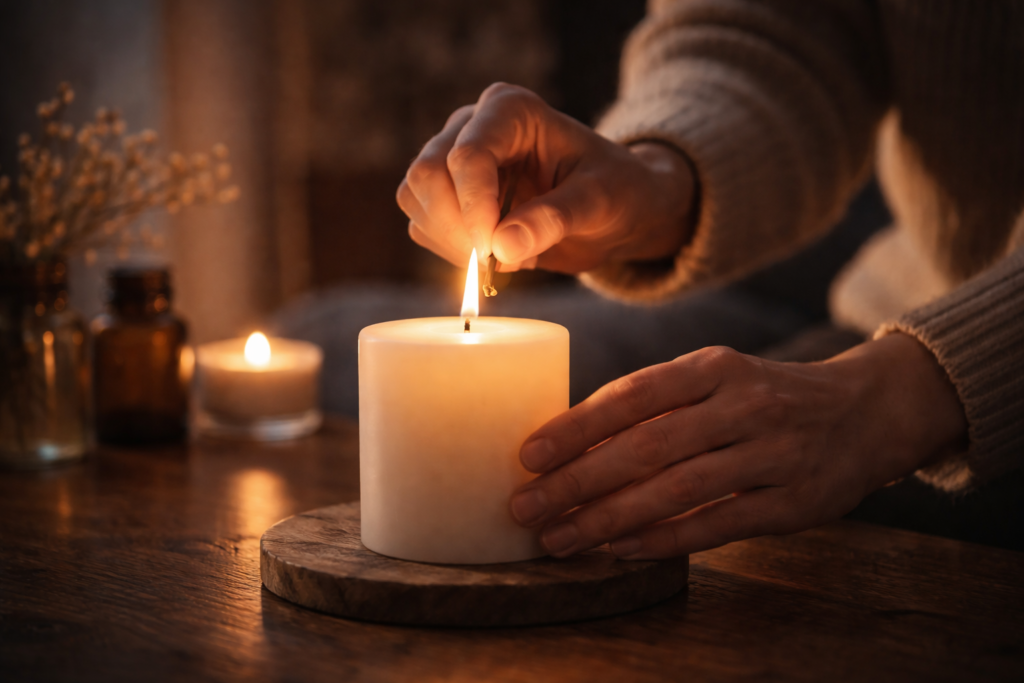
1. Everyday Candlelight and the Feeling of Transition
Have you ever noticed how a room changes when a candle is lit?
The light is softer than electric lamps.
The flame moves gently.
The atmosphere becomes calmer.
In moments like birthday celebrations,
people often grow quiet as the candles are lit.
Even before the wish is made,
everyone senses that the moment matters.
Lighting a candle subtly tells our minds:
something meaningful is about to happen.
2. The Psychology of Moving Light

From a scientific perspective, candlelight affects perception.
Studies on environmental psychology suggest that warm and flickering light can influence mood, attention, and relaxation.
Unlike static electric light, a candle flame moves.
This movement captures our visual attention and encourages slower, more reflective states of mind.
Lower lighting levels also stimulate relaxation responses in the body.
As a result, candlelight often encourages introspection, memory recall, and emotional awareness.
3. Candles as Symbols of the Sacred
Historically, candles have been deeply connected to religious and spiritual rituals.
In ancient cultures, fire was associated with divine presence.
In Judaism, the Hanukkah candles symbolize miracle and memory.
In Christianity, candles mark sacred time during Advent and prayer.
In Buddhism, lanterns and candles symbolize enlightenment.
Across traditions, lighting a flame represents a bridge between the ordinary and the sacred.
4. Candlelight and Collective Expression
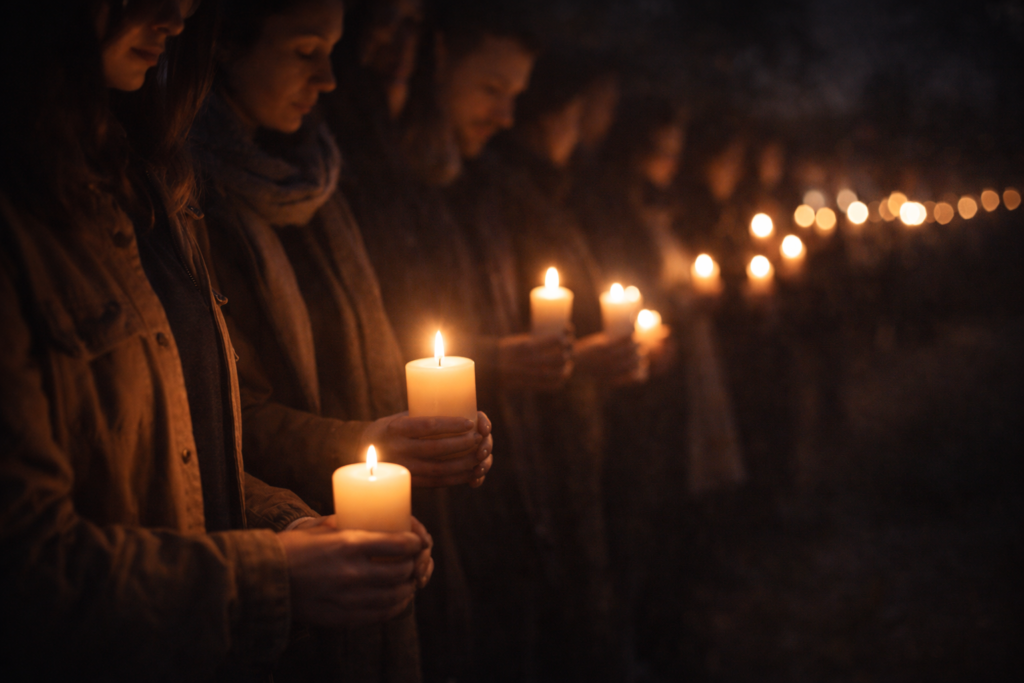
In modern societies, candles also appear in civic rituals.
Candlelight vigils and public gatherings often use candles as symbols of solidarity, remembrance, or peaceful protest.
A single flame becomes a quiet statement:
“We are present.”
“We remember.”
“We stand together.”
In this way, candlelight transforms from personal symbolism into collective meaning.
Conclusion: What Candlelight Reveals About Human Ritual
Candles are more than sources of light.
They are tools that reshape how we experience time and space.
A candle marks a boundary between the ordinary and the meaningful.
It invites pause, reflection, and shared attention.
Perhaps this is why people continue lighting candles even in an age of electricity.
Not because we need more light,
but because we need moments that feel significant.
Sometimes, the smallest flame
creates the deepest sense of ritual.
Related Reading
The cultural power of symbols and the meanings societies attach to everyday acts are further explored in The Power of Naming: Is Naming an Act of Control?, where the relationship between language, symbols, and social meaning reveals how seemingly simple practices can shape collective perception and cultural identity.
At a broader societal level, the role of symbolic gestures in public life is examined in Clicktivism in Digital Democracy: Participation or Illusion?, where debates about symbolic participation raise deeper questions about whether collective expressions—both online and offline—create real change or primarily function as shared social rituals.
References
1. Bille, M., Hastrup, F., & Sørensen, T. F. (2010). An Anthropology of Luminosity: Light, Vision and the Experience of the Everyday. Routledge.
→ This work examines how humans experience light culturally and sensorially, showing how illumination shapes emotion, perception, and everyday spatial meaning.
2. Eliade, M. (1959). The Sacred and the Profane: The Nature of Religion. Harcourt.
→ Eliade explores how symbolic acts, including fire and light, separate sacred time from ordinary life, explaining why ritual gestures feel meaningful.
3. Taylor, C. (2007). A Secular Age. Belknap Press of Harvard University Press.
→ Taylor discusses how modern societies continue to create meaning through symbolic practices even in secular contexts, highlighting the persistence of ritual-like behaviors.