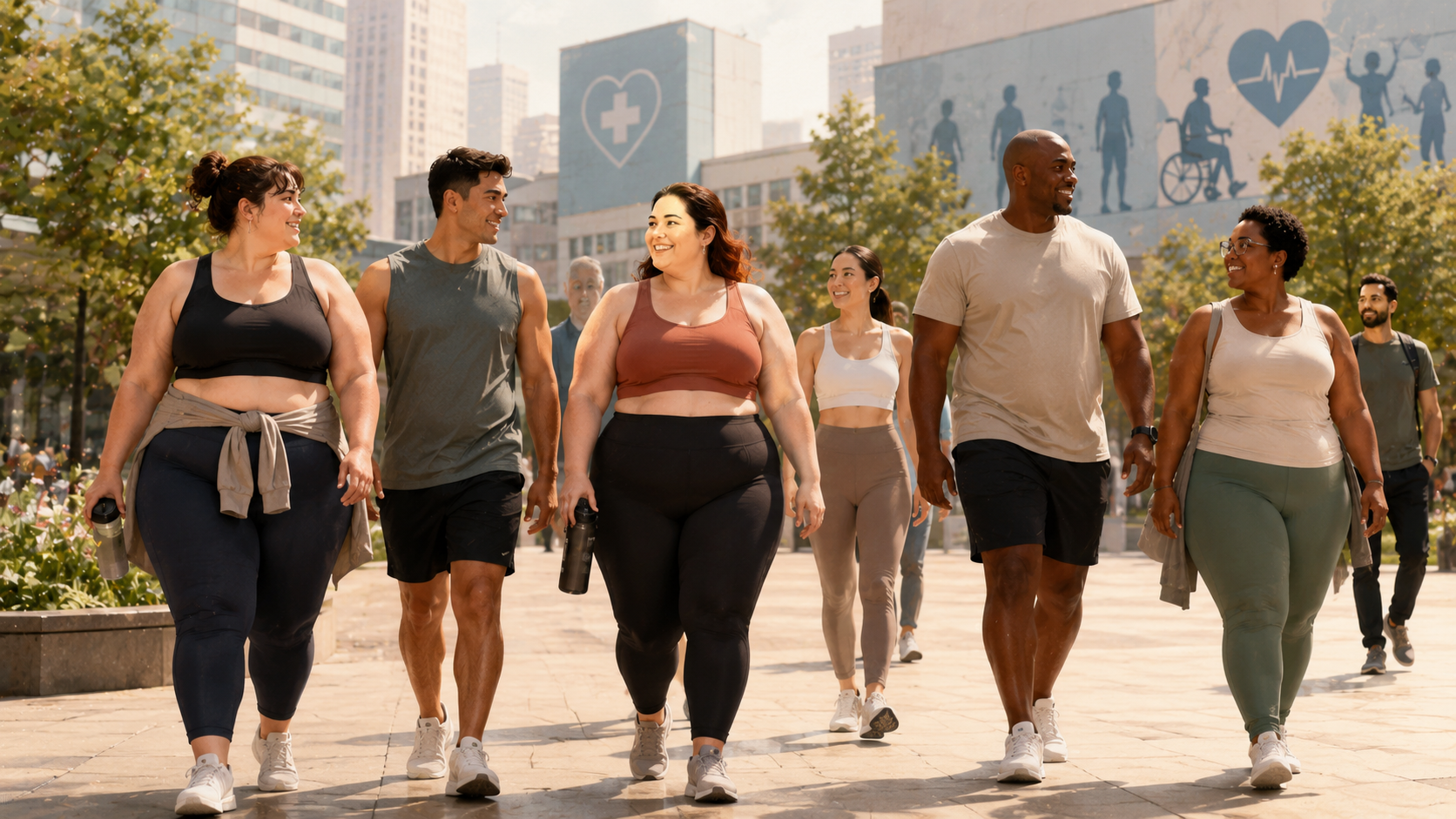
Personal Responsibility or a Public Health Challenge?
Last December, I underwent a routine health examination. At 178 centimeters tall and 86.5 kilograms, I was told that I fell into the obesity category.
“You should try to lose some weight,” my doctor advised. “You also have fatty liver disease, and reducing your weight will likely improve it.”
The conversation stayed with me long after the appointment ended. Was my weight simply the result of personal choices? Or was it also shaped by modern lifestyles, food environments, stress, and social conditions?
Around the world, obesity has become one of the most debated public health issues of the 21st century. At the same time, movements promoting body diversity challenge traditional assumptions about weight and health. As governments consider policies such as sugar taxes, food regulations, and public health campaigns, a deeper question emerges:
Should obesity be treated primarily as an individual responsibility, or as a collective social challenge?
1. Why Obesity Has Become a Global Concern
A Growing Worldwide Trend
According to the World Health Organization, obesity has increased substantially worldwide over the past several decades.
Obesity is associated with increased risks of cardiovascular disease, type 2 diabetes, certain cancers, sleep disorders, and other chronic conditions. As populations age and healthcare systems face increasing pressure, many governments view obesity as a significant public health challenge.
The economic impact is also substantial. Rising healthcare expenditures, productivity losses, and long-term treatment costs affect not only individuals but entire societies.
For this reason, many public health experts argue that obesity cannot be understood solely as a personal issue.
2. The Personal Responsibility Perspective
Lifestyle Choices Matter
Many people believe obesity is primarily influenced by personal decisions.
Food choices, physical activity, sleep habits, alcohol consumption, and daily routines all affect body weight. From this perspective, individuals should be encouraged to take responsibility for their health through healthier eating patterns and regular exercise.
Stories of successful weight loss often reinforce this viewpoint. Social media frequently highlights individuals who transformed their health through discipline and determination, creating the impression that obesity can be overcome through willpower alone.
The Appeal of Personal Agency
This perspective has an important strength: it recognizes that people have the ability to make positive changes.
Encouraging healthier habits can improve both physical and mental well-being. Public health campaigns often rely on this principle by promoting exercise, balanced nutrition, and preventive care.
However, critics argue that focusing exclusively on personal responsibility risks oversimplifying a far more complex issue.
3. The Public Health Perspective
The Environment Shapes Choices
Supporters of the public health approach argue that individual choices do not occur in isolation.
Modern societies are filled with highly processed foods, aggressive marketing campaigns, sedentary work environments, and urban designs that often discourage physical activity. In many communities, healthy food is more expensive or less accessible than calorie-dense alternatives.
From this perspective, obesity is influenced not only by personal behavior but also by social and economic structures.
Inequality and Health Outcomes
Research has linked obesity patterns to factors including income, education, neighborhood environments, and access to healthcare.
People living in disadvantaged communities may face greater barriers to maintaining healthy lifestyles. Limited access to safe recreational spaces, fresh foods, and preventive healthcare can contribute to higher obesity rates.
These findings suggest that obesity is partly shaped by circumstances beyond individual control.
4. Body Diversity and the Rise of the Body Positivity Movement
Challenging Weight-Based Stigma
Over the past decade, the body positivity movement has gained global attention.
Advocates argue that people of all body sizes deserve dignity, respect, and freedom from discrimination. They challenge social norms that equate thinness with worth, beauty, or success.
Supporters emphasize that weight stigma itself can cause harm. Research has linked weight discrimination to anxiety, depression, reduced healthcare engagement, and lower self-esteem.
A Continuing Debate
Critics, however, worry that some interpretations of body positivity may unintentionally downplay legitimate health risks associated with obesity.
This tension creates one of the central debates of the movement:
Can society promote body acceptance while still acknowledging medical evidence about obesity-related health risks?
One way to approach this tension is to separate respect for individuals from discussions about health outcomes. People deserve dignity regardless of body size, while health risks can still be discussed honestly and compassionately.
5. Should Governments Intervene?
Taxes, Regulations, and Public Health Campaigns
Many governments have experimented with policies designed to reduce obesity rates.
Mexico introduced a tax on sugary beverages. Several cities and countries have implemented nutrition labeling requirements. Public health campaigns encourage healthier eating and increased physical activity.
Supporters argue that such measures help create healthier environments and reduce long-term healthcare costs.
Concerns About Personal Freedom
Opponents often view these policies as excessive government intervention.
Critics argue that individuals should remain free to make their own dietary choices, even if those choices involve health risks. Others point out that taxes on unhealthy foods may disproportionately affect lower-income households.
As a result, policymakers must constantly balance public health goals with personal freedom.
Conclusion
The debate over obesity and body diversity cannot be reduced to a simple choice between personal responsibility and public health intervention.
Individual behaviors clearly influence health outcomes, but those behaviors are also shaped by social environments, economic opportunities, cultural norms, and public policies.
At the same time, societies face a difficult challenge. Efforts to reduce obesity should not lead to stigma or discrimination, while movements promoting body diversity should not discourage honest conversations about health.
Perhaps the most productive approach is to recognize both realities at once: people deserve respect regardless of body size, and societies have a legitimate interest in promoting healthier lives.
The future of this debate will likely depend not on choosing one side over the other, but on finding ways to combine personal empowerment, scientific understanding, and social compassion.
Reader Question
Do you believe obesity should be viewed mainly as a matter of personal responsibility, or do governments and societies share responsibility for creating healthier environments?
How can we promote public health without reinforcing stigma against people with different body types?
Related Reading
Obesity is shaped not only by individual choices but also by the information and food environments that influence those choices.
In Food Label Reform: Can Clearer Nutrition Labels Really Help Us Eat Healthier?, we examine whether clearer nutrition information can help consumers make healthier decisions—and how far governments should go in shaping the food environment.
References
1. World Health Organization. (2025). Obesity and Overweight. World Health Organization.
This global overview presents current evidence on the prevalence, health consequences, and complex causes of overweight and obesity. WHO emphasizes that obesity arises from interactions among biological factors, individual behaviors, access to healthy diets, market forces, and broader social environments, supporting the view that obesity cannot be explained by personal responsibility alone.
2. NCD Risk Factor Collaboration (NCD-RisC). (2024). “Worldwide Trends in Underweight and Obesity from 1990 to 2022: A Pooled Analysis of 3663 Population-Representative Studies with 222 Million Children, Adolescents, and Adults.” The Lancet, 403, 1027–1050.
This large international analysis documents major changes in obesity and underweight across more than three decades and across countries worldwide. Its findings demonstrate the scale of the global shift toward obesity and provide an important empirical foundation for understanding obesity as a major twenty-first-century public health challenge.
3. Puhl, Rebecca M., & Heuer, Chelsea A. (2010). “Obesity Stigma: Important Considerations for Public Health.” American Journal of Public Health, 100(6), 1019–1028.
This influential review examines the psychological and physical consequences of weight stigma and discrimination. It challenges the assumption that stigmatizing people because of their weight motivates healthier behavior and argues that weight stigma itself should be recognized as an important public health concern. PubMed
4. World Health Organization. (2024). Fiscal Policies to Promote Healthy Diets: WHO Guideline. World Health Organization.
This guideline examines how food environments influence dietary choices and how governments can use taxation and subsidies to encourage healthier diets. It is particularly relevant to debates over whether obesity prevention should depend primarily on individual choice or whether governments have a legitimate role in shaping healthier food environments.
5. World Health Organization. (2021). Implementing Fiscal and Pricing Policies to Promote Healthy Diets: A Review of Contextual Factors. World Health Organization.
This review examines not only the potential health effects of food and beverage taxes and subsidies but also questions of equity, human rights, feasibility, and public acceptance. It is especially relevant to concerns that public-health interventions may affect lower-income groups differently and shows why policy design must consider both health outcomes and social fairness.