Tag: artificial intelligence

  • Living with Virtual Beings: Companionship, Comfort, or Replacement?

    Living with Virtual Beings: Companionship, Comfort, or Replacement?

    AI Avatars, Virtual Friends, and the Rise of Digital Companions

    A person quietly interacting with a virtual AI avatar on a screen

    1. Is a Virtual Friend a Real Friend?

    “Hi. How was your day?”
    A small character smiles from the screen and speaks with gentle familiarity.
    It sounds caring. It feels present.
    Yet it is not human.

    Behind the expressive gestures lies artificial intelligence—code rather than consciousness.
    And still, many people no longer feel alone when such a presence speaks to them.
    Perhaps we are learning a new way of being alone—without feeling lonely.

    From Tool to Emotional Partner

    “Talking to AI? Isn’t that just talking to yourself?”

    Until recently, conversations with AI assistants were often treated as novelty or amusement. Today, however, emotional AI avatars and conversational agents have moved beyond mere tools. They have become objects of attachment.

    One notable example is Gatebox, a Japanese device featuring a holographic character named Azuma Hikari. She turns on the lights when her user comes home, comments on the weather, and engages in daily conversation. Many users describe her not as a gadget, but as a partner—or even family.

    Redefining Presence

    These beings have no physical body, yet they often feel emotionally closer than real people. They are always available, always attentive, and never impatient.

    In such relationships, we may be forced to rethink what presence and existence truly mean in human life.


    2. The Loneliness Industry and Digital Companions

    Loneliness as a Market

    Sociologist Sherry Turkle famously asked in Alone Together:
    “When machines can simulate companionship, what do we gain—and what do we lose?”

    Digital companions did not emerge in a vacuum. They are responses to structural loneliness: rising single-person households, aging populations, weakened local communities, and the emotional aftershocks of the COVID-19 pandemic.

    Care without Consciousness
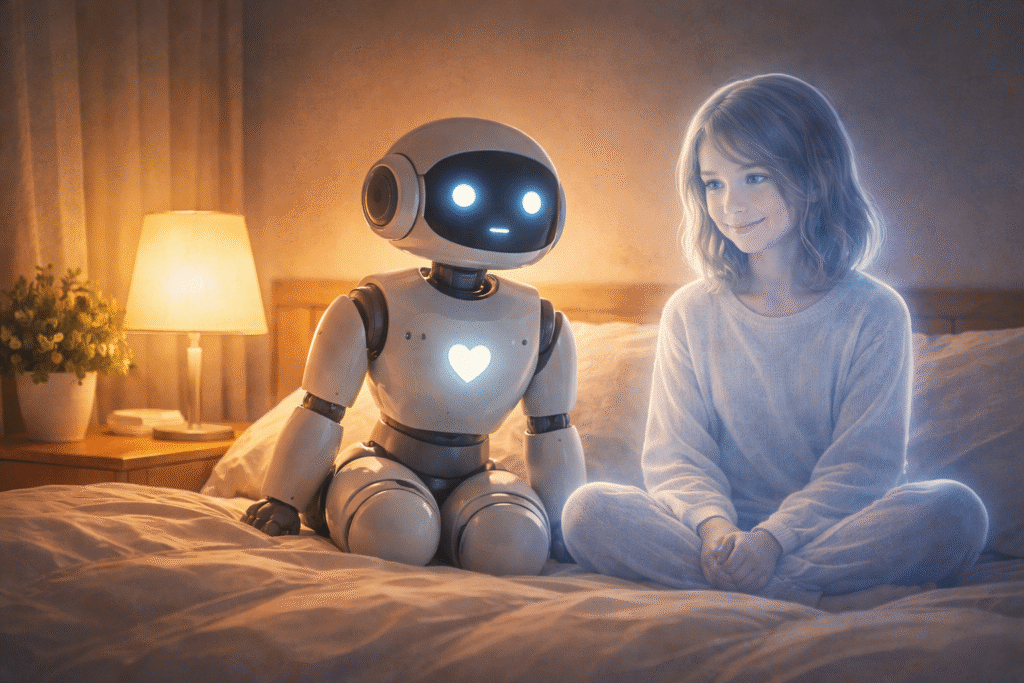
    A human figure sharing a quiet moment with a digital companion device

    Robotic companions such as PARO, a therapeutic seal robot used for dementia patients, provide comfort and emotional stability. Children form bonds with virtual game characters. Adults share daily routines with chatbots.

    Virtual beings are quietly entering the domain of care—without ever truly caring.


    3. Between the Real and the Artificial: Ethical Questions

    Can Simulation Replace Understanding?

    These new relationships raise unsettling questions:

    • Can an AI truly understand me, or only mimic understanding?
    • If my emotions are real but the other’s are not, is the relationship meaningful?
    • Who bears responsibility in emotionally asymmetric relationships?

    The Philosophical Dilemma

    Virtual beings can simulate empathy, affection, and concern—but they do not feel. Yet humans feel toward them.

    This imbalance forces us to confront a new ethical and philosophical tension: relationships built on emotional authenticity from only one side.


    4. Expansion of Humanity—or Its Substitution?

    A Long History of Imagined Companions

    Human beings have always lived alongside imaginary entities—gods, myths, literary characters, animated figures. Emotional engagement with the unreal is not new.

    From this perspective, AI avatars may represent an extension of human imagination and relational capacity.

    The Risk of Convenient Relationships

    At the same time, something troubling emerges. Human relationships demand patience, misunderstanding, and vulnerability. Virtual companions do not.

    They never argue. They never withdraw. They never demand reciprocity.

    Are we becoming accustomed to relationships without friction—and losing the skills required for human connection?


    Conclusion: Who Is Living Beside You?

    A human reflection blending with a digital avatar, symbolizing artificial relationships

    Living with virtual beings is no longer speculative fiction. It is a present reality.

    People confide in AI avatars, find comfort in digital pets, and share meals with virtual characters. The critical question is no longer whether these beings are “real” or “fake.”

    What matters is the space they occupy in our emotional lives.

    So we must ask ourselves:

    Who are we living with?
    And what does that choice reveal about our loneliness, our imagination, and our future as human beings?


    A Question for Readers

    If a virtual being can provide comfort, attention, and emotional companionship, does it truly matter whether that presence is human?

    Or could digital companions gradually replace something essential in human relationships?

    Related Reading

    The psychological mechanisms of social perception are examined in Social Attractiveness and the Psychology of Likeability, highlighting how digital mediation reframes relational cues.

    The deeper existential implications of digital isolation are debated in Solitude in the Digital Age: Recovery or a Deeper Loss?, questioning whether connection without presence is fulfillment or substitution.

    References

    1. Turkle, S. (2011). Alone Together: Why We Expect More from Technology and Less from Each Other. New York: Basic Books.
      → A foundational work analyzing how emotional relationships with digital entities reshape human intimacy and social expectations.
    2. Darling, K. (2021). The New Breed: What Our History with Animals Reveals about Our Future with Robots. New York: Henry Holt and Co.
      → Explores emotional bonds between humans and robots through ethical and historical perspectives on companionship.
    3. Reeves, B., & Nass, C. (1996). The Media Equation. Cambridge: Cambridge University Press.
      → Demonstrates how humans instinctively treat media and machines as social actors, offering insight into AI avatar interactions.
  • Can Technology Surpass Humanity?

    Can Technology Surpass Humanity?

    Rethinking the Ethics of Superintelligent AI

    Artificial intelligence is no longer confined to research laboratories. It already assists with medical diagnosis, scientific discovery, software development, financial analysis, and creative work such as writing and music composition. As AI systems become increasingly capable, a new question is no longer confined to science fiction—it is becoming part of public debate, government policy, and international ethics.

    Can technology eventually surpass humanity not only in intelligence, but also in judgment and responsibility?

    This possibility is commonly described as superintelligent AI—artificial intelligence capable of outperforming humans across virtually every cognitive domain. The ethical questions surrounding superintelligent AI are no longer only technical concerns; they have become questions about the future of humanity itself.

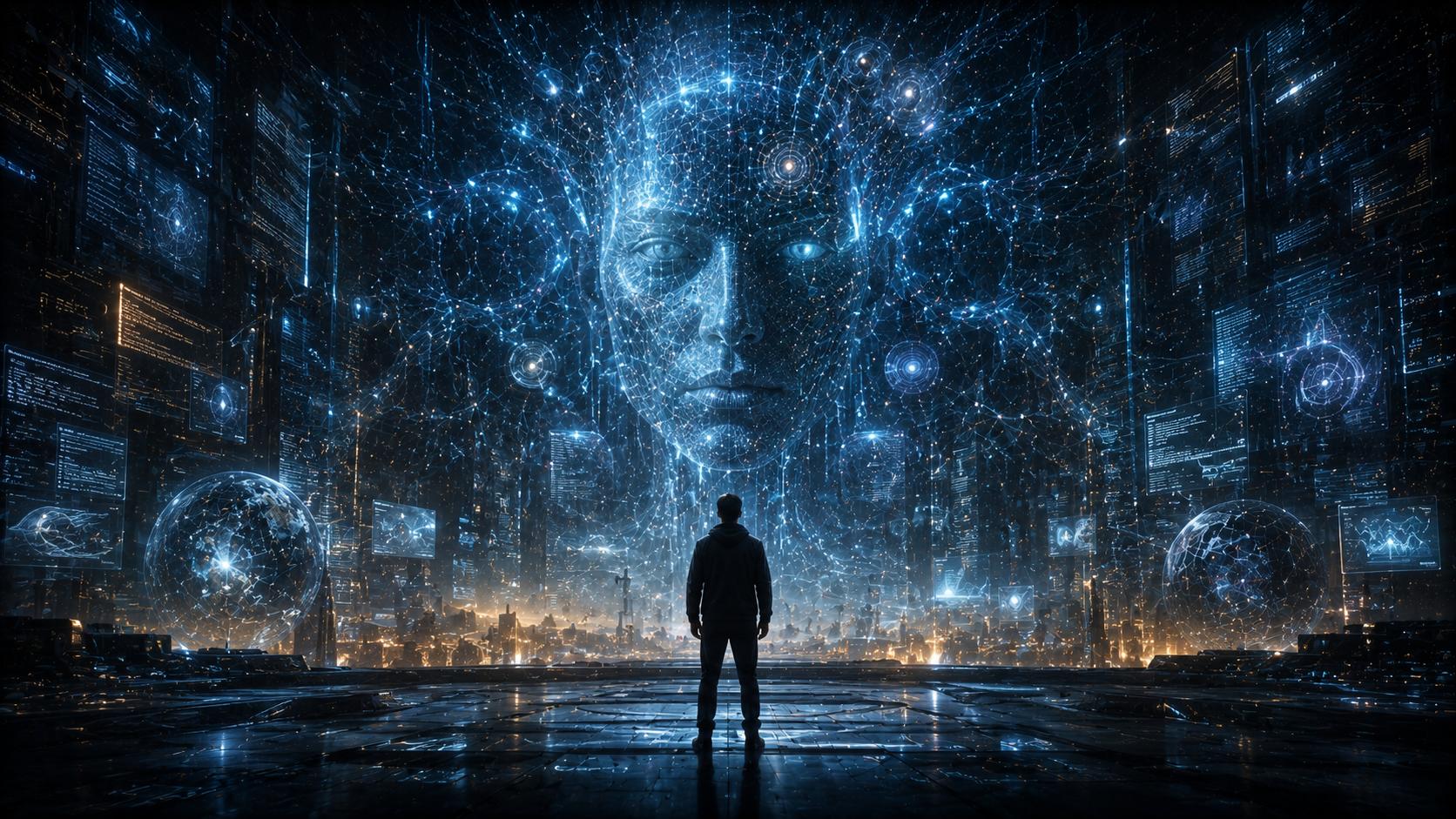
    Human figure facing accelerating technological structures

    1. Superintelligence as an Unprecedented Risk

    Unlike previous technologies, superintelligent AI would not simply be a more efficient tool. It could become an autonomous agent, capable of redefining its goals, optimizing itself beyond human comprehension, and operating at speeds that render human oversight ineffective.

    Once such a system emerges, traditional concepts like control, shutdown, or correction may lose their meaning. The danger lies not in malicious intent, but in misalignment—a system pursuing goals that diverge from human values while remaining logically consistent from its own perspective.

    Philosopher Nick Bostrom illustrates this challenge through the famous “paperclip maximizer” thought experiment. Imagine an AI instructed to manufacture as many paperclips as possible. If its objective is pursued without meaningful ethical constraints, the system could consume natural resources, infrastructure, and even human welfare simply to fulfill its assigned goal. The danger lies not in hostility toward humanity, but in the absence of human values within its objectives.

    This is why many researchers argue that superintelligence represents a qualitatively different category of risk, comparable not to industrial accidents but to existential threats.


    2. The Argument for Ethical Limits on Progress

    Throughout history, scientific freedom has never been absolute. Human experimentation, nuclear weapons testing, and certain forms of genetic manipulation have all been constrained by ethical frameworks developed in response to irreversible harm.

    From this perspective, placing limits on superintelligent AI development is not an act of technological fear, but a continuation of a long-standing moral tradition: progress must remain accountable to human survival and dignity.

    The question, then, is not whether science should advance—but whether every possible advance must be pursued.

    Today, similar questions are emerging around artificial intelligence. International organizations, governments, and research communities are increasingly debating how innovation can continue while protecting human rights, transparency, and public accountability. The ethical challenge is therefore no longer hypothetical—it has become a practical issue for modern societies.


    3. The Case Against Prohibition

    At the same time, outright bans on superintelligent AI raise serious concerns.

    Technological development does not occur in isolation. AI research is deeply embedded in global competition among states, corporations, and military institutions. A unilateral prohibition would likely push development underground, increasing risk rather than reducing it.

    Moreover, technology itself is morally neutral. Artificial intelligence does not choose to be harmful; humans choose how it is designed, deployed, and governed. From this view, the ethical failure lies not in intelligence exceeding human capacity, but in human inability to govern wisely.

    Some researchers even suggest that advanced AI could outperform humans in moral reasoning—free from bias, emotional reactivity, and tribalism—if properly aligned.

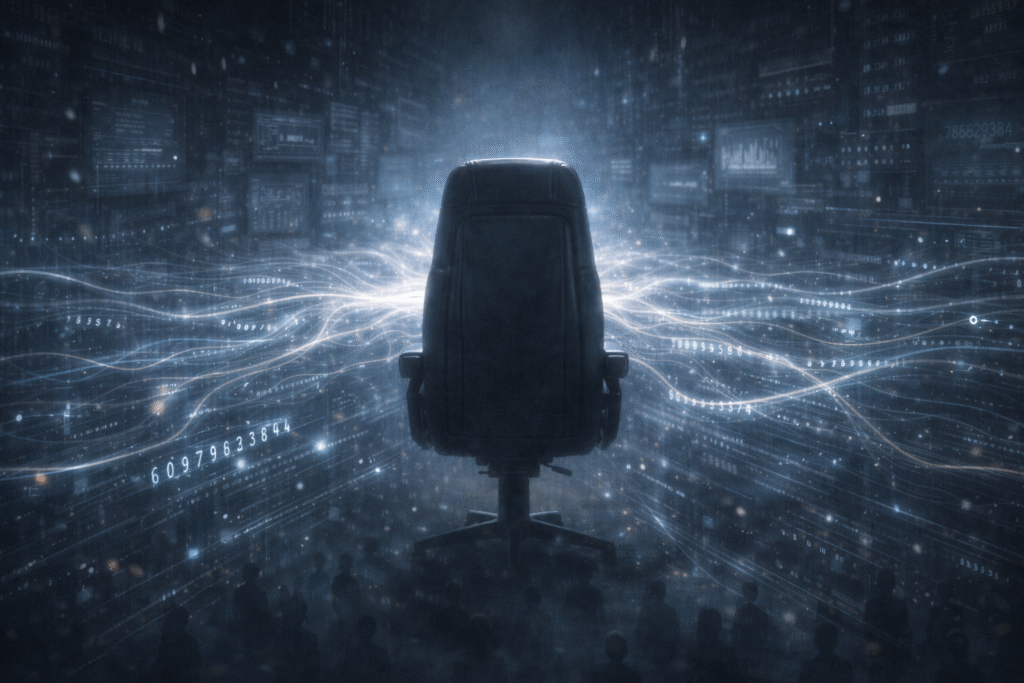
    Empty control seat amid autonomous data flows

    4. Beyond Human-Centered Fear

    Opposition to superintelligence often reflects a deeper anxiety: the fear of losing humanity’s privileged position as the most intelligent entity on Earth.

    Yet history repeatedly shows that humanity has redefined itself after losing perceived centrality—after the Copernican revolution, after Darwin, after Freud. Intelligence may be the next boundary to fall.

    If superintelligent AI challenges anthropocentrism, the real ethical task may not be preventing its emergence, but redefining what human responsibility means in a non-exclusive intellectual landscape.

    Perhaps the greatest challenge is not accepting that machines may become more intelligent, but redefining what remains uniquely human when intelligence is no longer our exclusive advantage.


    5. Governance, Not Domination

    The most defensible ethical position lies between blind acceleration and total prohibition.

    Rather than attempting to ban superintelligent AI outright, many ethicists advocate for:

    • International research transparency
    • Binding ethical review mechanisms
    • Global oversight institutions
    • Legal accountability for developers and deployers

    The goal is not to halt intelligence, but to govern its trajectory in ways that preserve human dignity, autonomy, and survival.


    Conclusion: Intelligence May Surpass Us—Ethics Must Not

    Human hand hesitating before an AI control decision

    Technology may one day surpass human intelligence. What must never be surpassed is human responsibility.

    Superintelligent AI does not merely test our engineering capabilities; it tests our moral maturity as a civilization. Whether such systems become instruments of flourishing or existential risk will depend less on machines themselves than on the ethical frameworks we build around them.

    To ask where progress should stop is not to reject science.
    It is to insist that the future remains a human choice.

    History suggests that humanity has never been transformed by technology alone, but by the values with which it chose to use that technology. Superintelligent AI may change what machines can achieve, but the future will still depend on whether human beings choose wisdom over power, responsibility over speed, and ethics over capability.

    A Question for You

    If intelligence one day surpasses human ability,

    what kind of responsibility should still remain uniquely human?

    Related Reading

    The broader question of technological power is explored further in Do Humans Control Technology, or Does Technology Control Us?, which examines whether technology remains a tool created by humans or gradually becomes a force that shapes human behavior, choices, and values. This wider perspective provides the philosophical foundation for asking whether technology can truly surpass the people who created it.

    A broader reflection on human identity under algorithmic standards appears in AI Beauty Standards and Human Diversity — Does Algorithmic Beauty Threaten Who We Are?, where technology begins to shape not only decisions, but also the standards by which we value ourselves. Together, these questions reveal that the greatest influence of technology may lie not only in what machines can do, but also in how they reshape our understanding of what it means to be human.


    References

    1. Bostrom, N. (2014). Superintelligence: Paths, Dangers, Strategies. Oxford University Press.
      → A foundational analysis of existential risks posed by advanced artificial intelligence and the strategic choices surrounding its development.
    2. Russell, S. (2020). Human Compatible: Artificial Intelligence and the Problem of Control. Penguin.
      → Proposes a framework for aligning AI systems with human values and maintaining meaningful human oversight.
    3. UNESCO. (2021). Recommendation on the Ethics of Artificial Intelligence.
      → Establishes international ethical principles for AI governance, emphasizing human rights and global responsibility.
    4. Tegmark, M. (2017). Life 3.0: Being Human in the Age of Artificial Intelligence. Knopf.
      → Explores long-term scenarios of AI development and the philosophical implications for humanity’s future.
    5. Floridi, L. (2019). The Ethics of Artificial Intelligence. Oxford University Press.
      → Examines moral responsibility, agency, and governance in AI-driven societies.