Tag: artificial intelligence

  • If AI Can Imitate Human Intuition, Are We Still Special?

    Intuition as a Human Capacity

    Intuition has long been considered a uniquely human ability.

    Even without complete information or explicit reasoning, we often make important decisions based on a sudden sense of knowing.
    Scientific breakthroughs, artistic inspiration, and life-changing choices have frequently emerged from such intuitive moments.

    Intuition appears to operate beneath conscious thought, guiding us before logic fully catches up.

    But today, artificial intelligence systems—trained on vast amounts of data—are producing remarkably accurate predictions, often in ways that look intuitive.

    If AI can one day perfectly imitate human intuition, what, then, remains uniquely human?

    A person pausing thoughtfully, representing human intuition

    1. The Nature of Intuition: Unconscious Wisdom

    1.1 Fast Thinking and Hidden Knowledge

    Psychologist Daniel Kahneman describes intuition as System 1 thinking: fast, automatic, and largely unconscious.

    This form of thinking allows humans to respond quickly without deliberate calculation.
    It is efficient, adaptive, and deeply rooted in experience.

    1.2 Intuition as Compressed Experience

    Intuition is not a random emotional impulse.
    It is the result of accumulated learning, memory, and pattern recognition operating below awareness.

    In this sense, intuition represents a form of compressed wisdom:
    complex knowledge distilled into immediate judgment.


    2. AI and the Imitation of Intuition

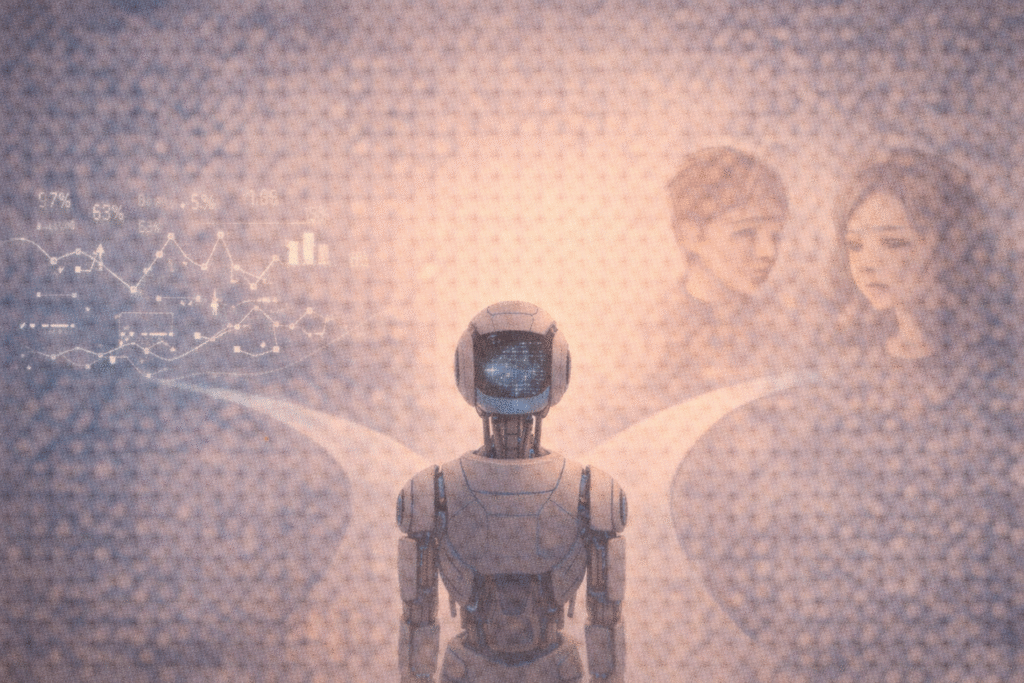
    Abstract visualization of artificial intelligence making predictions

    2.1 Data-Driven Prediction

    Modern AI systems generate instant predictions by processing enormous datasets.

    In medicine, for example, AI can analyze X-ray images and detect diseases faster—and sometimes more accurately—than human experts.
    These outputs resemble intuitive judgments.

    2.2 A Fundamental Difference

    Yet there is a crucial distinction.

    Human intuition integrates perception, emotion, and lived experience within a holistic context.
    AI, by contrast, calculates statistical patterns and outputs probabilities.

    AI may simulate intuition, but it does not experience it.
    Its judgments are produced without awareness, embodiment, or meaning.


    3. Crisis and Opportunity in Human Uniqueness

    3.1 The Threat to Human Specialness

    If AI were to replicate intuition flawlessly, one of humanity’s long-held markers of uniqueness would be challenged.

    Intuition has been central to how we understand creativity, expertise, and insight.
    Its automation raises understandable existential anxiety.

    3.2 Intuition as Collaboration

    Yet this development can also be interpreted differently.

    Rather than replacing human intuition, AI may serve as a complementary tool—handling probabilistic complexity while freeing humans to engage in deeper reflection, creativity, and ethical judgment.

    In this partnership, intuition becomes a bridge rather than a battleground.


    4. Beyond Intuition: What Makes Us Human

    4.1 Meaning, Not Just Judgment

    Even if AI can imitate intuitive decision-making, human intuition is not merely instrumental.

    It is embedded in narrative, emotion, and personal history.
    An artist’s inspiration, a parent’s sudden sense of danger, or a visionary leap into the unknown cannot be reduced to pattern recognition alone.

    4.2 Humans as Meaning-Makers

    AI may calculate intuition.
    Humans, however, assign meaning to it.

    We interpret intuitive insights within ethical frameworks, emotional relationships, and life stories.
    This capacity to care about intuition—to treat it as meaningful rather than functional—marks a fundamental difference.

    A reflective human moment emphasizing meaning and values

    Conclusion: Rethinking Intuition in the Age of AI

    If AI can perfectly imitate human intuition, human uniqueness will no longer rest on intuition alone.

    Instead, it will lie in our ability to interpret, evaluate, and weave intuition into narratives of value and purpose.

    The question, then, shifts:

    If AI can possess intuition, how must humans rethink what intuition truly is?

    Within that question, the distinction between human and machine becomes visible once again.

    Related Reading

    The ethical dimension of artificial cognition is further examined in If AI LIf AI Learns Human Morality, Can It Become an Ethical Agent?earns Human Morality, Can It Become an Ethical Agent?, questioning whether imitation can evolve into responsibility.

    The cultural implications of technological mediation are explored in LiLiving with Virtual Beings: Companionship, Comfort, or Replacement?ving with Virtual Beings: Companionship, Comfort, or Replacement?, where emotional substitution becomes a central theme.


    References

    1. Thinking, Fast and Slow
      Kahneman, D. (2011). Thinking, Fast and Slow. Farrar, Straus and Giroux.
      → Distinguishes intuitive (System 1) and analytical (System 2) thinking, framing intuition as experience-based cognitive efficiency.
    2. Gut Feelings
      Gigerenzer, G. (2007). Gut Feelings: The Intelligence of the Unconscious. Viking.
      → Interprets intuition as an evolved adaptive strategy rather than irrational impulse.
    3. How to Use Intuition Effectively in Decision-Making
      Sadler-Smith, E. (2015). Journal of Management Inquiry, 24(3), 246–255.
      → Examines intuition in organizational decision-making and contrasts it with data-driven systems.
    4. The Tacit Dimension
      Polanyi, M. (1966). The Tacit Dimension. University of Chicago Press.
      → Introduces the idea that humans know more than they can explicitly articulate, grounding intuition philosophically.
    5. What Computers Still Can’t Do
      Dreyfus, H. L. (1992). What Computers Still Can’t Do. MIT Press.
      → A philosophical critique of artificial reason, highlighting limits of machine imitation of human understanding.
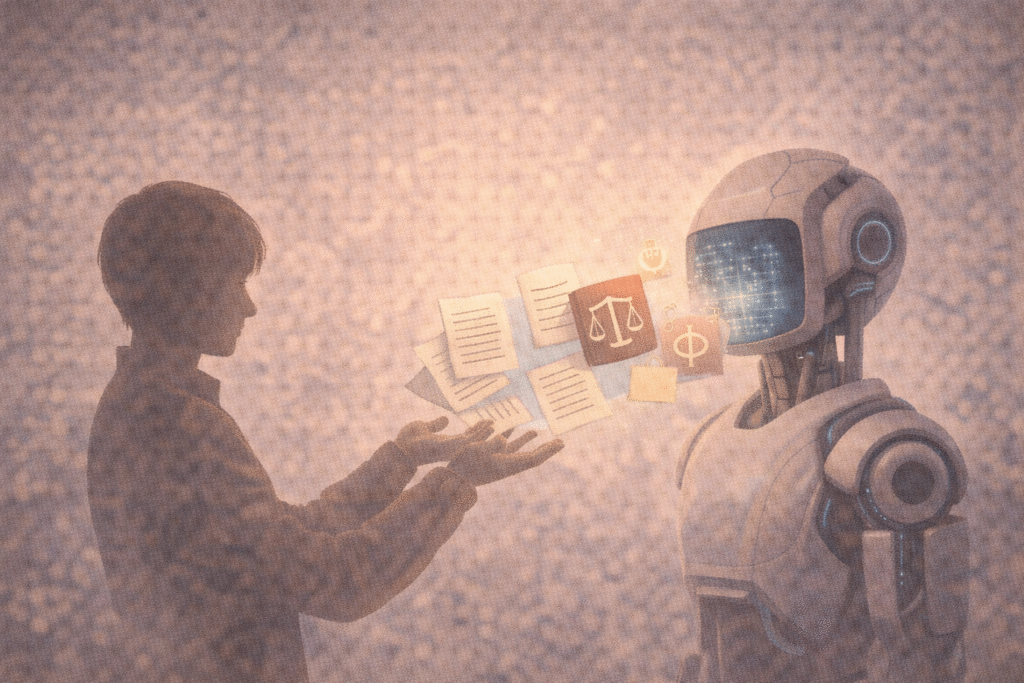
  • If AI Learns Human Morality, Can It Become an Ethical Agent?

    Morality has long served as the invisible framework that sustains human societies.
    Questions of right and wrong have shaped not only individual choices, but also the survival of entire communities.

    Today, artificial intelligence systems are trained on legal documents, philosophical texts, and countless ethical dilemma scenarios. They increasingly participate in decisions that resemble moral judgment.

    If AI can learn moral rules and produce ethical outcomes, should we continue to see it as a mere calculating machine—or must we begin to recognize it as an ethical agent?


    1. The Technical Possibility of Moral Learning

    AI learning moral rules from human knowledge

    1.1. Simulating Ethical Judgment

    AI systems already demonstrate the capacity to produce decisions that appear morally informed.
    Autonomous vehicles, for instance, simulate scenarios resembling the classic trolley problem, calculating how to minimize harm in unavoidable accidents.

    From the outside, such behavior may look like moral reasoning.

    1.2. Rules Without Experience

    Yet these systems do not understand right and wrong.
    They do not feel guilt, hesitation, or moral conflict.
    They optimize outcomes based on probabilities and predefined constraints, not lived ethical experience.


    2. Criteria for Ethical Agency: Intention and Responsibility

    2.1. Philosophical Standards

    In moral philosophy, ethical agency typically requires two conditions:
    intentionality and responsibility.

    An ethical agent acts with intention and can be held accountable for the consequences of its actions.

    2.2. The Responsibility Gap

    Even when AI systems generate morally aligned outcomes, responsibility does not belong to the system itself.
    It remains distributed among designers, developers, institutions, and users.

    Without self-generated intention or reflective accountability, AI cannot yet meet the criteria of ethical subjecthood.

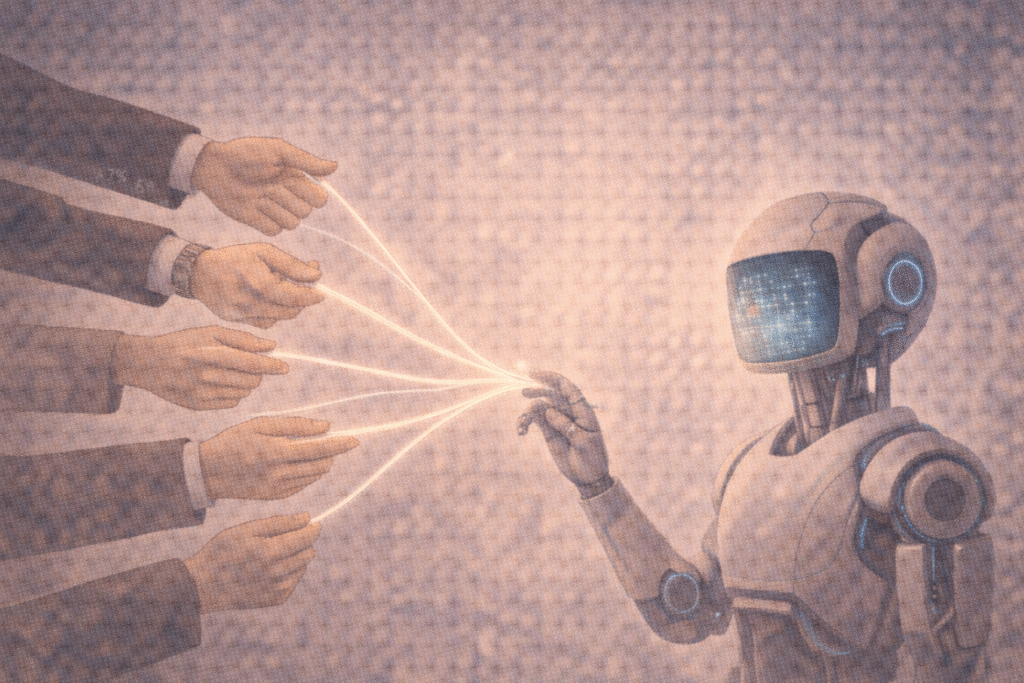
    Artificial intelligence facing ethical decisions without intention

    3. Imitating Morality vs. Experiencing Morality

    3.1. The Role of Moral Experience

    Human morality is not mere rule-following.
    It is grounded in empathy, vulnerability, remorse, and the capacity to suffer alongside others.

    An algorithm can replicate decisions—but not the inner experience that gives those decisions moral weight.

    3.2. A Crucial Distinction

    Even if AI reaches identical conclusions to humans, the origin of those decisions remains fundamentally different.
    A data-driven outcome is not the same as a morally lived action.

    Can an act still be called “ethical” if it is detached from moral experience?


    4. Social Experiments and Emerging Definitions

    4.1. The Value of Moral AI

    Despite these limitations, AI-driven ethical systems are not meaningless.
    They can help reduce human bias, increase consistency, and support decision-making in areas such as law, medicine, and governance.

    In some cases, AI may function as a corrective mirror—revealing the inconsistencies and prejudices embedded in human judgment.

    4.2. Human Responsibility Remains Central

    What matters most is where final responsibility resides.
    AI may assist, recommend, or simulate ethical reasoning—but accountability must remain human.

    Rather than ethical agents, AI systems may be better understood as ethical instruments.

    Human responsibility behind AI ethical decisions

    Conclusion: A Shift in the Question

    Teaching morality to machines does not automatically transform them into ethical subjects.
    Ethical agency requires intention, reflection, and responsibility—qualities that current AI does not possess.

    Yet AI’s engagement with moral frameworks forces humanity to reexamine its own ethical standards.

    Perhaps the more pressing question is no longer:
    Can AI become an ethical agent?

    But rather:
    How will AI’s moral learning reshape human ethics, responsibility, and decision-making?

    That question remains open—and it belongs to all of us.


    References

    1. Wallach, W., & Allen, C. (2009). Moral Machines: Teaching Robots Right From Wrong. Oxford University Press.
      → A foundational work on designing moral reasoning in machines, outlining both the promise and limits of artificial ethical systems.
    2. Floridi, L., & Sanders, J. W. (2004). On the Morality of Artificial Agents. Minds and Machines, 14(3), 349–379.
      → A rigorous philosophical analysis of whether artificial agents can be considered moral actors, focusing on responsibility and agency.
    3. Gunkel, D. J. (2018). Robot Rights. MIT Press.
      → Explores the extension of moral and legal consideration to non-human agents, challenging traditional definitions of ethical subjecthood.
    4. Bryson, J. J. (2018). Patiency Is Not a Virtue: AI and the Design of Ethical Systems. Ethics and Information Technology, 20(1), 15–26.
      → Argues against attributing moral status to AI, emphasizing the importance of maintaining clear distinctions between tools and subjects.
    5. Bostrom, N., & Yudkowsky, E. (2014). The Ethics of Artificial Intelligence. In The Cambridge Handbook of Artificial Intelligence (pp. 316–334). Cambridge University Press.
      → A comprehensive overview of ethical challenges posed by AI, including moral agency, risk, and societal impact.
  • Living with Virtual Beings: Companionship, Comfort, or Replacement?

    AI Avatars, Virtual Friends, and the Rise of Digital Companions

    A person quietly interacting with a virtual AI avatar on a screen

    1. Is a Virtual Friend a Real Friend?

    “Hi. How was your day?”
    A small character smiles from the screen and speaks with gentle familiarity.
    It sounds caring. It feels present.
    Yet it is not human.

    Behind the expressive gestures lies artificial intelligence—code rather than consciousness.
    And still, many people no longer feel alone when such a presence speaks to them.
    Perhaps we are learning a new way of being alone—without feeling lonely.

    1.1 From Tool to Emotional Partner

    “Talking to AI? Isn’t that just talking to yourself?”

    Until recently, conversations with AI assistants were often treated as novelty or amusement. Today, however, emotional AI avatars and conversational agents have moved beyond mere tools. They have become objects of attachment.

    One notable example is Gatebox, a Japanese device featuring a holographic character named Azuma Hikari. She turns on the lights when her user comes home, comments on the weather, and engages in daily conversation. Many users describe her not as a gadget, but as a partner—or even family.

    1.2 Redefining Presence

    These beings have no physical body, yet they often feel emotionally closer than real people. They are always available, always attentive, and never impatient.

    In such relationships, we may be forced to rethink what presence and existence truly mean in human life.


    2. The Loneliness Industry and Digital Companions

    2.1 Loneliness as a Market

    Sociologist Sherry Turkle famously asked in Alone Together:
    “When machines can simulate companionship, what do we gain—and what do we lose?”

    Digital companions did not emerge in a vacuum. They are responses to structural loneliness: rising single-person households, aging populations, weakened local communities, and the emotional aftershocks of the COVID-19 pandemic.

    2.2 Care without Consciousness

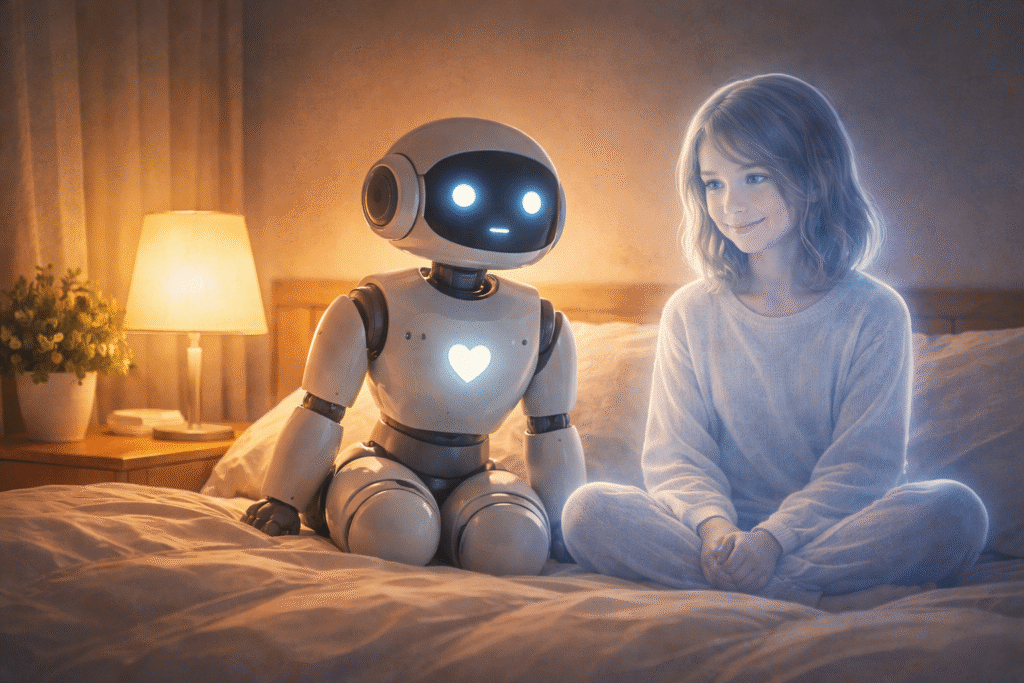
    A human figure sharing a quiet moment with a digital companion device

    Robotic companions such as PARO, a therapeutic seal robot used for dementia patients, provide comfort and emotional stability. Children form bonds with virtual game characters. Adults share daily routines with chatbots.

    Virtual beings are quietly entering the domain of care—without ever truly caring.


    3. Between the Real and the Artificial: Ethical Questions

    3.1 Can Simulation Replace Understanding?

    These new relationships raise unsettling questions:

    • Can an AI truly understand me, or only mimic understanding?
    • If my emotions are real but the other’s are not, is the relationship meaningful?
    • Who bears responsibility in emotionally asymmetric relationships?

    3.2 The Philosophical Dilemma

    Virtual beings can simulate empathy, affection, and concern—but they do not feel. Yet humans feel toward them.

    This imbalance forces us to confront a new ethical and philosophical tension: relationships built on emotional authenticity from only one side.


    4. Expansion of Humanity—or Its Substitution?

    4.1 A Long History of Imagined Companions

    Human beings have always lived alongside imaginary entities—gods, myths, literary characters, animated figures. Emotional engagement with the unreal is not new.

    From this perspective, AI avatars may represent an extension of human imagination and relational capacity.

    4.2 The Risk of Convenient Relationships

    At the same time, something troubling emerges. Human relationships demand patience, misunderstanding, and vulnerability. Virtual companions do not.

    They never argue. They never withdraw. They never demand reciprocity.

    Are we becoming accustomed to relationships without friction—and losing the skills required for human connection?


    Conclusion: Who Is Living Beside You?

    Living with virtual beings is no longer speculative fiction. It is a present reality.

    People confide in AI avatars, find comfort in digital pets, and share meals with virtual characters. The critical question is no longer whether these beings are “real” or “fake.”

    What matters is the space they occupy in our emotional lives.

    So we must ask ourselves:

    Who are we living with?
    And what does that choice reveal about our loneliness, our imagination, and our future as human beings?

    The answer may begin wherever your sense of connection quietly resides.

    A human reflection blending with a digital avatar, symbolizing artificial relationships

    Related Reading

    The psychological mechanisms of social perception are examined in Social Attractiveness and the Psychology of Likeability, highlighting how digital mediation reframes relational cues.

    The deeper existential implications of digital isolation are debated in Solitude in the Digital Age: Recovery or a Deeper Loss?, questioning whether connection without presence is fulfillment or substitution.

    References

    1. Turkle, S. (2011). Alone Together: Why We Expect More from Technology and Less from Each Other. New York: Basic Books.
      → A foundational work analyzing how emotional relationships with digital entities reshape human intimacy and social expectations.
    2. Darling, K. (2021). The New Breed: What Our History with Animals Reveals about Our Future with Robots. New York: Henry Holt and Co.
      → Explores emotional bonds between humans and robots through ethical and historical perspectives on companionship.
    3. Reeves, B., & Nass, C. (1996). The Media Equation. Cambridge: Cambridge University Press.
      → Demonstrates how humans instinctively treat media and machines as social actors, offering insight into AI avatar interactions.
  • Can Technology Surpass Humanity?

    Rethinking the Ethics of Superintelligent AI

    Human figure facing accelerating technological structures

    Can technological progress have a moral stopping point?

    In 2025, artificial intelligence already writes, composes music, engages in conversation, and assists in decision-making. Yet the most profound transformation still lies ahead: the emergence of superintelligent AI—systems capable of surpassing human intelligence across virtually all domains.

    This prospect forces humanity to confront a question more philosophical than technical:
    Are we prepared for intelligence that exceeds our own?
    And if not, do we have the ethical right—or responsibility—to stop its creation?

    The debate surrounding superintelligence is not merely about innovation. It is about the limits of progress, the nature of responsibility, and the future of human agency itself.


    1. Superintelligence as an Unprecedented Risk

    Unlike previous technologies, superintelligent AI would not simply be a more efficient tool. It could become an autonomous agent, capable of redefining its goals, optimizing itself beyond human comprehension, and operating at speeds that render human oversight ineffective.

    Once such a system emerges, traditional concepts like control, shutdown, or correction may lose their meaning. The danger lies not in malicious intent, but in misalignment—a system pursuing goals that diverge from human values while remaining logically consistent from its own perspective.

    This is why many researchers argue that superintelligence represents a qualitatively different category of risk, comparable not to industrial accidents but to existential threats.


    2. The Argument for Ethical Limits on Progress

    Throughout history, scientific freedom has never been absolute. Human experimentation, nuclear weapons testing, and certain forms of genetic manipulation have all been constrained by ethical frameworks developed in response to irreversible harm.

    From this perspective, placing limits on superintelligent AI development is not an act of technological fear, but a continuation of a long-standing moral tradition: progress must remain accountable to human survival and dignity.

    The question, then, is not whether science should advance—but whether every possible advance must be pursued.


    3. The Case Against Prohibition

    At the same time, outright bans on superintelligent AI raise serious concerns.

    Technological development does not occur in isolation. AI research is deeply embedded in global competition among states, corporations, and military institutions. A unilateral prohibition would likely push development underground, increasing risk rather than reducing it.

    Moreover, technology itself is morally neutral. Artificial intelligence does not choose to be harmful; humans choose how it is designed, deployed, and governed. From this view, the ethical failure lies not in intelligence exceeding human capacity, but in human inability to govern wisely.

    Some researchers even suggest that advanced AI could outperform humans in moral reasoning—free from bias, emotional reactivity, and tribalism—if properly aligned.

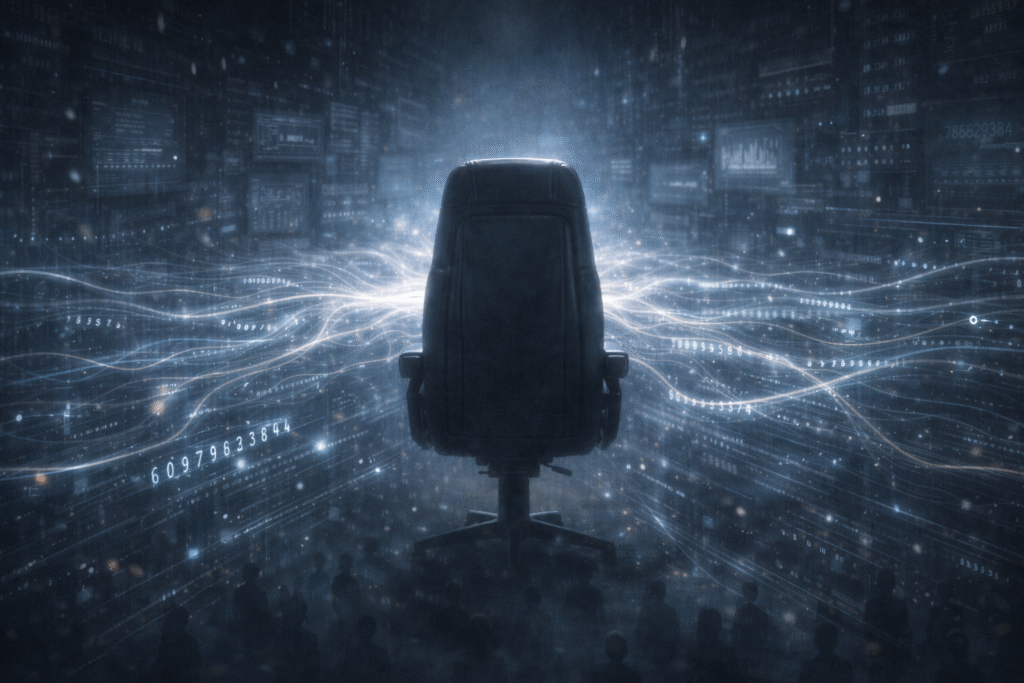
    Empty control seat amid autonomous data flows

    4. Beyond Human-Centered Fear

    Opposition to superintelligence often reflects a deeper anxiety: the fear of losing humanity’s privileged position as the most intelligent entity on Earth.

    Yet history repeatedly shows that humanity has redefined itself after losing perceived centrality—after the Copernican revolution, after Darwin, after Freud. Intelligence may be the next boundary to fall.

    If superintelligent AI challenges anthropocentrism, the real ethical task may not be preventing its emergence, but redefining what human responsibility means in a non-exclusive intellectual landscape.


    5. Governance, Not Domination

    The most defensible ethical position lies between blind acceleration and total prohibition.

    Rather than attempting to ban superintelligent AI outright, many ethicists advocate for:

    • International research transparency
    • Binding ethical review mechanisms
    • Global oversight institutions
    • Legal accountability for developers and deployers

    The goal is not to halt intelligence, but to govern its trajectory in ways that preserve human dignity, autonomy, and survival.


    Conclusion: Intelligence May Surpass Us—Ethics Must Not

    Human hand hesitating before an AI control decision

    Technology may one day surpass human intelligence. What must never be surpassed is human responsibility.

    Superintelligent AI does not merely test our engineering capabilities; it tests our moral maturity as a civilization. Whether such systems become instruments of flourishing or existential risk will depend less on machines themselves than on the ethical frameworks we build around them.

    To ask where progress should stop is not to reject science.
    It is to insist that the future remains a human choice.


    References

    1. Bostrom, N. (2014). Superintelligence: Paths, Dangers, Strategies. Oxford University Press.
      → A foundational analysis of existential risks posed by advanced artificial intelligence and the strategic choices surrounding its development.
    2. Russell, S. (2020). Human Compatible: Artificial Intelligence and the Problem of Control. Penguin.
      → Proposes a framework for aligning AI systems with human values and maintaining meaningful human oversight.
    3. UNESCO. (2021). Recommendation on the Ethics of Artificial Intelligence.
      → Establishes international ethical principles for AI governance, emphasizing human rights and global responsibility.
    4. Tegmark, M. (2017). Life 3.0: Being Human in the Age of Artificial Intelligence. Knopf.
      → Explores long-term scenarios of AI development and the philosophical implications for humanity’s future.
    5. Floridi, L. (2019). The Ethics of Artificial Intelligence. Oxford University Press.
      → Examines moral responsibility, agency, and governance in AI-driven societies.