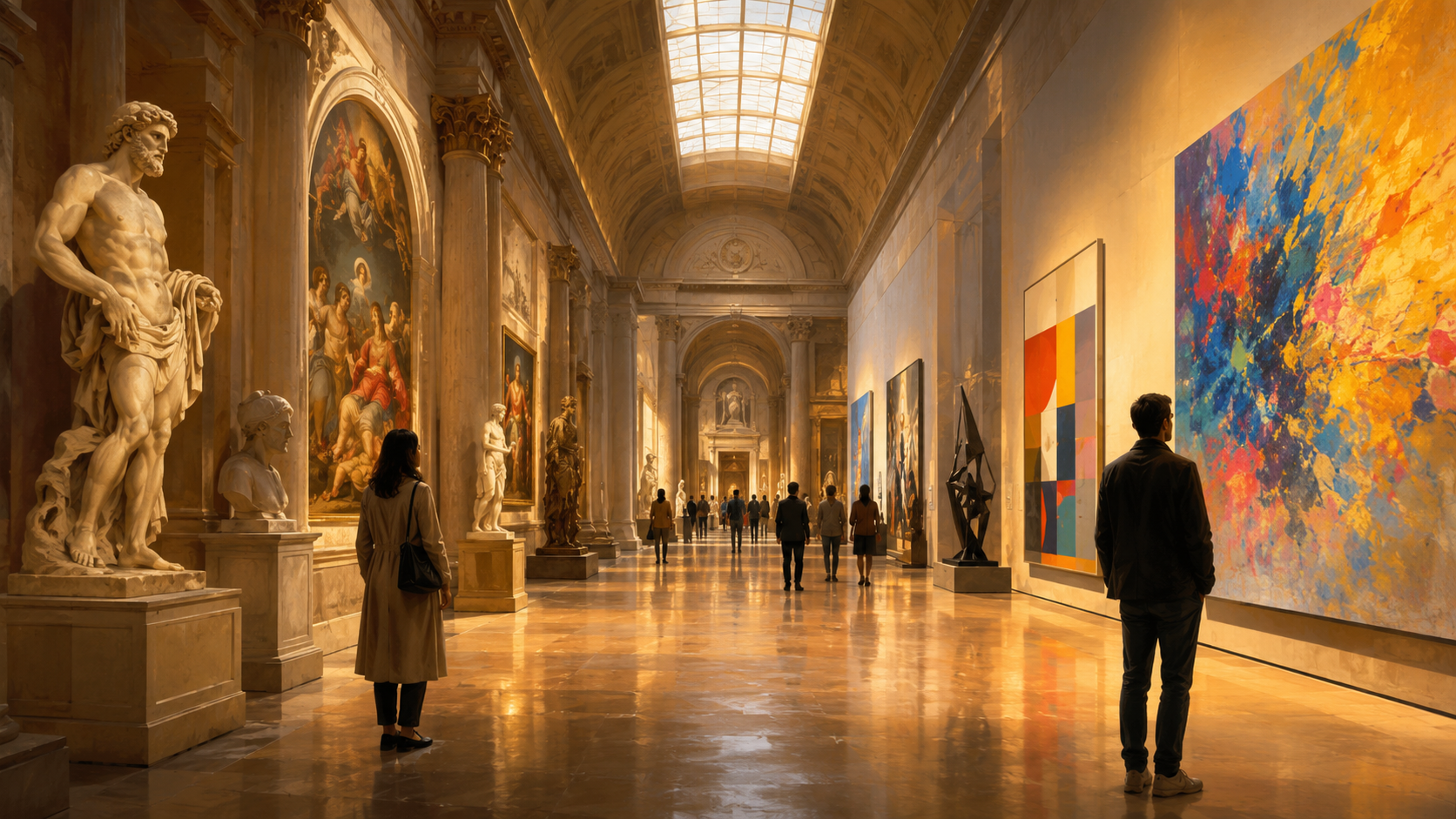
How Artists Have Expressed Human Emotion Across the Ages
Art has always been more than decoration.
Long before written history, people painted on cave walls, carved figures from stone, and created symbols that reflected fear, hope, love, and faith. Across every civilization, art has served as one of humanity’s oldest languages—a language capable of expressing emotions that words alone often cannot capture.
Although artistic styles have changed dramatically over thousands of years, one purpose has remained remarkably constant: to explore the inner world of human experience.
Classical art sought harmony, balance, and timeless beauty. Modern art, by contrast, embraced uncertainty, individuality, and emotional complexity.
At first glance, these two artistic worlds appear completely different.
Yet both ask the same timeless question:
What does it mean to be human?
1. Classical Art: The Pursuit of Ideal Beauty and Universal Emotion
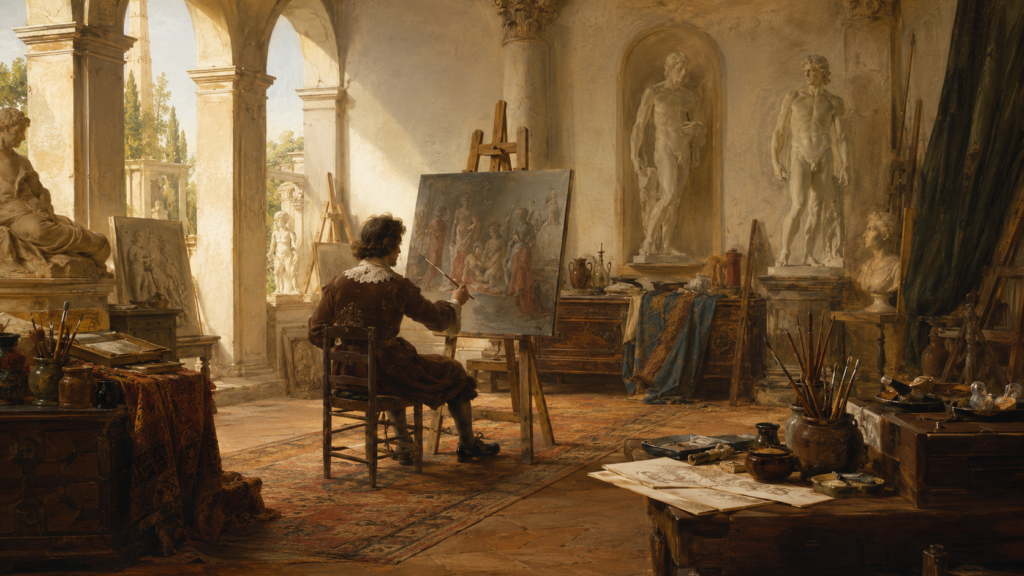
Classical art, particularly in ancient Greece, Rome, and later during the Renaissance, emphasized harmony, proportion, and idealized human beauty.
Artists believed that beauty reflected order, and that order revealed deeper truths about humanity and nature.
Rather than portraying temporary emotions, classical artists often sought to express universal human virtues such as courage, compassion, wisdom, dignity, and love.
Michelangelo’s David is one of the finest examples.
Although the sculpture depicts the biblical hero before his battle with Goliath, it is not merely a representation of physical strength. David’s calm expression and poised body communicate confidence, determination, and self-control.
Similarly, Leonardo da Vinci’s Mona Lisa continues to fascinate audiences because of its subtle emotional ambiguity.
Her mysterious smile seems to shift between serenity, warmth, confidence, and melancholy depending on how each viewer interprets it.
The painting reminds us that even quiet emotions can possess extraordinary depth.
Rather than overwhelming viewers with dramatic feelings, classical art invites contemplation through balance and elegance.
2. From Ideal Beauty to Personal Experience
As society changed, so did artistic priorities.
The nineteenth century marked an important transition.
Instead of portraying idealized perfection, artists increasingly focused on individual perception and personal experience.
The Impressionists, including Claude Monet and Pierre-Auguste Renoir, were less concerned with precise realism than with capturing fleeting moments of light, atmosphere, and emotion.
A sunrise, reflections on water, or sunlight passing through trees became worthy artistic subjects.
These paintings suggested that emotion does not always emerge from dramatic events.
Sometimes it appears quietly—in ordinary moments that pass almost unnoticed.
This shift prepared the way for modern art, where personal experience would become even more central.
3. Modern Art: Exploring the Inner Mind
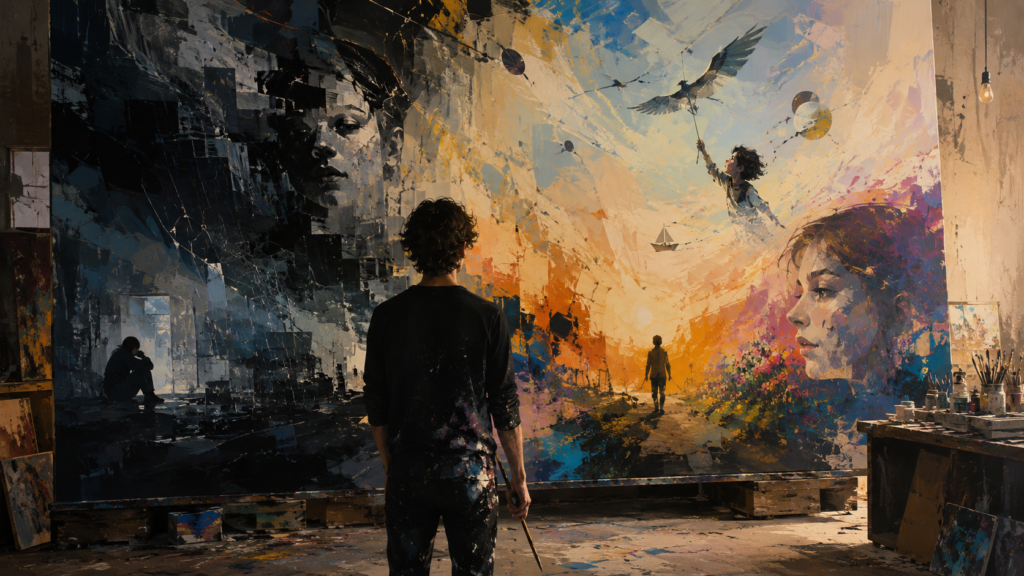
Modern art expanded the emotional range of artistic expression far beyond classical ideals.
Rather than searching for universal perfection, many modern artists explored anxiety, loneliness, fear, identity, and psychological conflict.
The goal was no longer simply to create beauty.
It was to reveal emotional truth.
Edvard Munch’s The Scream remains one of the most recognizable examples.
The distorted figure, swirling sky, and intense colors do not represent physical reality.
Instead, they visualize inner psychological distress.
Viewers often recognize something deeply human within the painting because fear and uncertainty are emotions shared across cultures.
Modern artists increasingly accepted that emotional honesty could be more important than visual perfection.
4. Pablo Picasso: A Bridge Between Classical and Modern Art
Few artists transformed art as dramatically as Pablo Picasso.
Although famous for Cubism, Picasso received rigorous classical training during his youth.
Rather than rejecting tradition entirely, he reimagined it.
His masterpiece Guernica demonstrates how modern artistic techniques can express timeless human emotions.
Created in response to the bombing of the Spanish town of Guernica during the Spanish Civil War, the painting does not depict war realistically.
Instead, fragmented forms, distorted faces, and broken bodies communicate chaos, suffering, and despair.
The emotional impact comes not from accurate representation, but from psychological intensity.
In this way, Picasso connected classical themes—human tragedy and moral reflection—with modern visual language.
His work reminds us that while artistic styles evolve, human suffering and compassion remain constant.
5. Abstract Expressionism: When Emotion Became the Subject
As the twentieth century progressed, some artists moved even further away from recognizable images.
Abstract Expressionists believed that emotion itself could become the artwork.
Jackson Pollock’s famous action paintings abandoned traditional composition altogether.
Instead of carefully arranging subjects, Pollock allowed movement, rhythm, and spontaneous gestures to become central elements of creation.
At first glance, these paintings may appear chaotic.
Yet many viewers experience powerful emotional responses precisely because there is no predetermined story.
Each person is invited to interpret the work through personal memories, emotions, and imagination.
Modern art increasingly shifted from providing answers to encouraging questions.
Instead of asking,
“What is this painting about?”
it asks,
“What do you feel when you look at it?”
6. Different Artistic Languages, Shared Human Questions
Classical and modern art often appear to stand at opposite ends of artistic history.
One celebrates order.
The other embraces uncertainty.
One searches for timeless ideals.
The other welcomes individuality and emotional complexity.
Yet beneath these differences lies a remarkable similarity.
Both seek to understand human existence.
Whether through the graceful proportions of Renaissance painting or the fragmented forms of modern expressionism, artists continue exploring love, fear, hope, loss, courage, loneliness, and joy.
The artistic language changes.
Human emotion does not.
Throughout history, art has served as a mirror reflecting not only society, but also the emotional landscape within ourselves.
Conclusion: Art as the Memory of Human Emotion
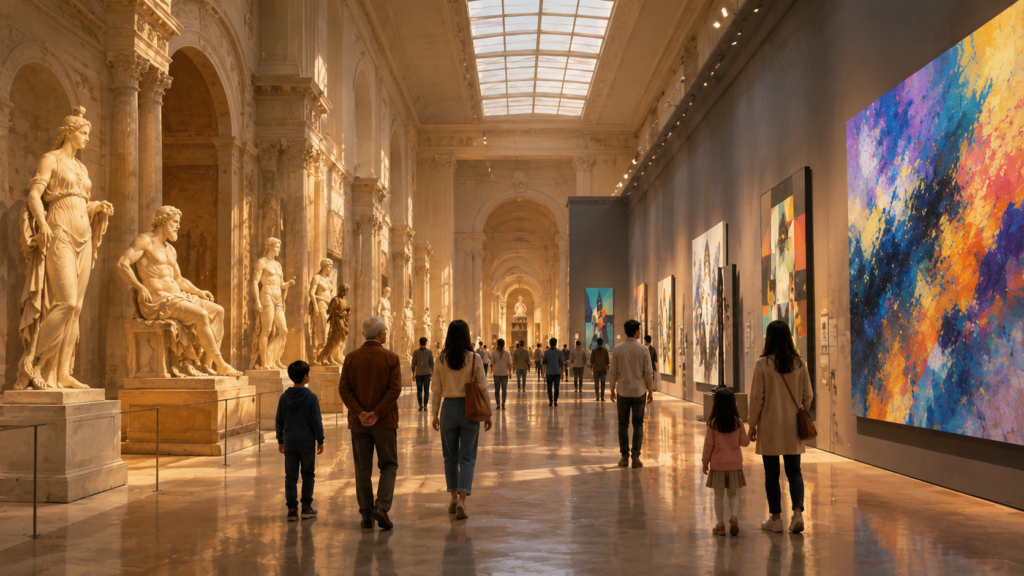
Every civilization leaves behind monuments, buildings, and written records.
Perhaps its greatest legacy, however, is the art through which it expressed its emotions.
Classical art teaches us the beauty of harmony, dignity, and timeless ideals.
Modern art reminds us that vulnerability, uncertainty, and emotional honesty are equally meaningful parts of being human.
Together, they tell a continuous story.
The story is not merely about changing artistic styles.
It is about humanity’s endless attempt to understand itself.
As cultures evolve and technologies transform the way we live, art continues to preserve something that remains unchanged:
our desire to express what cannot always be spoken.
Perhaps that is why great works of art never truly become old.
Although created centuries apart, they continue speaking to people across generations because the emotions they portray are, ultimately, our own.
A Question for Readers
When you stand before a great work of art, what moves you more—the harmony and balance of classical masterpieces, or the emotional honesty and bold experimentation of modern art?
Perhaps the answer says as much about our own experiences as it does about the artwork itself.
Related Reading
Related Reading
Art has always reflected humanity’s search for meaning, beauty, and a deeper understanding of life. This enduring pursuit of human wisdom connects naturally with The Origins of Medicine, which explores how different ancient civilizations sought to understand the human body, health, and the relationship between people and the natural world.
At the same time, works of art often invite viewers to interpret reality from different perspectives rather than offering a single definitive answer. This philosophical dimension is further explored in The Nature of Truth, which examines how perception, interpretation, and context shape the way we understand both truth and the world around us.