Tag: animal psychology

  • Can Pets Improve Your Health? The Science of the Human–Animal Bond

    Can Pets Improve Your Health? The Science of the Human–Animal Bond

    Pets are more than just companions—they are powerful contributors to human health and well-being. Around the world, millions of people share their lives with animals, not only for emotional comfort but also for physical and psychological benefits.

    Scientific research increasingly shows that the bond between humans and pets can reduce stress, improve heart health, and enhance overall life satisfaction. But how does this connection actually work?

    dog greeting owner home emotional comfort

    1. Reducing Stress and Anxiety: Emotional Stability Through Companionship

    Pets provide a unique form of emotional support that is both immediate and unconditional.

    1.1 Lowering Stress Hormones

    Spending time with pets has been shown to reduce cortisol levels—the hormone associated with stress—while increasing oxytocin, often referred to as the “bonding hormone.”

    Even simple actions, such as petting a dog or hearing a cat purr, can create a calming effect that helps regulate emotional responses.

    1.2 Alleviating Loneliness and Depression

    Pets offer consistent companionship, which can significantly reduce feelings of isolation. For individuals experiencing depression or anxiety, this presence can serve as a stabilizing emotional anchor.

    Research suggests that people who regularly walk their dogs report lower stress levels compared to those who do not engage in such routine activities.


    2. Improving Cardiovascular Health: Small Habits, Big Impact

    person walking dog health exercise routine

    The benefits of pet ownership extend beyond emotional well-being into physical health.

    2.1 Lower Blood Pressure and Heart Rate

    Interacting with pets has been associated with reduced blood pressure and heart rate, contributing to improved cardiovascular stability.

    2.2 Encouraging Physical Activity

    Dog owners, in particular, tend to engage in more regular physical activity through daily walks. These routines often help individuals meet recommended exercise levels without conscious effort.

    According to the American Heart Association, pet ownership is linked to a reduced risk of heart disease, partly due to increased activity and reduced stress.


    3. Enhancing Happiness and Social Connection

    Pets do not only improve individual well-being—they also influence social behavior.

    3.1 Increasing Daily Joy

    Pets bring moments of spontaneous joy into everyday life. Their behavior—playful, loyal, and responsive—creates emotional uplift that is difficult to replicate.

    3.2 Strengthening Social Bonds

    Pet ownership can serve as a social bridge. People walking their dogs or visiting pet-friendly spaces are more likely to engage in conversations and form new connections.

    In some therapeutic settings, animals are used to help socially withdrawn individuals develop communication skills and confidence.


    4. Therapeutic Roles: When Pets Become Healers

    In certain contexts, animals take on roles that go far beyond companionship.

    4.1 Therapy Animals

    Therapy animals are used in hospitals, rehabilitation centers, and mental health facilities to provide emotional comfort and reduce anxiety.

    For individuals with PTSD, interacting with animals can help regulate emotional responses and create a sense of safety.

    4.2 Service Animals

    Service animals, such as guide dogs or seizure-alert dogs, play critical roles in assisting individuals with disabilities. These animals not only improve quality of life but can also be life-saving.


    5. Why the Human–Animal Bond Matters in Modern Society

    In a world where many people experience stress, isolation, and digital fatigue, pets offer something increasingly rare: consistent, non-judgmental connection.

    Unlike human relationships, which can be complex and demanding, the bond with a pet is simple yet profound. It does not rely on language, social expectations, or performance—it is built on presence.


    Conclusion

    human pet quiet emotional healing moment

    The relationship between humans and pets is not just emotional—it is deeply biological and psychological. Pets help regulate stress, encourage healthier lifestyles, and create meaningful connections that improve overall well-being.

    Perhaps the most powerful aspect of this bond is its simplicity. In a fast-moving and often overwhelming world, pets remind us of something fundamental: that connection, care, and presence are essential to human health.

    A Question for Readers

    What role do pets play in your life—and do you believe their presence has changed your emotional or physical well-being?

    Related Reading


    If emotions shape how we experience connection, could they also influence how we bond with others—including animals?
    In Are Emotions a Barrier to Moral Judgment—or Its Foundation?, we explore how emotional responses shape human relationships—suggesting that our connection with pets may reveal deeper truths about empathy and care.


    If modern life makes solitude feel heavier, can companionship become a quiet form of healing?
    In Solitude in the Digital Age: Recovery or a Deeper Loss?, we examine how digital society reshapes loneliness and connection—revealing why the simple presence of a pet can feel deeply restorative.

    References


    1. Friedmann, E., & Son, H. (2009). The Human-Companion Animal Bond: How Humans Benefit. Veterinary Clinics of North America: Small Animal Practice, 39(2), 293–326.
    This study examines how companion animals contribute to both psychological well-being and cardiovascular health. It highlights the role of pets in reducing stress, enhancing social interaction, and supporting long-term emotional stability in daily life.


    2. Beetz, A., Uvnäs-Moberg, K., Julius, H., & Kotrschal, K. (2012). Psychosocial and Psychophysiological Effects of Human-Animal Interactions: The Possible Role of Oxytocin. Frontiers in Psychology, 3.
    This research explores how human–animal interaction influences hormonal responses, particularly oxytocin release. It provides a scientific explanation for why bonding with pets can lead to reduced stress, improved emotional regulation, and stronger feelings of trust and connection.


    3. American Heart Association. (2013). Pet Ownership and Cardiovascular Risk. Circulation, 129(8), 573–580.
    This report analyzes the relationship between pet ownership and heart health, suggesting that pet owners tend to have lower cardiovascular risk. It connects daily routines such as walking pets with increased physical activity and improved long-term health outcomes.
  • How Smart Are Animals? The Science Behind Animal Intelligence Tests

    How Smart Are Animals? The Science Behind Animal Intelligence Tests

    Do animals simply follow instinct—or are they capable of thinking, learning, and even understanding themselves?

    Scientists have long been fascinated by this question. Through carefully designed experiments, researchers attempt to measure animal intelligence and uncover how different species perceive the world. From self-recognition to problem-solving, and even connections to artificial intelligence (AI), animal cognition research continues to reshape how we understand intelligence itself.


    1. Mirror Test: Can Animals Recognize Themselves?

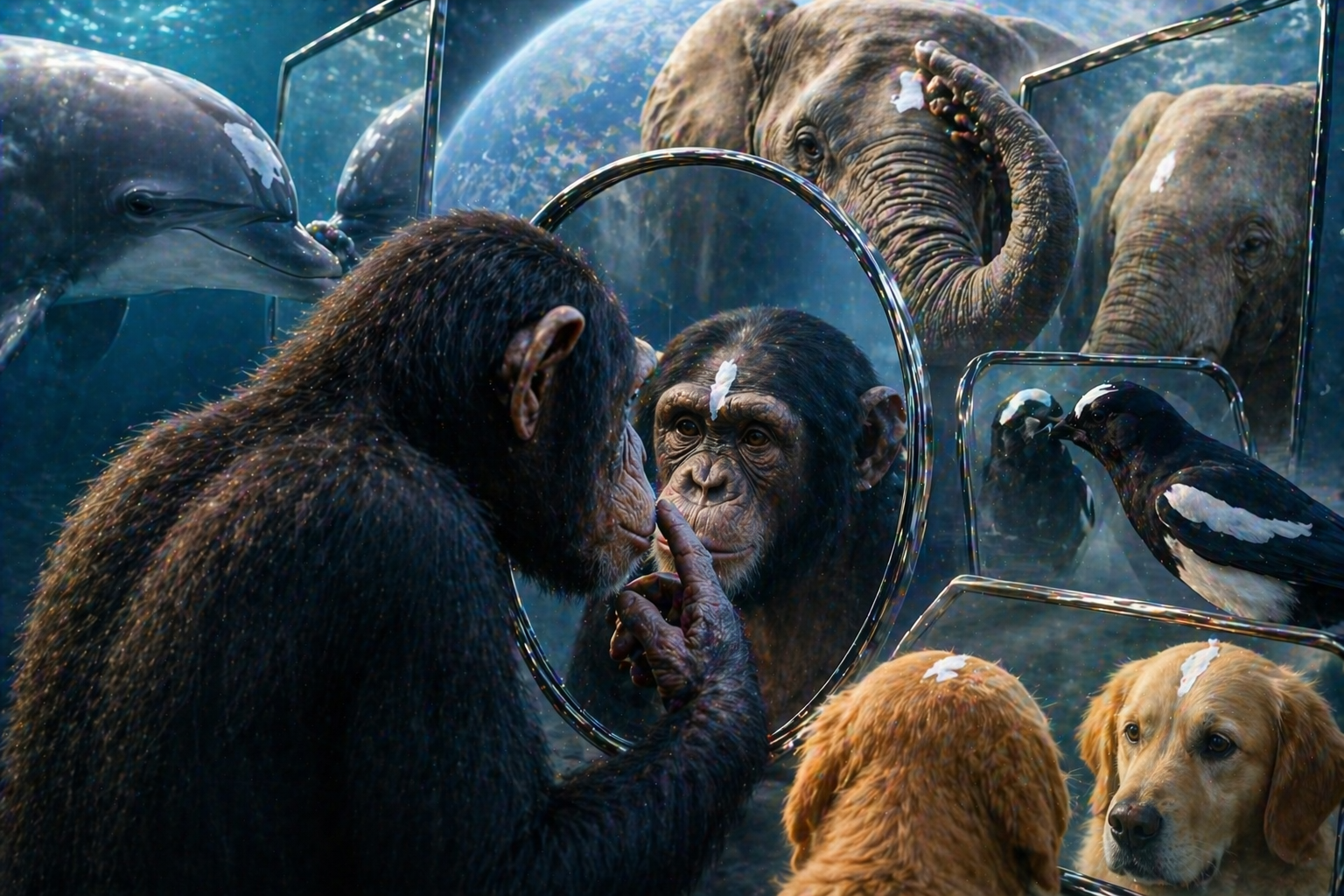
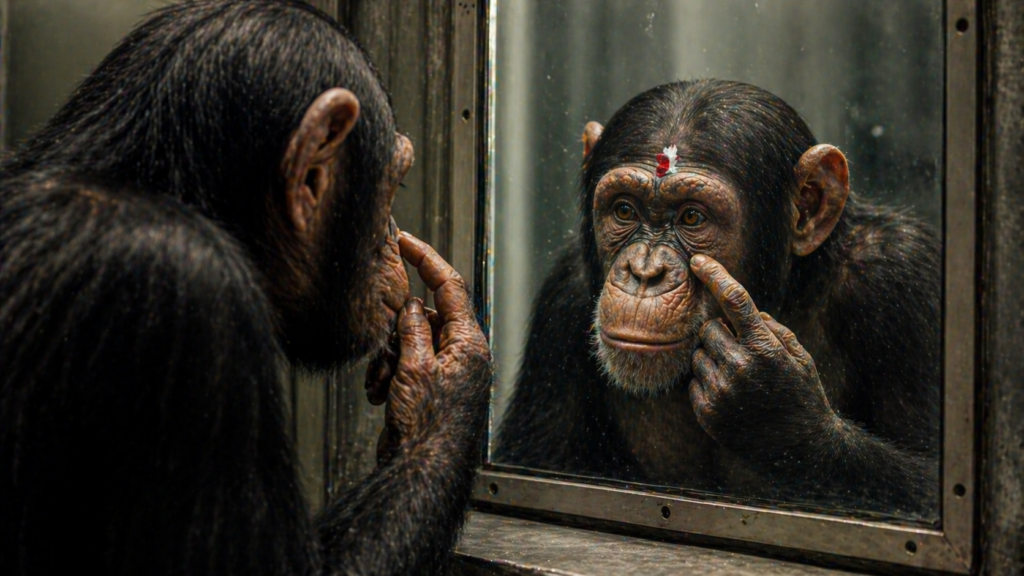
    animal mirror self awareness test

    1.1 What is the Mirror Test?

    The mirror test, developed by psychologist Gordon Gallup in 1970, is one of the most famous methods for studying self-awareness in animals.

    In this experiment, a visible mark is placed on an animal’s body without its knowledge. When the animal is placed in front of a mirror, researchers observe whether it attempts to inspect or touch the mark on its own body.

    If it does, this suggests a level of self-recognition—an ability once thought to be uniquely human.


    1.2 Which Animals Pass the Test?

    Only a few species have successfully passed the mirror test:

    • Chimpanzees: The first animals shown to recognize themselves
    • Elephants: Able to touch marks on their own bodies
    • Dolphins: Display self-exploratory behavior in mirrors
    • Magpies: One of the few bird species demonstrating self-awareness

    Interestingly, dogs and cats usually fail the test—not because they are unintelligent, but because they rely more on smell than vision.

    This highlights an important limitation:
    intelligence tests must match the sensory world of the animal being studied.


    2. Maze Experiments and Problem-Solving Skills

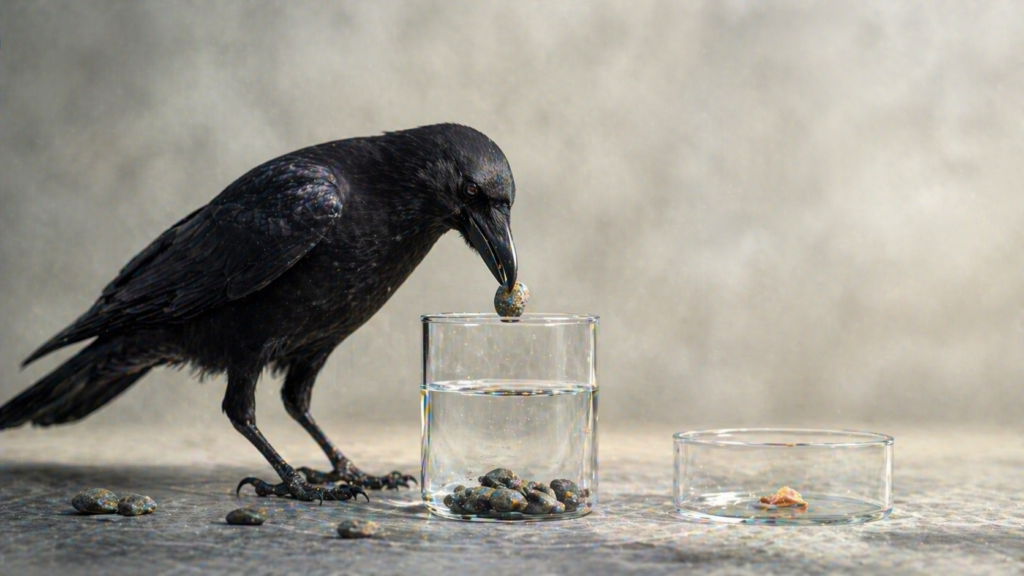
    crow problem solving intelligence experiment

    2.1 Learning Through Mazes

    Maze experiments are widely used to study learning and memory.

    In a typical setup:

    • Animals (often rats) navigate a maze
    • Food rewards are placed at the exit
    • Over time, animals learn faster routes

    This demonstrates trial-and-error learning, memory formation, and adaptation.


    2.2 Tool Use and Advanced Problem Solving

    Some animals go far beyond simple learning.

    One of the most famous examples is the New Caledonian crow.

    These birds have been observed:

    • Dropping stones into water to raise the level and access food
    • Using and even shaping tools to solve problems

    Primates such as chimpanzees and orangutans also use sticks and stones strategically.

    These behaviors suggest:

    • Understanding of cause and effect
    • Planning ability
    • Flexible thinking

    In other words, intelligence that goes beyond instinct.


    3. Animal Intelligence and Artificial Intelligence (AI)

    3.1 Learning Like Animals

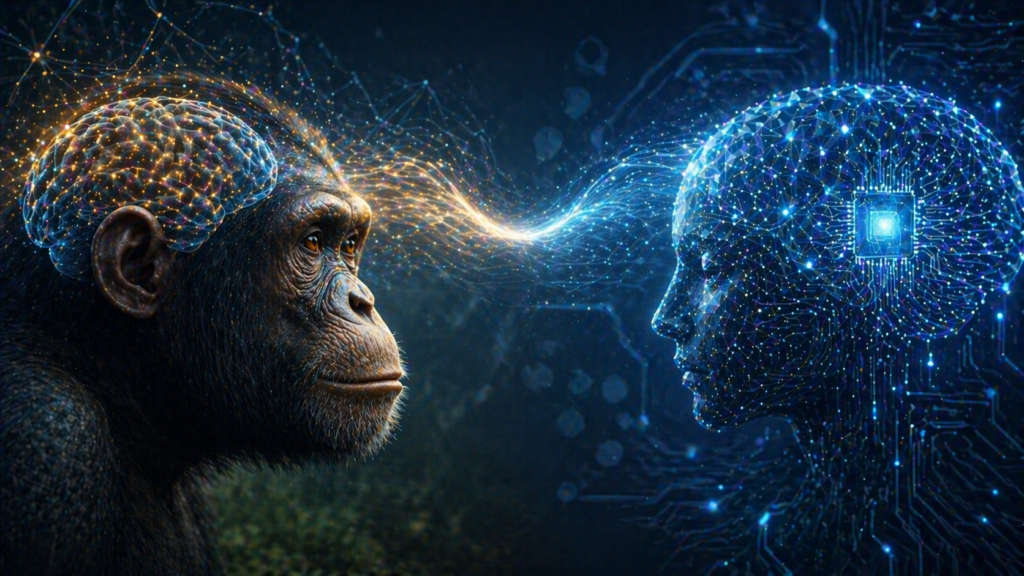
    Modern AI systems are increasingly inspired by how animals learn.

    One key example is reinforcement learning:

    • Animals learn through rewards and punishments
    • AI systems optimize decisions through similar feedback loops

    3.2 What AI Researchers Learn from Animals

    Animal cognition studies provide valuable insights:

    • Crow problem-solving → robotics navigation systems
    • Animal pattern recognition → computer vision improvements
    • Adaptive behavior → flexible AI decision-making

    The goal is clear:
    to build machines that learn as efficiently and naturally as living beings.


    4. What Animal Intelligence Research Really Means

    Studying animal intelligence is not just about curiosity—it reshapes how we define intelligence itself.

    It challenges assumptions such as:

    • Intelligence is uniquely human
    • Thinking requires language
    • Learning must follow a single model

    Instead, we discover that intelligence is:

    • Diverse
    • Context-dependent
    • Closely tied to environment and survival
    animal intelligence inspiring AI learning

    Conclusion

    Animals are not simply creatures of instinct.
    They learn, adapt, solve problems, and in some cases, even recognize themselves.

    Through mirror tests, maze experiments, and problem-solving studies, science continues to reveal the complexity of animal minds.

    At the same time, these discoveries are influencing the future of artificial intelligence—bridging biology and technology in unexpected ways.

    Perhaps the real question is not how intelligent animals are—
    but how narrow our definition of intelligence has been.

    Reader Question

    If an animal can solve problems, use tools, and even recognize itself—
    how different is its intelligence from ours?


    Do you think intelligence should be measured the same way for humans and animals?

    If animals think differently—not less—what does that say about our definition of intelligence?

    Related Reading


    If animals can think, learn, and even recognize themselves, where do we draw the line between human and non-human intelligence?
    In Can Humans Be the Moral Standard?, we question whether humans truly have the authority to define intelligence, morality, and value—especially when other species demonstrate forms of cognition we are only beginning to understand.


    If intelligence is not absolute but relative, shaped by environment and perception, are we measuring animals fairly at all?
    In Civilization and the “Savage Mind”: Relative Difference or Absolute Hierarchy?, we explore how intelligence has historically been judged through human-centered standards—and why this perspective may be fundamentally limited.


    References

    1. Griffin, D. R. (2001). Animal Minds: Beyond Cognition to Consciousness. University of Chicago Press.
    This work explores the cognitive and conscious experiences of animals, challenging traditional assumptions that animal behavior is purely instinctive. It provides a foundational framework for understanding self-awareness and intelligence across species.

    2. Pepperberg, I. M. (2008). Alex & Me. HarperCollins.
    Through her research with the African grey parrot Alex, Pepperberg demonstrates advanced language comprehension and reasoning abilities in birds, offering powerful evidence of non-human intelligence.

    3. Lake, B. M., et al. (2017). Building Machines That Learn and Think Like People.
    This study connects human and animal learning processes with artificial intelligence, showing how biological cognition inspires modern machine learning systems.