Tag: animal ethics

  • Fashion and Animal Ethics

    Fashion and Animal Ethics

    Ethical Fashion and the Conflict Over Traditional Materials

    In 2018, California became the first U.S. state to ban the sale of new fur products. Animal welfare organizations celebrated the decision, while many workers in the fur industry argued that their livelihoods were being threatened.

    A year later, luxury fashion brand Burberry announced that it would stop using fur in its collections. Rather than damaging its reputation, the decision strengthened its image among consumers increasingly concerned about sustainability and ethics.

    These examples reflect a growing global debate. Fashion has long relied on materials such as leather, fur, wool, silk, and feathers. Yet as awareness of animal welfare and environmental sustainability grows, many consumers are asking a difficult question:

    Can fashion remain both stylish and ethical?


    1. The Long History of Animal-Based Fashion

    Why Traditional Materials Became Popular

    For thousands of years, animal-derived materials served practical purposes.

    Fur protected people from harsh winters. Leather provided durable clothing, footwear, and tools. Wool offered warmth and flexibility long before synthetic fabrics existed.

    Over time, these materials became more than necessities. They evolved into symbols of luxury, status, and craftsmanship.

    Even today, many consumers prefer genuine leather products because of their durability and longevity. Supporters argue that high-quality natural materials often last longer than cheaper synthetic alternatives.

    Cultural and Economic Importance

    Traditional materials also support industries and communities around the world.

    Leather workers, shepherds, wool producers, and artisans often depend on these materials for their income. In some regions, animal-based fashion is closely tied to local heritage and cultural identity.

    As a result, calls to eliminate animal-derived materials can have economic consequences that extend beyond the fashion industry itself.

    artisans producing traditional leather and fur fashion products

    2. The Rise of Ethical and Vegan Fashion

    A Shift in Consumer Values

    Over the past decade, ethical fashion has moved from a niche movement into the mainstream.

    Many consumers now want products that align with their values regarding animal welfare, sustainability, and social responsibility.

    Fashion brands have responded by introducing alternatives to traditional materials, including:

    • Plant-based leather made from mushrooms, cactus, or pineapple fibers
    • Recycled synthetic materials
    • Bioengineered fabrics
    • Animal-free luxury products

    Several major fashion houses have phased out fur entirely, citing ethical concerns and changing consumer expectations.

    The Animal Welfare Argument

    Animal rights advocates argue that fashion should not depend on animal suffering.

    Investigations into some fur farms and industrial production systems have raised serious concerns about animal treatment. Critics argue that modern society no longer requires animal-based luxury products and therefore has a moral responsibility to pursue alternatives.

    From this perspective, ethical fashion is not merely a consumer preference but a reflection of evolving social values.

    designer showcasing sustainable vegan fashion materials

    3. Is Vegan Fashion Always Better?

    The Environmental Dilemma

    The debate becomes more complicated when environmental concerns enter the discussion.

    Many people assume that synthetic alternatives are automatically more sustainable. However, reality is often more complex.

    Artificial leather frequently contains petroleum-based plastics. Manufacturing and disposal can contribute to pollution and microplastic contamination.

    Meanwhile, some defenders of natural leather argue that it is biodegradable and can last for decades when properly maintained.

    This raises an important question:

    Should sustainability be measured by animal welfare alone, or by the full environmental lifecycle of a product?

    The Problem of Greenwashing

    Another challenge is “greenwashing”—when companies market products as environmentally friendly without providing meaningful evidence.

    Consumers increasingly demand transparency about sourcing, production methods, labor conditions, and environmental impact.

    As ethical fashion grows, scrutiny of corporate claims is likely to intensify.


    4. Fashion, Identity, and Consumer Responsibility

    Clothing as a Moral Statement

    Fashion is no longer viewed solely as a matter of appearance.

    For many people, purchasing decisions have become expressions of personal values. Choosing vegan products, recycled materials, or ethically sourced clothing allows consumers to align their purchases with broader beliefs about society and the environment.

    As a result, fashion choices increasingly function as ethical statements as well as style preferences.

    Can Consumers Change the Industry?

    Consumer behavior has already influenced major brands.

    Growing demand for ethical products has encouraged investment in sustainable materials, improved transparency, and greater attention to supply chains.

    Yet some critics argue that responsibility should not fall entirely on consumers. Governments, industry organizations, and corporations also play important roles in establishing standards and encouraging innovation.


    5. Finding a Balance Between Ethics and Practicality

    Beyond Simple Answers

    The conflict between traditional materials and ethical fashion is not easily resolved.

    Animal-based materials raise legitimate concerns about welfare and sustainability. At the same time, synthetic alternatives may introduce new environmental challenges.

    A balanced approach may involve:

    • Improving animal welfare standards
    • Developing innovative sustainable materials
    • Increasing supply-chain transparency
    • Supporting workers affected by industry transitions
    • Encouraging informed consumer choices

    Rather than framing the issue as a simple choice between good and bad, many experts advocate for a broader conversation about responsible production and consumption.


    Conclusion

    consumers comparing ethical and environmental impacts of fashion products

    The debate over fashion and animal ethics reflects larger questions about how modern societies balance tradition, innovation, sustainability, and morality.

    Animal-derived materials have a long history and continue to support industries around the world. At the same time, growing awareness of animal welfare and environmental challenges has encouraged consumers and brands to rethink long-standing practices.

    The future of fashion may not lie in choosing one side of the debate, but in finding ways to reduce harm while preserving creativity, quality, and cultural diversity.

    As technology advances and consumer values evolve, the most important question may no longer be what our clothes are made from, but what our choices say about the world we want to create.

    Reader Question

    Should animal welfare concerns outweigh centuries of tradition in fashion, even if doing so affects industries and communities that depend on animal-based materials?

    When ethical values, environmental sustainability, and economic realities point in different directions, what should consumers prioritize when making purchasing decisions?

    Related Reading

    If modern consumers increasingly judge products not only by quality but also by ethics, how should we decide whether a lifestyle choice is truly responsible or simply fashionable?

    In The Rise of Dietary Restrictions: Health Necessity or Modern Lifestyle Trend?, we explore how personal choices around food can reflect health concerns, ethical values, environmental awareness, and social identity.

    As societies continue debating the balance between tradition, innovation, and sustainability, how should industries adapt when long-standing practices come under ethical scrutiny?

    In Professionalism and Amateurism: Where Is the Boundary?, we examine how social expectations, cultural change, and evolving values reshape established industries and traditional ways of thinking.

    References

    1. Fletcher, Kate (2014). Sustainable Fashion and Textiles: Design Journeys

    One of the most influential books on sustainable fashion. It explores how environmental responsibility, ethical production, and innovative design can reshape the future of the fashion industry.

    2. Bennett, A., & Taylor, J. (2020). Ethical Fashion: The Movement for Sustainability and Animal Welfare

    Examines the growth of ethical fashion movements and the increasing role of animal welfare concerns in consumer decision-making and corporate strategy.

    3. PETA (People for the Ethical Treatment of Animals). Fashion Without Cruelty: The Case Against Animal Skins

    Presents arguments against the use of animal-derived materials and highlights campaigns encouraging the adoption of cruelty-free alternatives.

    4. Mintel Group (2022). Global Fashion Trends: Sustainability and Consumer Preferences

    Provides market research on how sustainability concerns are influencing consumer behavior and driving changes within the global fashion industry.

    5. Vogue Business (2021). The Rise of Vegan Fashion: Brands Embracing Animal-Free Products

    Analyzes the rapid growth of vegan fashion, the strategies adopted by luxury brands, and the challenges facing the animal-free fashion movement.

  • Can Humans Be the Moral Standard?

    Can Humans Be the Moral Standard?

    Rethinking Anthropocentrism in a Changing World

    1. Can Humans Alone Be the Measure of All Things?

    Human-centered worldview with nature and technology marginalized

    For centuries, human dignity, reason, and rights have stood at the center of philosophy, science, politics, and art.
    The modern world, in many ways, was built on the assumption that humans occupy a unique and privileged position in the moral universe.

    Yet today, that assumption feels increasingly fragile.

    Artificial intelligence imitates emotional expression.
    Animals demonstrate pain, memory, and cooperation.
    Ecosystems collapse under human-centered development.
    Even the possibility of extraterrestrial life forces us to question long-held hierarchies.

    At the heart of these shifts lies a single question:
    Is anthropocentrism—a human-centered worldview—still ethically defensible?


    2. The Critical View: Anthropocentrism as an Exclusive and Risky Framework

    2.1 Ecological Consequences

    The planet is not a human possession.
    Yet history shows that humans have treated land, oceans, and non-human life primarily as resources for extraction.

    Mass extinctions, deforestation, polluted seas, and climate crisis are not accidental outcomes.
    They are the logical consequences of placing human interests above all else.

    From this perspective, anthropocentrism appears less like moral leadership and more like systemic neglect of interdependence.

    2.2 Reason as a Dangerous Monopoly

    Human exceptionalism has often rested on language and rationality.
    But today, AI systems calculate, predict, and even create.
    Non-human animals—such as dolphins, crows, and primates—use tools, learn socially, and exhibit emotional bonds.

    If rationality alone defines moral worth, the boundary of “the human” becomes unstable.
    Anthropocentrism risks turning non-human beings into mere instruments rather than moral participants.

    2.3 The Fragility of “Human Dignity”

    Even within humanity, dignity has never been evenly distributed.
    The poor, the sick, the elderly, children, and people with disabilities have repeatedly been treated as morally secondary.

    This internal hierarchy raises an uncomfortable question:
    If anthropocentrism struggles to secure equal dignity among humans, can it credibly claim moral authority over all other beings?

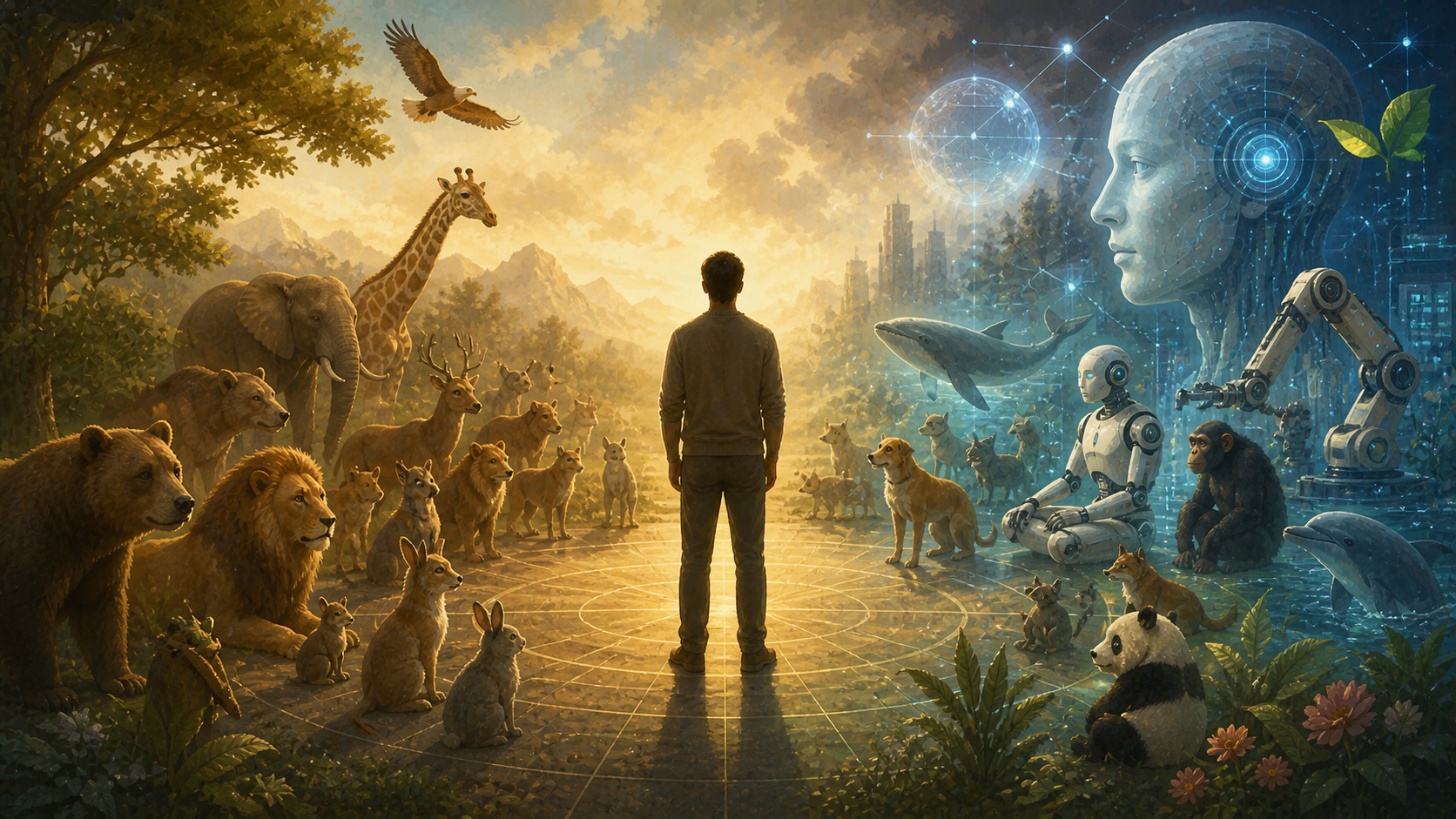
    Questioning anthropocentrism through human, animal, and AI coexistence

    3. The Defense: Anthropocentrism as the Foundation of Moral Responsibility

    3.1 Humans as Moral Agents

    Only humans, so far, have developed moral languages, legal systems, and ethical institutions.
    We are the ones who debate responsibility, regulate technology, and attempt to reduce suffering.

    Without a human-centered framework, it becomes unclear who is accountable for ethical decision-making.

    Anthropocentrism, in this view, is not about superiority—but about responsibility.

    3.2 Responsibility, Not Domination

    A human-centered ethic does not necessarily imply exclusion.
    On the contrary, environmental protection, animal welfare, and AI regulation have all emerged within anthropocentric moral reasoning.

    Humans protect others not because we are above them, but because we recognize our capacity to cause harm—and our obligation to prevent it.

    3.3 An Expanding Moral Horizon

    History shows that the category of “the human” has never been fixed.
    Once limited to a narrow group, it gradually expanded to include women, children, people with disabilities, and non-Western populations.

    Today, that expansion continues—toward animals, ecosystems, and potentially artificial intelligences.

    Anthropocentrism, then, may not be a closed doctrine, but an evolving moral platform.


    4. Voices from the Ethical Frontier

    An Ecological Philosopher

    “We have long classified the world using human language and values.
    Yet countless silent others remain. Ethics begins when we learn how to listen.”

    An AI Ethics Researcher

    “The key issue is not whether non-humans ‘feel’ like us,
    but whether we are prepared to take responsibility for the systems we create.”


    Conclusion: From Human-Centeredness to Responsibility-Centered Ethics

    Human responsibility within interconnected ethical relationships

    Anthropocentrism has shaped human civilization for millennia.
    It enabled rights, laws, and moral reflection.

    But it has also justified exclusion, exploitation, and ecological collapse.

    The challenge today is not to abandon anthropocentrism entirely,
    but to redefine it—from a doctrine of human superiority into a language of responsibility.

    When we question whether humans should remain the moral standard,
    we are already stepping beyond ourselves.

    And perhaps, in that very act of self-questioning,
    we come closest to what it truly means to be human.

    A Question for You

    Do you believe humans should remain the center of moral judgment,
    or is it time to expand our ethical responsibility beyond ourselves?

    Related Reading

    The question of human-centered ethics becomes even more complex in
    If AI Can Predict Human Desire, Is Free Will an Illusion?,
    where human autonomy is challenged by intelligent systems.

    The relationship between human dominance and hidden control is also explored in
    The Transparency Society: Foundation of Trust or Culture of Surveillance?,
    highlighting how systems of power can reshape moral responsibility.

    References

    1. Singer, P. (2009). The Expanding Circle: Ethics, Evolution, and Moral Progress. Princeton, NJ: Princeton University Press.

    This book traces how moral concern has gradually expanded beyond kin and tribe to include all humanity and, potentially, non-human beings. It provides a key framework for understanding ethical progress beyond strict anthropocentrism.


    2. Singer, P. (1975). Animal Liberation. New York: HarperCollins.

    A foundational work in animal ethics, this book challenges human-centered morality by arguing that the capacity to suffer—not species membership—should guide ethical consideration. It remains central to debates on anthropocentrism and moral inclusion.


    3. Haraway, D. (2003). The Companion Species Manifesto: Dogs, People, and Significant Otherness. Chicago, IL: University of Chicago Press.

    Haraway rethinks human identity through interspecies relationships, arguing that ethics emerges from co-existence rather than human superiority. The work offers a relational alternative to traditional human-centered worldviews.


    4. Malabou, C. (2016). Before Tomorrow: Epigenesis and Rationality. Cambridge: Polity Press.

    This philosophical work critiques the dominance of rationality as the defining human trait and explores how biological and cognitive plasticity reshape ethical responsibility. It supports a reconsideration of human exceptionalism in contemporary thought.


    5. Braidotti, R. (2013). The Posthuman. Cambridge: Polity Press.

    Braidotti presents a systematic critique of anthropocentrism and proposes posthuman ethics grounded in responsibility, interdependence, and ecological awareness. The book is essential for understanding ethical frameworks beyond human-centered paradigms.

  • The Cultural Meaning Between Companion Animals and Livestock

    The Cultural Meaning Between Companion Animals and Livestock

    How culture determines whether animals become companions or commodities?

    1. How Culture Draws the Line Between Animals

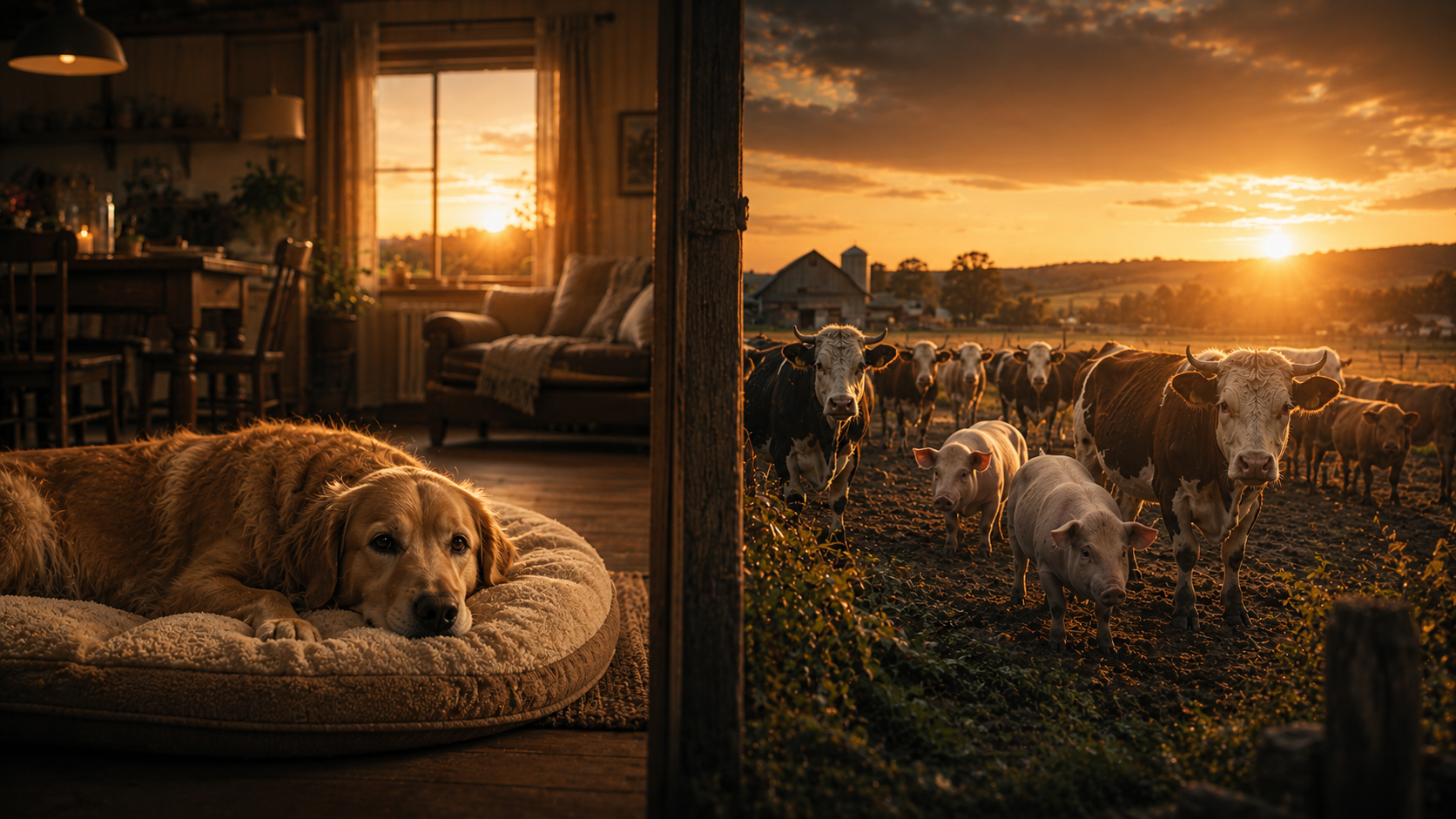
    A pet dog indoors contrasted with farm animals in the distance

    The animals we live alongside often fall into two broad categories.
    Some share our homes and emotional lives, while others provide food, labor, or materials essential for survival.

    At first glance, this difference seems purely functional.
    However, culture plays a far greater role than biology alone.

    In many societies, people treat the same animal as a beloved companion,
    while in others, they raise it as livestock.
    As a result, animals do not carry fixed meanings by nature.

    Instead, humans assign them value through social norms and cultural choices.
    In this sense, the distinction between companion animals and farm animals reveals the cultural meaning of pets and livestock, shaped not by biology, but by social values.


    2. Companion Animals: Animals as Family Members

    In many contemporary societies, companion animals—especially dogs and cats—are treated as members of the family rather than as property.

    Emotional Bonds

    Companion animals offer emotional comfort, reduce loneliness, and contribute to psychological well-being.
    Numerous studies show that interaction with pets lowers stress hormones and increases feelings of happiness and security.

    Social Identity

    For some people, the type of animal they keep—and even the animal’s personality—becomes a way of expressing their own identity and lifestyle.
    In this sense, companion animals function as an extension of the self.

    Legal and Institutional Change

    In several countries, animals are no longer legally defined as mere property, but as living beings deserving protection.
    This shift reflects changing moral attitudes toward animals and their place in society.


    3. Livestock: The Foundation of Survival and Economy

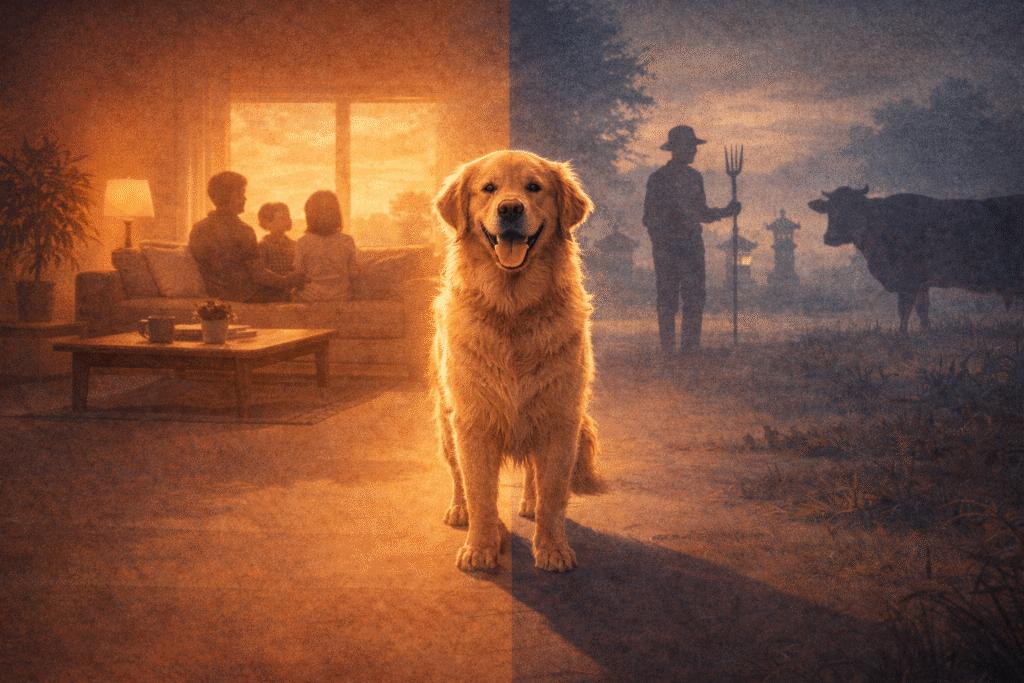
    The same animal shown as a pet in one culture and livestock in another

    Livestock, by contrast, have played a central role in the development of human civilization.

    Food Production

    Animals such as cattle, pigs, and chickens have long served as vital sources of protein, forming the backbone of agricultural societies.

    Labor and Energy

    Before industrialization, animals like horses, oxen, and donkeys were essential sources of labor—plowing fields, transporting goods, and powering economies.

    Materials for Daily Life

    Wool, leather, milk, and other animal-derived resources have shaped clothing, housing, and everyday necessities.

    Livestock have historically been valued for their productivity and economic function. Yet even this meaning is now being questioned and reshaped.


    4. Blurred Boundaries: One Animal, Different Cultures

    One of the most revealing aspects of human–animal relationships is how dramatically meanings shift across cultures.

    Dogs

    In many Western societies, dogs are celebrated as “humanity’s best friend.”
    In other regions, they have historically been raised for food.

    Rabbits

    In parts of Europe, rabbits exist simultaneously as pets, food animals, and storybook characters—occupying multiple symbolic roles at once.

    Cattle

    In India, cows are sacred and protected. Elsewhere, they are central livestock animals raised primarily for meat and dairy.

    These examples illustrate a crucial point: animals do not carry fixed meanings. Culture assigns their status.


    5. Contemporary Shifts: Rethinking the Boundary

    In modern societies, the line between companion animals and livestock is increasingly unstable.

    Animal Welfare Movements

    There is growing recognition that livestock are sentient beings capable of suffering.
    “Animal welfare farming” reflects an effort to balance production with ethical responsibility.

    New Forms of Companionship

    Animals once considered strictly livestock—such as pigs or chickens—are now sometimes kept as companions, especially in urban settings.

    Ethical Consumption

    As emotional bonds with companion animals deepen, some people begin questioning the moral implications of consuming other animals.


    This has contributed to the rise of vegetarian and vegan lifestyles.

    Human–animal relationships are no longer merely practical—they are ethical and philosophical.


    Conclusion: Animals as Cultural Mirrors

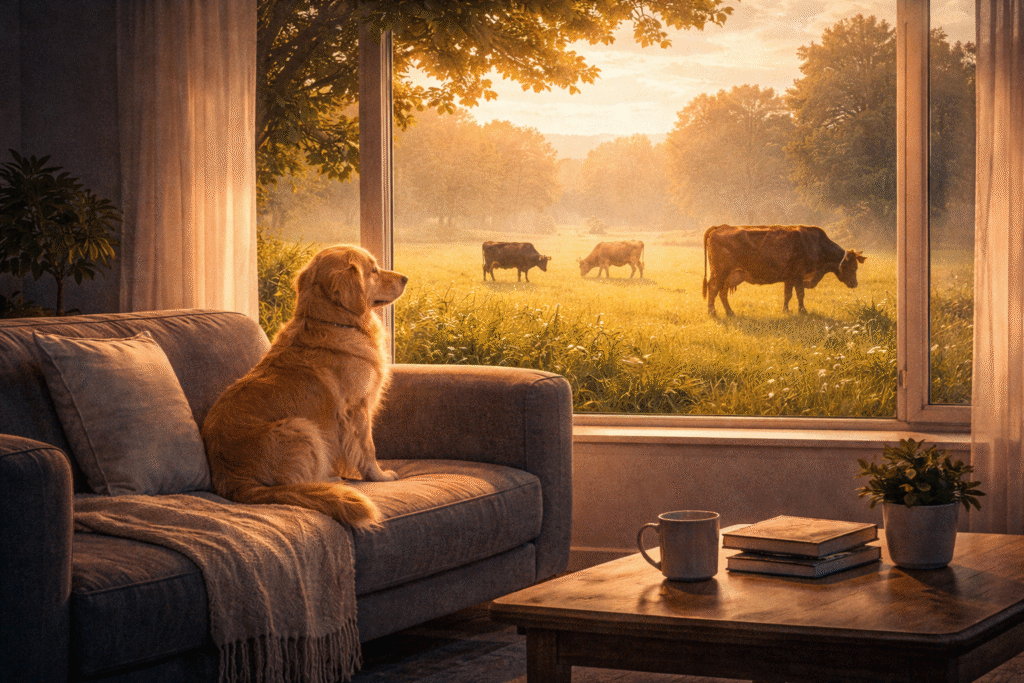
    A human quietly facing an animal, reflecting on coexistence

    The distinction between companion animals and livestock is not rooted in the animals themselves, but in human culture, values, and historical context.

    Some animals become friends.
    Some become resources.
    Some occupy both roles at once.

    As societies evolve, so do these categories.

    Today, we are increasingly called to reconsider what it means to live alongside animals—not only as users of their labor or bodies, but as co-inhabitants of a shared world.

    When we encounter a dog on the street or a cow on a farm, we are not simply seeing an animal.
    We are seeing a reflection of our own culture, ethics, and choices.

    A Question for Readers

    Why do some animals become beloved family members while others become sources of food or labor?

    And if these distinctions are shaped largely by culture, what does that reveal about human values and moral boundaries?

    Related Reading

    Human societies continuously redefine the moral status of non-human life.
    Can Nature Have Rights Above Humans? explores how ecological ethics challenges traditional human-centered perspectives.

    The way societies classify living beings often shapes how they are treated and valued.
    The Power of Naming examines how language and categorization influence social perception and power.

    References

    Serpell, J. (1996). In the Company of Animals: A Study of Human–Animal Relationships. Cambridge: Cambridge University Press.
    → Explores the historical and cultural diversity of human–animal relationships, offering a foundational framework for understanding why animals occupy different social roles.

    Digard, J.-P. (1988). L’homme et les animaux domestiques: Anthropologie d’une passion. Paris: Fayard.
    → An anthropological study of domestication, emphasizing that animals hold symbolic and social meanings beyond their economic functions.

    Franklin, A. (1999). Animals and Modern Cultures: A Sociology of Human–Animal Relations in Modernity. London: SAGE Publications.
    → Examines how modern societies assign animals different statuses—companions, livestock, or commodities—within changing cultural contexts.