
The Hidden Social World Beneath the Water
Can fish recognize each other?
Modern science increasingly suggests the answer is yes.
Fish remember individuals, form social relationships, and even build systems of cooperation beneath the water.
There was a time when I kept five goldfish and three loaches in a small aquarium.
Whenever food appeared, they gathered together immediately.
Sometimes, it even felt as though they were greeting one another.
At first glance, fish may seem like simple creatures drifting silently through water. But modern research suggests something far more fascinating:
Fish can recognize individuals, remember past interactions, protect territories, and even form surprisingly complex social relationships.
In other words, beneath the quiet surface of the aquarium exists a hidden social world.
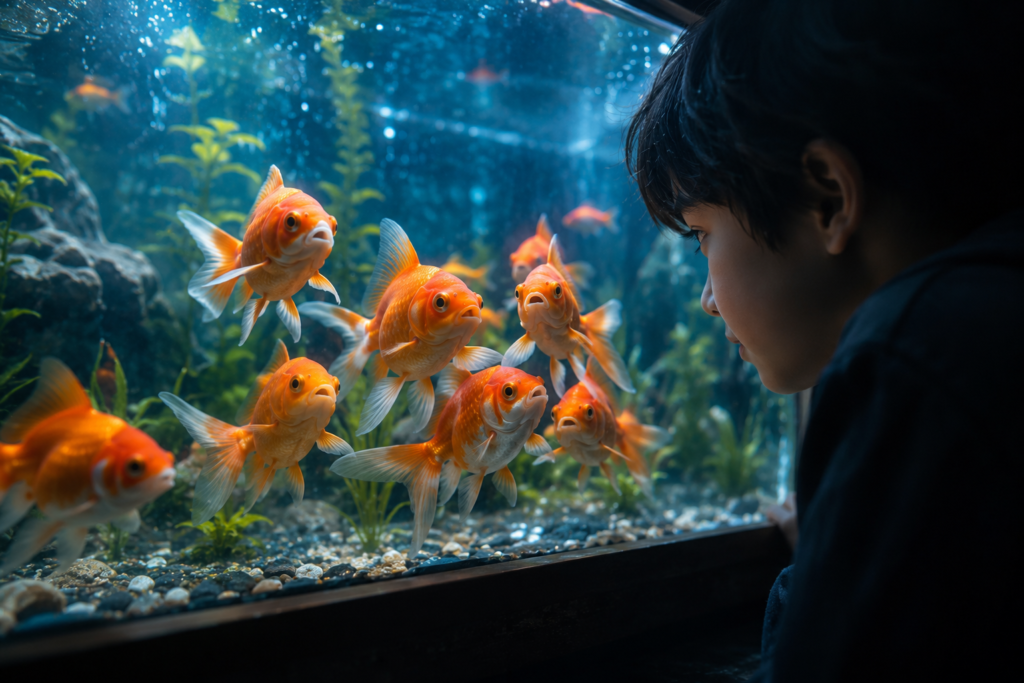
1. Fish Can Recognize Specific Individuals
Fish do more than simply distinguish members of their own species. Many species can identify and remember particular individuals.
For example, clownfish can recognize members of their own group and respond differently depending on whether another fish has previously behaved cooperatively or aggressively.
Scientists have discovered that fish use both visual cues—such as color patterns and body shapes—and chemical signals in the water to recognize others.
Some fish even remember specific markings and later respond consistently when encountering the same individual again. This ability demonstrates not only perception, but also learning and memory.
This challenges the old assumption that fish act only through instinct. Their behavior often reflects experience-based decision making.
2. Territorial Fish: Guardians of Their Own Space
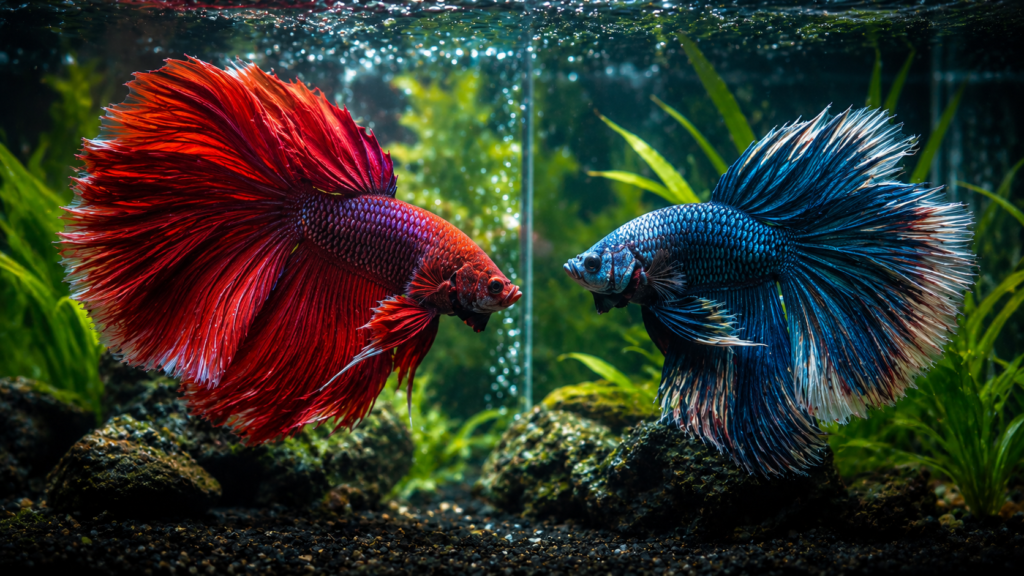
Many fish species establish territories and actively defend them.
One of the best-known examples is the betta fish. When another betta enters its territory, it immediately displays aggressive behavior to protect its space.
But this is not merely random aggression.
Territorial behavior increases survival chances by protecting food resources, shelter, and breeding opportunities. In nature, space often means survival.
A useful way to imagine this is:
Betta fish behave like underwater guardians, patrolling invisible borders and warning intruders to stay away.
Interestingly, researchers have also observed that some territorial fish adjust their aggression based on past encounters. Fish that repeatedly lose fights may become more cautious later, suggesting social memory and adaptive learning.
3. Cooperation and Mutual Benefit Underwater
Fish are not always competitors. Many species cooperate with one another in remarkable ways.
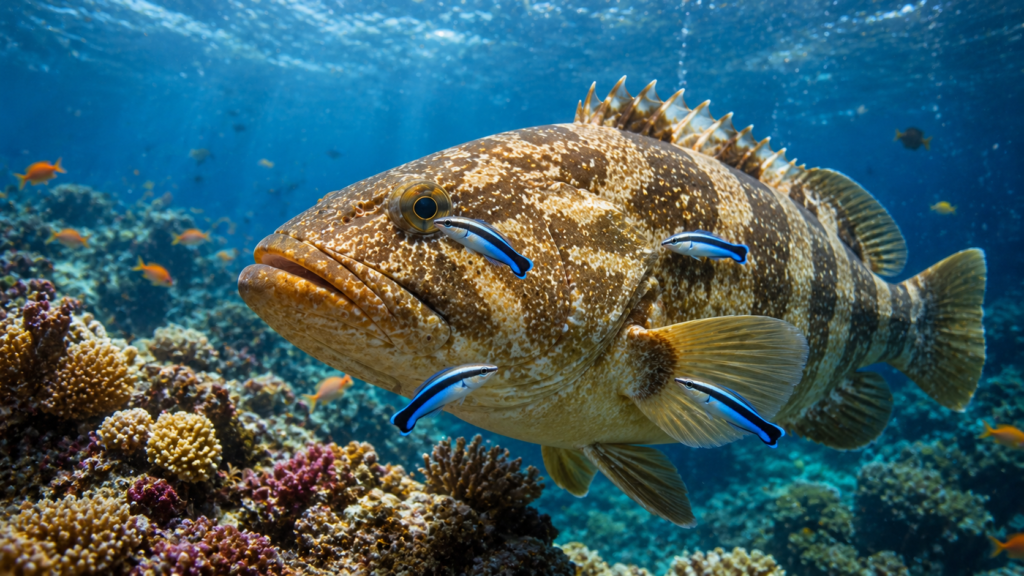
Cleaner fish provide one of the most famous examples.
These small fish remove parasites and dead tissue from the bodies of much larger fish. The larger fish allow them to approach safely, despite easily being able to eat them.
This relationship benefits both sides:
- Cleaner fish receive food.
- Larger fish stay healthier.
What makes this especially fascinating is that cleaner fish appear to maintain “honest” behavior to preserve trust. If they cheat by biting healthy tissue instead of parasites, larger fish may avoid them in future interactions.
This suggests a surprisingly sophisticated social system involving memory, reputation, and repeated interaction.
In some ways, this resembles human business partnerships built on trust and mutual benefit.
4. Fish Learn from Social Experience
The social lives of fish are shaped not only by instinct, but also by learning.
Studies involving guppies have shown that fish remember the previous behavior of others and modify future interactions accordingly.
For example, fish that displayed aggressive behavior in earlier encounters were later treated more cautiously or avoided by others.
This indicates that fish can develop social strategies based on experience.
Researchers studying animal cognition increasingly argue that intelligence exists on a spectrum across species. Fish may not think like humans, but they clearly process information, adapt behavior, and respond to social environments in meaningful ways.
Modern neuroscience has even revealed that fish possess surprisingly capable nervous systems that support learning, navigation, stress responses, and social recognition.
Conclusion: Fish Are More Social Than We Think
An aquarium may appear peaceful and simple from the outside.
But beneath the surface, fish are constantly communicating, remembering, negotiating, competing, and cooperating.
They recognize familiar individuals.
They defend territories.
They build cooperative relationships.
They learn from past social experiences.
The more scientists study fish behavior, the clearer it becomes that fish are not passive creatures driven only by instinct.
They are social beings living within dynamic underwater communities.
Perhaps the next time we watch fish swimming quietly through water, we may begin to notice something deeper:
a hidden society moving silently beneath the surface.
A Question for Readers
Have you ever watched an animal closely enough to feel that it recognized you back?
Perhaps intelligence appears in more forms than we usually imagine.
Related Reading
The growing recognition that fish possess memory, cooperation, and social awareness challenges the traditional assumption that only humans and higher mammals form emotionally meaningful bonds. This broader understanding of interspecies relationships connects naturally with Can Pets Improve Your Health? The Science of the Human–Animal Bond, which explores how interactions between humans and animals can profoundly influence emotional stability, stress reduction, and overall well-being.
At the same time, the question of whether fish possess forms of social intelligence also relates to a deeper philosophical issue: how humans define intelligence, morality, and superiority among living beings. This ethical perspective is further explored in Can Humans Be the Moral Standard?, which examines whether human-centered definitions of value and intelligence are sufficient for understanding the wider living world.
References
- Fish Cognition and Behavior
This academic volume explores learning, memory, problem-solving, and social behavior in fish. It challenges the traditional belief that fish possess only primitive cognitive abilities and demonstrates that many fish species show advanced behavioral flexibility and social recognition. - Sociality: The Behaviour of Group-Living Animals
This book examines how animals living in groups develop communication systems, cooperation, and social hierarchies. The sections involving fish behavior help explain how underwater social networks emerge through repeated interactions and adaptive learning. - Cleaner Fish Mutualism Research
This influential research analyzes the cooperative relationship between cleaner fish and larger fish species. It highlights concepts such as trust, reputation, and reciprocal benefit, suggesting that social intelligence exists even in relatively small-brained animals.