Ancient Healing Traditions That Still Influence Us Today
Modern medicine is often associated with advanced technology, scientific research, and sophisticated hospitals.
Yet the foundations of healing began thousands of years ago.
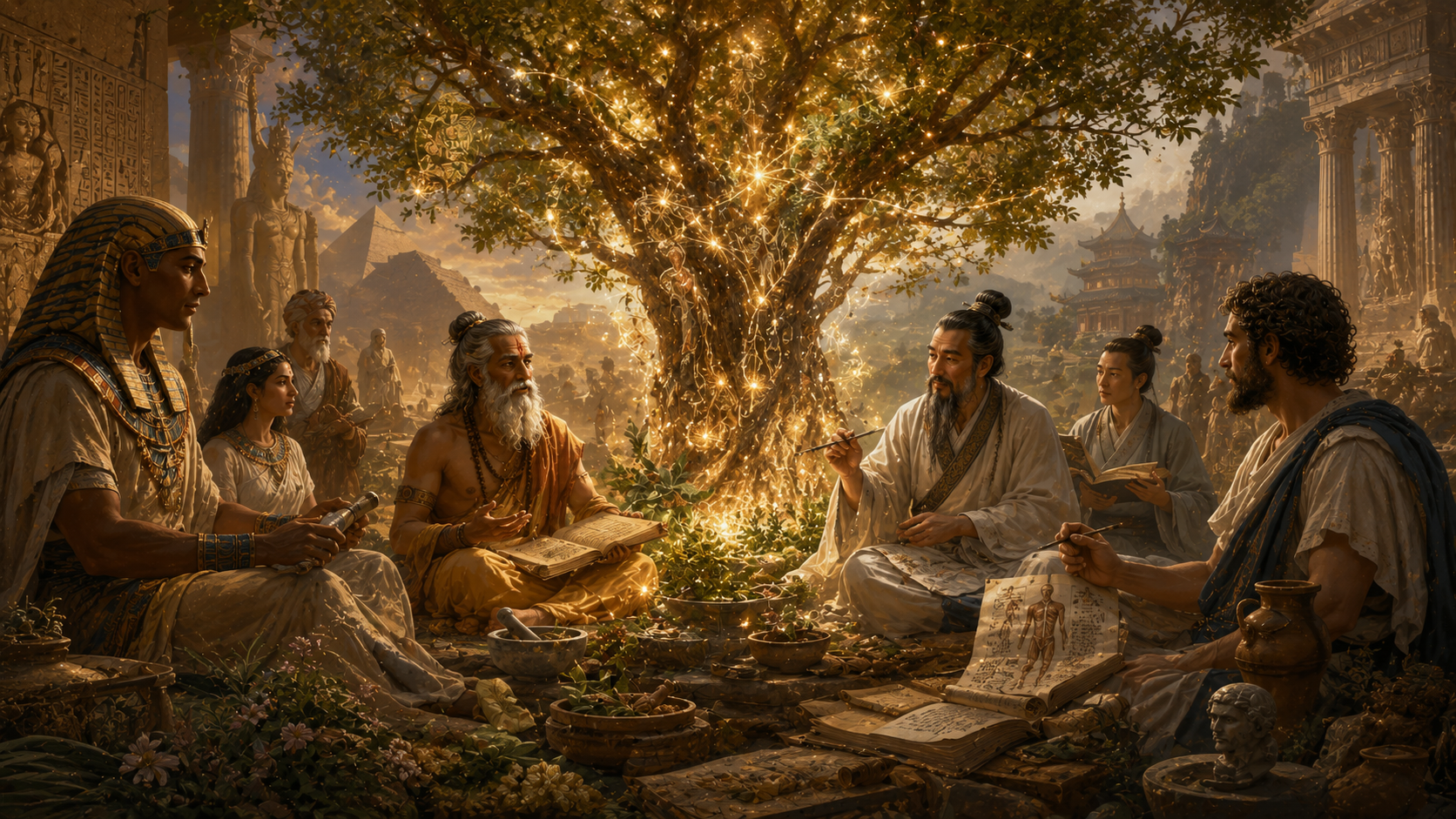
Long before laboratories and pharmaceuticals existed, people sought ways to understand illness, relieve pain, and preserve health. Ancient civilizations experimented with herbs, observed the human body, developed medical theories, and created surprisingly sophisticated systems of healthcare.
Although these traditions emerged in different parts of the world, many shared a common goal: understanding the relationship between human beings, nature, and health.
The story of ancient medicine is not merely a history of treatments. It is a story of humanity’s enduring effort to understand life itself.
1. Ancient Egypt: Where Science and Spirituality Met
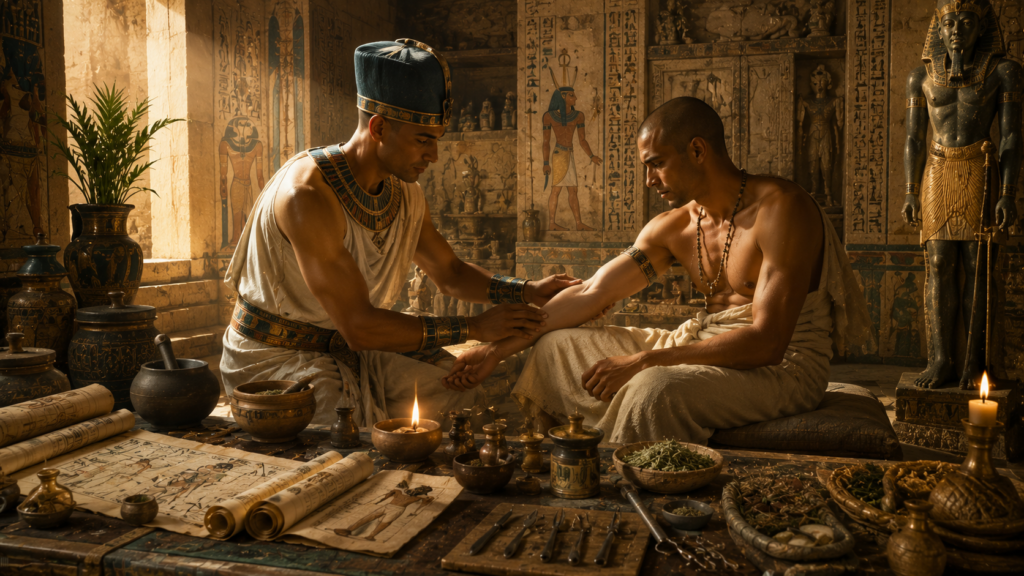
Ancient Egyptian medicine was deeply connected to religion.
Many Egyptians believed illness could result from spiritual forces or divine displeasure. As a result, healing often combined practical treatments with religious rituals.
Yet Egyptian medicine was also remarkably advanced for its time.
The famous Edwin Smith Papyrus contains detailed descriptions of injuries, surgical procedures, and anatomical observations. Unlike purely mystical texts, it demonstrates a surprisingly rational approach to diagnosing and treating patients.
Egyptian healers used natural substances such as:
- Honey
- Garlic
- Opium
- Plant extracts
Many of these ingredients possess genuine medicinal properties recognized even today.
Archaeological evidence also suggests that Egyptians practiced early forms of dentistry, including dental prosthetics found in mummies.
One particularly fascinating aspect of Egyptian medicine was its emphasis on the heart and blood vessels. Egyptian physicians recognized the importance of pulse observation, laying foundations for diagnostic methods still used in modern healthcare.
2. Ancient India and Ayurveda: The Balance of Body and Mind
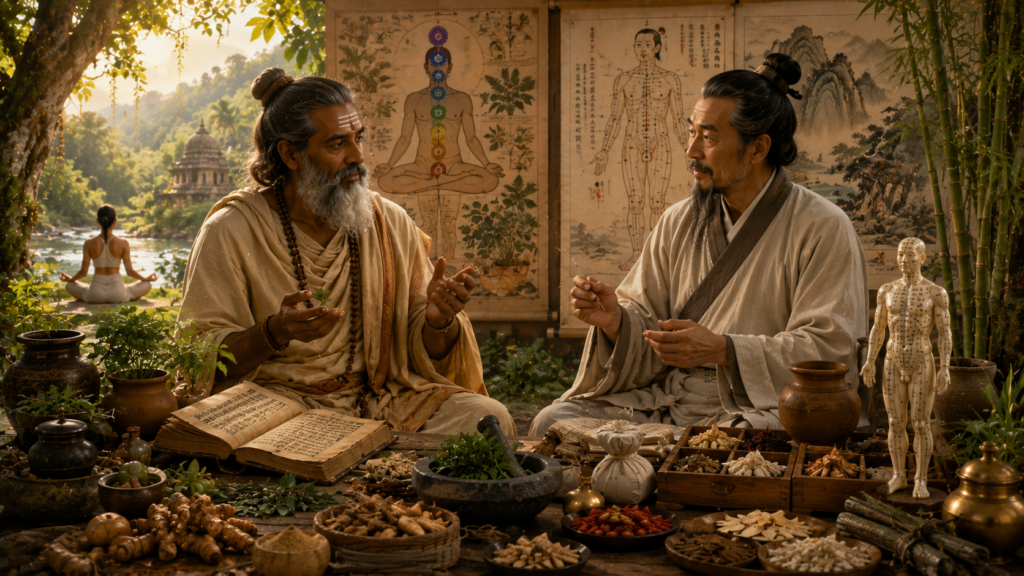
While Egyptian medicine focused on anatomy and practical treatment, ancient Indian medicine developed a broader philosophy of health.
Ayurveda, one of the world’s oldest medical systems, views health as a balance between body, mind, and environment.
According to Ayurvedic principles, every individual possesses a unique combination of three fundamental energies, known as doshas:
- Vata
- Pitta
- Kapha
Illness occurs when these forces become imbalanced.
Rather than treating disease alone, Ayurveda emphasizes prevention through lifestyle choices, nutrition, exercise, and mental well-being.
Treatment often included:
- Herbal medicine
- Dietary guidance
- Meditation
- Yoga
Interestingly, many Ayurvedic practices have gained global popularity in recent decades.
Yoga, once part of an ancient healing philosophy, is now practiced worldwide as a method of promoting physical and mental health.
3. Ancient China: Harmony and Preventive Medicine
Traditional Chinese Medicine developed around the concepts of balance, energy, and harmony.
According to Chinese medical philosophy, health depends on the proper flow of Qi (life energy) and the balance of Yin and Yang.
Disease was viewed not simply as a physical problem, but as a disruption of the body’s natural equilibrium.
This perspective gave rise to treatments such as:
- Acupuncture
- Herbal medicine
- Therapeutic exercise
- Dietary regulation
One of the most influential texts in Chinese medical history is the Huangdi Neijing (The Yellow Emperor’s Inner Canon).
Written over two thousand years ago, it established many principles that continue to influence Traditional Chinese Medicine today.
Perhaps one of its most modern ideas was the emphasis on prevention.
Ancient Chinese physicians believed the best doctor was not the one who cured disease, but the one who prevented illness before it appeared.
This philosophy continues to resonate strongly in modern public health and preventive medicine.
4. Ancient Greece and Rome: The Beginning of Scientific Medicine
Ancient Greece introduced one of the most important shifts in medical history.
Rather than explaining disease primarily through divine intervention, Greek physicians increasingly sought natural causes.
At the center of this transformation was Hippocrates, often called the “Father of Medicine.”
Hippocrates argued that illness resulted from natural processes rather than supernatural punishment.
This seemingly simple idea fundamentally changed medical thinking.
His ethical principles continue to influence healthcare today through the Hippocratic Oath, which remains a symbol of medical responsibility.
The Romans later expanded these ideas by focusing on public health.
They constructed:
- Aqueducts
- Sewage systems
- Public baths
- Urban sanitation infrastructure
These innovations significantly improved hygiene and reduced the spread of disease.
Long before modern epidemiology existed, the Romans recognized that public health depended on clean water and healthy living environments.
5. What Ancient Medicine Still Teaches Us
Although modern medicine relies heavily on scientific evidence and advanced technology, many ancient insights remain surprisingly relevant.
Prevention Matters
Egyptian, Indian, Chinese, and Greek traditions all emphasized preventing illness rather than merely treating it.
Today, preventive medicine remains one of the most effective healthcare strategies.
Health Is More Than the Absence of Disease
Ancient medical systems often viewed health as a state of balance involving body, mind, and environment.
Modern wellness research increasingly supports this broader perspective.
Nature Continues to Inspire Medicine
Many modern drugs originated from plants and natural substances first used in traditional healing practices.
Ancient experimentation laid the groundwork for future pharmaceutical discoveries.
Medicine Is Also a Cultural Story
Different civilizations developed unique ways of understanding health, yet many arrived at remarkably similar conclusions about balance, prevention, and healthy living.
Conclusion: Ancient Wisdom in a Modern World
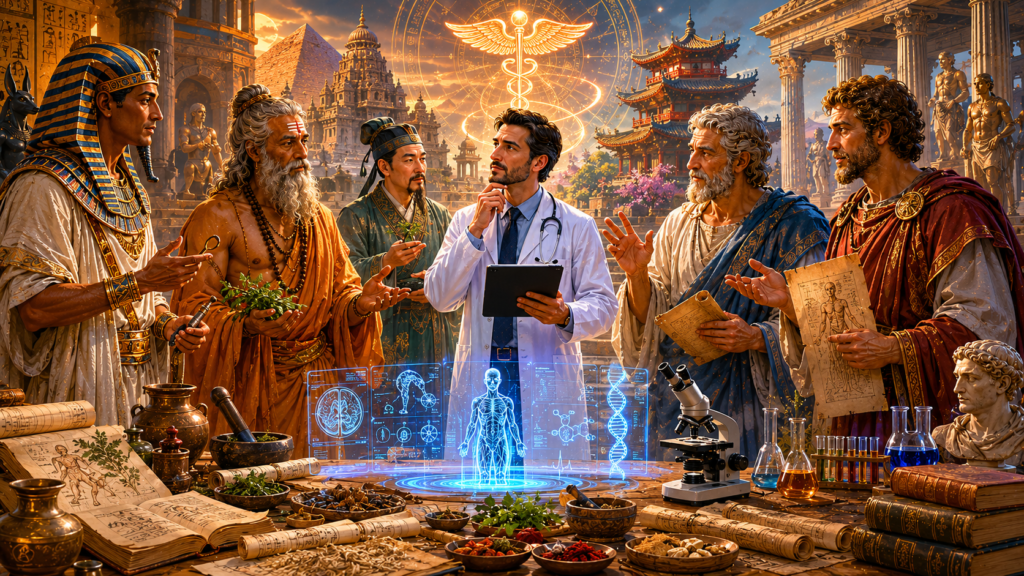
Ancient medicine is far more than a collection of outdated remedies.
It represents humanity’s first attempts to understand the body, relieve suffering, and improve quality of life.
Although modern medicine has transformed healthcare through scientific discovery, many of its fundamental questions remain the same:
What causes illness?
How can health be preserved?
What does it mean to live well?
Across Egypt, India, China, Greece, and Rome, ancient healers sought answers to these questions using the knowledge available to them.
Their ideas continue to echo through modern hospitals, wellness practices, preventive medicine, and healthcare ethics.
The history of medicine reminds us that progress is rarely created from nothing.
It is often built upon thousands of years of observation, curiosity, and human wisdom.
A Question for Readers
If you could travel back in time and observe one ancient medical tradition firsthand, which would you choose: Egyptian healing practices, Ayurveda, Traditional Chinese Medicine, or Greek medicine?
Perhaps understanding how past civilizations approached health can help us reflect on how we define well-being in the modern world.
Related Reading
Ancient medical traditions reveal that people across different civilizations sought not only to cure disease, but also to understand what it means to live a healthy and meaningful life. This broader relationship between well-being, nature, and human experience connects naturally with Can Pets Improve Your Health? The Science of the Human–Animal Bond, which explores how physical and emotional health can be influenced by our connections with the living world around us.
At the same time, ancient healing systems often reflected deeper cultural beliefs about human nature, knowledge, and the organization of society. This perspective is further explored in Can Humans Be the Moral Standard?, which examines how different civilizations have defined value, wisdom, and humanity, and whether human-centered assumptions remain sufficient in an increasingly interconnected world.
References
1. Majno, Guido. The Healing Hand: Man and Wound in the Ancient World. Harvard University Press, 1975.
This classic work explores medical practices in ancient Egypt, Greece, and Rome. It demonstrates how early physicians relied on observation, surgery, and practical experience, laying foundations for many principles of modern medicine.
2. David, Rosalie. Medicine in Ancient Egypt. British Museum Press, 2000.
An in-depth examination of Egyptian medical knowledge, including surgery, herbal remedies, and religious healing practices. The book highlights the surprisingly sophisticated nature of healthcare in one of the world’s earliest civilizations.
3. Kaptchuk, Ted J. The Web That Has No Weaver: Understanding Chinese Medicine. McGraw-Hill, 2000.
One of the most influential introductions to Traditional Chinese Medicine. It explains concepts such as Qi, Yin-Yang balance, and holistic healing from both historical and cultural perspectives.
4. Jouanna, Jacques. Greek Medicine: From Hippocrates to Galen. Brill, 2012.
This book examines the development of Greek medical thought and the transition from supernatural explanations of disease to naturalistic and observational approaches that shaped Western medicine.
5. Lad, Vasant. The Complete Book of Ayurvedic Home Remedies. Three Rivers Press, 1998.
A practical introduction to Ayurveda and its principles of balance, prevention, and holistic health. The book illustrates how ancient Indian medicine continues to influence modern wellness practices worldwide.