How Human Memory Differs from Artificial Intelligence
Memory is one of the most remarkable abilities of the human mind.
It allows us to recognize familiar faces, recall childhood experiences, learn new skills, and build our personal identities over time. Our memories are not simply collections of stored facts—they are woven together with emotions, relationships, and life experiences.
Artificial intelligence also stores and uses information. Modern AI systems can recognize images, translate languages, generate conversations, and solve increasingly complex problems.
At first glance, AI may appear to “remember” much like humans do.
However, beneath the surface, the two systems operate in fundamentally different ways.
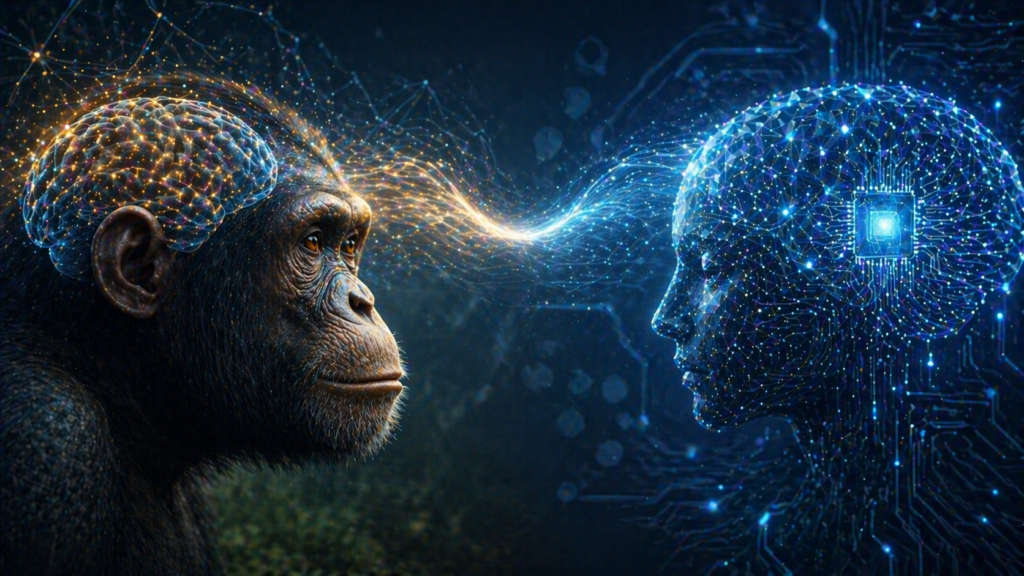
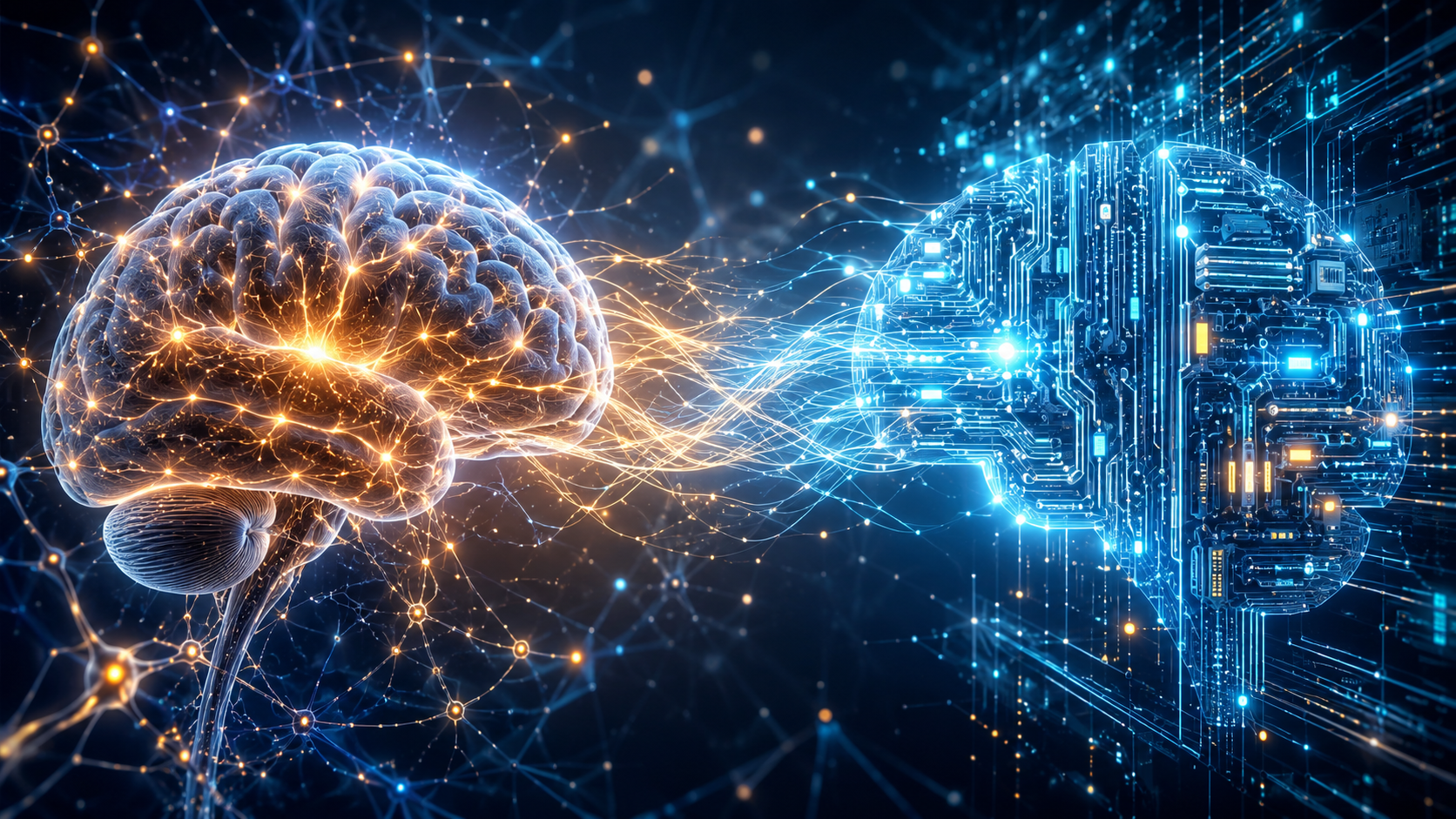
While the human brain builds memories through living experiences and constantly reshapes them over time, artificial intelligence processes data through mathematical models and learned patterns.
Understanding these differences not only helps us appreciate the remarkable complexity of the human brain but also reveals both the promise and the limitations of artificial intelligence.
1. Human Memory: Built Through Experience and Connection
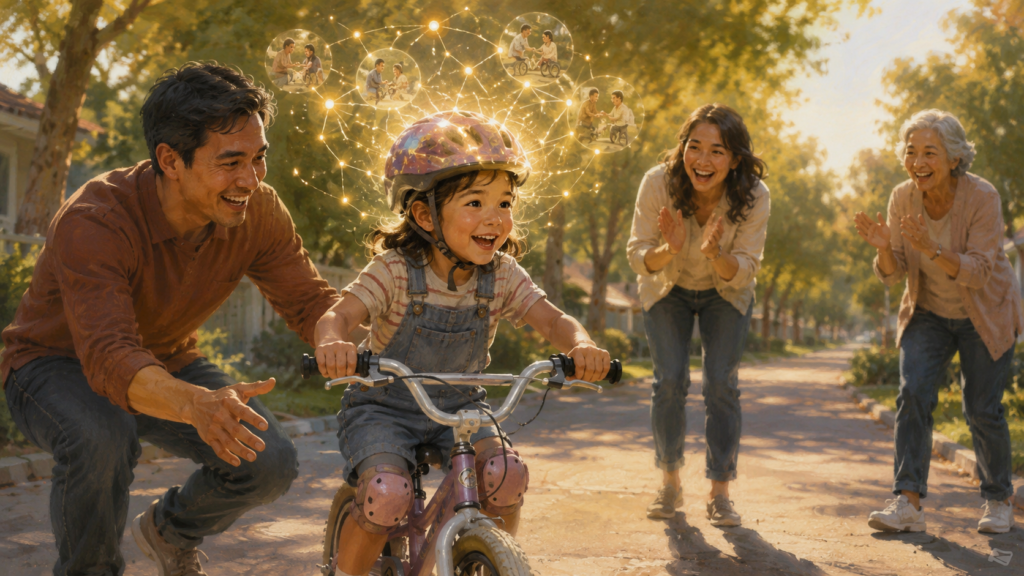
Human memory is not stored like files inside a computer.
Instead, memories emerge through billions of neurons communicating with one another.
Whenever we learn something new, practice a skill, or experience a meaningful event, connections between neurons become stronger or weaker through a process known as synaptic plasticity.
For example, when a child learns to ride a bicycle, the brain gradually strengthens neural pathways involved in balance, movement, and coordination.
With repeated practice, riding becomes almost automatic.
This is why many people can ride a bicycle even after not practicing for many years.
Human memory is therefore dynamic rather than static.
Short-Term and Long-Term Memory
Neuroscientists generally distinguish between two major forms of memory.
Short-term memory temporarily holds information for immediate use.
Remembering a phone number long enough to dial it is one example.
Long-term memory, on the other hand, stores information over much longer periods.
The face of a close friend, childhood experiences, or an important life lesson may remain accessible for decades.
Long-term memories are strengthened through repetition, emotional significance, and meaningful connections with existing knowledge.
Memory Is Connected to Emotion
Perhaps the greatest difference between human memory and computer storage lies in emotion.
Our memories are rarely isolated pieces of information.
Instead, they are linked to feelings, smells, sounds, places, and relationships.
A familiar song may instantly bring back memories of high school.
The smell of fresh bread may remind someone of their grandmother’s kitchen.
A birthday celebration may remain unforgettable not because of the cake itself, but because of the happiness shared with loved ones.
Emotion gives memories personal meaning.
Without emotional context, many memories would quickly fade.
2. How Artificial Intelligence Stores Information
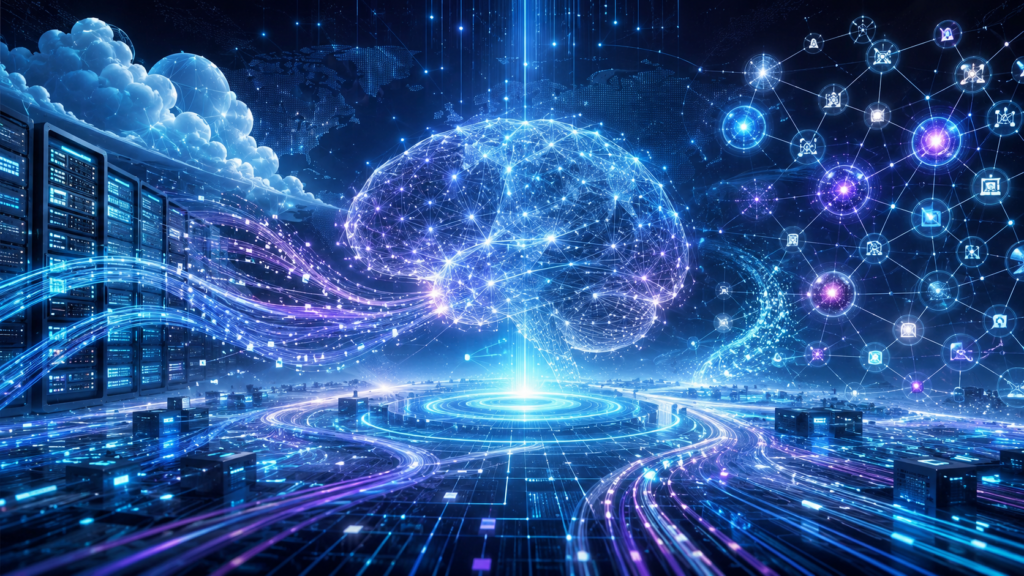
Artificial intelligence also processes enormous amounts of information.
However, AI does not form memories through lived experience.
Instead, it learns mathematical relationships within data.
Large datasets are stored in computers, servers, or cloud systems.
Machine learning algorithms analyze these datasets to identify patterns, similarities, and statistical relationships.
When an AI system recognizes a human face, it is not remembering that individual as humans do.
Rather, it compares visual patterns with representations learned during training.
Similarly, when a language model generates text, it does not retrieve personal experiences.
Instead, it predicts the most likely sequence of words based on patterns learned from vast amounts of training data.
Learning Through Neural Networks
Modern AI systems often use artificial neural networks, which were originally inspired by biological neurons.
Despite the similar terminology, artificial neurons differ greatly from real neurons.
Artificial neural networks learn by adjusting mathematical values called weights.
These weights determine how strongly different pieces of information influence one another during learning.
As training continues, the network gradually improves its ability to recognize patterns, classify information, and generate predictions.
This process resembles learning in some ways.
Yet it remains fundamentally different from human memory.
Humans remember experiences.
AI optimizes mathematical relationships.
3. Can AI Truly Remember Like Humans?
Recent advances in deep learning have allowed AI to imitate certain aspects of human memory surprisingly well.
Modern AI systems can summarize conversations, recognize familiar objects, and retrieve relevant information efficiently.
Some systems can even maintain limited conversational context during interactions.
However, these abilities should not be confused with genuine human memory.
Human memories are continuously reconstructed.
Each time we recall an event, the memory itself may change slightly.
Our current emotions, beliefs, and later experiences influence how we remember the past.
Memory is therefore an active process rather than a perfect recording.
Artificial intelligence does not reconstruct personal experiences in this way.
It retrieves or generates information according to learned statistical patterns.
The appearance of memory is created through computation rather than conscious recollection.
4. Why Emotion Remains AI’s Greatest Challenge
Human memory is inseparable from emotion.
Two people may witness the same event yet remember it very differently because each person experiences different emotions.
Memories are shaped not only by facts but also by fear, love, embarrassment, pride, regret, and hope.
Current AI systems can recognize emotional language or facial expressions to some extent.
They may identify whether a sentence sounds happy or sad.
They may detect smiling faces or stressed voices.
But recognizing emotion is very different from experiencing emotion.
An AI can identify the word “grief.”
It does not mourn.
It can describe happiness.
It does not feel joy.
Without subjective experience, AI cannot create memories in the deeply personal way humans do.
5. Generative AI and the Illusion of Memory
The rapid rise of generative AI has made this distinction even more important.
Systems such as conversational AI often appear to “remember” previous interactions.
In reality, they usually rely on temporary conversational context or stored user preferences rather than personal memory in the human sense.
They generate responses by identifying patterns learned during training, not by recalling lived experiences.
This explains why AI can produce remarkably fluent conversations while still lacking autobiographical memory.
It has knowledge.
It does not have a life history.
It processes information.
It does not remember birthdays, childhood friendships, or moments of personal loss unless those details are explicitly provided and stored within a system designed for that purpose.
The difference is subtle but profound.
6. What Human Memory Really Means
Comparing human memory with artificial intelligence teaches us something unexpected.
Memory is not merely a storage system.
It is part of our identity.
Our memories shape our personalities, influence our decisions, and connect our past with our future.
Every joyful celebration, painful mistake, meaningful conversation, and unexpected discovery becomes part of the story we call ourselves.
Artificial intelligence can organize information with extraordinary speed.
It can learn statistical relationships across billions of data points.
But it does not experience life.
Human memory grows through relationships, emotions, mistakes, imagination, and time.
That richness cannot easily be reduced to data alone.
Conclusion: Beyond Information
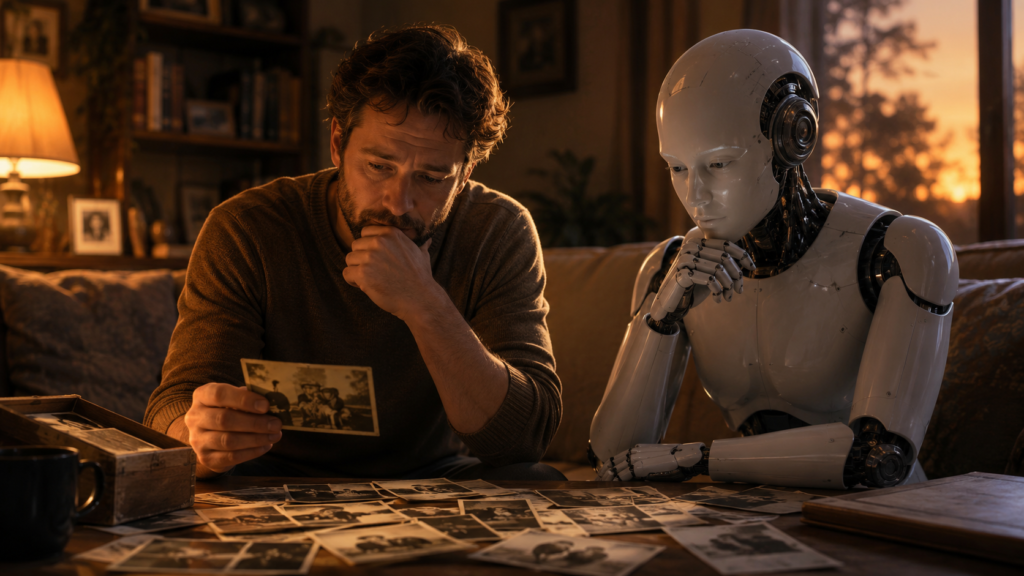
Human memory and artificial intelligence may appear similar because both can learn from information. Yet they are built on fundamentally different foundations.
While AI processes data through mathematical models, human memory is shaped by experience, emotion, and personal meaning. Our memories do more than preserve the past—they help define who we are.
As artificial intelligence continues to evolve, it may become increasingly capable of supporting human knowledge. Even so, the greatest lesson from comparing AI with the human brain may not be how closely machines can imitate memory, but how extraordinary human memory truly is.
A Question for Readers
If artificial intelligence could one day remember every conversation, every face, and every experience, would that make it truly similar to the human mind—or is memory meaningful only because it is connected to emotion, identity, and lived experience?
Perhaps remembering is not simply about storing information, but about becoming the person we are through the experiences we keep.
Related Reading
Understanding memory requires us to look beyond information itself and ask how humans create meaning from knowledge and experience. This relationship between learning, memory, and scientific understanding is further explored in The Origins of Medicine, which traces humanity’s long journey to understand the human body and mind through observation, experience, and accumulated knowledge.
At the same time, the question of whether machines can imitate human memory naturally leads to a broader discussion about artificial intelligence and human judgment. This theme continues in Confirmation Bias in Investing, which shows how human decisions are shaped not only by information but also by memory, experience, emotion, and cognitive bias—qualities that remain difficult for AI to replicate completely.
References
1. Kandel, Eric R. In Search of Memory: The Emergence of a New Science of Mind. W. W. Norton & Company, 2006.
Written by Nobel Prize–winning neuroscientist Eric Kandel, this book explains how memories are formed through neural connections and why learning changes the physical structure of the brain. It provides an accessible introduction to the biological foundations of human memory.
2. Hawkins, Jeff, and Sandra Blakeslee. On Intelligence. Times Books, 2004.
Hawkins explores how the human brain predicts, learns, and stores information, arguing that understanding the brain’s memory mechanisms is essential for developing more intelligent machines. The book bridges neuroscience and artificial intelligence.
3. Hassabis, Demis, et al. “Neuroscience-Inspired Artificial Intelligence.” Neuron, Vol. 95, No. 2, 2017.
This influential review examines how discoveries in neuroscience continue to inspire advances in artificial intelligence. It discusses the similarities and differences between biological memory and machine learning systems.
4. LeCun, Yann, Yoshua Bengio, and Geoffrey Hinton. “Deep Learning.” Nature, Vol. 521, 2015.
A landmark paper introducing the principles of deep learning and artificial neural networks. It explains how modern AI systems learn patterns from data while highlighting the differences between machine learning and human cognition.
5. Damasio, Antonio. The Feeling of What Happens: Body and Emotion in the Making of Consciousness. Harcourt Brace, 1999.
Damasio explores the relationship between consciousness, emotion, and memory, arguing that human memories cannot be separated from bodily experiences and emotions. His work helps explain why emotional memory remains one of AI’s greatest challenges.