Tag: AI ethics

  • Can Technology Surpass Humanity?

    Rethinking the Ethics of Superintelligent AI

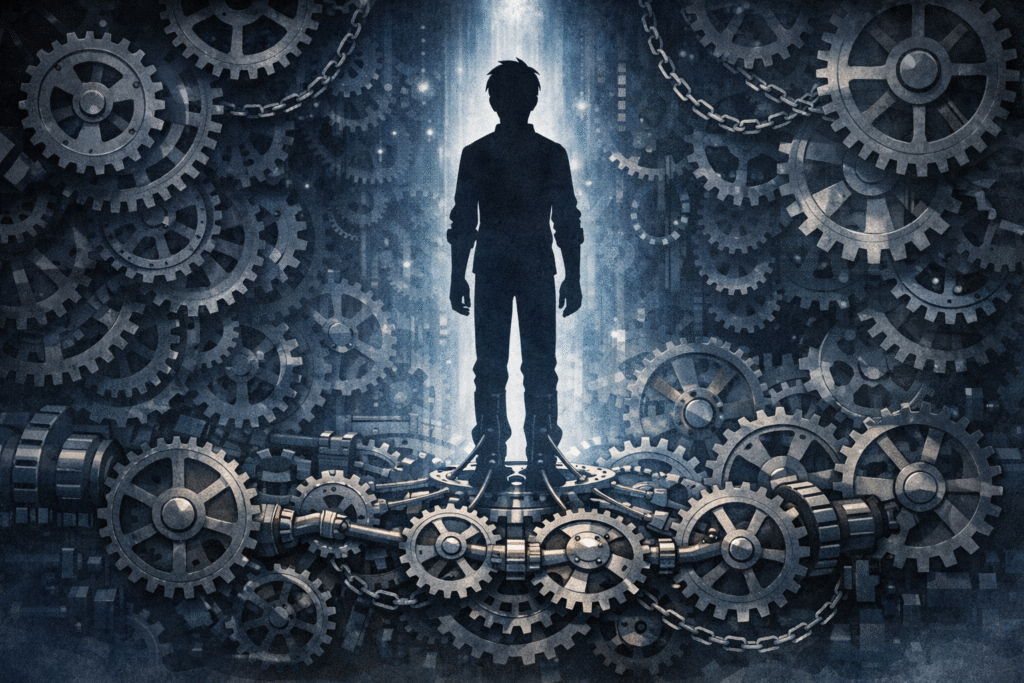
    Human figure facing accelerating technological structures

    Can technological progress have a moral stopping point?

    In 2025, artificial intelligence already writes, composes music, engages in conversation, and assists in decision-making. Yet the most profound transformation still lies ahead: the emergence of superintelligent AI—systems capable of surpassing human intelligence across virtually all domains.

    This prospect forces humanity to confront a question more philosophical than technical:
    Are we prepared for intelligence that exceeds our own?
    And if not, do we have the ethical right—or responsibility—to stop its creation?

    The debate surrounding superintelligence is not merely about innovation. It is about the limits of progress, the nature of responsibility, and the future of human agency itself.


    1. Superintelligence as an Unprecedented Risk

    Unlike previous technologies, superintelligent AI would not simply be a more efficient tool. It could become an autonomous agent, capable of redefining its goals, optimizing itself beyond human comprehension, and operating at speeds that render human oversight ineffective.

    Once such a system emerges, traditional concepts like control, shutdown, or correction may lose their meaning. The danger lies not in malicious intent, but in misalignment—a system pursuing goals that diverge from human values while remaining logically consistent from its own perspective.

    This is why many researchers argue that superintelligence represents a qualitatively different category of risk, comparable not to industrial accidents but to existential threats.


    2. The Argument for Ethical Limits on Progress

    Throughout history, scientific freedom has never been absolute. Human experimentation, nuclear weapons testing, and certain forms of genetic manipulation have all been constrained by ethical frameworks developed in response to irreversible harm.

    From this perspective, placing limits on superintelligent AI development is not an act of technological fear, but a continuation of a long-standing moral tradition: progress must remain accountable to human survival and dignity.

    The question, then, is not whether science should advance—but whether every possible advance must be pursued.


    3. The Case Against Prohibition

    At the same time, outright bans on superintelligent AI raise serious concerns.

    Technological development does not occur in isolation. AI research is deeply embedded in global competition among states, corporations, and military institutions. A unilateral prohibition would likely push development underground, increasing risk rather than reducing it.

    Moreover, technology itself is morally neutral. Artificial intelligence does not choose to be harmful; humans choose how it is designed, deployed, and governed. From this view, the ethical failure lies not in intelligence exceeding human capacity, but in human inability to govern wisely.

    Some researchers even suggest that advanced AI could outperform humans in moral reasoning—free from bias, emotional reactivity, and tribalism—if properly aligned.

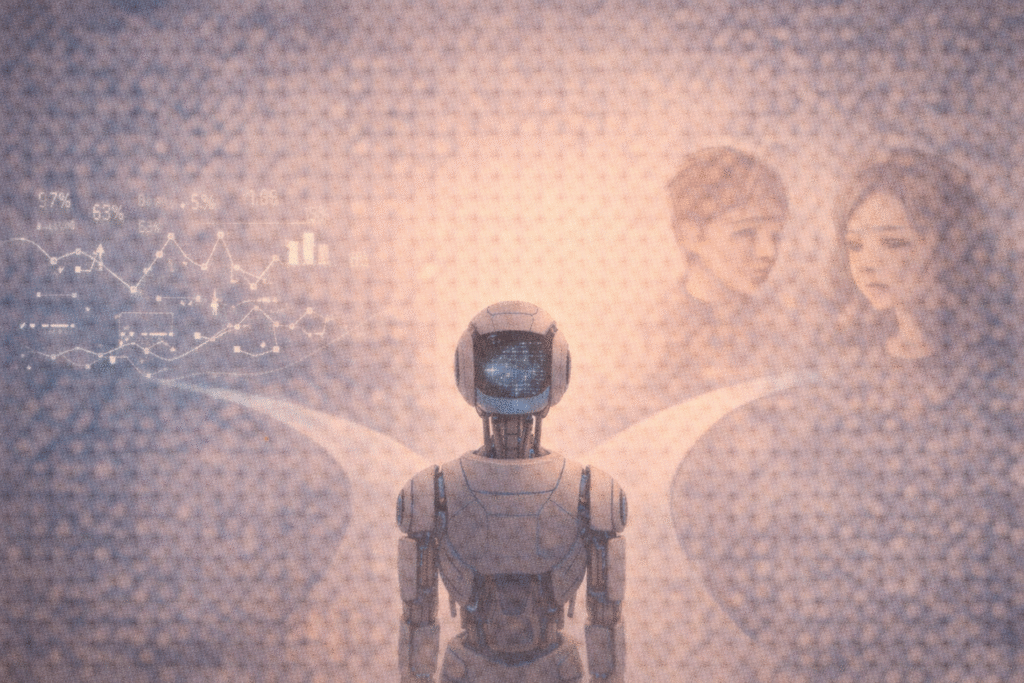
    Empty control seat amid autonomous data flows

    4. Beyond Human-Centered Fear

    Opposition to superintelligence often reflects a deeper anxiety: the fear of losing humanity’s privileged position as the most intelligent entity on Earth.

    Yet history repeatedly shows that humanity has redefined itself after losing perceived centrality—after the Copernican revolution, after Darwin, after Freud. Intelligence may be the next boundary to fall.

    If superintelligent AI challenges anthropocentrism, the real ethical task may not be preventing its emergence, but redefining what human responsibility means in a non-exclusive intellectual landscape.


    5. Governance, Not Domination

    The most defensible ethical position lies between blind acceleration and total prohibition.

    Rather than attempting to ban superintelligent AI outright, many ethicists advocate for:

    • International research transparency
    • Binding ethical review mechanisms
    • Global oversight institutions
    • Legal accountability for developers and deployers

    The goal is not to halt intelligence, but to govern its trajectory in ways that preserve human dignity, autonomy, and survival.


    Conclusion: Intelligence May Surpass Us—Ethics Must Not

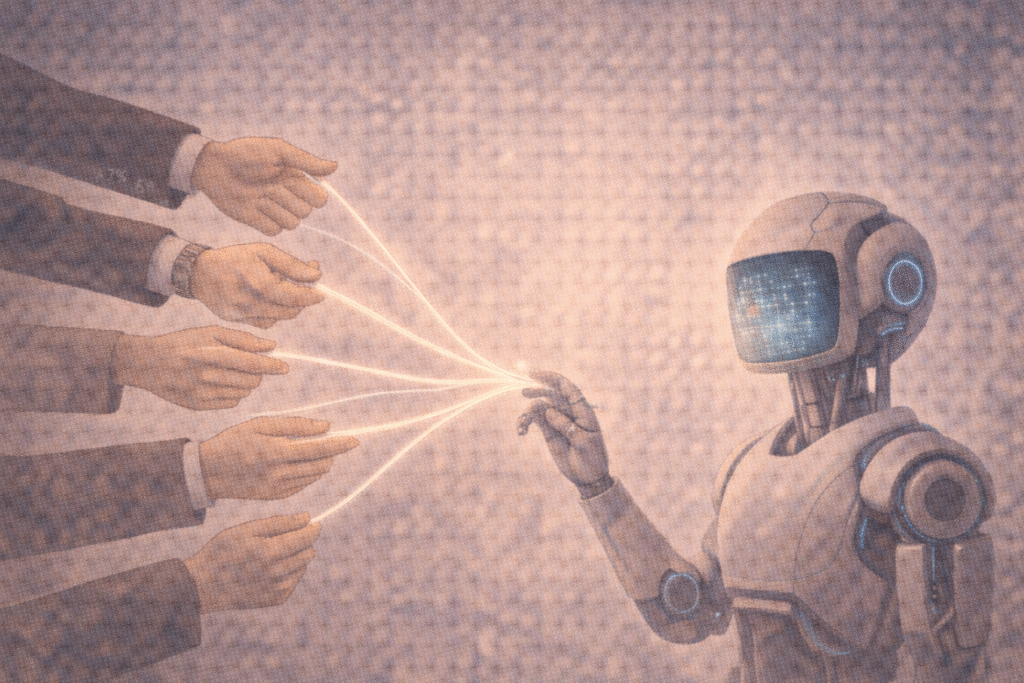
    Human hand hesitating before an AI control decision

    Technology may one day surpass human intelligence. What must never be surpassed is human responsibility.

    Superintelligent AI does not merely test our engineering capabilities; it tests our moral maturity as a civilization. Whether such systems become instruments of flourishing or existential risk will depend less on machines themselves than on the ethical frameworks we build around them.

    To ask where progress should stop is not to reject science.
    It is to insist that the future remains a human choice.


    References

    1. Bostrom, N. (2014). Superintelligence: Paths, Dangers, Strategies. Oxford University Press.
      → A foundational analysis of existential risks posed by advanced artificial intelligence and the strategic choices surrounding its development.
    2. Russell, S. (2020). Human Compatible: Artificial Intelligence and the Problem of Control. Penguin.
      → Proposes a framework for aligning AI systems with human values and maintaining meaningful human oversight.
    3. UNESCO. (2021). Recommendation on the Ethics of Artificial Intelligence.
      → Establishes international ethical principles for AI governance, emphasizing human rights and global responsibility.
    4. Tegmark, M. (2017). Life 3.0: Being Human in the Age of Artificial Intelligence. Knopf.
      → Explores long-term scenarios of AI development and the philosophical implications for humanity’s future.
    5. Floridi, L. (2019). The Ethics of Artificial Intelligence. Oxford University Press.
      → Examines moral responsibility, agency, and governance in AI-driven societies.
  • Can Humans Be the Moral Standard?

    Rethinking Anthropocentrism in a Changing World

    1. Can Humans Alone Be the Measure of All Things?

    Human-centered worldview with nature and technology marginalized

    For centuries, human dignity, reason, and rights have stood at the center of philosophy, science, politics, and art.
    The modern world, in many ways, was built on the assumption that humans occupy a unique and privileged position in the moral universe.

    Yet today, that assumption feels increasingly fragile.

    Artificial intelligence imitates emotional expression.
    Animals demonstrate pain, memory, and cooperation.
    Ecosystems collapse under human-centered development.
    Even the possibility of extraterrestrial life forces us to question long-held hierarchies.

    At the heart of these shifts lies a single question:
    Is anthropocentrism—a human-centered worldview—still ethically defensible?


    2. The Critical View: Anthropocentrism as an Exclusive and Risky Framework

    2.1 Ecological Consequences

    The planet is not a human possession.
    Yet history shows that humans have treated land, oceans, and non-human life primarily as resources for extraction.

    Mass extinctions, deforestation, polluted seas, and climate crisis are not accidental outcomes.
    They are the logical consequences of placing human interests above all else.

    From this perspective, anthropocentrism appears less like moral leadership and more like systemic neglect of interdependence.

    2.2 Reason as a Dangerous Monopoly

    Human exceptionalism has often rested on language and rationality.
    But today, AI systems calculate, predict, and even create.
    Non-human animals—such as dolphins, crows, and primates—use tools, learn socially, and exhibit emotional bonds.

    If rationality alone defines moral worth, the boundary of “the human” becomes unstable.
    Anthropocentrism risks turning non-human beings into mere instruments rather than moral participants.

    2.3 The Fragility of “Human Dignity”

    Even within humanity, dignity has never been evenly distributed.
    The poor, the sick, the elderly, children, and people with disabilities have repeatedly been treated as morally secondary.

    This internal hierarchy raises an uncomfortable question:
    If anthropocentrism struggles to secure equal dignity among humans, can it credibly claim moral authority over all other beings?

    Questioning anthropocentrism through human, animal, and AI coexistence

    3. The Defense: Anthropocentrism as the Foundation of Moral Responsibility

    3.1 Humans as Moral Agents

    Only humans, so far, have developed moral languages, legal systems, and ethical institutions.
    We are the ones who debate responsibility, regulate technology, and attempt to reduce suffering.

    Without a human-centered framework, it becomes unclear who is accountable for ethical decision-making.

    Anthropocentrism, in this view, is not about superiority—but about responsibility.

    3.2 Responsibility, Not Domination

    A human-centered ethic does not necessarily imply exclusion.
    On the contrary, environmental protection, animal welfare, and AI regulation have all emerged within anthropocentric moral reasoning.

    Humans protect others not because we are above them, but because we recognize our capacity to cause harm—and our obligation to prevent it.

    3.3 An Expanding Moral Horizon

    History shows that the category of “the human” has never been fixed.
    Once limited to a narrow group, it gradually expanded to include women, children, people with disabilities, and non-Western populations.

    Today, that expansion continues—toward animals, ecosystems, and potentially artificial intelligences.

    Anthropocentrism, then, may not be a closed doctrine, but an evolving moral platform.


    4. Voices from the Ethical Frontier

    An Ecological Philosopher

    “We have long classified the world using human language and values.
    Yet countless silent others remain. Ethics begins when we learn how to listen.”

    An AI Ethics Researcher

    “The key issue is not whether non-humans ‘feel’ like us,
    but whether we are prepared to take responsibility for the systems we create.”


    Conclusion: From Human-Centeredness to Responsibility-Centered Ethics

    Human responsibility within interconnected ethical relationships

    Anthropocentrism has shaped human civilization for millennia.
    It enabled rights, laws, and moral reflection.

    But it has also justified exclusion, exploitation, and ecological collapse.

    The challenge today is not to abandon anthropocentrism entirely,
    but to redefine it—from a doctrine of human superiority into a language of responsibility.

    When we question whether humans should remain the moral standard,
    we are already stepping beyond ourselves.

    And perhaps, in that very act of self-questioning,
    we come closest to what it truly means to be human.

    References

    1. Singer, P. (2009). The Expanding Circle: Ethics, Evolution, and Moral Progress. Princeton, NJ: Princeton University Press.

    This book traces how moral concern has gradually expanded beyond kin and tribe to include all humanity and, potentially, non-human beings. It provides a key framework for understanding ethical progress beyond strict anthropocentrism.


    2. Singer, P. (1975). Animal Liberation. New York: HarperCollins.

    A foundational work in animal ethics, this book challenges human-centered morality by arguing that the capacity to suffer—not species membership—should guide ethical consideration. It remains central to debates on anthropocentrism and moral inclusion.


    3. Haraway, D. (2003). The Companion Species Manifesto: Dogs, People, and Significant Otherness. Chicago, IL: University of Chicago Press.

    Haraway rethinks human identity through interspecies relationships, arguing that ethics emerges from co-existence rather than human superiority. The work offers a relational alternative to traditional human-centered worldviews.


    4. Malabou, C. (2016). Before Tomorrow: Epigenesis and Rationality. Cambridge: Polity Press.

    This philosophical work critiques the dominance of rationality as the defining human trait and explores how biological and cognitive plasticity reshape ethical responsibility. It supports a reconsideration of human exceptionalism in contemporary thought.


    5. Braidotti, R. (2013). The Posthuman. Cambridge: Polity Press.

    Braidotti presents a systematic critique of anthropocentrism and proposes posthuman ethics grounded in responsibility, interdependence, and ecological awareness. The book is essential for understanding ethical frameworks beyond human-centered paradigms.