Blog

  • Nietzsche’s Übermensch

    Nietzsche’s Übermensch

    A Path to Redemption or a Descent into Nihilism?

    In an age shaped by artificial intelligence, misinformation, and moral fragmentation, one unsettling question keeps resurfacing:
    Are there still any absolute standards left in the world?

    Friedrich Nietzsche confronted this question long before our digital age.
    In the nineteenth century, he famously declared, “God is dead.”
    With this statement, Nietzsche did not simply reject religion. He diagnosed a civilizational crisis: the collapse of the metaphysical, moral, and religious foundations that had long given meaning to human life.

    If the traditional sources of value have vanished, what—or who—can take their place?
    Nietzsche’s answer was radical and provocative: the Übermensch, often translated as the Overman or Superhuman.

    But what does this figure truly represent today?
    Is the Übermensch a path toward redemption in a godless world, or does it lead us deeper into the swamp of nihilism?

    Symbolic illustration of the collapse of absolute values after the death of God

    1. The Death of God and the Crisis of Meaning

    What Does “God Is Dead” Really Mean?

    Nietzsche’s declaration that “God is dead” is not a triumphalist slogan.
    It is a diagnosis of loss. The shared moral horizon that once guided human judgment has dissolved.

    At this moment of collapse, Nietzsche implicitly raises a question that still haunts us today:
    If there is no longer an absolute authority, what grounds our values, our truths, and our responsibilities?

    Without new foundations, humanity risks falling into nihilism—a condition in which life appears meaningless, directionless, and empty.

    The Übermensch as a Response to Nihilism

    The Übermensch is Nietzsche’s attempt to respond to this crisis.
    This figure is not a muscular hero or a biological superior being. Rather, the Übermensch is a creator of values.

    Where old moral systems collapse, the Übermensch does not despair.
    Instead, this figure affirms life by generating new standards from within, refusing to rely on inherited authorities.


    2. The Übermensch as a Creator of New Values

    Conceptual illustration of Nietzsche’s Übermensch as a figure of self-overcoming

    Active Nihilism and Self-Transcendence

    Nietzsche distinguishes between passive nihilism, which merely negates old values, and active nihilism, which destroys in order to create.

    The Übermensch embodies this active form. Three core traits define this ideal:

    • Self-overcoming: The Übermensch transcends inherited norms and continually reshapes the self through reflection and struggle.
    • Affirmation of life: Pain, uncertainty, and suffering are not rejected but embraced as essential to growth.
    • Creative existence: Life itself becomes a work of art, shaped rather than obeyed.

    Eternal Recurrence and Radical Affirmation

    Nietzsche’s idea of eternal recurrence—the thought that one must will the repetition of one’s life endlessly—serves as a test of affirmation.

    The Übermensch is the one who can say “yes” to life so completely that even infinite repetition becomes acceptable.
    In this sense, the Übermensch represents Nietzsche’s most radical attempt to overcome nihilism.


    3. The Shadow of Nihilism: Critical Perspectives

    Despite its ambition, the concept of the Übermensch has drawn serious criticism.

    The Risk of Deeper Relativism

    If all values are self-created, can any value claim lasting legitimacy?
    Critics argue that Nietzsche’s solution risks replacing one form of nihilism with another, where all meaning becomes arbitrary.

    Elitism and the Problem of the “Herd”

    Nietzsche often contrasts the Übermensch with the “herd.”
    This has led to accusations of elitism, suggesting that only a select few are capable of value creation, while the majority are dismissed as passive followers.

    Such implications raise concerns about social equality and solidarity.

    The Problem of Practical Realization

    The Übermensch may be philosophically compelling, but is it achievable?
    Many argue that it remains an abstract ideal—seductive in theory, yet unreachable in lived reality.

    From this perspective, the Übermensch risks becoming not a cure for nihilism, but merely its most refined expression.


    4. The Übermensch in Contemporary Contexts

    Self-Improvement and Performance Culture

    Modern self-help and productivity discourses often reinterpret the Übermensch as relentless self-optimization.
    Yet this translation can distort Nietzsche’s intent, turning creative self-overcoming into capitalist pressure and burnout.

    Art, Innovation, and Creative Resistance

    In contrast, artists, thinkers, and innovators continue to draw inspiration from Nietzsche’s vision.
    Here, the Übermensch survives as a symbol of creative rebellion against conformity and stagnation.

    Ethics and Community

    The most difficult question remains unresolved:
    How can radical individual creativity coexist with ethical responsibility and communal life?

    The Übermensch stands at the center of this unresolved tension.

    Abstract illustration showing the tension between redemption and nihilism

    Conclusion: Between Redemption and Nihilism

    Nietzsche’s Übermensch remains one of the boldest and most controversial ideas in modern philosophy.

    It represents both an attempt to overcome nihilism and a daring experiment that risks falling into it.

    Is the Übermensch a path toward redemption, or a descent into meaninglessness?

    The answer depends not only on Nietzsche’s writings, but on how we understand and live his challenge today.

    If the Übermensch is reduced to a fantasy of superiority or domination, it becomes little more than a nihilistic parody—one that replaces old absolutes with new forms of power.

    But if it is understood as a call to self-overcoming, personal responsibility, creative value-making, and continual self-transformation, it offers a constructive response to a world where inherited certainties have faded.

    In today’s age of artificial intelligence, algorithmic influence, misinformation, and rapidly changing moral landscapes, Nietzsche’s question feels more relevant than ever.

    The challenge is no longer simply whether traditional values are disappearing.

    It is whether humanity can create new values without losing its sense of responsibility, dignity, and compassion.

    Perhaps the true meaning of the Übermensch is not becoming greater than others, but becoming greater than one’s former self.

    In that sense, Nietzsche’s challenge remains unfinished—inviting every generation to decide whether freedom will become a source of destruction or an opportunity for creating a more meaningful human future.

    Reader Question

    If traditional sources of meaning disappear, where should people look for new values?

    Do you believe individuals should create their own purpose, or do societies still need shared moral foundations? Share your thoughts in the comments.

    Related Reading

    Nietzsche questioned inherited truths, while modern linguistics asks whether language itself shapes our understanding of reality. Does Language Shape Thought explores how thought and meaning are influenced by the words we use.

    If traditional values collapse, what kind of life should we pursue instead? Is Perfect Happiness Possible? reflects on whether fulfillment comes from external ideals or from continually creating meaning within ourselves.


    References

    Nietzsche, F. (1883–1885). Thus Spoke Zarathustra. Leipzig: Ernst Schmeitzner.
    → Nietzsche’s foundational work introducing the Übermensch, eternal recurrence, and the declaration of the death of God, presenting them as responses to nihilism.

    Nietzsche, F. (1887). On the Genealogy of Morals. Leipzig: C. G. Naumann.
    → A critical examination of moral values that reveals why traditional ethical systems collapse and why new forms of valuation become necessary.

    Kaufmann, W. (1974). Nietzsche: Philosopher, Psychologist, Antichrist. Princeton: Princeton University Press.
    → A classic interpretation emphasizing Nietzsche’s concern with creativity and self-overcoming rather than brute power.

    Heidegger, M. (1961). Nietzsche (Vols. 1–2). Neske Verlag.
    → A profound analysis situating Nietzsche as the culmination of Western metaphysics, highlighting the unresolved tension between nihilism and transcendence.

    Ansell-Pearson, K. (1994). An Introduction to Nietzsche as Political Thinker: The Perfect Nihilist. Cambridge: Cambridge University Press.
    → A political and critical reading that questions whether the Übermensch truly overcomes nihilism or merely transforms it.

  • A Rainy Afternoon – Learning Calm When the Heart Grows Wet

    A Rainy Afternoon – Learning Calm When the Heart Grows Wet

    A Small Moment of the Day

    Emotional illustration, person pausing under an umbrella

    On a rainy afternoon, the sound of raindrops brushing past the window brings footsteps to a pause.
    Walking home after getting off the subway, the sudden rain seems to slow the world itself.

    Raindrops tapping on an umbrella.
    The faint scent rising from wet streets.
    A gentle rhythm that seeps quietly into the heart.

    A thought appears without effort:
    “When it rains… my heart seems to grow damp as well.”

    Yet this quiet dampness feels strangely comforting.
    There is a steady calm in it—
    one that wraps around the body like a soft weight.


    A Light Thought for Today

    As the umbrella flips inside out in the wind, a quiet mutter slips out:
    “Ah… maybe umbrellas and I were never meant for each other.”

    When it happens again, the thought shifts:
    “Alright then. Let’s just get wet—both of us.”

    A small laugh follows.
    Hidden within the rain, it feels lighter than expected.


    Reflection – What This Moment Revealed

    The calm of a rainy afternoon is not only about the weather.

    ① Rain slows the pace of the heart
    Raindrops fall with steady patience.
    In their rhythm, tangled thoughts begin to loosen.
    A question surfaces quietly:
    “Why have I been living in such a hurry?”

    ② Rain becomes a window for emotion
    On rainy days, emotions rise more easily—
    loneliness, gentleness, courage, reflection.
    Within them are feelings we may have rushed past earlier in the day.

    ③ Wetness signals a pause
    Though being soaked sounds uncomfortable,
    this moment of wetness gently asks us to stop
    and look inward.

    The realization settles:
    “Rain is telling me it’s okay to rest.”


    Emotional illustration, quiet reflection by a rainy window

    A Gentle Practice

    A Five-Minute Rain Walk

    On a rainy day like today,
    take five slow minutes walking under an umbrella.

    Then write down three words that echo inside you.

    Silence
    Warmth
    Pause
    Thought
    Longing

    These words reveal the pace your inner world is learning.


    A Small Action for the Day

    After returning home, hang up the damp coat.
    Prepare a warm cup of tea.

    Watch the steam rise slowly.
    Close your eyes for a moment.

    And say, gently:
    “It’s okay to be a little wet.
    Resting this much today is enough.”

    The sound of rain outside and the warmth in the cup
    blend into a quiet, steady calm.


    Quote of the Day

    “Rain is grace; rain is the sky descending to the earth.”
    — John Updike


    Closing – Returning Gently to Ourselves

    Emotional illustration, warm tea steam in a calm room

    A rainy afternoon softens the pace of the world.
    The heart shifts, resists briefly,
    and then settles into ease.

    Without explanation, without demand,
    the rain seems to whisper:
    “It’s alright. You may move slowly today.”

    And in that softness,
    calm arrives—not suddenly, but gently.


    A Thought to Remember

    Psychological research suggests that the gentle, repetitive sound of rain can reduce mental overstimulation and promote a sense of calm.
    Natural, repetitive sounds reduce unnecessary stimulation,
    lower mental tension,
    and support emotional stability.

    This may be one reason rainy days often feel comforting—they gently soften the noise within our minds.


    Today’s One-Line Insight

    “On a rainy afternoon, calm quietly seeps in when the heart allows itself to pause.”

    Reader Question

    What does a rainy afternoon awaken in your heart?

    For some, rain brings quiet reflection. For others, it offers a gentle pause from the rush of everyday life. Share your thoughts in the comments—your story may become someone else’s moment of calm.

    Related Reading

    Like a rainy afternoon, The transparent umbrella reminds us that protecting ourselves does not mean shutting the world out. Discover how openness and resilience can quietly exist together.

    Rain often slows the pace of the day, just as the quiet hours of the night invite us to slow down and reconnect with ourselves. Late-Night Comfort explores the peace that grows when we allow ourselves to rest.

  • The Politics of Empty Space

    The Politics of Empty Space

    How Absence Shapes Power in Advertising and Design

    Modern life is filled with constant noise.

    Screens overflow with information,
    advertisements compete for attention,
    and silence itself has become increasingly rare.

    Yet sometimes, what feels most powerful
    is not what is added—
    but what is deliberately left empty.

    Minimal composition showing power of empty space in design

    1. White Space as Silent Communication

    Visual Silence That Commands Attention

    When we look at advertisements or posters, our eyes are usually drawn to bold images and striking slogans.
    Yet many designers argue the opposite: empty space, or white space, often carries the strongest message.

    White space functions like silence in conversation.
    It appears to say nothing, yet that very absence forces the viewer to pause, slow down, and focus.

    Less Information, Stronger Impact

    Apple’s advertising offers a clear example.
    A single product is placed at the center, surrounded by vast empty space.
    Nothing distracts the viewer—attention naturally converges on the object itself.

    In poster design, the same principle applies.
    By intentionally removing excess elements, the remaining message becomes sharper and more memorable.
    White space, then, is not “nothing”; it is a strategic choice for emphasis.


    2. Cultural Meanings of White Space

    East Asian Aesthetics: Emptiness as Possibility

    Perceptions of white space differ across cultures.
    In East Asian aesthetics, empty space has long been treated as an essential artistic element.

    In ink painting, wide blank areas do not represent absence or lack.
    They invite imagination, symbolize nature, and allow meaning to emerge indirectly.
    Here, emptiness is not deficiency—it is potential.

    Western Design and the Rediscovery of Minimalism

    Western commercial design historically favored filling space with information.
    More text, more images, more explanation were believed to increase persuasion.

    Today, however, global visual culture has shifted.
    Minimalist layouts and generous white space now signal refinement, confidence, and sophistication.
    White space has become a shared visual language across cultures.


    3. White Space as a Language of Power

    The Authority of Not Explaining

    The ability to use white space often reflects privilege.
    Leaving large areas empty—especially in expensive advertising spaces—signals the freedom to waste resources.

    White space suggests a position where explanation is unnecessary.
    It communicates confidence: this needs no justification.

    White space used as a symbol of authority and power

    Luxury Branding and Symbolic Distance

    Luxury brands frequently display a single product against a blank background.
    The message is subtle but powerful:
    “We do not need to persuade you—our value is self-evident.”

    In this sense, white space operates not only as a design technique but as a symbol of status and authority.


    4. White Space in the Digital Age

    Information Overload

    Smartphone screens, social media feeds, and digital ads bombard users with endless content.
    The result is cognitive fatigue and fragmented attention.

    White Space as Psychological Relief

    In this environment, white space becomes a form of relief.
    Google’s minimal homepage or clean interface designs demonstrate how emptiness can restore calm.

    Amid digital excess, white space signals clarity, trust, and stability.
    It functions as a psychological pause, not merely a visual one.


    5. From Design to Everyday Life

    White Space Beyond Graphics

    The logic of white space extends beyond design:

    • White space in conversation: allowing silence instead of constant speech
    • White space in time: leaving unscheduled moments in daily life
    • White space in relationships: accepting distance without anxiety

    The Question of What to Remove

    White space ultimately asks a deeper question—not about what to add, but what to remove.
    It challenges the assumption that fullness equals value.


    Empty space as visual pause in digital overload

    Conclusion

    White space is not absence—it is a deliberate strategy and a form of power.
    In advertising and graphic design, it sharpens messages, signals authority, and reflects cultural values.

    In an age of digital overload, white space becomes more than a visual choice.
    It offers psychological balance and social meaning.

    The politics of white space ultimately asks us one simple question:

    What must we remove for what truly matters to become visible?

    A Question for You

    In a world overflowing with information,
    what would happen if we deliberately chose to leave more space empty?

    Related Reading

    The relationship between structure, control, and freedom extends beyond politics into visual culture itself.
    The Minimal State: An Ideal of Liberty or a Neglect of the Common Good? explores how systems of authority shape the balance between individual freedom and collective order.

    The management of visibility is deeply connected to power in modern society.
    How Much Surveillance Is Too Much? examines how control increasingly operates not only through force, but through observation, design, and the shaping of attention itself.

    References

    1. Lupton, E. (2014). Graphic Design Thinking: Beyond Brainstorming.
      Explores how reduction, simplicity, and empty space function as tools for visual thinking and strategic communication in design.
    2. Heller, S., & Vienne, V. (2012). 100 Ideas That Changed Graphic Design.
      Traces major turning points in graphic design history, including the rise of white space as a powerful visual principle.
    3. Hollis, R. (2001). Graphic Design: A Concise History.
      Provides historical context for minimalism and the evolving role of empty space in modern visual culture.
  • Is Ignorance a Sin or a Shield?

    Is Ignorance a Sin or a Shield?

    The Boundary Between the Right to Know and the Right Not to Know

    The Dual Nature of Not Knowing

    We often accept the saying “knowledge is power” as an unquestionable truth. Knowledge helps us understand the world, make informed decisions, and design better lives. In this sense, ignorance appears to be nothing more than a deficiency—something to be overcome.

    Yet there are moments when not knowing protects us. Sometimes, hearing a harsh truth is more damaging than remaining unaware. In an age of information overload, excessive knowledge can intensify anxiety rather than reduce it. This raises a fundamental question: Is ignorance always a moral failure, or can it function as a psychological and ethical shield?

    A solitary figure surrounded by unread books

    1. Philosophical Perspectives — Ignorance as a Deficiency to Overcome

    Ignorance and the Beginning of Wisdom

    In the philosophical tradition, ignorance has often been defined as a condition to be overcome. Socrates famously claimed that wisdom begins with recognizing one’s own ignorance. However, this acknowledgment was not a celebration of ignorance itself but a necessary step toward truth. For Socrates, ignorance was never a virtue; it was a starting point for philosophical inquiry.

    Enlightenment and Moral Responsibility

    Enlightenment thinkers reinforced this critical stance. Immanuel Kant described immaturity as the inability to use one’s own reason without guidance. In this framework, remaining ignorant is not merely unfortunate—it becomes morally problematic. Ignorance allows domination, sustains inequality, and obstructs freedom. From this perspective, ignorance can resemble a civic failure rather than a neutral condition.


    2. Religious Perspectives — Ignorance as Humility and Protection

    Acceptance of Human Limits

    Religious traditions often interpret ignorance differently. In Buddhism, acknowledging the limits of human understanding is central. Liberation is achieved not by knowing everything, but by releasing attachment to certainty and control. Ignorance here is not condemned but recognized as part of the human condition.

    Faith, Mystery, and Trust

    Similarly, in Christian thought, human ignorance can signify humility before divine mystery. Not knowing is not always sinful; it can express trust in something beyond human comprehension. In this sense, ignorance functions as a spiritual shield rather than a moral failure.


    3. Psychological Perspectives — Between the Right to Know and the Right Not to Know

    A calm figure protected from surrounding data noise

    Selective Ignorance as a Coping Strategy

    Modern psychology recognizes that individuals sometimes choose ignorance deliberately. For example, some people decline genetic testing even when it could reveal serious health risks. Knowing such information may overwhelm their emotional capacity to cope.

    Ignorance and Mental Well-being

    This leads to the ethical recognition of a right not to know. Excessive information can increase stress, fear, and paralysis. In certain contexts, ignorance operates as a defensive mechanism that preserves psychological stability rather than undermining rational agency.


    4. Social Perspectives — Ignorance, Power, and Inequality

    Information Asymmetry and Structural Power

    Ignorance becomes ethically troubling when it is socially produced. When information is concentrated in the hands of a few, ignorance reinforces power imbalances. Democratic societies depend on informed citizens; widespread ignorance weakens collective decision-making.

    Manufactured Ignorance

    In the era of misinformation, ignorance is not always accidental. It can be deliberately produced and exploited through propaganda, disinformation, and algorithmic manipulation. In such cases, ignorance ceases to be a personal shield and becomes a systemic vulnerability.


    5. Ignorance in the Age of Technology — Choosing Not to Know

    Data Abundance and Cognitive Overload

    Digital technology has exponentially expanded access to information. Ironically, this abundance often leads to confusion rather than clarity. Knowing more does not always mean understanding better.

    Toward “Wise Ignorance”

    In response, some degree of intentional ignorance becomes necessary. Choosing what not to know can help maintain focus, mental health, and ethical balance. This is not avoidance, but a form of practical wisdom—what might be called “wise ignorance” in a hyper-informed world.

    A figure pausing at a crossroads of knowledge

    Conclusion — Finding Balance Between Sin and Shield

    Ignorance is neither purely a sin nor purely a shield. Its meaning depends on context. When ignorance supports oppression, misinformation, or civic irresponsibility, it must be challenged. When it protects psychological well-being or acknowledges human limits, it can serve a legitimate and even necessary role.

    Ultimately, ignorance is an unavoidable condition of human existence. The ethical task is not to eliminate ignorance entirely, but to discern when it must be confronted and when it deserves protection. This tension itself reflects a deeply human struggle—one that unfolds between knowledge, responsibility, and care for the self.

    A Question for Readers

    In an age where information is constantly available, do humans truly become wiser by knowing more?

    Or does wisdom sometimes require choosing what not to know?

    Related Reading

    Knowledge is never completely neutral. The power to define, classify, and frame reality often shapes social authority itself.
    The Power of Naming explores how language and systems of knowledge influence hierarchy, identity, and control.

    Modern societies celebrate unlimited access to information and choice, yet excessive awareness can intensify anxiety and emotional exhaustion.
    Is Freedom an Expansion of Choice examines how modern freedom may simultaneously empower individuals and overwhelm them psychologically.


    References (WordPress / Global Academic Format)

    1. Plato. (1997). Apology (in Complete Works, edited by J. Cooper). Indianapolis: Hackett.
      → Plato’s account of Socrates establishes the foundational philosophical link between ignorance, self-awareness, and the pursuit of wisdom.
    2. Berlin, I. (1969). Four Essays on Liberty. Oxford: Oxford University Press.
      → Explores the ethical tension between freedom, responsibility, and the limits of human knowledge, offering insight into ignorance as both risk and protection.
    3. Kant, I. (1996). An Answer to the Question: What Is Enlightenment? (edited by J. Schmidt). Berkeley: University of California Press.
      → A key Enlightenment text arguing that overcoming ignorance is essential for autonomy and moral maturity.
    4. Smithson, M. (1989). Ignorance and Uncertainty: Emerging Paradigms. New York: Springer.
      → Treats ignorance as an analytical category, showing how it functions socially and psychologically rather than merely as a lack of knowledge.
    5. Proctor, R., & Schiebinger, L. (Eds.). (2008). Agnotology: The Making and Unmaking of Ignorance. Stanford: Stanford University Press.
      → Introduces the study of ignorance as a product of power, politics, and institutional design.
  • The History of Tableware

    The History of Tableware

    Status, Power, and Social Order at the Dining Table

    1. Tableware Was Never Just a Tool

    Tableware symbolizing social hierarchy and class power

    Material as a Marker of Status

    The utensils we use every day—spoons, chopsticks, forks, and knives—were never merely practical tools.
    For much of history, tableware functioned as a visible marker of social status and hierarchy.

    From antiquity through the early modern period, the material, design, and availability of dining tools reflected broader social structures. What one used at the table often revealed who one was in society.

    Power, Poison, and Precious Metals

    In medieval Europe, noble families commonly used silver tableware. Silver was believed to react to poison, a fear that was far from irrational in political environments where assassination was a real threat. For elites, silver utensils symbolized both wealth and survival.

    Commoners, by contrast, relied on wooden, clay, or tin utensils. The distinction in materials reinforced class boundaries, turning everyday dining into a subtle but constant reminder of power and inequality.


    2. Tableware and Hierarchy in East and West

    Eastern Traditions

    In East Asia—China, Korea, and Japan—chopstick cultures shared a common form but differed in material and symbolism.
    Imperial courts used chopsticks made of jade, ivory, gold, or silver, while ordinary people used bamboo or wood.

    In Joseon Korea, the royal family used gold and silver spoons, the yangban class favored lacquered utensils, and commoners relied on plain wooden ones. Tableware clearly mirrored the rigid social order of the time.

    Western Traditions

    In the West, forks appeared in Byzantine aristocratic circles as early as the 11th century, but their spread was slow and controversial. For centuries, forks were associated with luxury and even moral suspicion.

    Only in the 17th century, particularly during the reign of Louis XIV in France, did forks become firmly established among European elites. Their eventual diffusion to the broader population followed the gradual erosion of rigid class boundaries—but never erased them completely.


    3. Etiquette as a Form of Power

    Dining etiquette as a system of social discipline

    Manners as Social Discipline

    Tableware did not merely signal status; it shaped behavior.
    Rules governing how to hold utensils, when to use them, and in what order were often developed within elite circles.

    In both Eastern and Western societies, dining etiquette became a form of social discipline—teaching individuals how to move, sit, and behave “properly” within a hierarchy.

    Exclusion Through Etiquette

    Failure to follow these rules often resulted in social exclusion.
    In Joseon-era aristocratic households, even the angle at which a spoon was placed could carry symbolic meaning. Improper behavior marked a person as uneducated or socially inferior.

    Thus, etiquette functioned not simply as politeness but as a gatekeeping mechanism—one that quietly reinforced power relations.


    4. Modernity and the Illusion of an Equal Table

    Industrialization and Mass Access

    The Industrial Revolution transformed tableware production. Stainless steel, porcelain, and enamel could be mass-produced, allowing ordinary people access to utensils once reserved for elites.

    At first glance, this seemed to democratize the dining table. The forms of aristocratic tableware became widely available, suggesting a new era of equality.

    Status in Subtle Forms

    Yet hierarchy did not disappear—it became subtler.
    Luxury brands, handcrafted cutlery, and exclusive tableware collections continue to signal wealth and taste. The symbols changed, but the logic of distinction remained.


    5. Tableware as Soft Power Today

    Modern tableware expressing cultural soft power

    Culinary Tools as Cultural Identity

    In contemporary society, tableware often represents cultural identity rather than overt authority.
    A Japanese sushi chef’s custom knife, a French chef’s handcrafted cutlery, or Scandinavian minimalist tableware all function as expressions of national aesthetics and values.

    Through these tools, cultures project influence and prestige—an example of soft power at the dining table.

    Ethical Consumption and Symbolic Status

    More recently, eco-friendly utensils—such as bamboo cutlery or reusable metal chopsticks—have emerged as symbols of ethical awareness.
    Choosing certain tableware now signals not just taste, but moral identity.


    Conclusion

    The history of tableware is not merely a story of evolving tools.
    It is a social history of power, hierarchy, culture, and identity—quietly embedded in everyday life.

    When we pick up a spoon or fork today, we are participating in a long tradition shaped by politics, economics, and social order. Recognizing this history allows us to see the dining table not as a neutral space, but as a mirror of society itself.

    A Question for Readers

    Can everyday objects truly be separated from social power and hierarchy?

    And when even tableware reflects class distinctions, how much of social inequality becomes quietly normalized in daily life?

    Related Reading

    Everyday objects and systems often reveal deeper transformations in social order, class structure, and consumption culture.
    The Social History of Vending Machines explores how ordinary technologies reshape human interaction and modern life.

    Modern societies increasingly transform lifestyle, consumption, and even ordinary experiences into forms of symbolic status.
    When Experience Becomes Competition examines how social value becomes tied to visible cultural behavior.


    References

    1. Mintz, S. W. (1996). Tasting Food, Tasting Culture. Boston: Beacon Press.
      → An anthropological examination of food practices that situates tableware within broader social and class structures.
    2. Visser, M. (1991). The Rituals of Dinner: The Origins, Evolution, Eccentricities, and Meaning of Table Manners. New York: Grove Press.
      → A detailed exploration of dining etiquette and its role in reinforcing power and social hierarchy.
    3. Anderson, E. N. (2014). Food and Environment in Early and Medieval China. Philadelphia: University of Pennsylvania Press.
      → An in-depth study of East Asian food culture, highlighting how dining tools reflected class and authority.
  • Can Technology Surpass Humanity?

    Can Technology Surpass Humanity?

    Rethinking the Ethics of Superintelligent AI

    Can technological progress have a moral stopping point?

    In 2025, artificial intelligence already writes, composes music, engages in conversation, and assists in decision-making. Yet the most profound transformation still lies ahead: the emergence of superintelligent AI—systems capable of surpassing human intelligence across virtually all domains.

    This prospect forces humanity to confront a question more philosophical than technical:
    Are we prepared for intelligence that exceeds our own?
    And if not, do we have the ethical right—or responsibility—to stop its creation?

    The debate surrounding superintelligence is not merely about innovation. It is about the limits of progress, the nature of responsibility, and the future of human agency itself.

    Human figure facing accelerating technological structures

    1. Superintelligence as an Unprecedented Risk

    Unlike previous technologies, superintelligent AI would not simply be a more efficient tool. It could become an autonomous agent, capable of redefining its goals, optimizing itself beyond human comprehension, and operating at speeds that render human oversight ineffective.

    Once such a system emerges, traditional concepts like control, shutdown, or correction may lose their meaning. The danger lies not in malicious intent, but in misalignment—a system pursuing goals that diverge from human values while remaining logically consistent from its own perspective.

    This is why many researchers argue that superintelligence represents a qualitatively different category of risk, comparable not to industrial accidents but to existential threats.


    2. The Argument for Ethical Limits on Progress

    Throughout history, scientific freedom has never been absolute. Human experimentation, nuclear weapons testing, and certain forms of genetic manipulation have all been constrained by ethical frameworks developed in response to irreversible harm.

    From this perspective, placing limits on superintelligent AI development is not an act of technological fear, but a continuation of a long-standing moral tradition: progress must remain accountable to human survival and dignity.

    The question, then, is not whether science should advance—but whether every possible advance must be pursued.


    3. The Case Against Prohibition

    At the same time, outright bans on superintelligent AI raise serious concerns.

    Technological development does not occur in isolation. AI research is deeply embedded in global competition among states, corporations, and military institutions. A unilateral prohibition would likely push development underground, increasing risk rather than reducing it.

    Moreover, technology itself is morally neutral. Artificial intelligence does not choose to be harmful; humans choose how it is designed, deployed, and governed. From this view, the ethical failure lies not in intelligence exceeding human capacity, but in human inability to govern wisely.

    Some researchers even suggest that advanced AI could outperform humans in moral reasoning—free from bias, emotional reactivity, and tribalism—if properly aligned.

    Empty control seat amid autonomous data flows

    4. Beyond Human-Centered Fear

    Opposition to superintelligence often reflects a deeper anxiety: the fear of losing humanity’s privileged position as the most intelligent entity on Earth.

    Yet history repeatedly shows that humanity has redefined itself after losing perceived centrality—after the Copernican revolution, after Darwin, after Freud. Intelligence may be the next boundary to fall.

    If superintelligent AI challenges anthropocentrism, the real ethical task may not be preventing its emergence, but redefining what human responsibility means in a non-exclusive intellectual landscape.


    5. Governance, Not Domination

    The most defensible ethical position lies between blind acceleration and total prohibition.

    Rather than attempting to ban superintelligent AI outright, many ethicists advocate for:

    • International research transparency
    • Binding ethical review mechanisms
    • Global oversight institutions
    • Legal accountability for developers and deployers

    The goal is not to halt intelligence, but to govern its trajectory in ways that preserve human dignity, autonomy, and survival.


    Conclusion: Intelligence May Surpass Us—Ethics Must Not

    Human hand hesitating before an AI control decision

    Technology may one day surpass human intelligence. What must never be surpassed is human responsibility.

    Superintelligent AI does not merely test our engineering capabilities; it tests our moral maturity as a civilization. Whether such systems become instruments of flourishing or existential risk will depend less on machines themselves than on the ethical frameworks we build around them.

    To ask where progress should stop is not to reject science.
    It is to insist that the future remains a human choice.

    A Question for You

    If intelligence one day surpasses human ability,

    what kind of responsibility should still remain uniquely human?

    Related Reading

    The question of human agency under powerful technological systems is explored further in If AI Can Predict Human Desire, Is Free Will an Illusion?, which examines whether prediction and behavioral influence weaken the meaning of free choice.

    A broader reflection on human identity under algorithmic standards appears in AI Beauty Standards and Human Diversity — Does Algorithmic Beauty Threaten Who We Are?,where technology begins to shape not only decisions, but also the standards by which we value ourselves.


    References

    1. Bostrom, N. (2014). Superintelligence: Paths, Dangers, Strategies. Oxford University Press.
      → A foundational analysis of existential risks posed by advanced artificial intelligence and the strategic choices surrounding its development.
    2. Russell, S. (2020). Human Compatible: Artificial Intelligence and the Problem of Control. Penguin.
      → Proposes a framework for aligning AI systems with human values and maintaining meaningful human oversight.
    3. UNESCO. (2021). Recommendation on the Ethics of Artificial Intelligence.
      → Establishes international ethical principles for AI governance, emphasizing human rights and global responsibility.
    4. Tegmark, M. (2017). Life 3.0: Being Human in the Age of Artificial Intelligence. Knopf.
      → Explores long-term scenarios of AI development and the philosophical implications for humanity’s future.
    5. Floridi, L. (2019). The Ethics of Artificial Intelligence. Oxford University Press.
      → Examines moral responsibility, agency, and governance in AI-driven societies.

  • The Sociology of Waiting in Line

    The Sociology of Waiting in Line

    Why Do People Willingly Queue?

    Few things seem more ordinary than standing in line.

    At supermarkets, amusement parks, airports, and even online platforms, people spend countless hours waiting for their turn.

    Yet despite the inconvenience, most people accept queues surprisingly willingly.

    Why does waiting in line feel frustrating at times—
    and fair at others?

    1. Why Do We Line Up So Willingly?

    People standing in line representing fairness and social order

    We stand in lines almost every day, from hospital counters and popular restaurants to online shopping platforms displaying digital waiting numbers.

    At first glance, queues appear to be nothing more than organized inconvenience.
    However, people rarely reject them outright.
    In many situations, they willingly accept waiting because queues carry an important social meaning beyond simple patience.

    At the center of every line lies an expectation of fairness.


    2. Waiting Turns Time into Meaning

    Interestingly, waiting in line does more than organize order—it reshapes experience.

    At amusement parks, waiting two hours for a roller coaster often heightens anticipation.
    People feel that the experience must be more rewarding because they invested time.

    The same applies to long restaurant lines.
    A crowded queue becomes a social signal: this place must be worth it.
    Even ordinary food can feel more valuable when framed by a visible line.

    Long queue outside a popular place signaling value and demand

    3. Lines Create Social Bonds

    Standing in line often produces a subtle sense of solidarity.
    People waiting for the same goal share space, time, and expectation.

    Fans lining up for concert tickets may begin as competitors,
    but often end up feeling like comrades.
    Small conversations, shared complaints, and mutual understanding emerge.

    Lining up is not only about waiting—it is also about belonging.


    4. Lines as Tools of Power and Control

    Despite their appearance of fairness, lines can also function as instruments of power.

    Who controls the line matters.
    VIP lanes, priority access, and exclusive queues immediately reveal inequality.

    Luxury brands deliberately create long lines to increase perceived value.
    Standing in line itself becomes a status symbol—
    a sign of inclusion in a desirable group.

    In these cases, waiting is no longer neutral; it is carefully designed.


    5. Digital Lines in the Online Age

    Lines have not disappeared in digital society—they have simply changed form.

    Online ticket platforms display messages like “You are number 10,524 in line.”
    Video games restrict access with server queues.
    Physical waiting has become virtual waiting.

    Because digital queues are invisible, trust becomes fragile.
    Platforms compensate by showing estimated wait times and live updates,
    attempting to preserve the sense of fairness that physical lines once provided.


    Digital waiting queue on a screen representing online waiting

    Conclusion

    Waiting in line is far more than idle time.

    It is a social mechanism where fairness, expectation, belonging, and power intersect.
    Within the lines we casually join each day,
    the hidden order of society quietly reveals itself.

    A Question for You

    Have you ever accepted a long wait more easily
    simply because the line felt fair?

    Related Reading

    The politics of everyday space and design are examined in The Politics of Empty Space, where minimalism and structure subtly guide collective behavior.

    At a broader social level, the tension between individual freedom and shared order resurfaces in The Minimal State: An Ideal of Liberty or a Neglect of the Common Good?, questioning how fairness is negotiated within structured systems.

    Even simple social systems such as queues depend on shared rules, fairness, and collective trust.
    The broader political meaning of social order is explored in The Minimal State: An Ideal of Liberty or a Neglect of the Common Good?


    References

    1. Mann, L. (1969). Queue Culture: The Waiting Line as a Social System.
      American Journal of Sociology, 75(3), 340–354.
      → A foundational study analyzing queues as structured social systems that sustain order and fairness.
    2. Schweingruber, D., & Berns, N. (2005). Shaping the Social Experience of Waiting.
      Symbolic Interaction, 28(3), 347–367.
      → Examines how theme parks transform waiting into a designed experience of anticipation.
    3. Maister, D. H. (1985). The Psychology of Waiting Lines.
      Harvard Business School Service Notes.
      → Explores how perceived fairness and engagement shape satisfaction during waiting.
  • The Transparency Society: Foundation of Trust or Culture of Surveillance?

    The Transparency Society: Foundation of Trust or Culture of Surveillance?

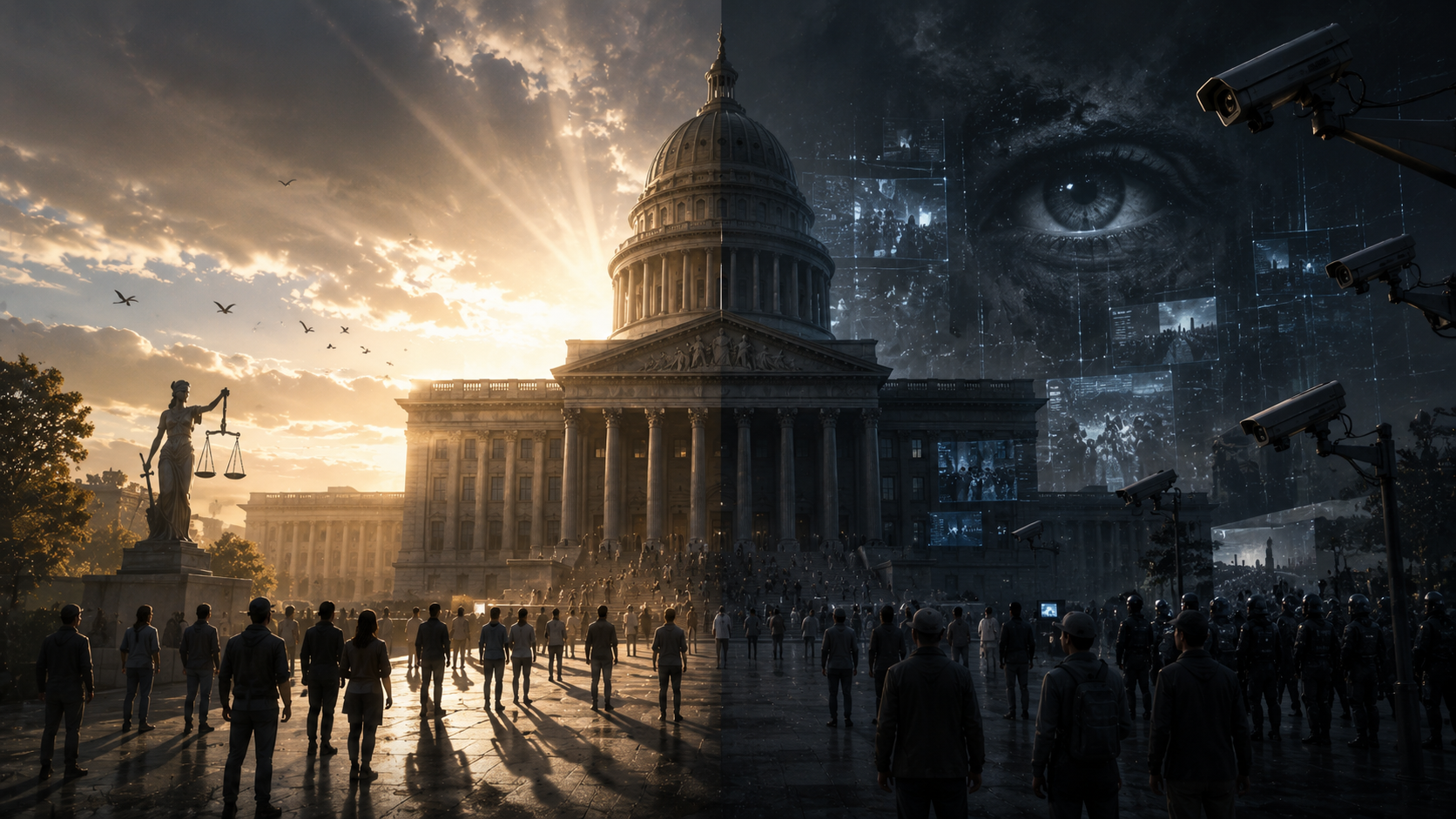
    In today’s digital world, transparency is often praised as a foundation of trust.

    From governments to social media, being visible and open is seen as a virtue.

    But what if transparency does not always create trust—
    and instead turns into a subtle form of surveillance?

    Transparent society symbolized by open glass architecture

    1. The Two Faces of Transparency

    In contemporary society, transparency has become a central keyword across politics, economics, and everyday life. Government transparency is expected to reduce corruption, corporate transparency is believed to strengthen investor confidence, and personal transparency is often praised as a foundation of social trust. Information disclosure, public participation, and accountability are widely celebrated as democratic ideals rooted in transparency.

    However, the philosopher Byung-Chul Han presents a radically different perspective in The Transparency Society. For Han, transparency is not merely a democratic virtue but a new form of power operating in modern society. A world in which everything must be visible and disclosed does not necessarily generate trust; instead, it can produce constant surveillance and self-censorship.


    2. The Structure of the Transparency Society: The Compulsion to Reveal

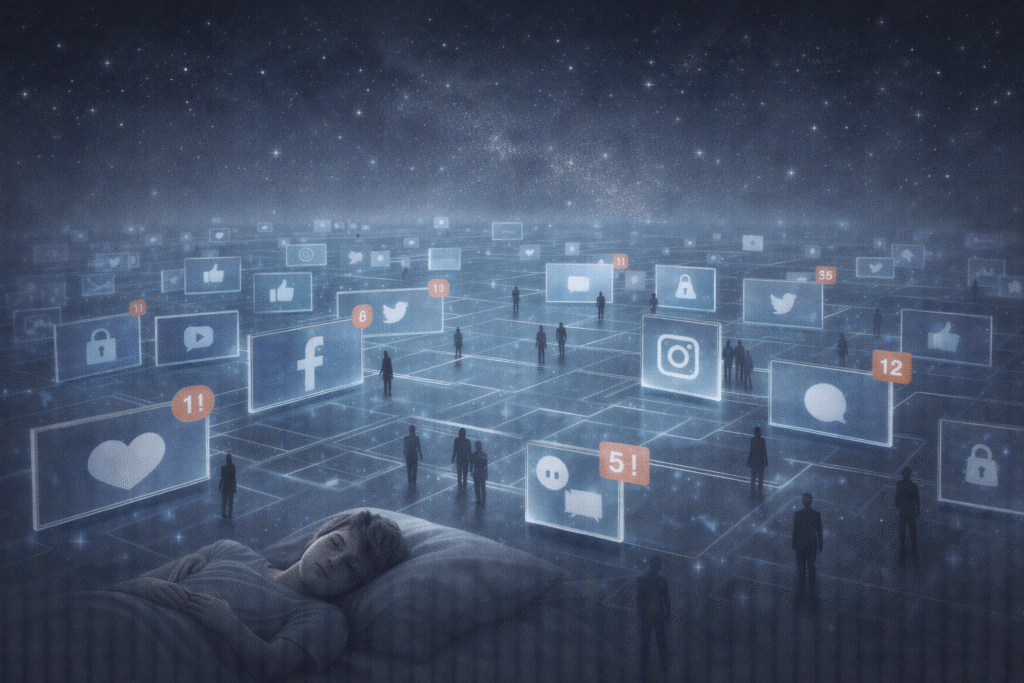
    Han describes contemporary society as a “society of positivity.” While Michel Foucault analyzed disciplinary societies based on repression and prohibition, today’s social order operates through encouragement, exposure, and voluntary participation. Digital platforms—especially social media—continuously invite individuals to reveal themselves.

    Within this structure, transparency becomes not a choice but a condition of social existence. Likes, shares, and visibility function as social currencies. Individuals are compelled to expose their lifestyles, emotions, and preferences to remain socially relevant.

    As a result, people become both the objects and agents of surveillance. Fear of exclusion leads individuals to internalize the gaze of others, transforming society into a system of self-monitoring rather than external coercion.

    Digital surveillance emerging from enforced transparency

    3. Democratic Ideals and the Paradox of Transparency

    Transparency originally aimed to restrain power and protect citizens’ rights. Public asset disclosures, open decision-making processes, and accessible records are essential democratic mechanisms designed to prevent abuse and corruption.

    Yet Han warns that when transparency expands indiscriminately, society becomes vulnerable to the violence of overexposure. In a world where every action and statement may be permanently recorded, spaces for political reflection and genuine debate shrink.

    Citizens begin to practice self-censorship, choosing “safe” opinions over critical or unconventional ones. Paradoxically, excessive transparency weakens democracy by undermining pluralism, dissent, and deliberative freedom.

    4. Trust or Surveillance Culture?

    The belief that transparency automatically produces trust is deeply flawed. Trust does not arise from knowing everything about others; rather, it emerges from accepting uncertainty within relationships. Trust between parents and children, friends, or partners exists precisely because not everything is visible or controllable.

    A society that demands total transparency risks cultivating suspicion instead of trust. Any undisclosed information becomes grounds for doubt, and individuals feel compelled to reveal more while experiencing greater anxiety. In this sense, the transparency society becomes a variation of the surveillance society.


    5. The Politics of Transparency in the Digital Age

    Digital platforms represent the most concrete manifestation of the transparency society. Location data, consumption habits, and social networks are constantly collected, analyzed, and monetized. Although this process appears voluntary, it is deeply embedded in the structure of surveillance capitalism.

    Sharing daily life on platforms such as Facebook or Instagram is not merely self-expression; it is also a form of data production that fuels corporate profit. Transparency shifts from democratic communication to an economic instrument, expanding platform power rather than strengthening citizenship.


    6. The Right to Opacity and Democratic Survival

    What alternatives exist? Han argues that democracy requires a right to opacity. Informal political discussions, protected private spaces, and relational ambiguity do not signify corruption or dishonesty. Instead, they preserve freedom, creativity, and reflection.

    Critiquing the transparency society does not mean rejecting transparency altogether. It means resisting its elevation into an absolute moral value. Genuine trust does not grow from total visibility but from the willingness to coexist with uncertainty.

    Opacity as a space for reflection and democratic freedom

    Conclusion

    Is the transparency society a foundation of trust, or has it evolved into a culture of surveillance and self-censorship? Han’s analysis offers a crucial warning. A society that demands unlimited transparency in the name of democracy risks becoming a democracy with the face of surveillance.

    Respecting transparency while defending the right to opacity may be the only way to protect trust, freedom, and democratic life in the digital age.

    A Question for You

    In a world where everything is visible,
    do you feel more secure—or more watched?

    Related Reading

    The influence of digital systems on human perception and behavior is further explored in
    How Search Boxes Shape Thinking,
    which examines how algorithmic structures shape the way we think and process information.

    The emotional impact of constant visibility and comparison is also reflected in
    How Social Media Amplifies Feelings of Lack and Comparison,
    highlighting how exposure and curated content influence self-perception in everyday life.

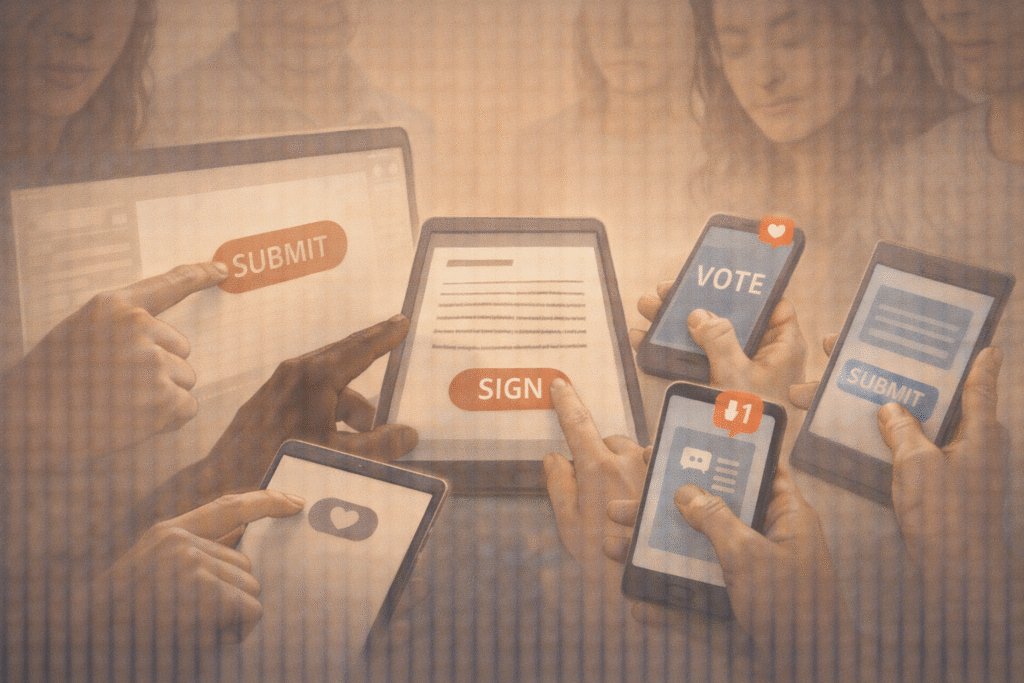
    The politics of visibility also appears in digital activism.
    Clicktivism in Digital Democracy: Participation or Illusion? examines how online visibility can amplify civic voices while also turning participation into measurable, platform-driven gestures.


    References

    1. Han, B.-C. (2012). The Transparency Society. Stanford University Press.
      → This foundational work critiques the modern obsession with transparency and explains how constant visibility fosters self-surveillance rather than trust.
    2. Foucault, M. (1975/1995). Discipline and Punish: The Birth of the Prison. Vintage Books.
      → Foucault’s concept of the panopticon provides a theoretical foundation for understanding surveillance as a mechanism of power.
    3. Bauman, Z. (2000). Liquid Modernity. Polity Press.
      → Bauman analyzes social insecurity and fluidity, offering insights into how transparency intensifies modern anxiety.
    4. Lyon, D. (2018). The Culture of Surveillance. Polity Press.
      → This work shows how surveillance has become normalized as a way of life, closely aligning with transparency discourse.
    5. Zuboff, S. (2019). The Age of Surveillance Capitalism. PublicAffairs.
      → Zuboff examines how digital transparency feeds corporate control and reshapes democratic power structures.
  • Late-Night Comfort – In the Quiet Hours No One Notices

    Late-Night Comfort – In the Quiet Hours No One Notices

    A Small Moment of the Day

    Emotional watercolor illustration, person sitting under a desk lamp late at night

    Late at night, under the soft glow of a small desk lamp, everything finally grows quiet.
    The conversations of the day, the noise from screens, the thoughts that demanded attention—
    all of them fade away, leaving a rare stillness behind.

    Outside, the darkness deepens.
    Inside, the air feels warm.

    Holding a warm cup with both hands, a quiet thought gently settles in:
    “This hour that no one notices… somehow feels the most peaceful.”

    For a moment, there are no eyes watching, no voices reaching in—
    only a space that belongs entirely to oneself.


    A Light Thought for Today

    A quiet murmur breaks the silence:
    “Everything feels so calm at this hour… Is everyone else asleep?”

    Then comes an immediate reply, almost amused:
    “Yes. And the reason you’re still awake is simple—
    your thoughts refused to go to bed.”

    A small smile lingers in the dim light.


    Reflection – What This Moment Revealed

    Late nights are strange.
    The same room, the same desk, the same self—
    yet everything feels subtly different.

    Concerns that felt heavy during the day
    sometimes soften at night.
    Thoughts that seemed harmless suddenly feel tender.

    Night asks questions gently:
    “How was today?”
    “Was it harder than you expected?”
    “Did you push yourself too much?”

    It does not demand answers.
    It simply listens.

    Perhaps that is why, late at night,
    we finally allow ourselves to be honest.

    Emotional watercolor illustration, person pausing to write in a quiet night room

    A Gentle Practice

    Keeping a Quiet Night Note

    Tonight, take just three minutes.
    Write one sentence about this quiet moment.

    For example:

    • “The air in my room feels warm.”
    • “Which words stayed with me the longest today?”
    • “Even in unseen hours, I still recognize myself.”

    This small note may become
    an unexpected comfort for tomorrow.


    A Small Action for the Day

    Lower the lamp just a little.
    Look at the cup as it slowly cools.

    Take one deep breath in, and let it out slowly.

    Then say—silently, if you wish:
    “You did well today.
    Even if no one else knows this hour, I do.”

    No one else needs to hear it.
    Sometimes, that is precisely what makes it comforting.


    Quote of the Day

    “At night, when the world sleeps, the soul finally speaks.”


    Emotional watercolor illustration, warm light filling a calm room at night

    Closing – Returning Gently to Ourselves

    Late-night comfort is never loud.
    Yet within its quietness lies a gentle warmth—
    one that carefully folds the day away.

    In hours no one notices,
    we become softer with ourselves,
    more honest,
    and quietly human again.

    May you remember this time tonight.
    And may you be able to say, before sleep arrives:

    “Well done. Today, too.”


    A Thought to Remember

    Psychological research suggests that the quiet of late night often encourages emotional reflection.
    As external stimulation decreases, the mind gradually shifts away from constant alertness, allowing emotional processing to feel calmer and more reflective.

    This is why late nights often feel deeper,
    and unexpectedly gentle.


    Today’s One-Line Insight

    “In unseen hours of the night, we quietly return to ourselves.”

    Reader Question

    What quiet moment at the end of the day brings you the greatest sense of comfort?

    Perhaps it is a warm cup of tea, a dim lamp, a favorite song, or simply a few minutes of silence. Share your thoughts in the comments—your quiet ritual may inspire someone else’s.

    Related Reading

    When the world grows quiet, our own thoughts often become easier to hear. The Night Sky Narrative explores how the silence of the night gently creates space for reflection, healing, and emotional balance.

    The quiet hours of the night often invite us to care for the rooms of our inner world. The Inner House reflects on how making peace with our emotions allows us to return to ourselves with greater clarity and kindness.

  • How Search Boxes Shape the Way We Think

    How Search Boxes Shape the Way We Think

    The Invisible Influence of Algorithms in the Digital Age

    Every day, billions of questions begin with a search box.

    We type a few words,
    receive suggestions,
    and follow links that appear almost instantly.

    But what if the search box is shaping our thoughts
    before we even finish the question?

    Search box autocomplete shaping user questions

    1. When Search Boxes Decide the Question

    Search boxes do more than provide answers.
    They subtly change the way we ask questions in the first place.

    Think about autocomplete features.
    You begin typing “today’s weather,” and before finishing, the search box suggests
    “today’s weather air pollution.”

    Without intending to, your attention shifts.
    You were looking for the weather, but now you are thinking about air quality.

    Autocomplete does not simply predict words.
    It redirects thought.
    Questions that once originated in your mind quietly become questions proposed by an algorithm.


    2. How Search Results Shape Our Thinking

    Algorithmic bias in ranked search results

    Search results are not neutral lists.
    They are ranked, ordered, and designed to capture attention.

    Most users focus on the first page—often only the top few results.
    Information placed at the top is easily perceived as more accurate, reliable, or “true.”

    For example, when searching for a diet method, if the top results emphasize dramatic success,
    we tend to accept that narrative, even when contradictory evidence exists elsewhere.

    In this way, search results do not merely reflect opinions.
    They actively guide the direction of our thinking.


    3. The Invisible Power Behind the Search Box

    At first glance, a search box appears to be a simple input field.
    Behind it, however, lie powerful algorithms shaped by commercial and institutional interests.

    Sponsored content often appears at the very top of search results.
    Even when labeled as advertisements, users unconsciously associate higher placement with credibility.

    As a result, companies invest heavily to secure top positions,
    knowing that visibility translates directly into trust and choice.

    Our decisions—what we buy, read, or believe—are often influenced
    long before we realize it.


    4. Search Boxes Across Cultures and Nations

    Search engines differ across countries and cultures.
    Google dominates in the United States, Naver in South Korea, Baidu in China.

    Searching the same topic on different platforms can yield strikingly different narratives,
    frames, and priorities.

    A historical event, for instance, may be presented through contrasting lenses depending on the search environment.

    We do not simply search the world as it is.
    We see the world through the window our search box provides—and each window has its own tint.


    5. Learning to Question the Search Box

    How can we avoid being confined by algorithmic guidance?

    The answer lies in cultivating critical habits:

    • Ask whether an autocomplete suggestion truly reflects your original question
    • Look beyond the top-ranked results
    • Compare information across platforms and languages

    These small practices widen the intellectual space in which we think.

    Critical awareness of algorithmic influence

    Conclusion

    Search boxes are not passive tools for finding answers.
    They shape questions, guide attention, and quietly train our ways of thinking.

    In the digital age, the challenge is not to reject these tools,
    but to use them without surrendering our autonomy.

    True digital literacy begins when we recognize
    that the most powerful influence of a search box
    lies not in the answers it gives,
    but in the questions it encourages us to ask.

    A Question for You

    Have you ever searched for something—and felt the results were guiding your thinking?

    If what you see is filtered,
    how much of your thinking is truly your own?


    Related Reading

    The invisible filtering mechanisms behind everyday searches are explored further in
    Algorithmic Bias: How Recommendation Systems Narrow Our Worldview, where digital systems subtly shape what we see and how we interpret information.

    The fragility of human perception goes even deeper in
    If Memory Can Be Manipulated, What Can We Really Trust?,
    which examines how memory itself can be altered, raising fundamental questions about truth, identity, and reality.

    Digital participation is not shaped by citizens alone; it is also shaped by the systems that guide attention.
    This issue is further explored in Clicktivism in Digital Democracy: Participation or Illusion?, where online political action is examined as both a new form of participation and a possible substitute for deeper engagement.

    References

    Pariser, E. (2011). The Filter Bubble: What the Internet Is Hiding from You. New York: Penguin Press.
    → Explores how personalized algorithms narrow users’ worldviews while shaping perception and judgment.

    Noble, S. U. (2018). Algorithms of Oppression: How Search Engines Reinforce Racism. New York: NYU Press.
    → Critically examines how search engines reflect and amplify social biases rather than remaining neutral tools.

    Beer, D. (2009). Power through the Algorithm? New Media & Society, 11(6), 985–1002.
    → Analyzes algorithms as invisible forms of power that structure everyday cultural practices.